Optimization of chlorite and talc flotation using experimental design methodology: Case study of the MCG plant, Morocco
Abstract
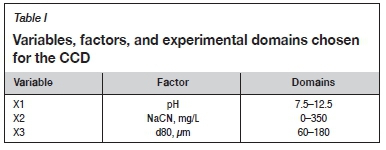
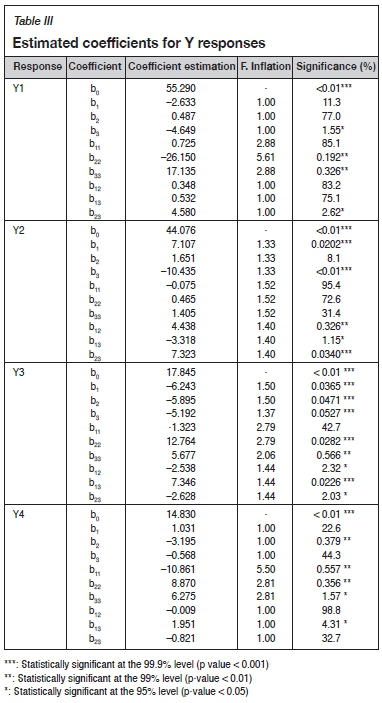
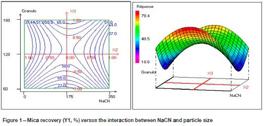
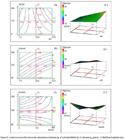
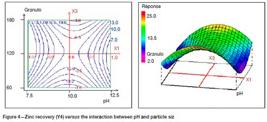
Response surface methodology (RSM), central composite design (CCD), and desirability functions were used for modelling and optimization of the operating factors in chlorite and talc (collectively termed 'mica') flotation. The influence of pulp pH, cyanide (NaCN) consumption, and particle size was studied with the aim of optimizing ssilicate flotation while minimizing recoveries of galena, chalcopyrite, and sphalerite. Flotation tests were carried out on a representative sample of a complex sulphide ore from Draa Sfar mine (Morocco). The model predictions for the flotation of each of the minerals concerned were found to be in good agreement with experimental values, with R2 values of 0.91, 0.98, 0.99, and 0.90 for mica, galena, chalcopyrite, and sphalerite recoveries, respectively. RSM combined with desirability functions and CCD was successfully applied for the modelling of mica flotation, considering simultaneously the four flotation responses to achieve the maximum recovery of mica and minimal loss of Pb, Cu, and Zn to the flotation concentrate.
chlorite; talc; flotation; response surface methodology; central composite design; optimization
 Thumbnail
 Thumbnail
 Thumbnail
 Thumbnail