Study of the dissolution of chalcopyrite in solutions of different ammonium salts
Abstract
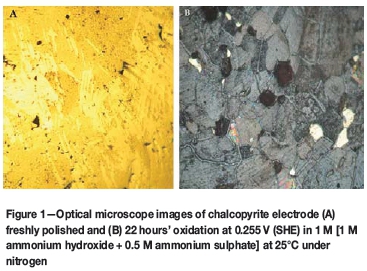
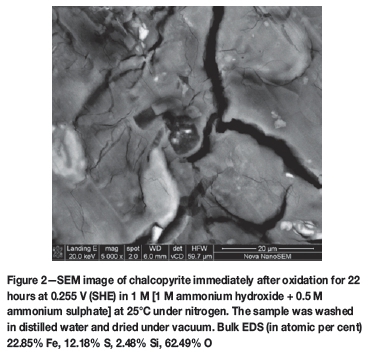
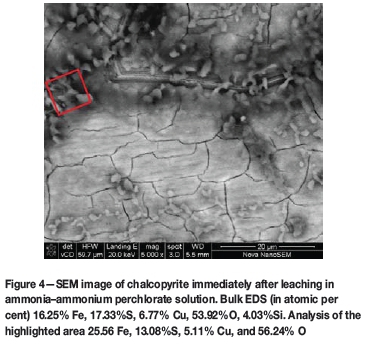
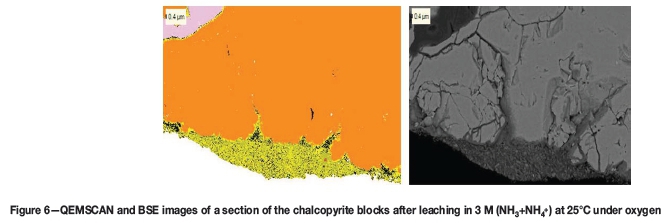
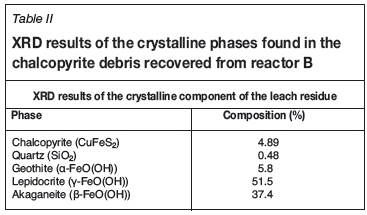
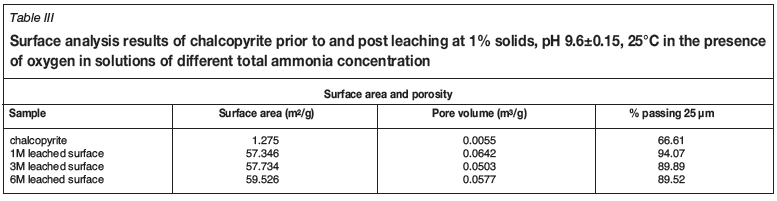
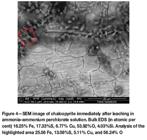
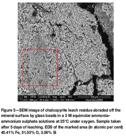
The oxidative leaching of chalcopyrite in ammoniacal solutions has been evaluated using electro-analytical techniques and controlled bulk leaching studies. The anodic dissolution process has been established to be a seven-electron transfer process under nitrogen in ammonia-ammonium sulphate solutions and ammonia-ammonium carbonate solutions, which suggests that the sulphur is oxidized to thiosulphate and the copper and iron released as Cu+ and Fe2+ in these systems. The deportment of Fe2+ and S2O32- is affected by choice of the ammonium salt used in the leaching process. In the perchlorate salt, only five electrons are transferred, supporting formation of different sulphur species as proposed for the sulphate and carbonate salts. Scanning electron microscopy and energy-dispersive spectroscopic analysis of the mineral surface after leaching indicate presence of an iron-sulphur surface layer completely free of copper in the sulphate system, an iron-rich surface layer in the perchlorate solutions, and absence of surface layer build-up in carbonate solutions. XRD analysis of a bulk leach residue from leaching in ammonia-ammonium sulphate solutions showed the surface layer to be mostly amorphous (90%). The crystalline content (10%) is composed of 95% polymorphs of anhydrous iron oxide hydroxide FeO(OH). Choice of ammonium salt and the hydrodynamic environment of leaching have been shown to influence the presence or absence of the surface product, as well as its nature.
chalcopyrite; ammonia; surface deposits; coulometry; iron oxy-hydroxide
 Thumbnail
 Thumbnail
 Thumbnail
 Thumbnail
 Thumbnail
 Thumbnail
 Thumbnail