Quantitative impacts of induction heating power on refractory erosion and inclusion behaviour in tundishes
Abstract
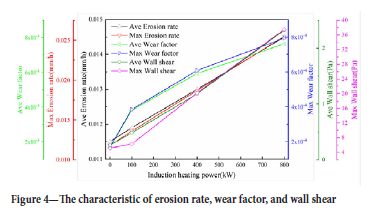
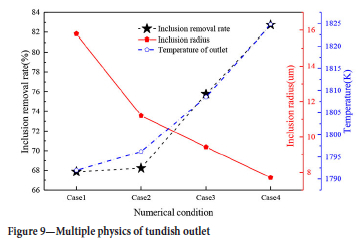
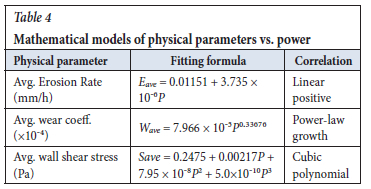
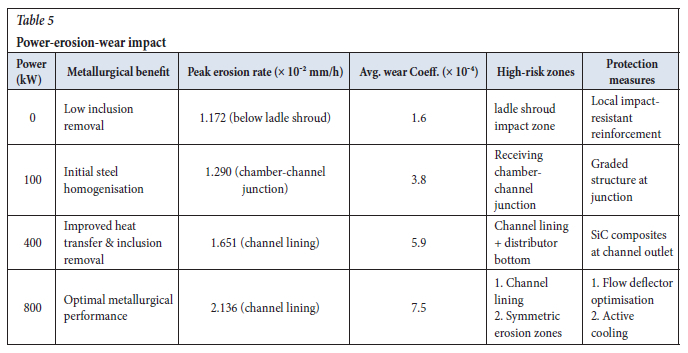
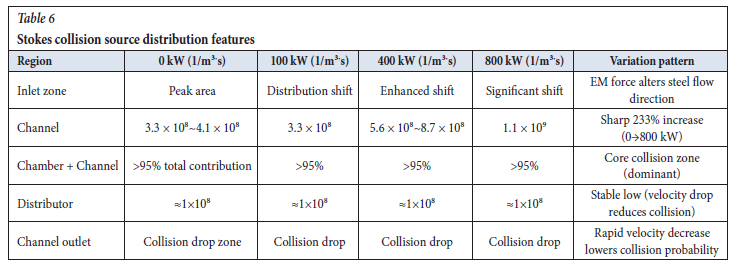
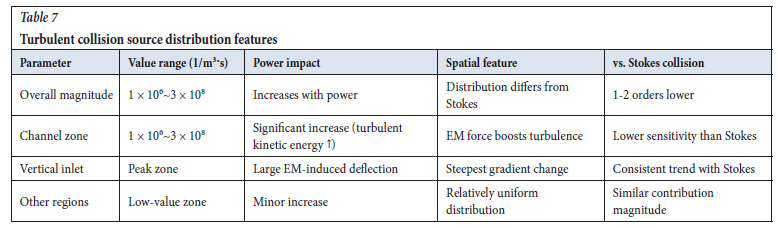
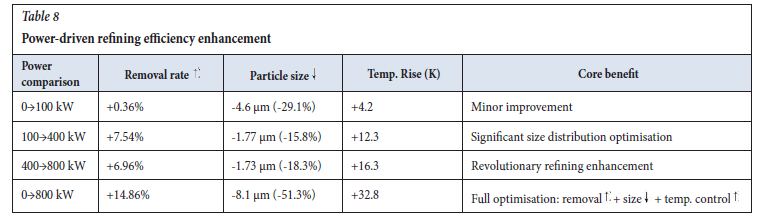
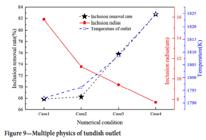
This study established a coupled fluid-electromagnetic numerical model to systematically analyzse the effects of molten steel flow, inclusion transport, and temperature gradients on refractory erosion behaviour within an induction-heated tundish. The results demonstrate that increased induction heating power significantly exacerbates both flow-induced erosion and magneto-thermal corrosion of the refractory lining in the channel region. The erosion rate exhibits a linear increase with power, while the wear coefficient follows a power-law relationship. Concurrently, a higher power level intensifies the inclusion collision source term by a factor of ten, substantially promoting inclusion collision, growth, and removal (increasing the removal rate by 14.86%). However, this also leads to a 51.3% reduction in the outlet inclusion particle size. This research provides a quantitative basis for balancing metallurgical benefits (temperature control and improved steel cleanliness) with the longevity-oriented design of refractory linings.
induction-heated tundish; refractory erosion; inclusion removal; multi-physical field simulation
 Thumbnail
 Thumbnail
 Thumbnail
 Thumbnail
 Thumbnail
 Thumbnail
 Thumbnail
 Thumbnail
 Thumbnail