Physical and numerical modelling of a four-strand steelmaking tundish using flow analysis of different configurations
Abstract
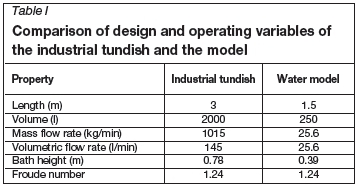
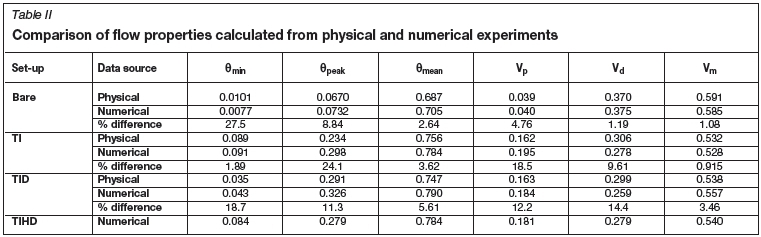
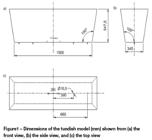
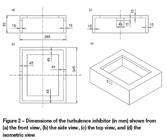
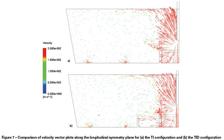
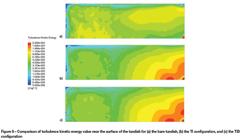
Modern tundishes have evolved as vessels to serve as the final step in refining of molten steel by removing inclusions and promoting thermo-chemical homogeneity. In this study the flow behaviour in a four-strand tundish was investigated by means of a ½-scale water model as well as numerical modelling. The numerical and physical models were used to characterize residence time distribution and calculate properties pertaining to tundish flow regime. Three different tundish configurations were investigated: a bare tundish with no flow control devices, a tundish with a turbulence inhibitor, and a tundish with both a turbulence inhibitor and a dam. The physical and numerical models showed that a tundish without flow control devices is prone to significant short-circuiting. A tundish with a turbulence inhibitor was shown to be successful in preventing short-circuiting and provided surface-directed flow that might assist the removal of inclusions from the melt. However, it was also observed that the upward-directed flow caused the maximum turbulence kinetic energy near the surface to increase dramatically. The potential for slag entrainment should therefore be considered during the design and operation of tundishes with turbulence inhibitors.
tundish; steelmaking; CFD; physical modelling; numerical modelling
 Thumbnail
 Thumbnail
 Thumbnail
 Thumbnail
 Thumbnail
 Thumbnail
 Thumbnail
 Thumbnail