Learnings from development of an underground sub-level open stope mine below an open pit
Abstract
This paper presents the lessons learnt during the transition from an open pit method to a sub-level open stoping method at the Koidu Limited kimberlite pipe. These learnings may assist other mines with planning, both from a practical implementation perspective (layout, charging up challenges), and a method for estimating potential dilution and stability challenges associated with the interaction between the surface and underground excavations. Predictive geotechnical stability modelling was successfully applied to highlight potential failure zones, which allowed modification and enhancement of the mining layouts and quantification of the potential dilution of the kimberlite from indicative instabilities.
open pit -underground interaction; geotechnical modelling; sub-level open stoping; dilution; kimberlite
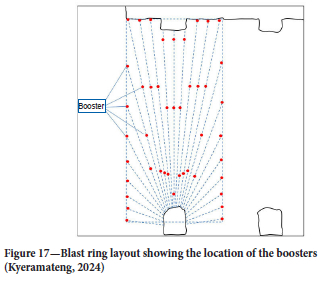
 Thumbnail
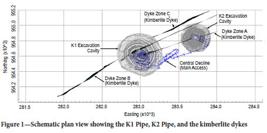
 Thumbnail
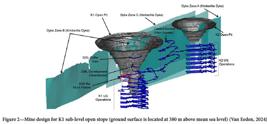
 Thumbnail
 Thumbnail
 Thumbnail
 Thumbnail
 Thumbnail
 Thumbnail
 Thumbnail
 Thumbnail
 Thumbnail
 Thumbnail
 Thumbnail
 Thumbnail
 Thumbnail
 Thumbnail
 Thumbnail