The management of constructability knowledge in the building industry through lessons learnt programmes
Abstract
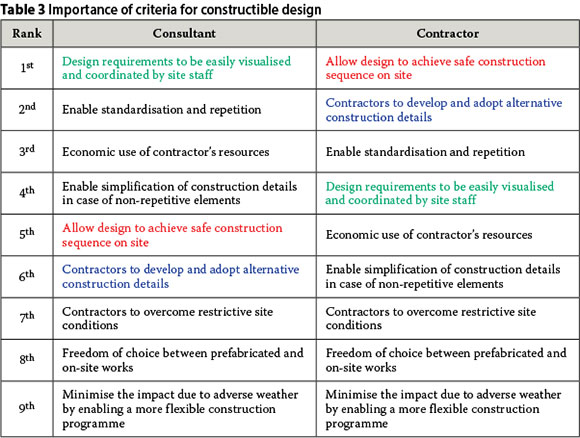
In the 1980s the term "constructability" evolved in the USA. The proponents of this concept believe that constructability, which embraces both design and management functions, is comprehensive in facilitating construction operations and solving problems on site. Constructability problems are common on the construction site, due to the lack of construction experience in the design team and the absence of tools to assist designers in addressing constructability. Moreover, designs are predominantly done early in the project in the absence of contractor input, and there is yet no explicit means of defining or measuring constructability. This paper aims to address constructability problems in building construction, by understanding the nature of constructability knowledge and investigating how construction experience may be effectively disseminated amongst project participants, particularly through the use of lessons learnt programmes and inter-disciplinary knowledge sharing. It has been found that there is fundamental misalignment between consultants and contractors on the perceptions of criteria for a constructible design, implications of design decisions, and certain traits that may represent optimised vs poor constructability. The discrepancy in communication is the elemental cause of constructability problems and this research has demonstrated how lessons learnt programmes can be an effective tool in attaining better constructability knowledge management and collaboration.