Implication of reliability categories on the structural design of higher-risk buildings
Abstract
This paper reviews the impact of reliability-based design considerations for higher-risk buildings (high-rise, hospitals, critical infrastructure, etc.) in South Africa. SANS 10160-1 Annex A and B provide guidance on enhanced partial safety factors for loading, third-party design verification, and additional site supervision requirements for such structures. This work reviews the legal framework governing building design, following the hierarchy from constitution to design standards, emphasising the need for engineering judgement for non-standard and higher-risk buildings. The impact of supplementary legislation such as the Critical Infrastructure Protection Act (8 of 2019) are pointed to, highlighting the increased reliability requirements. The reliability framework in SANS 10160-1 is considered and the assumptions inherent in general building design are presented, identifying how they may not be fully representative when aspects such as post-disaster function, high loss of life, large economic loss, and similar factors must be considered. As a result, anecdotal evidence suggests that the more onerous design and supervision requirements of higher-risk structures, such as increased partial safety factors, third-party checking of structural designs, and construction supervision are not currently being carried out in South Africa, despite SANS 10160-1 proposing it as best practice. Given their ability to prevent both calculation errors and conceptual errors related to structural robustness, improved design supervision and third-party checking are proposed as critical requirements for high-risk structures.
structural reliability; higher-risk structures; standardised structural design; design practice
INTRODUCTION
Structures need to be designed to ensure adequate safety and functionality over their intended lifespan while remaining economically viable (ISO 2015). In modern structural design, this is practically implemented through reliability-based design. A structure is designed with a target level of reliability (linked to a probability of failure) which is appropriate to its function and circumstances. The required reliability of a structure should be dependent on a balance between the potential consequences if the structure fails and the cost of increasing safety required to mitigate or avoid failures (JCSS 2001). High-risk structures, which have more dire consequences in the case of failure, require increased levels of reliability, whereas the converse is true for structures where there is little risk or where the consequences of failure are insignificant.
However, when costs to increase safety or mitigate risks become disproportionately high in comparison to the benefit gained from them, lower levels of reliability may be warranted, subject to an absolute minimum required for human safety (Caspeele et al 2013, Pandey et al 2025). Reliability is practically implemented in structural design and materials codes, but often requires engineering judgement, and especially so in the case of higher-risk structures or those which are innovative or unusual.
In South Africa, structural design codes (e.g. SANS 10160) are not mandated as law, but are rather a way of practically implementing the law through a rational design by a competent person (Retief & Dunaiski 2009), defined as a "registered professional" within the Identification of Engineering Work Regulations (IDoEW). The legal framework for building design in South Africa initiates with essential human rights of a safe environment within the Constitution (Act 108 of 1996) and extends down through the National Building Regulations and Building Standards Act (103 of 1977). The building regulations are supplemented by other legal documents such as the Critical Infrastructure Protection Act (8 of 2019) (previously the National Key Points Act) and the Engineering Professions Act (114 of 1990), among others. The building regulations are generally functional in nature, setting out qualitative statements about what is required of a building or building element without specifying exact methods, dimensions, or materials. The technical details for the application of the building regulations are then given in SANS 10400, on a deemed-to-satisfy basis. Most typically in South Africa, the rational design of a building structure is performed under a registered professional which, in conjunction with structural design and materials codes, provides a building that should perform at least equivalently to one that complies with the requirements of the relevant parts of SANS 10400.
Reliability in structural design codes is implemented using a framework that accounts for multiple factors, including the design approach, level of supervision, uncertainties in loads and resistance, material properties, geometry, robustness, redundancy, and construction quality. In South Africa, the SANS 10160 suite of codes provides the foundation for structural design, incorporating these aspects. Reliability is semi-implicitly addressed in the codes through the use of characteristic values for material strengths and loads, and more explicitly through partial safety factors for load and resistance. Ensuring adequate reliability also depends on appropriate levels of design and construction supervision, as well as the implementation of specific risk-mitigation measures. For structures with moderate consequences of failure, these considerations can typically be addressed within standard design and supervision practices. For higher-risk structures, however, appropriately adjusted reliability-based design and increased supervision levels are required, frequently requiring greater engineering judgment.
As the design of higher-risk structures is not commonplace, habitual practice may be adopted without consideration of the amendments or additions required for higher-risk structures. Additionally, guidance on identifying higher-risk structures and the design philosophy/processes for them is placed in informative annexes of regulations and codes in South Africa, which are not frequently consulted as a result. The de-regulation of structural design fees and subsequent discounting required to secure design work in the country further complicates this (Okonkwo & Wium 2018, Van Zijl 2024). The additional time and resources required to properly consider higher-risk structures, and even to do due diligence for "normal" structures is simply in short supply. In a survey conducted in South Africa by Okonkwo and Wium (2018), nearly half of the design consultants who responded indicated that they had offered discounts of up to 27%, and another third up to 60%, of the ECSA-approved fee scales to secure work. Additionally, nearly fifty fatalities and scores more injuries have occurred in the recent catastrophic collapse of the buildings in Ormonde, Johannesburg (2026), Redcliffe, Durban (2025) and Dormehls Drift, George (2024). While two of these buildings would have been on the border between "normal" and higher-risk structures, their collapses have resulted in much discussion in the media regarding the need for regulation and safety in structural engineering. With this as context, in the experience of the authors it appears that higher-risk structures in South Africa are either not being identified as such or are being designed and constructed using standard practice for "normal" structures.
This paper therefore aims to investigate the implications regarding the design of higher-risk building structures in relation to existing policy, create an awareness of the need for higher levels of reliability, and guide how it may be practically implemented. Through considering the legal framework in South Africa, classifying higher-risk building structures, and illustrating how reliability can be increased through design codes and practice, the paper aims to prompt designers and clients to reflect on whether higher-risk structures in South Africa are currently being designed and constructed with due diligence.
LEGAL FRAMEWORK FOR BUILDING DESIGN IN SOUTH AFRICAThis section considers the legal framework within South Africa, illustrated in Figure 1, and the extent to which it highlights the need for engineering judgement in design. At the highest level, the fundamental right to a safe and sustainable environment comes from Section 24 of the Constitution, which states that, "Everyone has the right to an environment that is not harmful to their health or well-being" This is carried through to Section 17 of the National Building Regulations and Standards Act (NBR), which authorises the making of regulations with respect to the "strength and stability of buildings" and "to provide for... precautionary measures against fires or other emergencies", among others. The practical application of the national building regulations is detailed in SANS 10400.

SANS 10400-A indicates two ways of satisfying the NBR, in addition to adhering to the prescriptive regulations in the relevant parts of SANS 10400. All functional regulations need to be satisfied either by adopting building solutions that comply with the deemed-to-satisfy criteria in the relevant parts of SANS 10400, or by engaging a competent person (under the Engineering Profession Act 46 of 2000) to prepare a rational design for a building structure that will at least satisfy the relevant parts of SANS 10400. Typically, the latter route is followed, satisfying the relevant parts of SANS 10400 by following SANS 10400-B and other relevant SANS codes (10160, 51992-1-1, 10162, etc.).
The philosophy behind SANS 10400, as the application of the NBR, is to set out requirements for the design and construction of buildings that provide a safe and healthy environment in the simplest and most economical way possible. That is, it aims to set performance requirements without being overly prescriptive in how they are implemented. As such, it states in the introduction to SANS 10400-A that "designers and building owners should be aware that the mere fact that a building complies with the National Building Regulations does not necessarily indicate that it is a desirable building". This is one of the first indications that engineering judgement is required even at an overarching level of design. Rational designs follow this in that best practice should be used to propose a design solution appropriate to the function of the building structure and the needs of the client, naturally requiring engineering judgement. Applying only the mandatory parts of a structural design code does not automatically fulfil a designer's obligation of providing a satisfactory structural solution. This is especially true in the case of higher-risk structures, or structures that are innovative or unfamiliar in relation to the experience of the project team. Further allusions to, and illustrations of the need for, engineering judgement are given in the following section. Ultimately, however, Section A2 of SANS 10400-A states that it is the responsibility of the owner to appoint, and maintain the appointment of, competent persons for the rational design work to be undertaken. Furthermore, the client should ensure that best practice is followed.
RELIABILITY IMPLEMENTATION IN STRUCTURAL DESIGNThis section details the implementation of reliability within structural design. Commentary on how reliability principles are to be amended for higher-risk structures is presented in the following sections. A reliability framework within structural design aims to ensure that structures fulfil their specified requirements throughout their working life with an acceptable level of reliability (ISO 2015, JCSS 2001). In South Africa, the basis of this reliability framework stems from SANS 10160-1, which addresses the requirement for controlling risks to structural safety in SANS 10400-A Appendix B.9. SANS 10160 follows a limit states design format and is based on the first generation of Eurocodes. The target level of reliability, as a balance between structural safety and economy, forms the basis of structural design and is structure-dependent. SANS 10160-1 indicates that the choice of target reliability for a structure is dependent on:
■ The possible cause or mode of failure for a limit state
■ The consequences of failure
■ Public aversion to failure
■ The costs of increasing safety (or mitigate risks).
Target reliability is expressed through the reliability index (β), which is inversely related to a probability of failure (pf) over a specified period of time, i.e. as the reliability increases, the probability of failure decreases. Appendix A in SANS 10160-1 gives minimum ultimate limit state (ULS) β values for a design life of 50 years as a function of the consequences of failure, reproduced here as Table 1. Table 1 shows that typical structures (in Reliability Class (RC) 2) should be designed to have a target reliability of ßt = 3.0, which equates to a probability of failure, pf approximately equal to 1 in 1 000 in a 50-year return period (not considering human error). The reliability class descriptions come directly from the Eurocode (EN 1990), except class RC4, which is an additional higher-risk class typically for post-disaster structures, similar to that in the American ASCE 7-16 code (ASCE 2017). The values of ßt in Table 1 are based on back-calibration to existing practice in South Africa (Kemp et al 1987) and are slightly lower than those in EN 1990. Table 1 indicates that increasing consequences of failure warrant increasing target reliability levels. Despite the given examples, the qualitative descriptions for the type of structures in each class are not highly specific in assisting designers when identifying the appropriate class.
In limit states design codes, target reliability is achieved through the use of a framework of both "quantitative" and "qualitative" measures, as discussed in the following sections.
Quantitative reliability implementation
Target levels of reliability are quantitatively achieved in codes primarily through the use of partial safety factors (PSFs), typically with symbol yi, (e.g. 1.2 and 1.6 for permanent and imposed loads, and 1.15 for reinforcing steel strength, respectively) and the use of characteristic values of load and resistance, Fk and Xk, respectively. The use of PSFs and characteristic values intentionally increase the load (E) and decrease the resistance (R) in design so that when design parameters are calculated (e.g. area of tension reinforcement), they provide more capacity than is actually required to resist the average load. This is graphically illustrated in Figure 2, for the example of the bending resistance of a reinforced concrete (RC) beam, where the area of tension reinforcement increases the resistance. In reality, load and resistance vary due to inherent uncertainty, and are therefore represented as distributions in Figure 2. The reliability index, β, can be understood as a measure of the "overlap" between E and R, and the variation in each. The less overlap between £ and R, the higher the reliability, and vice versa; interested readers may refer to Holický (2009) for a more technical definition. In the top left of Figure 2, the load (applied bending moment) and resistance (bending moment resistance) are shown for the highly dangerous case where the average resistance (Rm) is determined based on the average load (Em). The top right shows how the reliability is increased (overlap reduced) by using characteristic values within the resistance (Rk) and load (Ek). The bottom shows how the additional use of partial safety factors further separate the resistance and load to their design values, Rd and Ed, respectively, to provide at least the target level of reliability.

For limit states design, the design resistance, Rd, must be greater than the design load (or action effect), Ed, for all considered limit states, as shown in Equation 1 (SANS 10160-1) and expanded in Equation 2, where ψ is a combination factor for accompanying variable loads. In limit state design codes, the load, resistance, and associated PSFs are typically treated independently of one another from a reliability perspective, with each contributing a set proportion of reliability towards the total target reliability.

Partial safety factors
PSFs are used to increase and decrease the characteristic load and resistance, respectively, as shown in Equation 3. The PSFs account for uncertainties in load and material resistance achieving their characteristic values, and also for model uncertainties in their prediction. The PSFs in SANS 10160 were adopted from SABS 0160, the precursor to SANS 10160, following an extensive reliability calibration by Kemp et al (1998) and Ter Haar et al (2001). When used in conjunction with the characteristic loads and resistances, the combination of the PSFs for load and resistance were shown to achieve a minimum value of β = 3.0 in 50 years. These were further found to be satisfactory by Retief & Dunaiski (2009) when adopted for SANS 10160. The PSFs for materials (e.g. γc for concrete and γs for steel) are generally developed within each material code, and are carried through to the relevant part of SANS 10160, 10162, 51992-1-1, etc.
Characteristic values of load and resistance
Characteristic values are statistically defined values of load or resistance used to account for variability and uncertainty within the load or material. For material strengths, this is the value below which fewer than 5% of test results are expected to fall (e.g. characteristic concrete compressive stress). For loads, the characteristic value is that which is rarely exceeded. For variable loads which fluctuate notably with time (e.g. variable live load in an office), this is typically taken as the 98th percentile for a reference period of 1 year. For permanent loads, where there is little or no variability with time, the characteristic value is taken as the mean value.
Qualitative reliability implementation
In addition to the quantitative elements within a design code, there are also elements that contribute to the target reliability in a qualitative sense. That is, the quality control of design and construction supervision and robustness requirements need to be commensurate to that given to the quantitative aspects of design.
Robustness and structural integrity
Largely catalysed by the Ronan Point building collapse in the UK in the late 1960s, the design of modern structures needs to consider how to mitigate the risk of accidental actions that may cause disproportionate or progressive collapse (Pearson & Delatte 2005). This is typically provided for by ensuring that structures have sufficient robustness to withstand a degree of local collapse due to unspecified accidental actions. This requires a system that ensures that parts of the structure remain connected after local failure events, often in the form of horizontal and/or vertical ties. Robustness requirements are given as a function of consequence or risk classes. SANS 10160-1 recommends general strategies for robustness in Sections 4.4, 7.4.2, and Annex B which are summarised here in Table 2 (see full details in SANS 10160-1).
Structures in higher consequence classes require greater degrees of robustness to counteract the risk of increased consequences of failure. Notably from Table 2, which stems from EN 1991-1-7, even for medium risk structures (class CC2), which make up a large proportion of structures, there is a basic requirement for horizontal ties and anchorage of floors to columns or walls as a means of creating continuity to limit disproportionate damage from accidental loads. For structures in class CC3, disproportionate collapse needs to be explicitly considered through either more extended tie-requirements than for RC2 or, alternatively, a notional-removal strategy can be adopted. If excessive damage is likely to occur if a supporting member fails, then the element should be designed as a key element, able to resist the likely accidental loads that might occur. The code recommends a full systematic risk assessment instead for class CC4 structures, making reference to risk assessment principles in EN 1991-1-7, but does not specify how such an assessment should be performed.
Supervision in design and construction
The second notable "qualitative" attribute contributing to the reliability framework is the consideration of design and construction supervision. The minimum recommended requirements are presented in Annex A of SANS 10160-1, summarised here in Table 3. For design, this encompasses the internal quality control process of design within an organisation, and that required for independent design checking, depending on the reliability level of the structure. This relates particularly to the checking of design assumptions, calculations, drawings, and specifications. Similarly, higher levels of reliability necessitate a greater degree of construction supervision, which may be a combination of a greater frequency of inspection, more stringent tolerances, and/ or using independent inspectors/those with greater expertise.
CONSIDERATIONS FOR HIGHER-RISK OR UNUSUAL STRUCTURES
Most South African structures fall into reliability class RC2, and are referred to as "normal" structures here. Typical design and supervision practices employed in South Africa appear to generally be sufficient for structures within this category. Although, with the current pressures on the construction industry related to fee discounting, what used to be standard practice is potentially changing. Van Zijl (2024) highlights that the number of cases of structural failures, faults, or construction accidents reported to the Engineering Council of South Africa (ECSA) increased from 40 in 2014 to 115 in 2022. This, in conjunction with the 2024 George apartment building collapse, where there were 34 fatalities, is likely an indication that this may be happening. For higher-risk structures or those with novel materials or unusual behaviour, the more stringent requirements set out in the codes may not currently be appropriately implemented for various reasons, as already highlighted by Watermeyer and Smith (2016) and Mallin (2019). This section aims to discuss and give guidance on how to identify a higher-risk structure and to highlight the differences in design between "normal" and higher-risk structures, emphasising the heightened need for engineering judgement in design.
Classifying structures with regard to risk
Risk in structural engineering is generally concerned with the product of the consequences of structural failure (Cf), and the probability of that failure occurring (pf), shown in Equation 4 (Høj et al 2025). Consequently, a reduction in either Cf or pf lowers risk. Table 1 classifies reliability classes for structures exposed to levels of risk from low to very high, and recommends commensurate levels of increasing reliability (which lowers pf) to counter increasing
One of the main hindrances to identifying higher-risk or unusual structures is that guidance on the definition of higher-risk structures is limited and is often placed in informative annexes in code documents that are seldom consulted as a result.
Table 1 from SANS 10160-1 Appendix A gives overarching, qualitative descriptions of risk that are difficult to interpret for individual structures without the more detailed descriptions in Table 2 (SANS 10160-1 Appendix B). However, the relationship between reliability classes and consequence classes in SANS 10160-1 Appendices A and B is not clear. As Table 2 and Appendix B are focussed on the consideration of robustness requirements and are in a different annex, it is unclear whether practising professionals understand that the consequence classes relate largely to the reliability classes. In both the first- and second-generation Eurocodes (EN 1990), the reliability classes are directly related to consequence classes, and it is assumed that this was intended in SANS 10160, given its Eurocode-basis. In the new generation of EN 1990, there is an explicit link between consequence classes, reliability classes, and the level of design and construction supervision. Combining the information in Table 1 with that in Table 2 already gives designers significantly more guidance and clarity on assigning appropriate levels of risk for structures.
Other sources provide alternative ways of evaluating the consequence/reliability class of structures. The Joint Committee on Structural Safety (JCSS) Probabilistic Model Code (JCSS 2001) gives indicative ranges for the ratio (ρ) of the consequences of failure (Cf) to the construction cost (C0) of the structure as an alternative to the qualitative descriptions for reliability classes, as shown in Table 4. Note that the Kf value in Table 4 is described in the following section. The Cf due to ULS failure is comprised of: repair or replacement of structural damage, repair or replacement of damage to non-structural components or contents, loss of structural function, compensation for injuries or fatalities, psychological damage, and legal costs. As an illustration from Table 4, the total failure costs for normal structures in class RC2 would indicatively be within a range of 2 to 5 times the construction cost, as a reference. The fib Model Code 2020 (fib 2024) gives another alternative by considering the number of people at risk in the case of failure (Nrisk) for each reliability class. Guidance on approximating the number of people/m2 based on the function of the structure is given in SANS 10400 Annex A.20 and A.21. Similarly, ISO 2394 (ISO 2015) proposes an indicative range of casualties in the case of ULS failure as a means by which to differentiate between reliability class.
In addition to the qualitative guidance given in the combination of Table 1 and Table 2, Table 4 summarises the quantitative guidance, giving registered professionals a greater set of tools with which to identify the appropriate risk/reliability class of a structure. In some cases, it is also possible to differentiate between the reliability class required for the structure and that required for individual members/parts. If only a part of the structure has higher consequences of failure, that part may be classified as RC3 while the rest of the structure may remain RC2. Helpful commentary and further guidance on consequence classes and structure classification, including mixed-use structures, can be found in a guide by the Steel Construction Institute (Way 2011). It is worth noting that, based on the qualitative risk descriptions in Section 16 of the Critical Infrastructure Protection Act, most, if not all, structures classified as critical infrastructure (previously National Key Points) will fall into RC4.
Once a structure is identified as having a higher degree of risk (RC3 or RC4), quantitative and qualitative measures need to be put in place to reduce the risk of the increased consequences of failure. Table 1 shows that the required reliability should be increased by a value of β = 0.5 for each increase in reliability class (e.g. RC1 to RC2). It should be noted here that structures in class RC4 are recommended to have a minimum value of ßt = 4, however, a higher value may be appropriate for certain structures where exceptionally high risks are present (as informed by the full risk assessment), for which the recommended Kf will not be sufficient.
Quantitative measures
From a quantitative perspective, the use of the standard PSFs in SANS 10160-1 are adequate to achieve the level of reliability required for normal structures, i.e. ßt = 3.0 for RC2 (Holický et al 2019). For higher-risk structures, Annex A.3.2 proposes increasing the PSFs for unfavourable loads (not for favourable loads or resistances) so that an appropriately higher level of reliability is achieved. This simple PSF multiplication factor, KF is shown in Table 4 and its use is illustrated in Equation 5 and Figure 3. The familiar form of Ed < Rd is used in Equation 5 for the (simplified) design case of a sagging bending moment applied to an RC T-beam in a building structure, where the area of tension reinforcement, AS, is the decision parameter which most effectively increases reliability. The sagging moment has components of permanent load (MDL) and variable load (MLL), and the resistance is affected by the yield stress of the reinforcement (fy) and the lever arm (z). The KF value is used to increase permanent and imposed PSFs, yG and Yq, which subsequently increase the required value for As and thus the reliability. Figure 3 shows how each increase in the Kf factor increases the reliability by Δβ ~ 0.5, shown in red (which decreases the probability of failure by roughly an order of magnitude, shown in blue), as is required for an increase for each reliability class from Table 1. Dashed lines are used to illustrate the β and pf values for RC2. While the initial material cost increases with using higher PSFs, the increased capital cost is ultimately outweighed by the reduced probability of the failure costs being realised in future. The magnitude of this change should be appreciated in that the design loads for RC3 and RC4 structures are increased by 10% and 20%, respectively, potentially resulting in changes to all members throughout a typical structure. However, it should be noted that the total cost of the structure is only likely to increase by a few percent, as the decision parameter usually represents a relatively small fraction of the total cost.
Qualitative measures
Quantitative-related measures like increased PSFs are important to increase baseline reliability. However, they cannot root out the occurrence of human errors or provide robustness against unforeseen accidental loads (e.g. accidental vehicle impact, explosions) beyond designing members in a ductile fashion (Gulvanessian et al 2012). If the assumptions of the design philosophy are not correct or have not considered certain scenarios, increasing partial factors further will have little effect on increasing the overall reliability. In contrast, providing structural robustness and appropriate supervision in the design and construction process can identify and mitigate both quantitative errors as well as human errors in judgement. As such, commensurate quality control measures on supervision and the provision of robustness against accidental actions are arguably more important to providing appropriate levels of safety.
Robustness and structural integrity
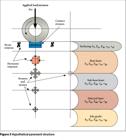
As a safeguard against unforeseen risks and disproportionate collapse, robustness requirements should be provided as suggested in Table 2 (SANS 10160-1 Section 7.4 and Annex B). Effective horizontal ties and continuity between floors and supporting columns/walls are considered adequate to provide robustness for RC2. Higher-risk building structures (RC3) additionally require effective vertical ties between columns, walls, and floors from foundation to roof, as illustrated in Figure 4, to allow for loads to be redistributed via alternative load paths. Special requirements for vertical ties in load-bearing wall construction are prescribed in Annex B.6 of SANS 10160-1. In framed buildings, supporting columns and walls are required to withstand an accidental tension force equal to the largest vertical column load from any one storey, so that if the member fails, the forces can be redistributed through catenary action in the floors above. For reinforced concrete structures, where continuity of elements is commonplace, these requirements can be implemented without much adjustment to the design approach for "normal" structures. For steel, precast, timber or load-bearing masonry structures, however, these requirements are not as easily met. As a result, an alternative method is proposed whereby supporting beams, columns, or supporting wall sections are removed one at a time to evaluate the damage that would result if such a member failed due to unforeseen accidental actions. The resulting damage may not cause overall structural instability, nor be disproportionate. In this scenario, "disproportionate" damage is proposed as the failure of the minimum of 100 m2 or 15% of the floor area in each of two adjacent storeys. In cases where the removal of an element causes disproportionate damage, the member should be designed as a key element. Key elements should be designed to withstand a notional accidental load of 34 kN/m2, simulating a gas explosion, acting simultaneously with normal loading on the member and connected components to test structural robustness and integrity. In-depth guides on practically implementing robustness in design can be found in various guides by the Institution of Structural Engineers (IStructE 2010) and the Steel Construction Institute (Way 2011), among others.
Due to the dire consequences of failure for structures in RC4, a full systematic risk assessment should be carried out considering both foreseeable and unforeseeable hazards. This consists of at least a qualitative part through, for example, a decision tree analysis or causal network to identify risks and risk scenarios that may arise. Risks are assigned a qualitative likelihood of occurrence and the consequences of the event. A risk matrix is typically used to identify notable risks, as illustrated in Figure 5 (as an example), and strategies can be developed to avoid or mitigate these risks. The more detailed the likelihood and consequences are in the matrix, the more useful it will be in decision making.
Risk acceptance in structural design is often modelled using the 'as low as reasonably practicable' (ALARP) principle (Pandey et al 2025, Vrouwenvelder et al 2024). Following this principle, risks within a matrix are generally classified as being tolerable, tolerable if ALARP, or intolerable. A risk within the ALARP zone may be accepted if it has been shown that mitigation strategies have been implemented to the point where further risk reduction is impracticable, or where the cost of additional or further measures becomes grossly disproportionate to the reduction of risk gained (ISO 2015).
In extreme cases, a quantitative probabilistic cost optimisation can be performed and the resulting solution can be checked for societal acceptance using measures like the Life Quality Index principle (Pandey & Nathwani 2004, Way et al 2022) or using frequency-consequence diagrams (also known as F-N diagrams). Although it is not explicitly mentioned, it is reasonable to assume that the requirements for RC3 should be adhered to as a minimum for RC4, in addition to further requirements identified through the risk assessment. Further risk assessment guidance can be found in EN 1991-1-7, JCSS (2008), ISO 2394 and Vrouwenvelder et al (2024).
Supervision in design and construction
The typical design supervision model used in South Africa involves a senior designer (typically a Pr Eng) establishing an overarching structural design philosophy, after which more junior designers (typically candidate engineers) perform the majority of the detailed design in consultation with the senior designer. The senior designer, who will take responsibility for signing off the structure as the competent person, then performs checks on the design work of the candidate(s). Following Table 3, this typical supervision model should be sufficient for structures in RC1 and RC2. It should be noted though, that any gross errors that may be made by the senior designer in the design philosophy are unlikely to be identified. As such, although not explicitly recommended for RC2 structures, it is generally good practice for senior designers to at least discuss the structural design philosophy with a colleague of similar or greater experience wherever possible to avoid gross errors in design, ideally at preliminary design stage.
Many RC3 structures are not classified as such due to the previously mentioned difficulties in classification, and it is subsequently unlikely that clients are insisting on independent third party design checking, as recommended in Table 3. Structures in class RC4 require "regulated third party checking to satisfy the requirements of the regulatory or supervisory authority" (SANS 10160-1 Table A.2). While such regulatory or supervisory design checking authorities may exist as part of European practice (e.g. The Federal Association of Design Review Engineers in Germany), they do not exist in South Africa. The term "regulated third party checking" is not clarified in the rest of the code, and is subsequently open to interpretation. It is probable that the "regulated" component refers to the need for creating formalised guidance and verification processes that are followed by independent, experienced practitioners. A comparative local example of this is the Council for Geoscience, which maintains a list of regulated experts who check designs for all projects on category D4 dolomite sites in South Africa, as required by SANS 1936.
The same problem of the non-identification of RC3 structures exists for construction supervision, which requires third party inspection, from Table 3. It is, however, highly unusual practice for a third party to perform construction supervision in South Africa and, as such, it would probably be more realistic to increase the frequency and/or scope of site inspections for RC3. Part of this could, for example, include a requirement for the competent person responsible for signing off the structure to inspect at practicable intervals during the construction of the structural frame. A second inspector, even at less frequent intervals, would also give additional oversight and other benefits of the two-person rule (four-eyes principle). The large consequences of failure of RC4 structures would warrant independent third party inspections. Similarly to design supervision, the lack of a definition for regulated third party inspections leaves the application open to interpretation.
RECOMMENDATIONS AND CONCLUDING COMMENTSGiven the foregoing discussions, it is clear that the following reliability- and engineering judgement-related issues are concerns for the South African structural design industry:
1. It is highly likely that higher-risk structures (RC3 & RC4) are not being identified as such, due to either the limited or unclear guidance in the informative appendices of SANS 10160-1 or engineers not applying the guidance.
2. Consequently, higher-risk structures are likely not being designed with the appropriate reliability framework measures, namely:
■ Quantitative measures: Increased partial factors required for loads
■ Qualitative measures: Robustness required to mitigate disproportionate and progressive collapse; greater degrees of design and construction supervision required.
As the identification of higher-risk structures is the main trigger for the subsequent issues, the illustration of the link between the qualitative descriptions of reliability classes in Table 1 and consequence classes in Table 2, and the quantitative criterion presented in Table 4, aims to provide practicing engineers with guidance to better identify higher-risk structures. Once a structure has been identified as higher-risk, the appropriate measures can be put in place to provide an adequate level of reliability. These include:
■ The quantitative aspect of using a factor (Kp) to increase unfavourable load partial safety factors to appropriately increase reliability through strength reserves is illustrated in Table 4, and is fairly simple to apply.
■ The qualitative robustness requirements for RC3 of effective horizontal and vertical tie elements, or the notional removal of supporting elements and the subsequent design of key elements, are described in Table 2. While these requirements do require additional design time and consideration, they are well-detailed and relatively simple to apply.
■ While not clearly stated, the robustness requirements for RC3 are likely implied as a minimum requirement for RC4, in addition to measures that should be identified and implemented through a structure-specific risk assessment for the notable consequences of failure.
The over-generalised requirements for design and construction supervision of higher-risk structures are where further clarity is required. No delineation is made between third party checking for RC3 and regulated third party checking for RC4 for design checking. The intent was clearly to recommend a more rigorous and/or extensive check for RC4. As such, it may be sensible to be more specific about the extent of the third party design check. A possibility is to propose, at minimum, a conceptual design check for RC3 and both a conceptual and full design check for RC4. For RC3, a conceptual design check by a suitably experienced designer would help to identify and correct gross errors in the design philosophy and approach at an early stage of design without unnecessarily hindering the design process. For the notably high-risk structures in RC4, the combination of a conceptual and full design check would identify both conceptual design errors as well as non-compliance with codes and errors in detailed member design. Table 5 combines these, as well as proposals for experience requirements of checkers with the recommendations in Table 3 from SANS 10160-1 Appendix B. Responsibility and liability with respect to reviewers needs to be clearly defined such that the review process is neither a proverbial rubber stamp exercise with no benefit, nor a task that transfers disproportionate risk to the reviewers.
In terms of the lack of clarity for construction supervision, the recently-published ECSA Guideline Scope of Services and Professional Fees (ECSA 2025) proposes guidelines for three levels of construction supervision, which by qualitative description seem broadly comparable to those describing RC1 to RC3. They give guidance on the typical frequency of inspections as well as conceptually describing typical tasks carried out during inspection. They also seem to support the notion of an increased frequency of supervision (to full-time), rather than third party inspections for what would be RC3. Due to the notable consequences of failure for RC4, third party inspections would be warranted, in addition to the requirements for RC3. This guidance, as well as some proposals for experience-related requirements for construction inspectors are combined with the requirements from Table 3 and are shown on the right of Table 5. The ECSA Fee Guidelines document highlights that requirements for supervision should always be explicitly agreed upon with the client prior to commencement of the services.
Critical infrastructure such as large hospitals, courts, power stations, and important government buildings should inherently be classified as RC3 or RC4 structures due to the consequence of their loss of function to society. The additional structural costs associated with increased reliability will typically be small in relation to the economic cost associated with the non-functioning of that building (e.g. as seen in the loss of the Cape Town Parliament building due to a severe fire in 2022). Furthermore, higher-risk structures are more likely to be targets for sabotage, arson, or terrorist attack, and so may require a systematic risk analysis.
This work has sought to bring together the various policy and design frameworks in South Africa with an emphasis on the design and construction of higher-risk structures. It appears that such structural classifications are often not identified, or the design requirements for them are not known/applied by registered professionals, leading to a lack of usage of the SANS 10160-1 reliability-based guidance on increased partial safety factors, third party review, increased construction supervision, design of redundancy and so on. Structural systems such as precast concrete, load-bearing brickwork and mass timber often have little continuity and are therefore at higher risk of disproportionate collapse, but even reinforced concrete structures with more ductile members and possibilities for load redistribution need to be considered in order to mitigate the potential risks.
REFERENCES
- ASCE. 2017. Minimum design loads and associated criteria for buildings and other structures (7-16). Viginia: American Society of Civil Engineers.
- Caspeele, R, Sýkora, M, Allaix, D L & Steenbergen, R. 2013. The design value method and adjusted partial factor approach for existing structures. Structural £ngineeringInternational, 23(4): 386-393.
- CEN. 2002. £urocode: Basis of structural design (EN 1990:2002). Brussels: Comité Européen de Normalisation.
- CEN. 2006. £urocode 1: Actions on structures -Part 1-7: General actions - Accidental actions (EN 1991-1-7:2006). Brussels: Comité Européen de Normalisation.
-
Constitution of the Republic of South Africa Act 108 of 1996 (South Africa), amended 2023. Available at: https://www.gov.za/documents/constitution/constitution-republic-south-africa-1996-04-feb-1997.
» https://www.gov.za/documents/constitution/constitution-republic-south-africa-1996-04-feb-1997 -
Critical Infrastructure Protection Act 8 of 2019 (South Africa). Available at: https://www.gov.za/documents/acts/critical-infrastructure-protection-act-8-2019-english-isixhosa-28-nov-2019.
» https://www.gov.za/documents/acts/critical-infrastructure-protection-act-8-2019-english-isixhosa-28-nov-2019 - ECSA. 2025. Scope of Services and Professional Fees for Persons Registered in terms of the Engineering Profession Act, 46 of 2000. Government Gazette, board notice 783 of 2025. Johannesburg: Engineering Council of South Africa.
- Engineering Profession Act 114 of 1990 (South Africa). fib. 2024. Model Code for Concrete Structures 2020. Lausanne: International Federation for Structural Concrete.
- Gulvanessian, H, Calgaro, J A & Holický, M. 2012. Designers' Guide to £urocode: Basis of structural design. London: Thomas Telford Publishing.
- Høj, N P, Kroon, I B, Nielsen, J S & Schubert, M. 2025. System risk modelling and decision-making. Reflections and common pitfalls. Structural Safety, 113: 102469.
- Holický, M. 2009. Reliability analysis for structural design. Stellenbosch: SunMedia.
- Holický, M, Retief J, Viljoen C. 2019. Reliability basis for assessment of existing building structures with reference to SANS 10160. Journal of the South African Institution of Civil Engineering, 63(1): 2-10
-
Identification of Engineering Work Regulations, Government Gazette board notice 21 of 2021, Republic of South Africa. Available at: https://www.gov.za/sites/default/files/gcis_document/202103/44333bn21.pdf.
» https://www.gov.za/sites/default/files/gcis_document/202103/44333bn21.pdf - IStructE. 2010. Practical guide to structural robustness and disproportionate collapse in buildings. London: Institution of Structural Engineers.
- ISO. 2015. General principles on reliability for structures (ISO 2394:2015). Geneva: International Organization for Standardization.
-
JCSS. 2008. Risk Assessment in Engineering - Principles, System Representation & Risk Criteria. Joint Committee on Structural Safety. Available at: https://www.jcss-lc.org/publications/raie/01_jcss_riskassessment.pdf.
» https://www.jcss-lc.org/publications/raie/01_jcss_riskassessment.pdf -
JCSS. 2001. Probabilistic Model Code. Joint Committee on Structural Safety. Available at: https://www.jcss-lc.org/jcss-probabilistic-model-code/.
» https://www.jcss-lc.org/jcss-probabilistic-model-code/ - Kemp, A, Mahachi, J & Milford, A. 1998. Comparisons of international loading codes and options for South Africa. Proceedings, South African National Conference on Loading, 9-10 September, Midrand, South Africa.
- Kemp, A, Milford, R & Laurie, J. 1987. Proposals for a comprehensive limit states formulation for South African structural codes. The Civil Engineer in South Africa, 29(9): 351-360.
- Mallin, M. 2019. Do we realise that buildings are beyond the scope of our codes in many cases? Civil Engineering, 27(2): 14-17.
-
National Building Regulations and Building Standards Act 103 of 1997 (South Africa), amended 2008. Available at: https://www.gov.za/documents/national-building-regulations-and-building-standards-act-16-apr-2015-1302.
» https://www.gov.za/documents/national-building-regulations-and-building-standards-act-16-apr-2015-1302 - Okonkwo, P N & Wium, J. 2018. Impact of discounted professional fees on the risk exposure of civil and structural engineering services consultants in South Africa. Journal of the South African Institution of Civil Engineering, 60(1): 10-20.
- Pandey, M, Viljoen, C, Way, A, Fischer, K, Sýkora, M, Diamantidis, D, Steenbergen, R D, Lind, N, Frangopol, D M, Yang, D Y & Retief, J V. 2025. Life safety in the reliability-based design and assessment of structures. Structural Safety, 113: 102453.
- Pandey, M D & Nathwani, J S. 2004. Life quality index for the estimation of societal willingness-to-pay for safety. Structural Safety, 26(2): 181-199.
- Pearson, C & Delatte, N. 2005. Ronan point apartment tower collapse and its effect on building codes. Journal of Performance of Constructed Facilities, 19(2): 172-177.
- Retief, J V & Dunaiski, P. 2009. Background to SANS 10160: Basis of structural design and actions for buildings and industrial structures. Stellenbosch: African Sun Media.
- SABS. 2018. Basis of Structural Design and Actions for Buildings and Industrial Structures. Part 1: Basis of Structural Design, SANS 10160-1: 2010, Amended 2018. Pretoria: South African Bureau of Standards.
- SABS. 2018. The structural use of steel. Part 1: Limit-states design of hot-rolled steelwork, SANS 10162-1: 2011. Pretoria: South African Bureau of Standards.
- SABS. 2010. The application of the National Building Regulations, SANS 10400: 2010. Pretoria: South African Bureau of Standards.
- SABS. 2025. The design of concrete structures - Part 1-1: General rules and rules for buildings, SANS 51992-1-1: 2025. Pretoria: South African Bureau of Standards.
- SABS. 1994. Code of Practice: The general procedures and loadings to be adopted in the design of buildings, SABS 0160: 1989, Amended 1994. Pretoria: South African Bureau of Standards.
- Ter Haar, T R, Retief, J V & Kemp, A R. 2001. Calibration of load factors for the South African loading code. Structural Engineering, Mechanics and Computation, 2: 1289-1296.
- Van Zijl, G. 2024. The state of SA's structural engineering environment: Factors that undermine safety and increase risk of catastrophic failure. Civil Engineering, 32(7): 40-43.
- Vrouwenvelder, T, Dimova, S, Sousa, L M, Marková, J, Mancini, G, et al. 2024. Reliability background of the Eurocodes - Support to the implementation, harmonization and further development of the Eurocodes. Luxembourg: Publications Office of the European Union.
- Watermeyer, R & Smith, T. 2016. Registration, licensing and specialist list in a civil engineering context. Civil Engineering, 24(2): 20-26.
- Way, A C, de Koker, N & Viljoen, C. 2022. Target reliability for new road bridges in South Africa. Journal of the South African Institution of Civil Engineering, 64(3): 10-19.
- Way, A G J. 2011. Structural robustness of steel framed buildings. Berkshire: Steel Construction Institute.
A Way
Department of Civil Engineering
Stellenbosch University
Bosman Street, Stellenbosch, 7600, South Africa
Department of Civil Engineering
University of Pretoria
Hatfield, 0028, Pretoria, South Africa
Department of Civil Engineering
Stellenbosch University
Bosman Street, Stellenbosch, 7600, South Africa
Department of Civil Engineering
Stellenbosch University
Bosman Street, Stellenbosch, 7600, South Africa