The use of bias-corrected climate model projections for bituminous binder selection for the construction of resilient asphalt roads
Abstract
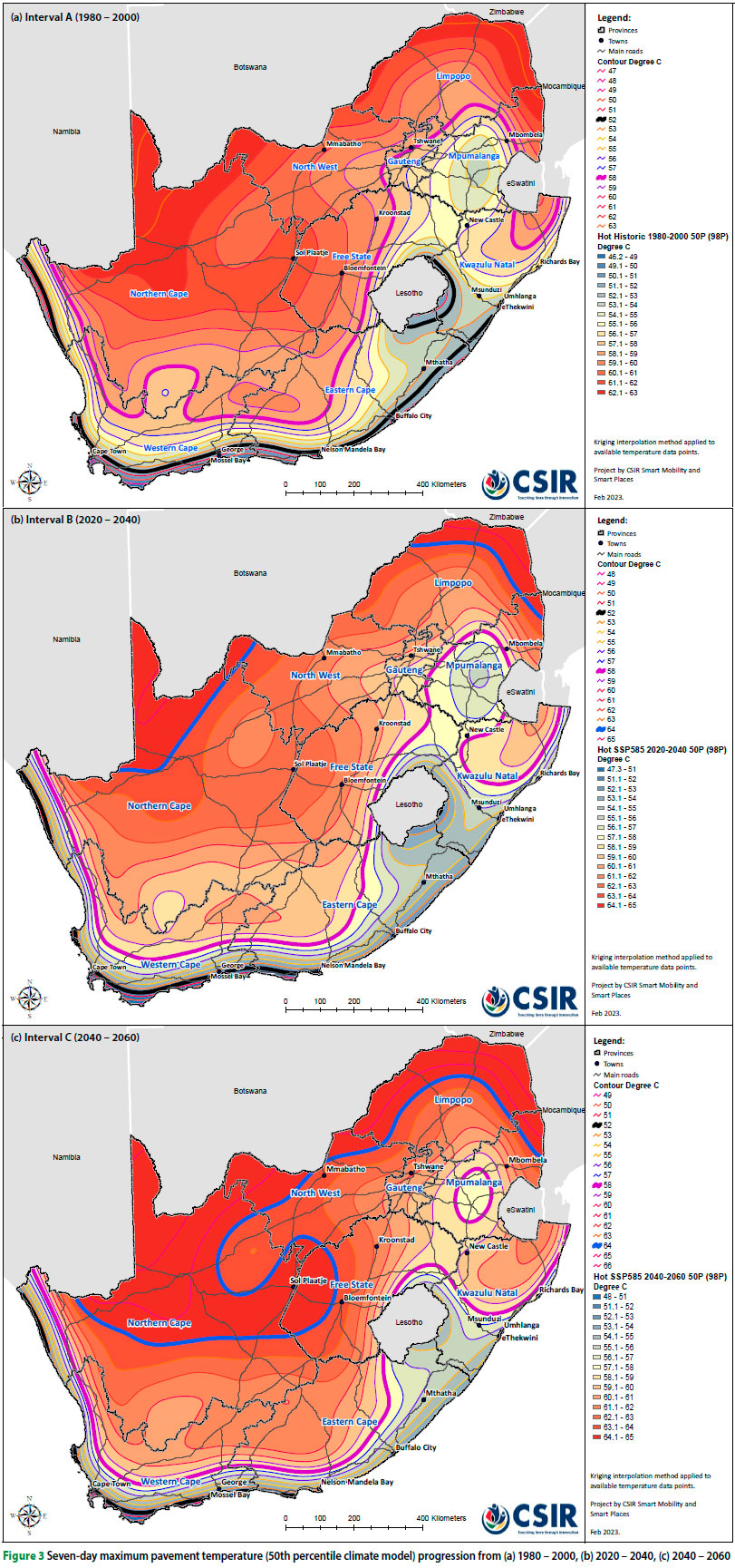
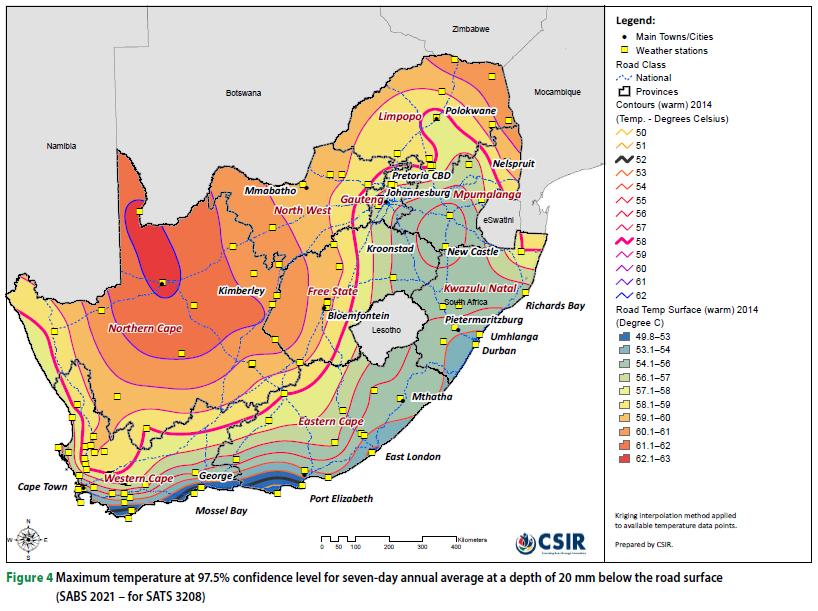
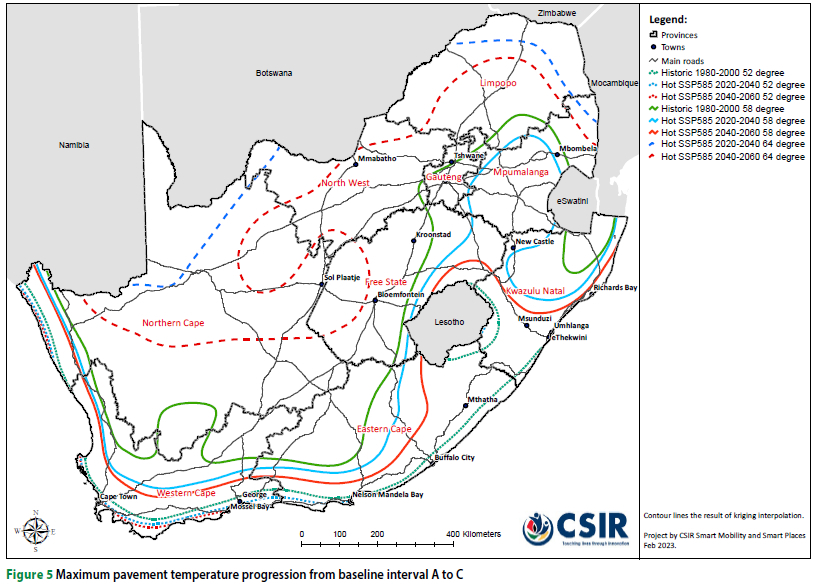
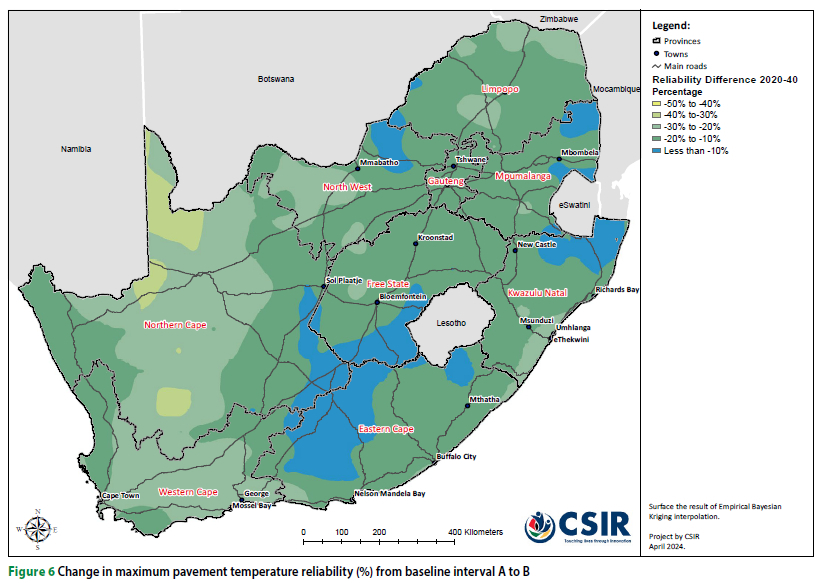
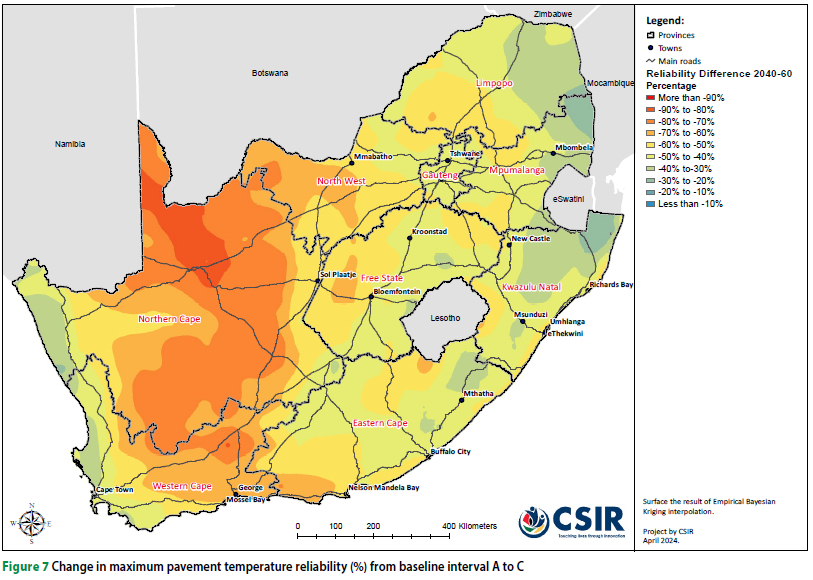
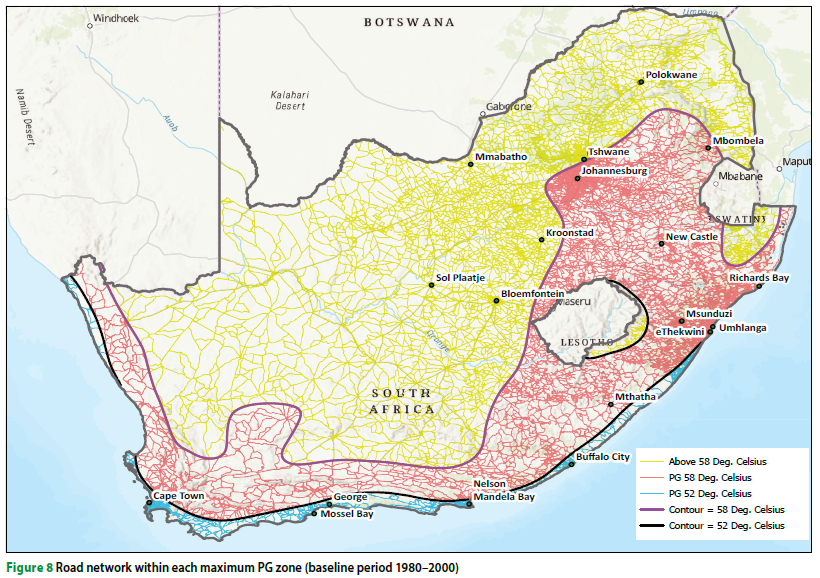
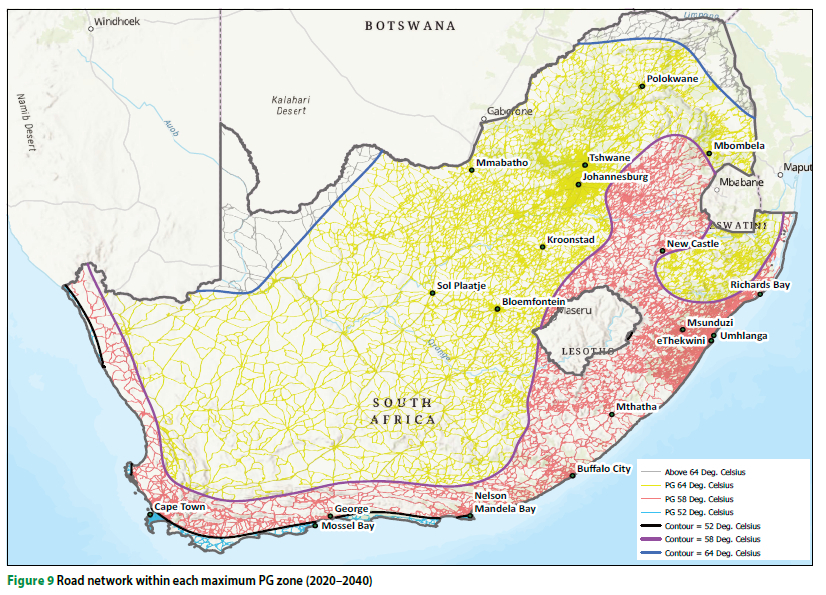
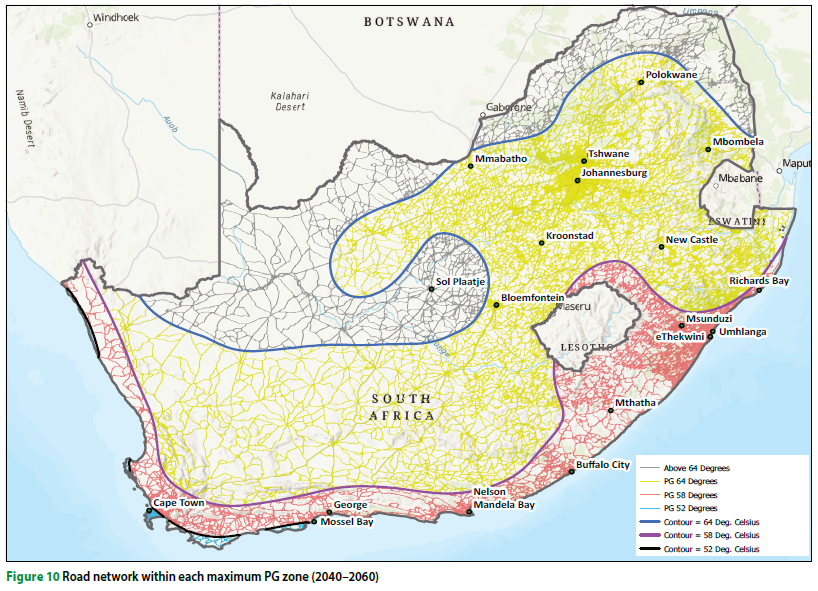
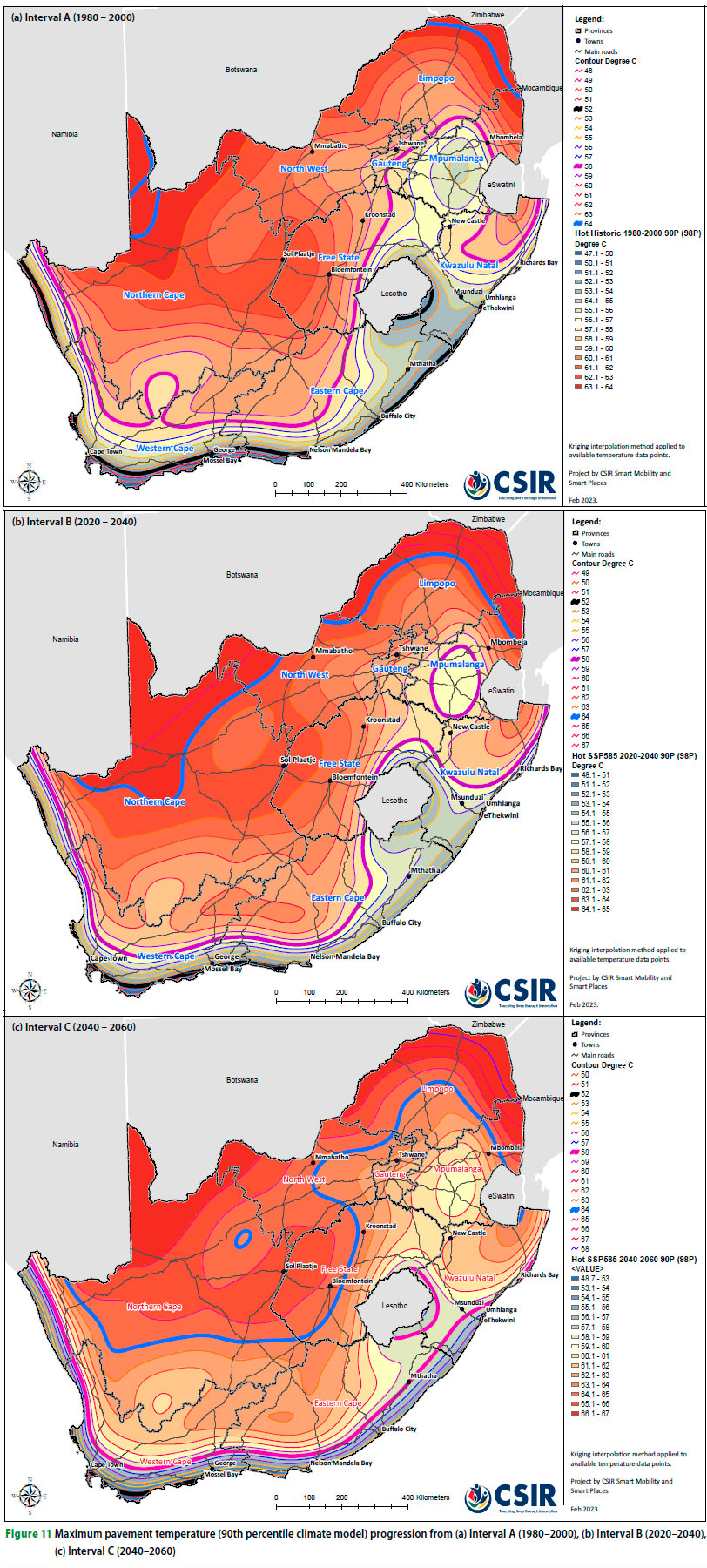
The increased frequency of extreme weather events associated with climate change is a growing concern for road authorities, consultants, contractors and end users. Climate change adaptation is not yet incorporated into South Africa's transport design and planning. Current design methods for asphalt pavements include recently introduced performance-graded (PG) specifications for bitumen. Although the need exists to use future-projected temperature maps in the road industry, the hindrance to this adoption has been extracting the appropriate rising air temperatures from climate model projections. This study focuses on the integration of bias-adjusted historical and projected climate model temperature outputs between 1980 and 2060 to estimate changes in pavement temperatures throughout South Africa to inform a strategy for adaptive material selection. Differences in bitumen selection are observed for the PG 58 and PG 52 maximum temperature grade, and an introduction of PG 70 regions, as derived from climate model data in comparison with the SATS 3208 technical standard. The general trend is a gradual increase in maximum pavement design temperatures, mostly affecting the country's northern and central regions and corresponding road networks. This paper concludes that adjustments are required regarding climate projections for use in bituminous binder selection based on the current specification.
climate change; temperature model projections; transport adaptation planning; bituminous binder selection; asphalt pavements
 Thumbnail
 Thumbnail
 Thumbnail
 Thumbnail
 Thumbnail
 Thumbnail
 Thumbnail
 Thumbnail
 Thumbnail
 Thumbnail
 Thumbnail
 Thumbnail
 Thumbnail
 Thumbnail
 Thumbnail
 Thumbnail