Assessment of local sewage sludge ash as a supplementary cementitious material - effects of incineration temperature and cooling rate of the ash
Abstract
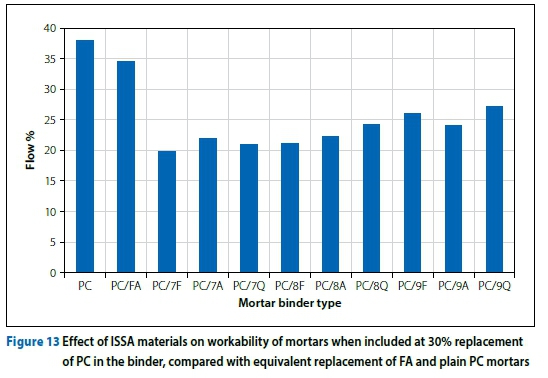
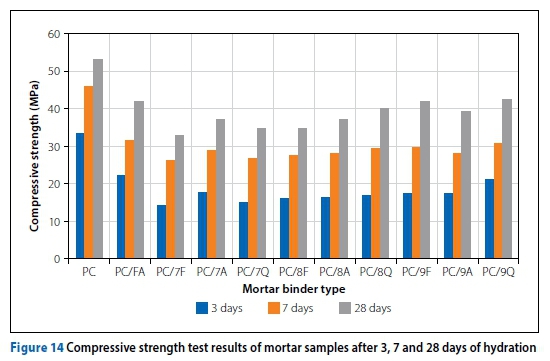
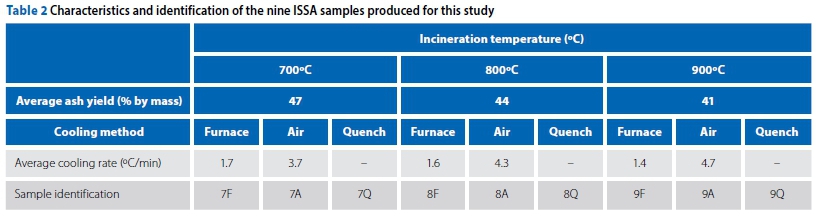
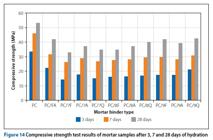
This paper reports on the possible use of sewage sludge ash as a pozzolanic supplementary cementitious material to Portland cement. Samples of sewage sludge were incinerated at 700°C, 800°C and 900°C and these were then cooled in the furnace (FISSA), in air (AISSA) or by quenching in water. The resulting ashes were ground to suitable fineness and used to prepare cement pastes and mortars in which the binder consisted of 30% ash and 70% Portland cement. The paste samples were used for microscopic and chemical assessment of the evolution of hydration products, while the mortars were used to assess the effects of the ashes on workability and compressive strength of laboratory-prepared samples using a water/binder ratio of 0.5. Fly ash was used as a reference pozzolanic material to assess the performance of sewage sludge ashes. Analysis of the sewage sludge ashes showed the presence of cementitious compounds and hydration products that suggest that this material can be used as a partial replacement of Portland cement. However, sewage sludge ash reduces the workability of the mortar. Compressive strength results indicate that the highest strength is obtained when the sewage sludge is incinerated at 900°C and then quenched in water.
sewage sludge ash; pyro-processing; pozzolanicity; mortar strength; workability
 Thumbnail
 Thumbnail
 Thumbnail
 Thumbnail
 Thumbnail
 Thumbnail
 Thumbnail
 Thumbnail
 Thumbnail
 Thumbnail
 Thumbnail
 Thumbnail
 Thumbnail
 Thumbnail
 Thumbnail
 Thumbnail
 Thumbnail