Proposed guideline for modelling water demand by suburb
Abstract
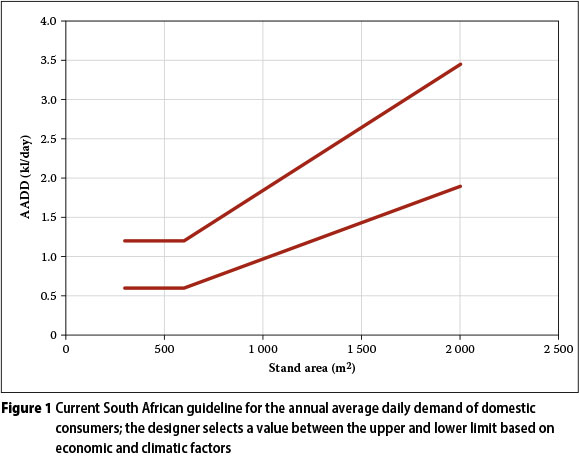
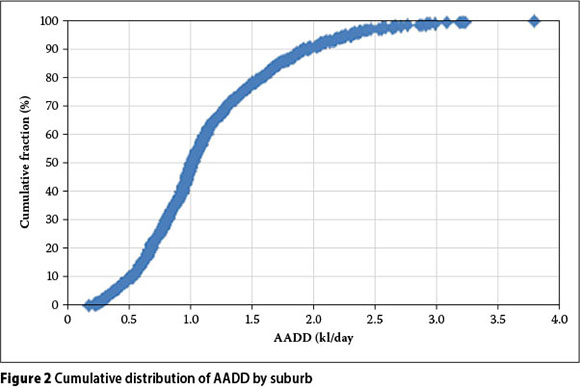
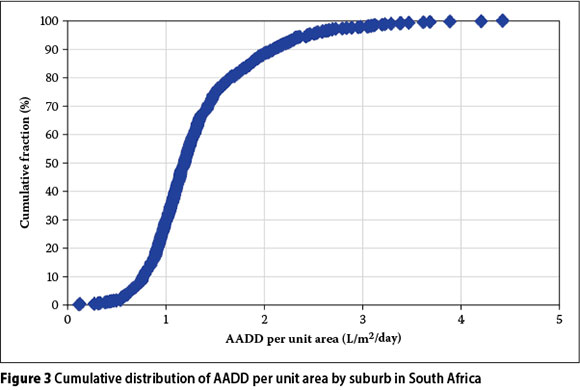
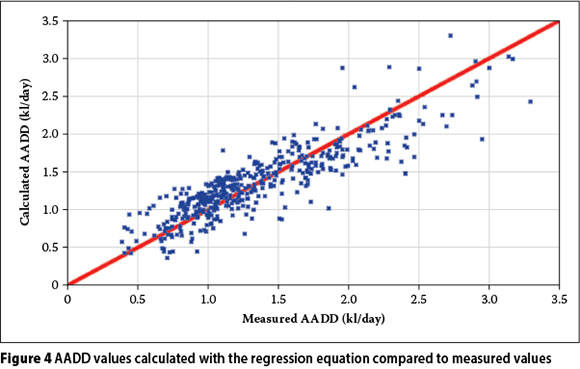
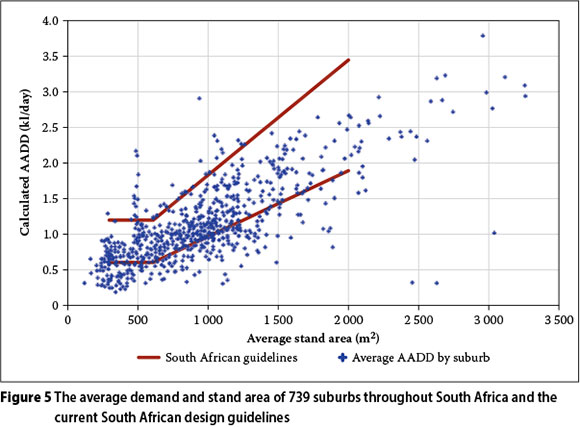
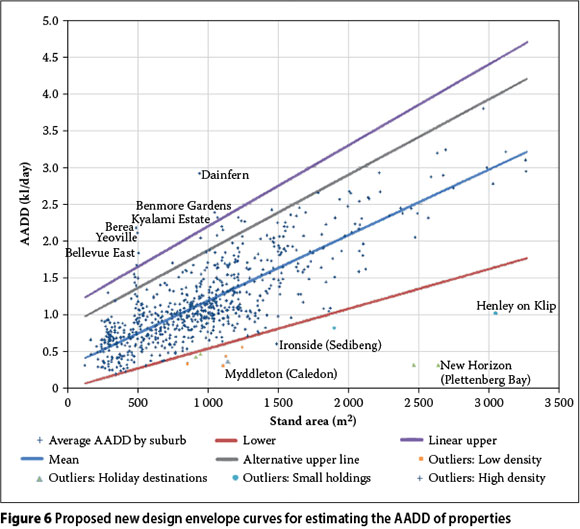
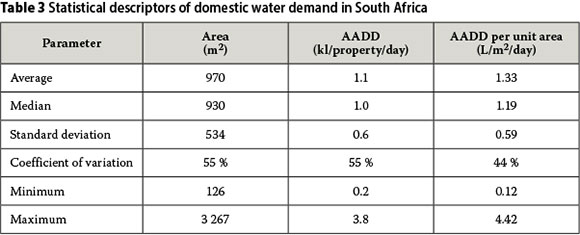
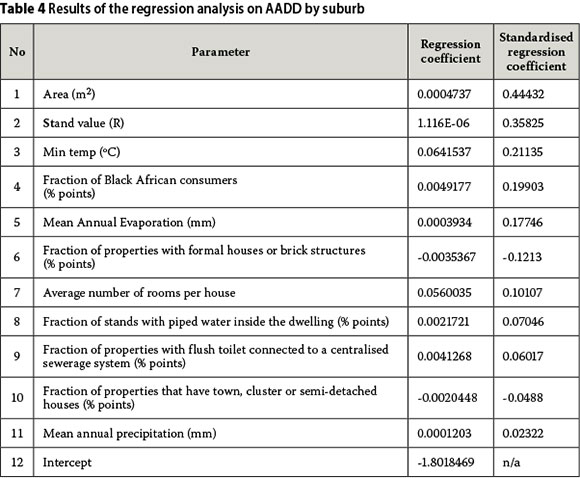
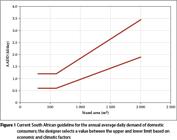
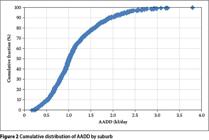
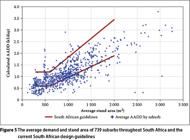
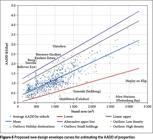
This study investigated factors affecting the average domestic water demand of a large number of suburbs in South Africa. Suburbs form an ideal demand grouping since they tend to have similar stand areas, climatic conditions and user characteristics. In addition, since properties within a suburb are close to one another, it may be reasonably assumed that differences in user demands will cancel one another out so that a designer only has to cater for the average demand of the suburb. A database on measured domestic water demands was used to determine the average of the Annual Average Daily Demand (AADD) for a large number of suburbs in South Africa (i.e. the average AADD per suburb), and this data was linked to census and climate data. The combined data set was then subjected to various regression analyses to identify the most important influencing factors. Stand area was found to be the most important influencing factor, validating the approach followed by the current South African design guidelines. However, the current guidelines were found to exclude a large number of measured data points, and thus a new, more comprehensive design envelope is proposed.
 Thumbnail
 Thumbnail
 Thumbnail
 Thumbnail
 Thumbnail
 Thumbnail