Reduction of local scouring at round-nosed rectangular piers using a downstream bed sill
Abstract
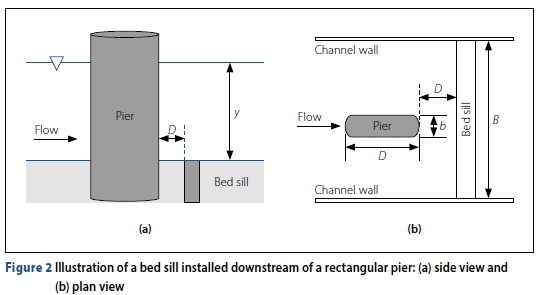
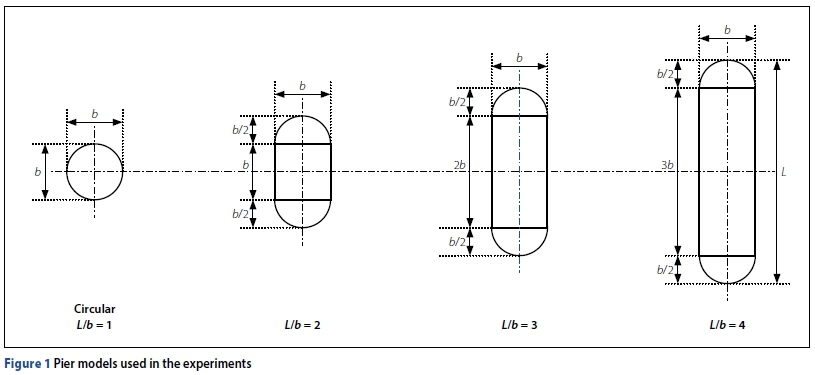
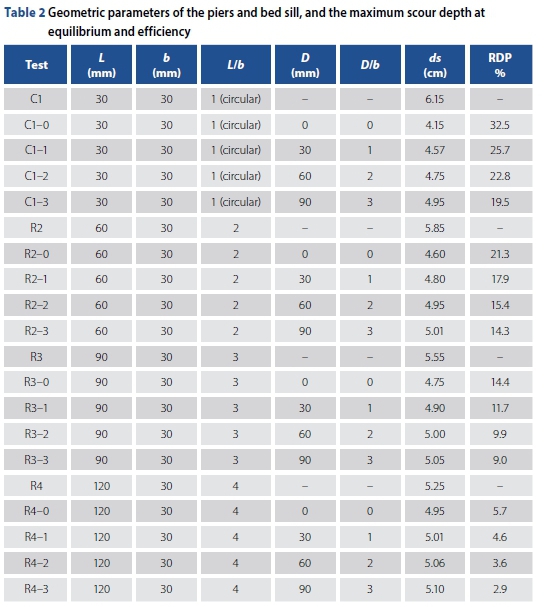
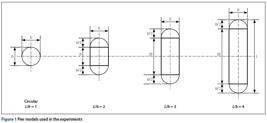
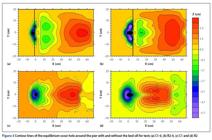
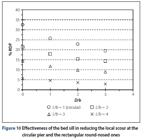
This study investigated the effectiveness of bed sills in reducing the scour depth with time at rectangular piers in a laboratory. Experiments were conducted just below the threshold of sediment motion (U/Uc = 0.95) for round-nosed piers with the length-to-width ratios of L/b = 1, 2, 3 and 4. Accordingly, a 1 cm thick PVC section as wide as the channel was used as the bed sill, which was flush with the bed and located at various distances, D, in the downstream of the piers, i.e. D/b = 0, 1, 2 and 3. It was found that the efficiency of the bed sill for a rectangular pier was significantly less than that for the circular one; there was a decrease in efficiency and scour depth with an increase of the pier length. The maximum efficiency obtained for the round-nosed piers with L/b = 1, 2, 3 and 4 was 32.5%, 21.3%, 14.4% and 5.7%, respectively. The application of a bed sill to reduce the local scour in round-nosed rectangular piers, when the length-to-width ratio exceeds 2, is therefore not recommended. Furthermore, the efficiency of the bed sill is the best when it is attached to the downstream end of the pier; its efficiency is decreased when increasing its distance from the pier.
bed sill; bridge; pier; local scour; rectangular piers
 Thumbnail
 Thumbnail
 Thumbnail
 Thumbnail
 Thumbnail
 Thumbnail
 Thumbnail
 Thumbnail
 Thumbnail
 Thumbnail
 Thumbnail
 Thumbnail
 Thumbnail