The issue of personal safety on dolomite: Update of a probability-based evaluation with respect to single-storey residential houses
Abstract
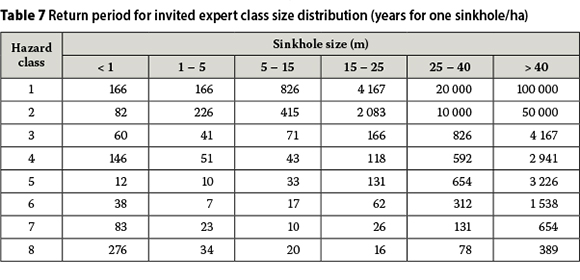
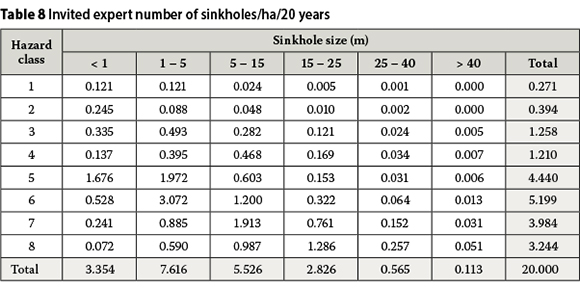
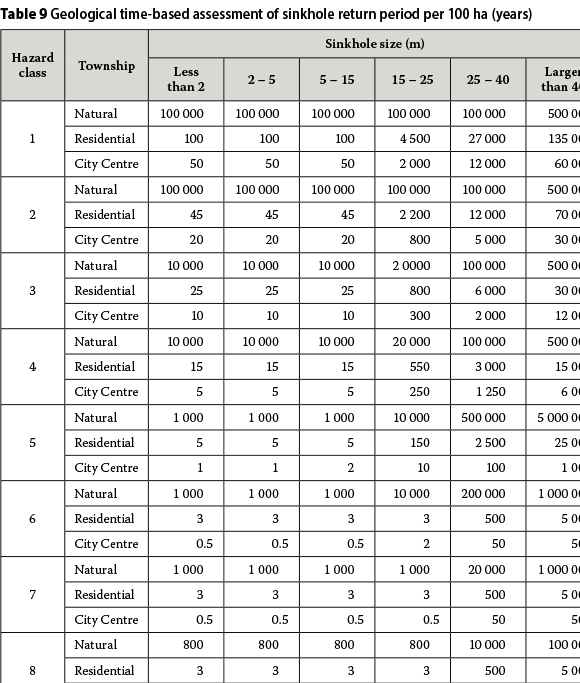
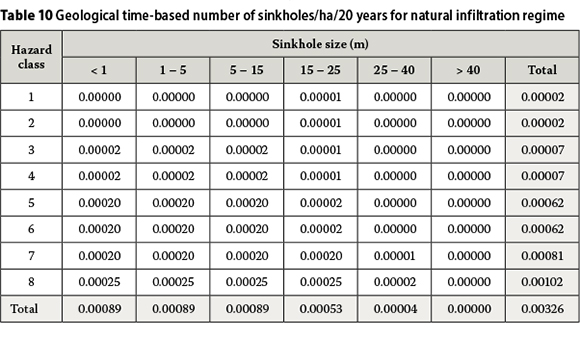
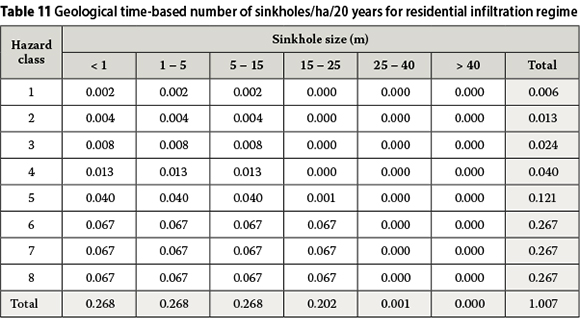
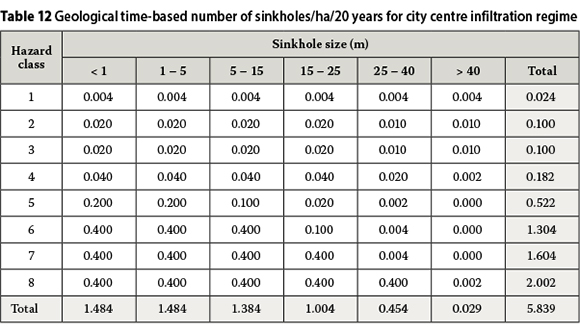
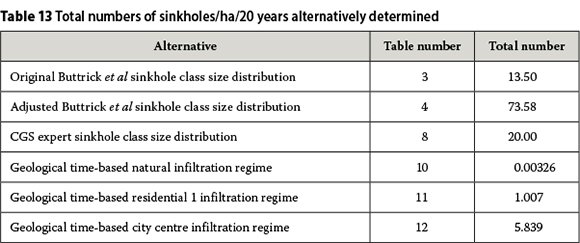
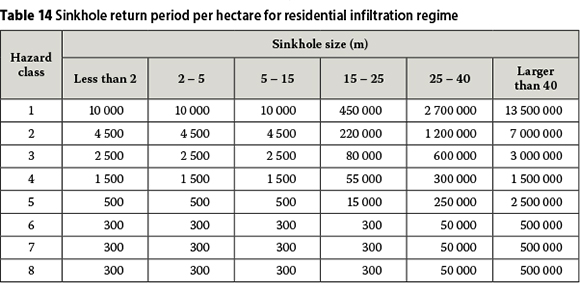
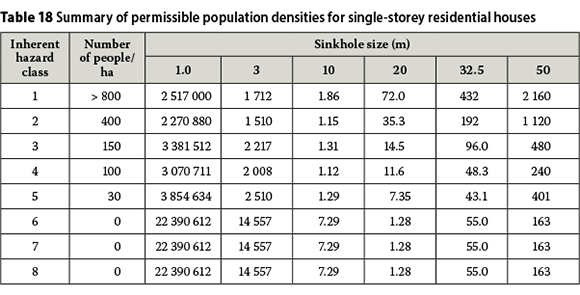
ABSTRACT Sinkholes may be treated as a chance phenomenon of which the likelihood of occurrence is a key parameter in determining their effect on public safety in the development of dolomite land. However, determining the likelihood of the occurrence of sinkholes remains a complex if not evasive problem in view of the sparsely populated datasets available at present. Three approaches to determining the likelihood of sinkhole occurrence that were developed over a period of time are reviewed and comparatively evaluated. The geological time-based return periods postulated for a residential infiltration regime in the third approach is applied to determine the maximum allowable population densities for a single-storey residential house development as an update of a previous paper on the problem. The maximum population densities based on this updated approach were found to be one and a half to three times larger than those previously considered to be allowable for Inherent Hazard Classes 1, 2 and 3. This relaxation on the historically established empirical rules on population density is considered by the authors to better represent observations in recent years.
dolomite; sinkhole; risk; hazard; coincidence; probability; single houses
 Thumbnail
 Thumbnail
 Thumbnail
 Thumbnail
 Thumbnail
 Thumbnail