Experiences of health sciences students residing on campus during university recess: A photovoice study
Abstract
In South Africa, health sciences students who live in university residence must often remain on campus during university recess to fulfil work-integrated learning obligations. Some of the observed challenges during this time are relocating to a temporary residence, having limited access to supplies and services as well as concerns about safety. These challenges were further aggravated by the Covid-19 pandemic. Yet, literature on factors and dynamics that affect student well-being and learning during these periods is sparse. The purpose of this study was therefore to explore the experiences of health sciences students residing on campus during recess at a specific university. Participatory research utilising the photovoice method was conducted. Four health sciences students volunteered to participate in three workshops to complete the research process. Captioned photographs and narratives were used to document their on-campus experiences during university recess. During a public photo exhibit, which concluded the project, essential stakeholders wrote anonymous reviews in the visitors' book. Collaborative thematic data analysis was performed, leading to the identification of four themes: (1) sharing personal space, (2) support services and structures, (3) security, and (4) personal development. The findings revealed a sense of lost belonging due to inadequate support during recess, which could affect student learning and well-being. Remaining on campus during recess can have adverse effects on students' learning and well-being, due to experiences of extreme loneliness and feelings of being out of place. At the same time, this period can create opportunities for quiet self-reflection and personal growth. Using methods such as photovoice to document these experiences can empower students to advocate for necessary institutional changes. Future research should include more participants from various disciplines and extended recess periods to better inform policies and guidelines.
Health sciences students; student experience; campus residence; university recess; photovoice
Abstract
KAKARETSO Mona Afrika Borwa, baithuti ba saense ya bophelo ba dulang mafelong a bodulo a yunivesithi hangata ba dula khamphaseng nakong ya phomolo ho phethela dithuto tsa bona tse kopanngwang le mosebetsi (work-integrated learning). A mang a mathata ao ba tobanang le ona nakong ena a akarelletsa ho fallela bodulong ba nakwana, ho haella ha disebediswa le ditshebeletso, le matshwenyeho ka tsa tshireletso. Mathata ana a ile a mpefala le ho feta nakong ya COVID-19. Le ha ho ntse ho le jwalo, ho haella dingolwa tse hlalosang hore na dintho tsena di ama jwang boiketlo le katleho ya thuto ya baithuti nakong eno. Sepheo sa patlisiso ena e ne e le ho hlahloba maiphihlelo a baithuti ba saense ya bophelo ba dulang khamphaseng nakong ya phomolo yunivesithing e itseng. Ho ile ha sebediswa patlisiso ya kopanelo ka mokgwa wa photovoice. Baithuti ba bane ba ile ba ithaopa ho nka karolo ditherisanong tse tharo tse ileng tsa phethela tshebetso yohle ya patlisiso. Ba ile ba nka dinepe tse nang le ditlhaloso le ho ngola dipale tse bontshang kamoo ba phetseng kateng khamphaseng nakong ya phomolo. Qetellong ya projeke, ho ile ha tshwarwa pontsho ya dinepe moo bankakarolo ba ka sehloohong ba ileng ba ngola maikutlo a sa tsejweng bukeng ya baeti. Tlhatlhobo ya data ka mokgwa wa dihlooho e ile ya bontsha dihlooho tse nne: (1) ho abelana sebaka sa poraefete, (2) ditshebeletso le mehaho ya tshehetso, (3) tshireletso, (4) le kgolo ya motho ka mong. Diphuputso di bontshitse hore ho haella ha tshehetso nakong ya phomolo ho baka ho lahlehelwa ke maikutlo a ho ikutlwa o le karolo ya setjhaba, e leng se ka amang boiketlo le katleho ya baithuti. Ho sala khamphaseng nakong ya phomolo ho ka ama baithuti hampe ka lebaka la ho ikutlwa ba le bang haholo le ho se be moo ba ikutlwang ba tshwanelwa teng. Empa nako ena e ka boela ya ba monyetla wa ho itekola, ho nahana ka bophelo le ho hola. Mekgwa e kang photovoice e fa baithuti matla a ho phetela maiphihlelo a bona ka tsela e matlafatsang, le ho buella diphetoho tse hlokahalang ho tsamaisa ditaba tsa thuto hantle. Patlisiso ya nakong e tlang e lokela ho akaretsa baithuti ba bangata ho tswa mafapheng a fapaneng, le ho kenyelletsa diphaposi tsa nako e telele ya phomolo, ho ntlafatsa melao le maano a yunivesithi.
Baithuti ba saense ya bophelo; maiphihlelo a baithuti; bodulo khamphaseng; phomolo ya yunivesithi; photovoice
Introduction and background
Students living on campus during university recess experience a unique and diverse set of circumstances, particularly those in health sciences programs. The students' experiences are shaped by the mandates of various health professions governing bodies such as the South African Nursing Council (SANC), the Health Professions Council of South Africa (HPCSA), the Allied Health Professions Council (AHPCSA), the South African Pharmacy Council (SAPC), and the South African Dental Technicians Council (SADTC) (NDoH, 2020). These bodies require students to attain clinical competence through work-integrated learning, preparing them for professional practice by bridging theoretical classroom education with clinical practice (Du Plessis, 2015; Lewis et al., 2010; Govender & Wait, 2017; Saad et al., 2023).
Dual engagement in academic and clinical learning significantly increases their stress levels (Langtree et al., 2018; Masri et al., 2019; Worku et al., 2020). Factors such as heavy academic workloads, long hours, assessments, fear of errors, residence safety concerns, high parental expectations, and financial pressures contribute to this stress (Worku et al., 2020). Additionally, confronting life-and-death scenarios in clinical settings could adversely affect their mental health, potentially leading to anxiety, depression, suicidal thoughts, and substance abuse, which in turn could impact their academic and clinical performance (Racic et al., 2017).
Moreover, to complete their clinical learning outcomes, health sciences students often remain on campus during recess, when life in campus residences presents additional challenges. Students face safety issues linked to substance abuse and disruptive behaviours from peers during events such as arts festivals on campus that attract public attendance (Gopal & Van Niekerk, 2018). At the research site, standard practice requires students to vacate residences during official recess, moving to temporary on-campus accommodations where they might share rooms with unfamiliar peers, which could limit their sense of privacy (Research Site Housing and Residence Affairs, 2021; Ndofirepi, 2015). During these periods, essential academic, administrative, health, and support services are typically unavailable, contrasting with the regular academic calendar when students have access to well-equipped facilities and supportive environments (Ndofirepi, 2015).
The Covid-19 pandemic brought additional complexities, with health sciences students returning to campus to meet clinical learning requirements under restructured living arrangements to comply with safety protocols, which often led to social isolation (Baloyi et al., 2022). These pandemic-induced changes highlighted gaps in understanding the experiences of health sciences students who remain on campus during recess. Various studies have explored student experiences at the research site (see Calitz, 2016; Coetzee, 2018; Mahlala, 2015; Martinez-Vargas et al., 2019; Mutanga, 2015; Ndeya-Ndereya & Van Jaarsveldt, 2013; Ts'ephe, 2015; Senkhe et al., 2018). However, none have specifically addressed the unique challenges faced by health sciences students residing on campus during recess or how the impacts of Covid-19 adjustments affected these students. This empirical gap is addressed in this article which is based on findings from data collected for a master's study. The purpose of the study was to explore the experiences of health sciences students residing on campus during recess at a specific university. Ultimately, the aim was to uncover the factors shaping their learning and well-being.
The article is divided into six main sections. Following this introduction is a review of literature, which provides an overview of research related to student residence issues in South Africa. Thereafter the methodology and photovoice process is described. This is followed by a description of the conceptual framework. The discussion of findings is then presented, followed by the conclusion.
The concern of whether student housing is a necessary component of university infrastructure or a social issue is an ongoing debate (Newell & Marzuki, 2018; Swift, 2019), but what is agreed upon in this literature in that on-campus accommodation serves students' educational, social and recreational requirements well. This is because residing on campus allows ease of access to libraries, sports facilities, and health services - all of which can contribute to an outstanding student experience (Newell & Marzuki, 2018; Swift, 2019; Xulu-Gama, 2019). Moreover, some research suggests that students who reside on campus academically outperform those who do not (Dlamini & Mafumbate, 2021; Makenzie, 2021; Mbandlwa, 2021; Van Zyl & Fourie-Malherbe, 2021).
Their academic achievement has been linked to the fact that living off campus can lead to increased financial strain from higher living and transportation costs, reduced access to campus resources, less time for academic activities due to commuting, and limited social integration - all of which may hinder students' academic success and well-being (Callo et al., 2021; Rammuki, 2019; Walker et al., 2022).
However, residing on campus does not guarantee a perfect student life experience. Safety concerns, crime and antisocial behaviour have been prominent issues in higher education settings (Myeza, 2025; Lekganyane et al., 2023). Incidents of crime such as theft and violence are prevalent, with reports of severe cases at various institutions in recent years (Govender, 2020; Mthethwa, 2021). Importantly, reports of crime often come from both sides; students who live on campus as well as those who live off campus (Ross & Rasool, 2019). This indicates that higher education institutions in general are challenged with ensuring a secure and safe living environment for students, which is crucial for their well-being (Buyung et al., 2018).
Both local and international literature emphasise that students' living arrangements and overall satisfaction with their residence play a significant role in their psychological health and academic success (Beiter et al., 2015; Alloh et al., 2018). Among the factors influencing the psychological health of students include their choice of university, and involvement in sports but also their adjustment to campus life (Pretorius & Blaauw, 2014; Campbell et al., 2022). Issues such as poor roommate relationships, struggles to fit in and isolation were found to negatively affect students' well-being (Worsley et al., 2021b).
Another impediment to student well-being is poor sleep and poor dietary habits alongside food insecurity, which are widespread among university students and affect both physical health and academic performance (Chung et al., 2008; Du et al., 2021). In South Africa, food insecurity is particularly challenging among low-income students, including those funded by the National Student Financial Aid Scheme (NSFAS) (Van den Berg & Raubenheimer, 2015; Sabi et al., 2020). Many of these students struggle to afford balanced meals (Broton & Goldrick-Rab, 2018; Ahmad et al., 2021). The fact that universities in South Africa provide limited access to healthy options in their food courts on campus further contributes to students' poor dietary choices (Clinton-McHarg et al., 2018; Malambe, 2021).
Literature therefore highlights that living on campus has many benefits, including ease of access to educational and recreational facilities, and limited time spent commuting to and from lectures. However, to bring nuance into discussions on the benefits of university residence life, these benefits should be considered in light of the identified challenges. Some of these nuances were brought into sharp relief during the Covid-19 pandemic which disrupted global higher education, forcing universities to temporarily close or transition to online teaching and learning (Chavarría-Bolaños et al., 2020). This shift created a more isolated educational experience and challenged fields reliant on hands-on training, such as the health sciences (Rose, 2020; Moodley et al., 2022). Health sciences students thus faced unique difficulties as they balanced remote learning with frontline roles in the pandemic response. Some of these unique challenges emerged in the findings of this article and illustrate how an exploration of student experiences, particularly during recess periods, offers a valuable opportunity to develop a deeper understanding of university residence life from a student perspective.
Research methodology
This study employed a participatory research paradigm, focusing on the collaborative creation of knowledge through the lived experiences of the researcher and co-researchers. Photovoice (Wang & Burris, 1997) was selected for its effectiveness in gathering and analysing qualitative and visual data, including drawings, photographs, captions, and group discussions. Traditionally used in marginalised communities, photovoice was adapted for a higher education context, involving health sciences students as the community of interest. Ethical approval was obtained from the Health Sciences Research Ethics Committee (HSREC) at the university. To enhance research integrity virtues-based ethics guided the process. The co-researchers held one another accountable to the seven Cs described by Zuber-Skerritt (2018) namely, communication, collaboration, commitment, coaching, critical and self-critical attitudes, competence, and compromise.
The study population consisted of all health sciences students living in campus residences at the university. This campus houses 18 residences, including a newly constructed co-ed health sciences residence with 250 beds. The exact number of health sciences students on campus during the study was unknown, as the department of Housing and Residence Affairs did not provide the statistics. Heterogeneous purposive sampling was employed to include information-rich co-researchers with diverse perspectives.
Although guidelines for photovoice suggest a ratio of five to six co-researchers per facilitator, only four students volunteered to participate. The research continued because the focus was on capturing the depth of experiences rather than a large sample size. Three workshops were held, with the first coinciding with Level 3 of the Covid-19 lockdown, restricting campus access to the selected students. To minimise exposure and time commitment, the first two workshops were merged, adhering to strict Covid-19 protocols, including sanitisation and social distancing. The third workshop involved co-researchers presenting their experiences through photos, illustrations and spoken narratives. The PHOTO1 acronym, used for photo analysis, and the VOICE2 principle, emphasising the importance of each participant's perspective, guided the analysis. The final workshop, held at a local restaurant, followed Covid-19 safety measures. Co-researchers and supervisors contributed voluntarily, with refreshments provided.
The study concluded with a public exhibition at the research site which was held on 4 April 2022. Delayed by two years to accommodate logistical and approval processes, the exhibition allowed students and viewers to engage with the photographs and provide feedback, fostering a broader dialogue than during the pandemic.
In a typical photovoice study, co-researchers individually craft their narratives by selecting a limited number of photographs that align with a specific storyboard. For instance, a collection might consist of a series of six or more photos that capture their unique experiences of staying on campus during recess. However, this study took a different approach. Instead of presenting each person's photo essay separately, the photo essays were organised according to themes that were collectively developed. This method was selected to highlight the unity among co-researchers and the common goal of increasing awareness of campus life during recess.
The process of analysis utilised a collaborative coding approach. In the initial phases, codes were generated inductively from group conversations where co-researchers freely expressed their interpretations of the pictures, aligning with participatory visual methodologies that centre student voice (Mitchell et al., 2018). Categories included examples such as noise levels, food security, and social isolation. These inductive insights were subsequently integrated with a deductive approach, as relevant literature on student well-being and residential life (Fife & Gossner, 2024) was revisited to validate and refine the thematic framework. The process incorporated validation by means of member checking (Birt et al., 2016). The draft themes were returned to the group for review during the workshops, and co-researchers engaged in active discussions on how to handle overlapping concepts. For instance, there was a lively discussion on whether access to healthcare should be independent or part of support services. These conversations not only improved the credibility of the findings but also fostered the cooperative element of the study (Kara, 2020). Quotes from the exhibition viewers, including the stakeholders, staff members and other attendees, further validated the results. A reflexive thematic analysis process was used in this study (Alhojailan, 2012; Kiger & Varpio, 2020; Vaismoradi & Snelgrove, 2019). Additionally, the workshop facilitator diligently documented her role in shaping the analysis and maintained a reflective diary during the workshops.
In the end, the themes were collaboratively recognised, reflected on, and selected for incorporation into the public exhibition. The discussed topics comprised: personal space sharing, diversity, hygiene, noise levels, loneliness and isolation, support systems and services, help with relocation, access to campus amenities, healthcare service access, security, personal safety, food availability, character development, and personal growth. These were subsequently grouped into four larger categories: (i) sharing personal space, (ii) support systems and services, (iii) security, and (iv) personal growth and character development. Accompanying the explanations of the photographs are quotes from the co-researchers' captions, as well as feedback from exhibition viewers, who are identified by the letter 'V' and their visitor book number. Co-researchers names are substituted by pseudonyms as established in the first workshop. In the findings section, the four main themes are explored in detail and supplemented with additional data, including photo captions, workshop discussion excerpts, and transcriptions from the visitors' book. Next, the conceptual framework that guided the interpretation of the themes is described.
Conceptual framework
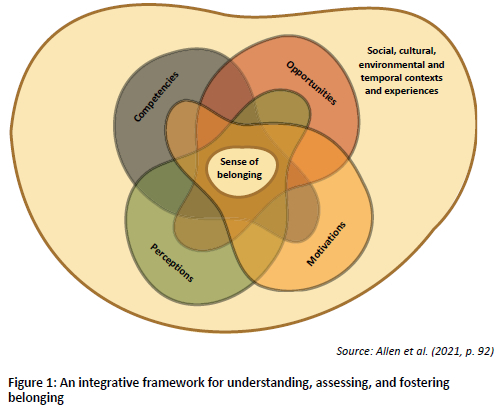
In their narrative review of literature that addresses notions of belonging, Allen et al. (2021) define sense of belonging as a subjective feeling that one is an integral part of their surrounding systems. These systems can range from individual and collective experiences within and outside of families, to school environments or physical places. As Allen et al. (2021) highlight, having a sense of belonging is a fundamental human need that can affect various dimensions of well-being including the mental, physical, and social. In the context of higher education research, studies have indicated that having a strong sense of belonging within one's university matters not only for students' academic achievements and success (Ahn & Davis, 2019) but also for their well-being (Calitz, 2016) and for their expansive learning outcomes (Walker et al., 2022). As the findings in the next section show, there are various ways in which students' sense of belonging on university campuses can be disrupted during recess, with implications for their well-being and learning. Drawing on the framework proposed by Allen et al. (2021), we conceptualise students' sense of belonging in this article as a dynamic feeling and experience that is shaped by four interrelated components: (1) competencies for belonging; (2) opportunities to belong; (3) motivations to belong; and (4) perceptions of belonging.
Competencies for belonging
The first component refers to having abilities and skills to feel connected to and relate with other people, for example through identifying with their cultural background and developing a sense of shared identity (Allen et al., 2021). It also refers to being able to develop a sense of connection to place (Allen et al., 2021). In the context of this study, this could mean the ability to develop a shared sense of identity with fellow health sciences students across different disciplines; behave in ways that are consistent with professional norms in the health sciences faculty; feel at home on the university campus or feel at ease with the university institutional culture and values.
Opportunities to belong
The second component is related to the availability of groups, people, places, times, and spaces that enable belonging to occur (Allen et al., 2021). This component considers the fact that the ability to connect with others is useless in the absence of opportunities to connect (Allen et al., 2021). For instance, students from rural communities could face unique challenges with the school to university transition, especially when having to migrate to urban universities (Walker & Mathebula, 2019). They might have social competencies, but their circumstances (e.g. not having the confidence to speak to new peers or spending limited time on extra-curricular activities within the university space) could limit opportunities to foster belonging.
Motivations to belong
The third component refers to the basic need for people to be accepted, to engage in social interactions and to form connections with others (Allen et al., 2021). Being motivated to belong means enjoying positive interactions with others, seeking out interpersonal connections, having positive experiences of long-term relationships, and on the flip side, disliking negative social experiences, and resisting the loss of attachments (Allen et al., 2021). Students who are motivated to belong will actively seek out similarities and things in common with fellow students, be it in terms of culture, ethnic background or nationality, degree program and field or study, or other belonging attributes.
Perceptions of belonging
The fourth and final component is related to a person's subjective feelings and experiences as well as thoughts and evaluations of whether they fit in with those around them (Allen et al., 2021). This component considers scenarios where a person has skills to connect to others, opportunities to belong and the motivation to belong, but still feels out of place and disconnected (Allen et al., 2021). In the context of our study, this could happen for instance when students from low-income households question their belonging in a university where socio-economic class and/or wealth disparities are easily observable. Being unable to afford expensive items from the campus food court and being unable to afford a laptop or a car, while observing other students afford such things, can make poorer students feel like they do not fit in or that they do not belong.
We understand the four components discussed above as a dynamic social system in the sense that they reinforce and influence one another over time, as students move through different social, environmental, and temporal contexts and experiences during their time at university. We thus borrow the framework proposed by Allen et al. (2021) - see Figure 1 - but we apply it in the context of higher education, and specifically to the experiences of health sciences students who remain on campus during recess. This helped us not only to explain our interpretation of the data in more conceptual terms, but it also helped us to think about university policies and practices that unwittingly hinder students' sense of belonging under normal circumstances.
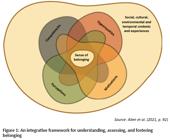
In the findings discussion we explain how the four components dynamically interact with and are supported or hindered by the university campus milieu during recess. The evidence provided in the discussion of findings illustrates different ways in which these components work together to result in varying levels of students' sense of belonging. The discussion that follows our presentation of findings reflects on some implications for health science students' well-being and learning.
Findings
Theme one: Sharing personal space
The theme of sharing personal space will be explored and broken down into subthemes in the following order: diversity, hygiene, noise levels, isolation and loneliness, and the effects of Covid-19. For many students, sharing their personal space with strangers is inevitable, given the diverse and inclusive nature of South African higher education institutions. This often involves living with someone of a different race, age, culture, or academic background, which can lead to discomfort. For instance, Yesum, an introvert, found it challenging to coexist with her extroverted roommate who constantly wanted to talk, leading to misunderstandings. Nice shared similar concerns, noting the discomfort of sharing space with a roommate who was always present, particularly during practical work periods when she needed more privacy.
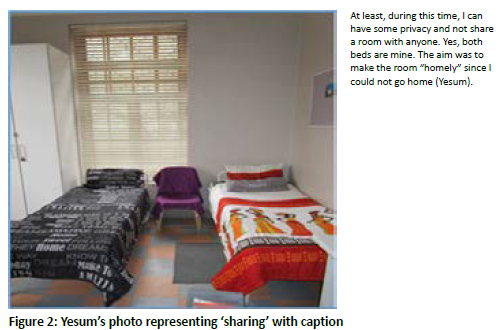
Despite acknowledging the diversity, the co-researchers expressed unease and a preference for not sharing their space with others, citing noise, silence, and unhygienic conditions as significant stressors. The lack of cleanliness during recess was a constant reminder that they were away from home, intensifying feelings of isolation and loneliness. These issues were exacerbated by the Covid-19 pandemic, which imposed unfamiliar rules and restrictions, further impacting students' mental well-being. Yesum highlighted the importance of personal space by capturing a photograph that depicted her enjoying a homely environment when alone.
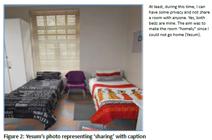
Studies by Barsukova et al. (2015) and Costa (2024) indicate that students greatly appreciate personal space, however differing personalities in cohabiting situations frequently create difficulties. This diversity - be it in personality, social background, or academic routes - shapes opportunities and drives to belong, which are two essential elements in Allen et al.'s (2021) framework. Dutta et al. (2021) emphasise that fostering a sense of belonging through inclusive policies and enhanced facilities is crucial for student well-being and learning.
Diversity
Understanding how we view variety among our peers - including racial, ethnic, gender, and social class - as well as their abilities, languages, and study programs, is vital, according to Trentham et al. (2020). A student's personality and character have an enormous impact on how well they acclimate to university life. Bold, who identifies as a social butterfly, found it simpler to accept variety. According to Dutta et al. (2021), a sense of belonging is cultivated by feeling at ease with peers and is vital for learning and growth, a phenomenon, elaborated by Allen et al. (2021), which is shaped by competencies, opportunities, motivations, and feelings of belonging. Institutions must consequently have strong policies to foster inclusion and address discrimination.
Research indicates that although there are additional resources available to the university, facilities including sanitation and hygiene continue to require improvement (KabirI et al., 2021). The ongoing deficiencies in university facilities, especially in sanitation and hygiene, directly influence students' opportunities and feelings of belonging, as substandard services could cause them to feel less at home on campus.
Hygiene
Based on experience, hygiene in university residences during recess has always been a significant issue. Three co-researchers highlighted inadequate cleaning services during this time. Nice mentioned that people leave food to rot in the kitchen, Bold noted that refuse removal is neglected, and Yesum observed that bathrooms often run out of toilet paper and are poorly maintained. Viewers of the exhibition were able to relate to the images portraying these problems because they had experienced comparable inconveniences, such as running out of toilet paper and having to buy their own (V23). In addition to hygiene issues, the campus setting during recess could also impact students' comfort and well-being, as noise levels - both inside and outside - further influence their sense of belonging and capacity to concentrate.
Noise levels
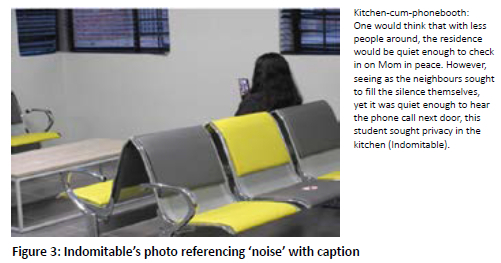
During the workshops, co-researchers were particularly concerned about noise levels during university recess. Some, like Nice, enjoyed the quieter environment with fewer people around. However, Yesum highlighted the persistent noise from first-year students and external events, like concerts at a nearby stadium, that disrupted the peace. While some students and exhibition viewers noted the quietness during recess as a time for reflection, others were troubled by noise from both internal and external sources. Thattai et al. (2017) and Chere and Kirkham (2021) emphasise that noise can negatively impact health and learning. A viewer, V45, also stressed the need for quiet spaces, especially for students who stay behind during recess.
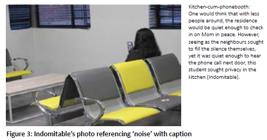
Noise can negatively affect academic performance and frustrate some students. During the Covid-19 pandemic, with fewer students on campus and social events either prohibited or limited, the environment became quieter and more peaceful. While some students appreciated this calm, the silence also led to feelings of loneliness and isolation. Achieving this balance is essential, as restricted chances for interaction and diminished feelings of belonging may lead to students experiencing isolation and loneliness.
Isolation and loneliness
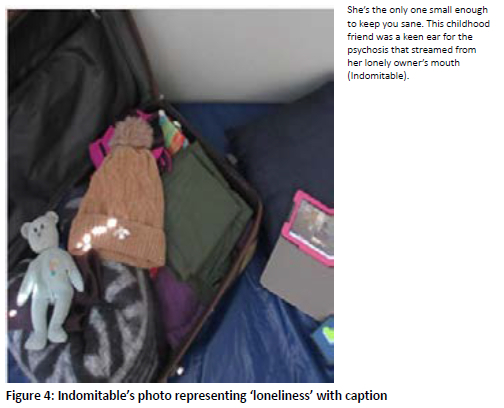
Students at tertiary institutions often experience isolation and loneliness, impacting their mental health. Worsley et al. (2021a) and Mzileni (2018) note that loneliness is common, with some students dissatisfied with the support offered in residences. Factors contributing to mental health issues include bereavement, family and relationship problems, peer pressure, trauma, anxiety, mood disorders, psychotic disorders, and substance abuse (Naidoo & Cartwright, 2020). Depression, anxiety, and loneliness tend to increase when students feel uncomfortable in their living space due to sharing with unfamiliar individuals (Candini et al., 2021; Worsley et al., 2021a). The co-researchers shared how Covid-19 intensified their feelings of loneliness and isolation, which Indomitable captured in a photograph expressing these emotions.
The childhood toy depicted in Figure 4 offered Indomitable consolation and mental stability during recess, as she lacked other forms of support. At the photovoice exhibition, both a parent and an alumnus resonated with the loneliness and isolation shown in the photograph. The parent shared:
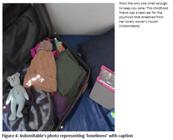
I relate because my daughter also experiences loneliness and stress when her roommate is away and she is alone, living far from home. It would help if there were measures for students who stay behind while others are with their families, as this loneliness causes them stress. (V15)
An alumnus (V6) reflected that, as a former student and staff member, the image reminded them of the isolation students endure, exacerbated by diminished access to resources during recess. The co-researchers noted that while loneliness has always been an issue, the Covid-19 regulations intensified these feelings.
Effects of Covid-19
As this study was conducted during the Covid-19 pandemic its effects were a reality, not only in the requirement to observe protocols during data collection, but in the lives of the co-researchers. At the university where this study was conducted, Covid-19 compliance officers were appointed to advise and assist with compliance to regulations and protocols.
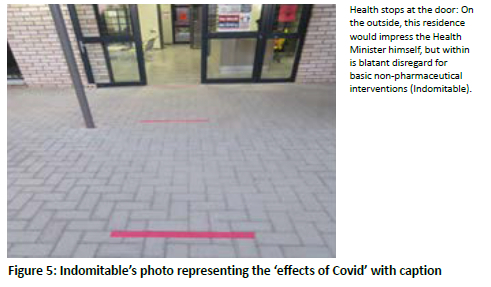
Indomitable, however, believed that, during recess period, the students did not adhere to Covid-19 regulations. In her photograph she captured that everything looked good on the outside, however, there was little adherence to basic rules and protocols on the inside.
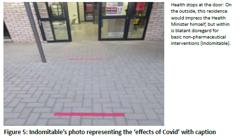
This period, during which drastic protocols and measures had to be implemented for the well-being of the students and the community at large, was one of a kind.
Collectively, the sub-themes demonstrate how the sharing of personal space affects students' sense of belonging through the interactions of diversity, hygiene, noise levels, loneliness, and the impact of Covid-19. According to Allen et al.'s (2021) framework, difficulties in these aspects hinder opportunities for connection and the motivation to interact with peers, while also diminishing feelings of comfort and competence in the residential setting. Consequently, the co-researchers faced increased stress, isolation, and diminished well-being, which in all probability destructively impacted their capacity to focus, feel enthused and engage completely in their educational pursuits.
Theme two: Support services and structures
Support services and structures are essential for creating a positive environment that helps students succeed academically, develop personally, and maintain their overall well-being. This theme encompasses sub-themes that relate to assistance with moving, access to campus facilities, and access to healthcare services.
Assistance with moving
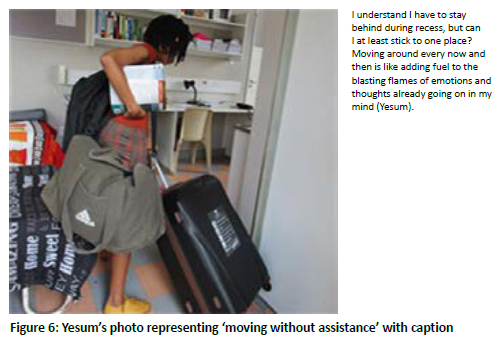
Martin (2021) notes that accommodation changes often stress pupils. Moving their possessions to different residences proved to be very difficult for the co-researchers. As Nice expressed, they had to bring their own refrigerators which they were not strong enough to carry themselves. Additionally, this massive fridge was carried down the stairs alone. That was the last time Nice moved the fridge out. V26 wrote in the visitors' book:
As health sciences students we are expected to return earlier to school. We are allocated to different residences every time, sometimes the support structure provided is not enough or provided at all. I relate with both those. This tends to be problematic as a student because we can't settle into a residence, knowing you might be told to move back to your own residence at any time. This also affects how one gets comfortable academically.
Yesum visually documented the struggle of moving belongings without adequate assistance.
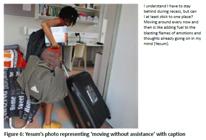
Their lack of physical strength and inability to move large appliances put the co-researchers at a disadvantage when they had to move physical objects that were heavy and burdensome. These physical constraints not only posed practical difficulties for the co-researchers but also impacted their chances and feelings of belonging, emphasising how access - or the absence of it - to campus resources can affect students' overall sense of inclusion and well-being (Allen et al., 2021).
Access to campus facilities
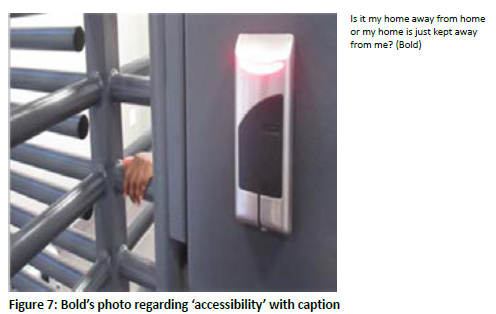
Price et al. (2003) and Nwedu (2019) explain that, when universities recruit students, they market the availability and quality of accommodation, together with other accessible facilities (canteen, sport facilities, academic facilities, etc.). During recess times, co-researchers reported that these vital facilities were not operational - the very same facilities they were promised would be operational throughout to assist them. Indomitable shared:
You cannot really be social in the gazelles during holidays because some students will be studying there. And most gazelles are not homey; there are plastic chairs stacked in ours and a projector. You are not even allowed to touch the computer. I feel like the mere fact that you have a student card means that you have access to the entire campus, why should I be treated like a prisoner of some section?
Bold captured a photograph illustrating that the inaccessibility to facilities made her feel "imprisoned" and kept her away from home.
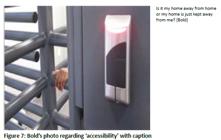
Concerning these sentiments of 'imprisonment', the co-researchers indicated that the unavailability of facilities served as a continuous harsh reminder that they were not in their own space, and limited access to campus healthcare further worsened their experiences. These obstacles demonstrate that restricted access to vital resources can hinder students' abilities to interact with their surroundings, diminish chances and motivations for participation, and adversely influence their feelings of belonging, ultimately impacting their wellness and sense of inclusion (Allen et al., 2021).
Access to healthcare services
Section 27 of the Constitution of South Africa (1996) states that access to healthcare is a constitutional right in South Africa. We noticed during discussions and feedback that we all had experiences of being either sick or in need of medical attention during university recess. However, during this time the on-campus health facility was closed or operated with restricted hours.
"If you are sick, you are sick until you heal". (Yesum)
The difficulties encountered regarding relocation, access to vital campus amenities, and health services highlight not only logistical and administrative flaws but also the emotional and psychological weight students subsequently carry. These structural constraints hinder students' capacity to feel stable, safe, and supported - elements that are crucial for their academic involvement, social integration, and emotional health. These interruptions directly influence students' feelings of social connectedness, safety, and comfort within their surroundings (Allen et al., 2021). In the absence or inconsistency of these support mechanisms, students might find it difficult to view themselves as valued members of the university community, thus diminishing their overall feeling of belonging.
Safety is also a concern for students, particularly when students must go off campus to seek help, especially at night. The general safety and security of the students was flagged as one of their major concerns.
Theme three: Security
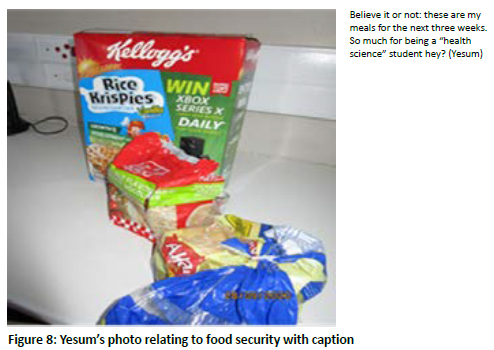
This theme contains no sub-themes, since only a single issue was classified here. The co-researchers voiced that personal safety was a major cause for concern, because there were fewer people on campus during recess. The presence of protection services personnel was rare, and this contributed to feelings of uncertainty and mistrust. Even with measures in place for safety on campus, for example, panic buttons, students still felt unsure and doubted whether protection services would respond. The co-researchers expressed that they perceived a distant relationship between students and campus protection services According to Allen et al. (2021), limitations on skills, chances, motivations, and viewpoints can weaken students' general feelings of belonging and safety. Not only was personal safety a concern, but food safety as well as captured by Yesum.
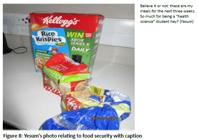
The institution has organisations in place to assist students with food security. These are well established and known to students, however, the efficiency thereof, especially during recess period, was deemed inadequate. Indomitable agreed that there was functional support in their residence during university recess through a foodbank. However, the protocols of the process, she felt, were belittling. She stated:
There is something like a foodbank in our residence and I went to the relevant person to go ask about it and hoping for a referral to maybe the 'No Student Hungry campaign'. That person just told me to send them a message of what I need, and they will bring it to me. I just felt I am not a beggar; I am not going to beg like that. (Indomitable)
The co-researchers typically faced challenges with nutrition and food security during recess, depending on the food they possessed or were able to purchase. The shutdown of campus dining services during recess and due to Covid-19 measures intensified this insecurity, especially for students from underprivileged backgrounds.
Using Allen et al.'s (2021) conceptual framework, these experiences can be interpreted through the four interconnected aspects of belonging: restricted access to nutritious food limited students' full engagement with campus life; inadequate competencies, such as budgeting or cooking under challenging conditions, further obstructed their adaptation; their motivation to belong diminished as the anxiety of food insecurity lowered their desire or energy for social participation; and their feelings of belonging were compromised, resulting in a sense of disconnection and marginalisation. These elements demonstrate how fundamental requirements such as food security are closely connected to students' overall feelings of inclusion, well-being, and academic involvement on campus.
Theme four: Personal development
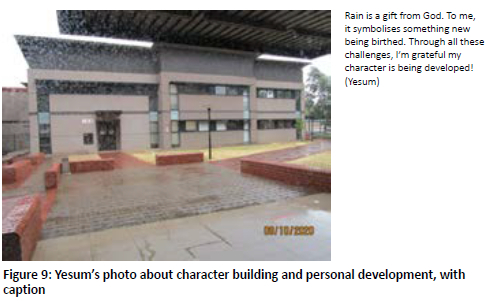
The theme of personal development also contains a single focus without sub-themes. The co-researchers expressed that, despite their struggles in difficult periods, an opportunity for personal growth and development was unexpectedly created. They found themselves having to cultivate various skills to navigate and survive - skills that they believed would be beneficial in their lives beyond graduation. Through the sharing of their experiences, the co-researchers discovered their own strengths and capabilities, as these challenging circumstances compelled them to become resilient individuals. Nice mentioned:
"... even if it was difficult... I told myself it's okay, it has to be done". (Nice)
Yesum captured her gratitude:
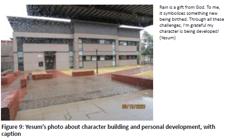
The co-researchers also expressed gratitude, realising that overcoming obstacles was an essential, if not desired, part of the process. The acknowledgment of the circumstances they faced emphasised the necessity of improving conditions for students during recess while also highlighting the value of recognising the resources and assistance that is available, even if their access is limited.
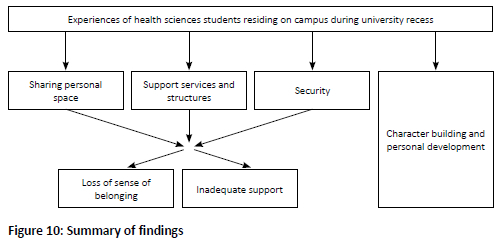
To conclude, as summarised in Figure 10 below, students' experiences of living on campus during university recess can be clustered into four themes. Depending on their interaction, these experiences can either limit or improve competencies, opportunities, motivations, and perceptions of belonging (Allen et al., 2021).
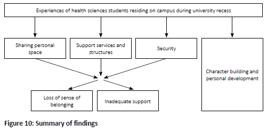
Theme four highlights how students, despite facing significant challenges during university recess, experienced unexpected personal growth. They developed resilience, independence, and problem-solving skills that contributed to their overall maturity. This personal development enhanced their sense of competence and self-worth, aligning with Allen et al.'s (2021) conceptual framework of belonging. Specifically, it strengthened their perceived ability to cope and succeed, which in turn reinforced their motivation to engage and belong within the university community.
Conclusion
The findings presented in this article suggest that health sciences students' living conditions during recess can be improved through revision of policies and enhancing students' competencies, opportunities, motivations, and perceptions of belonging. As discussed in the review of literature, sense of belonging has implications for students' educational experiences and well-being. The findings thus underscore the significance of providing adequate support and resources to ensure student well-being, not only during term time, but also during recess. Importantly, students' reflections also highlighted the transformative nature of their experiences of remaining on campus during recess, including the personal growth they experienced, and their recognition of the value of resilience and gratitude. This indicates that their experiences are not only negative -there are positive aspects too.
As such, the findings have brought to light the nature of university dynamics and practices during recess - some of them problematic - that should be altered over time. Based on the findings, the following changes can be recommended to universities: updating the policies regarding moving between residences during recess; providing more hands-on assistance to students who are moving their belongings; providing more nutritious food options on campus and organising food drives with more care; enhancing access to facilities and healthcare; guaranteeing that cleaning services are continually provided and expanding security presence. Within reason, these measures need to be taken continuously across the academic year.
Considering the contextual nature and limited number of participants of this research, larger scale studies, including students from various disciplines and institutions, should be conducted to better inform current and future policies and guidelines. Reflecting on the small number of co-researchers: it is possible that persons who are not comfortable with photography or self-disclosure refrained from participating in the photovoice study. Whilst the timeframe of data collection accentuated the difficulties of residing on campus during recess, the restrictions imposed by the Covid-19 pandemic also limited opportunities for the co-researchers to fully capture their experiences on camera.
Ethics statement
Access to the co-researchers was gained by requesting approval from the HSREC and permission from the relevant gatekeepers, including, the Dean of the Faculty of Health Sciences and the Dean of Students. The authors collaborated with Housing and Residence Affairs, the residence heads and residence committees to identify and approach co-researchers. A campus access Covid-19 permit was issued.
Potential conflict of interests
The authors confirm that no personal or financial commitments influenced the writing of this article.
Funding acknowledgementThe School of Nursing, Faculty of Health Sciences and the Centre for Graduate Support at the University of the Free State partially funded the study.
References
Acknowledgements
The SARChI Chair in Higher Education and Human Development provided the necessary equipment for this study. The authors are grateful for the constructive feedback from the anonymous peer reviewers.
Literature review
- Ahmad, N. S. S., Sulaiman, N., & Sabri, M. F. (2021). Food insecurity: Is it a threat to university students' well-being and success? International Journal of Environmental Research and Public Health, 18(11), 5627. https://doi.org/10.3390/ijerph18115627
- Ahn, M. Y., & Davis, H. H. (2019). Four domains of students' sense of belonging to university. Studies in Higher Education, 45(3), 622-634. https://doi.org/10.1080/03075079.2018.1564902
- Alhojailan, M. I. (2012). Thematic analysis: A critical review of its process and evaluation. West East Journal of Social Sciences, 1(1), 39-47. Retrieved from https://www.westeastinstitute.com/journals/wp-content/uploads/2013/02/4-Mohammed-Ibrahim-Alhojailan-Full-Paper-Thematic-Analysis-A-Critical-Review-Of-Its-Process-And-Evaluation.pdf
- Allen, K.-A., Kern, M. L., Rozek, C. S., McInerney, D. M., & Slavich, G. M. (2021). Belonging: A review of conceptual issues, an integrative framework, and directions for future research. Australian Journal of Psychology, 73(1), 87-102. https://doi.org/10.1080/00049530.2021.1883409
- Alloh, F. T., Tait, D., & Taylor, C. (2018). Away from home: A qualitative exploration of health experiences of Nigerian Students in a UK university. Journal of International Students, 8(1), 1-20. https://doi.org/10.32674/jis.v8i1.149
- Baloyi, O. B., Jarvis, M. A., & Mtshali, N.G. (2022). A report of a South African university's Journal of Educational and Psychological Research management of undergraduate nursing students' teaching and learning following the COVID-19 interruptions. Health SA Gesondheid, 27(0), 1-7. https://doi.org/10.4102/hsag.v27i0.1816
- Barsukova, O., Mozgovaya, N. N., & Krishchenko, E. (2015). The students' representations of ambition, personal space and trust. Mediterranean Journal of Social Sciences, 6(6 S1), 290-297. http://dx.doi.org/10.5901/mjss.2015.v6n6s1p290
- Birt, L., Scott, S., Cavers, D., Campbell, C., & Walter, F. (2016). Member checking: A tool to enhance trustworthiness or merely a nod to validation? Qualitative Health Research, 26(13), 1802-1811. https://doi.org/10.1177/1049732316654870
- Broton, K. M., & Goldrick-Rab, S. (2018). Going without: An exploration of food and housing insecurity among undergraduates. Educational Researcher, 47(2), 121-133. https://doi.org/10.3102/0013189X17741303
- Buyung, M. R., Shafii, H., Yusoff, N. A., & Rewahidayu Buyung, N. (2018). The concept of sustainable residential college: A study on the provision of facilities in the public university residential colleges in Malaysia. International Journal of Academic Research in Business and Social Sciences, 8(4), 1167-1184. http://dx.doi.org/10.6007/IJARBSS/v8-i4/4151
- Calitz, T. M. L. (2016). A capabilities approach to student experiences of pedagogy, power and well-being at a South African university [PhD Thesis, University of the Free State]. Retrieved from https://www.researchgate.net/publication/301486357_A_capabilities_approach_to_student_experiences_of_pedagogy_power_and_well-being_at_a_South_African_university
- Callo, E. F., Alegoria-Groom, S., & Matriano, E. (2021). Case analysis of college students living far distance from school. Columban College, Olongapo City.
- Campbell, F., Blank, L., Cantrell, A., Baxter, S., Blackmore, C., Dixon, J., & Goyder, E. (2022). Factors that influence mental health of university and college students in the UK: A systematic review. BMC Public Health, 22, 1778. https://doi.org/10.1186/s12889-022-13943-x
- Chavarría-Bolaños, D., Gómez-Fernández, A., Dittel-Jiménez, C., & Montero-Aguilar, M. (2020). E-learning in dental schools in the times of COVID-19: A review and analysis of an educational resource in times of the COVID-19 pandemic. Odovtos International Journal of Dental Sciences, 22(3), 69-86. https://www.redalyc.org/journal/4995/499566200011/
- Chere, B., & Kirkham, N. (2021). The negative impact of noise on adolescents' executive function: An online study in the context of home-learning during a pandemic. Frontiers in Psychology, 12, 715301. https://doi.org/10.3389/fpsyg.2021.715301
- Chung, F., Yegneswaran, B., Liao, P., Chung, S. A., Vairavanathan, S., Islam, S., Khajehdehi, A., & Shapiro, C. (2008). STOP questionnaire: A tool to screen patients for obstructive sleep apnea. Anesthesiology, 108(5), 812-821. https://doi.org/10.1097/aln.0b013e31816d83e4
- Clinton-McHarg, T., Janssen, L., Delaney, T., Reilly, K., Regan, T., Nathan, N., Wiggers, J., Yoong, S. L., Wyse, R., Grady, A., Lecathelinais, C., & Wolfenden, L. (2018). Availability of food and beverage items on school canteen menus and association with items purchased by children of primary-school age. Public Health Nutrition, 21(15), 2907-2914. https://doi.org/10.1017/S1368980018001726
- Coetzee, L. (2018). A Kristevian analysis on disability at a South African university [Unpublished master's dissertation]. University of the Free State.
- Costa, A. R. (2024). The physical dimensions of the home learning environment and its impact on young people's learning motivations. Cogent Education, 11(1), 2322862. https://doi.org/10.1080/2331186X.2024.2322862
- Dlamini, S. M., & Mafumbate, R. (2021). Factors leading to choice of staying off-campus by first year students in Eswatini universities. UNESWA Journal of Education, 4(1), 27-40. https://ojs.uneswa.ac.sz/index.php/ujoe/article/view/474
- Du, C., Zan, M. C. H., Cho, M. J., Fenton, J. I., Hsiao, P. Y., Hsiao, R., Keaver, L., Lai, C.-C., Lee, H., Ludy, M.-J., Shen, W., Swee, W. C. S., Thrivikraman, J., Tseng, K.-W., Tseng, W.-C., Almotwa, J., Feldpausch, C. E., Folk, S. Y. L., Gadd, S., & Wang, L. (2021). Health behaviours of higher education students from 7 countries: Poorer sleep quality during the COVID-19 pandemic predicts higher dietary risk. Clocks & Sleep, 3(1), 12-30. https://doi.org/10.3390/clockssleep3010002
- Du Plessis, J. G. E. (2015). A work-integrated learning education and training programme for radiography in South Africa [Unpublished PhD Thesis]. University of the Free State.
- Dutta, N., Maini, A., Afolabi, F., Forrest, D., Golding, B., Salam, R. K., & Kumar, S. (2021). Promoting cultural diversity and inclusion in undergraduate primary care education. Education for Primary Care, 32(4), 192-197. https://doi.org/10.1080/14739879.2021.1900749
- Fife, S. T., & Gossner, J. D. (2024). Deductive qualitative analysis: Evaluating, expanding, and refining theory. International Journal of Qualitative Methods, 23. https://doi.org/10.1177/16094069241244856
- Gopal, N., & Van Niekerk, C. (2018). Safety in student residences matters! South African Journal of Higher Education, 32(3), 172-188. https://doi.org/10.20853/32-3-2524
- Govender, S. (2020, June 23). Safety a priority at new student accommodation. Herald LIVE. https://www.theherald.co.za/news/2020-06-23-safety-a-priority-at-new-student-accommodation/#google_vignette
- Govender, C. M., & Wait, M. (2017). Work integrated learning benefits for student career prospects - mixed mode analysis. South African Journal of Higher Education, 31(5), 49-64. https://doi.org/10.20853/31-5-609
- KabirI, A., Roy, S., Begum, K., Kabir, A. H., & Miah, M. D. S. (2021). Factors influencing sanitation and hygiene practices among students in a public university in Bangladesh. PLoS ONE, 16(9), 1-19. https://doi.org/10.1371/journal.pone.0257663
- Kara, H. (2020). Creative research methods: A practical guide (2nd ed.). Policy Press.
- Kiger, M. E., & Varpio, L. (2020). Thematic analysis of qualitative data: AMEE Guide No. 131. Medical Teacher, 42(8), 846-854. https://doi.org/10.1080/0142159X.2020.1755030
- Langtree, E. M., Razak, A., & Haffejee, F. (2018). Factors causing stress among first-year students attending a nursing college in KwaZulu-Natal, South Africa. African Journal of Health Professions Education, 10(2), 90-95. https://hdl.handle.net/10520/EJC-10ddca9196
-
Lewis, M. P., Holtzhausen, N., & Taylor, S. (2010). The dilemma of work integrated learning (WIL) in South African higher education - The case of Town and Regional Planning at the University of Johannesburg. Town and Regional Planning, 57, 25-36. DOI: 10.38140/trp.v57i0.428
» https://doi.org/10.38140/trp.v57i0.428 - Mahlala, N. (2015). Exploring higher education capabilities of black women graduates towards personal and professional development [Master's dissertation, University of the Free State]. DSpace. http://hdl.handle.net/11660/7823
- Makenzie, J. (2021). Feels like home: On campus housing and its effect on sense of belonging (Publication No. 4871) [Master's thesis, Eastern Illinois University]. The Keep. https://thekeep.eiu.edu/theses/4871
- Malambe, L. S. (2021). An exploration of factors that influence food choices among students of the University of KwaZulu-Natal, Howard College Campus, Durban, South Africa [Master's thesis, University of KwaZulu-Natal]. Research Space. https://researchspace.ukzn.ac.za/handle/10413/19999
- Martin, T. (2021). Understanding the impact of Coronavirus on student housing, health, and success [Honours thesis, East Carolina University]. The ScholarShip. http://hdl.handle.net/10342/9180
- Masri, R., Kadhum, M., Farrel, S. M., Khamees, A., Al-Taiar, H., & Molodynski, M. (2019). Wellbeing and mental health amongst medical students in Jordan: A descriptive study. International Review of Psychiatry, 31(7-8), 619-625. https://doi.org/10.1080/09540261.2019.1670402
- Mbandlwa, Z. (2021). The comparison of the academic performance of students that are staying at student residences and those who are staying in their homes. Elementary Education Online, 20(4), 1562-1571. https://ilkogretim-online.org/index.php/pub/article/view/4902
- Mitchell, C., De Lange, N., & Moletsane, R. (2018). Participatory visual methodologies: Social change, community and policy. SAGE.
- Moodley, R., Singh, S., & Moodley, I. (2022). Undergraduate dental students' perspectives on teaching and learning during the COVID-19 pandemic: Results from an online survey conducted at a South African university using a mixed-methods approach. African Journal of Health Professions Education, 14(1), 26-33. https://hdl.handle.net/10520/ejc-m_ajhpe_v14_n1_a6
- Mthethwa, C. (2021, September 23). Two University of the Free State students shot dead, two others injured in robbery. News24. https://www.news24.com/news24/southafrica/news/two-university-of-the-free-state-students-shot-dead-two-others-injured-in-robbery-20210923
- Mutanga, O. (2015). Experiences of disabled students at two South African universities: A capabilities approach (Publication No. 3870) [PhD Thesis, University of the Free State]. DSpace. http://hdl.handle.net/11660/3870
- Myeza, Z. (2025, October 10). New initiative to make higher education institutions safer. The Witness. https://witness.co.za/news/2025/10/01/new-initiative-to-make-higher-education-institutions-safer/
- Ndeya-Ndereya, C. N., & Van Jaarsveldt, D. E. (2013). An e-learning needs analysis of students with disabilities at the University of the Free State. University of the Free State.
- NDoH (National Department of Health). (2020). Statutory bodies (health professional councils). http://www.health.gov.za
- Newell, G., & Marzuki, J. B. (2018). The emergence of student accommodation as an institutionalised property sector. Journal of Property Investment & Finance, 36(6), 523-538. https://doi.org/10.1108/JPIF-01-2018-0007
- Nwedu, C. (2019). Strategies and opportunities for student recruitment and retention in African universities: Lessons from Western universities. Journal of Educational and Psychological Research, 1(2), 1-9.
- Pretorius, M., & Blaauw, P. F. (2014). Happiness among first-year students at a comprehensive tertiary institution - An exploratory study. Journal of Economic and Financial Sciences, 7(2), 467-484. https://jefjournal.org.za/index.php/jef/article/download/151/147
- Price, I., Matzdorf, F., Smith, L., & Agahi, H. (2003). The impact of facilities on student choice of university. Facilities, 21(10), 212-222. https://doi.org/10.1108/02632770310493580
- Rammuki, P. M. (2019). The factors influencing learner travel time to school in the metropolitan municipalities of Gauteng province [Master's thesis, University of Stellenbosch]. SUNScholar. https://scholar.sun.ac.za/server/api/core/bitstreams/44781c15-fc19-430f-bd56-281a40f0b8a5/content
- Research Site Housing and Residence Affairs. (2021). General contract conditions pertaining to accommodation in junior accommodation facilities 2021. https://www.ufs.ac.za/docs/librariesprovider32/housing-and-residence-affairs-documents/2021/junior-residences/junior-residences-conditions.pdf?sfvrsn=a806820_2
- Ross, E., & Rasool, S. (2019). 'You go to campus with fear and come back with fear': University students' experiences of crime. South African Crime Quarterly, 1(68), 1-20. https://www.ajol.info/index.php/sacq/article/view/239438
- RSA Const. Sec. 27. 1996.
- Sabi, S. C., Kolanisi, U., Siwela, M., & Naidoo, D. (2020). Students' vulnerability and perceptions of food insecurity at the university of KwaZulu-Natal. South African Journal of Clinical Nutrition, 33(4), 144-151. https://www.tandfonline.com/doi/pdf/10.1080/16070658.2019.1600249
- Senkhe, N., Masiteng, T. T., Mdletshe, A., Tsomela, N., Takalani, S. M., Ramaesela, M. M., Leshilo, K., Mnyakama, M., Nkete, P. P., Stallenberg, I., Mahano, P., Walker, M., Mkwananzi, F., Selaledi, K., & Martinez, C. (2018). Photovoice participatory research project: Access and aspirations [Policy brief]. SARCHI Chair in Higher Education and Human Development Research Programme, University of the Free State. https://www.ufs.ac.za/docs/librariesprovider34/default-document-library/photo-voice-project_2018321bcee65b146fc79f4fff0600aa9400.pdf?sfvrsn=880fa121_2
- Swift, J. (2019). A case for student housing: A holistic approach to student housing in the modern university learning environment [Master's thesis, Victoria University of Wellington]. Open Access Te Herenga Waka. https://openaccess.wgtn.ac.nz/articles/thesis/A_Case_For_Student_Housing_A_holistic_approach_to_student_housing_in_the_modern_University_learning_environments_/17150843?file=31712453
- Thattai, D., Sudarsan, J. S., Sathyanathan, R., & Ramasamy, V. (2017). Analysis of noise pollution level in a university campus in South India. International conference on civil engineering and infrastructural issues in emerging economies (Vol. 80, pp. 1-7). IOP Publishing Ltd. https://iopscience.iop.org/article/10.1088/1755-1315/80/1/012053?utm_source=researchgate.net&medium=article
- Vaismoradi, M., & Snelgrove, S. (2019). Theme in qualitative content analysis and thematic analysis. Forum: Qualitative Social Research, 20(3). https://doi.org/10.17169/fqs-20.3.3376
- Van den Berg, L., & Raubenheimer, J. (2015). Food insecurity among students at the University of the Free State, South Africa. South African Journal of Clinical Nutrition, 28(4), 160-169. https://doi.org/10.1080/16070658.2015.11734556
- Van Zyl, B., & Fourie-Malherbe, B. (2021). Promoting student engagement among commuter students: A South African case study. Student Engagement in Higher Education Journal, 3(2), 119-140. https://sehej.raise-network.com/raise/article/download/1019/773/4968
- Walker, M., & Mathebula, M. (2019). Low-income rural youth migrating to urban universities in South Africa: Opportunities and inequalities. Compare: A Journal of Comparative and International Education, 50(8), 1193-1209. https://doi.org/10.1080/03057925.2019.1587705
- Walker, M., McLean, M., Mathebula, M., & Mukwambo, P. (2022). Low-income students, human development and higher education in South Africa: Opportunities, obstacles and outcomes. African Minds. https://www.africanminds.co.za/low-income-students/
- Wang, C., & Burris, M. A. (1997). Photovoice: Concept, methodology, and use for participatory needs assessment. Health Education & Behavior, 24(3), 369-387. https://doi.org/10.1177/109019819702400309
- Worku, D., Dirriba, A. B., Wordofa, B., & Fetensa, B. (2020). Perceived stress, depression, and associated factors among undergraduate health science students at Arsi University in 2019 in Oromia, Ethiopia. Hindawi Psychiatry Journal, 4956234, 1-8. https://doi.org/10.1155/2020/4956234
- Worsley, J. D., Harrison, P., & Corcoran, R. (2021a). Bridging the gap: Exploring the unique transition from home, school or college into university. Frontiers in Public Health, 9, 634285. https://doi.org/10.3389/fpubh.2021.634285
- Worsley, J. D., Harrison, P., & Corcoran, R. (2021b). The role of accommodation environments in student mental health and wellbeing. BMC Public Health, 21, 573. https://doi.org/10.1186/s12889-021-10602-5
- Zuber-Skerritt, O. (2018). An educational framework for participatory action learning and action research (PALAR). Educational Action Research, 26(4), 513-532. https://doi.org/10.1080/09650792.2018.1464939
Accepted 2 September 2025
Published 5 December 2025
T - What does this picture Tell us about your experience of residing on campus during university recess?;
O - How can this picture provide Opportunities for us to improve the student experience and contribute towards policymaking?
2 Voicing Our Individual and Collective Experience