A health and wellness transformation programme to ensure optimal student performance and well-being within ICE environments
Abstract
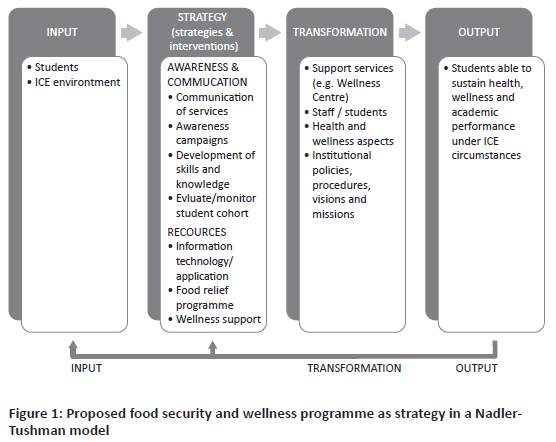
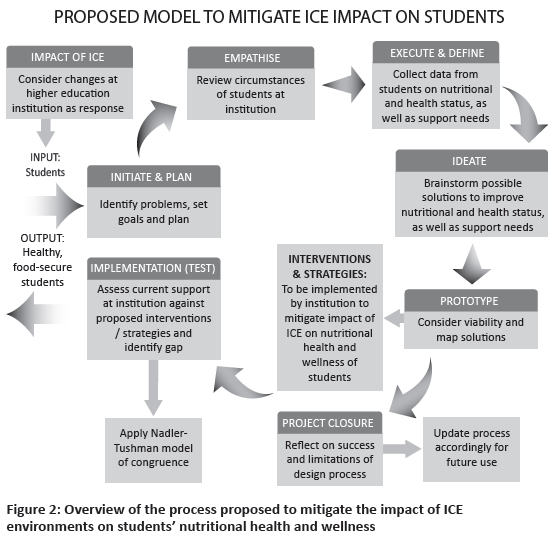
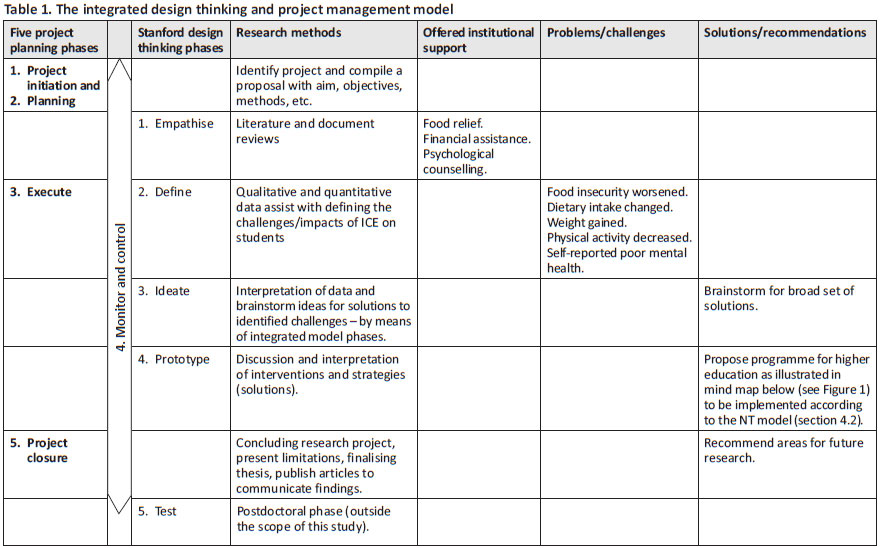
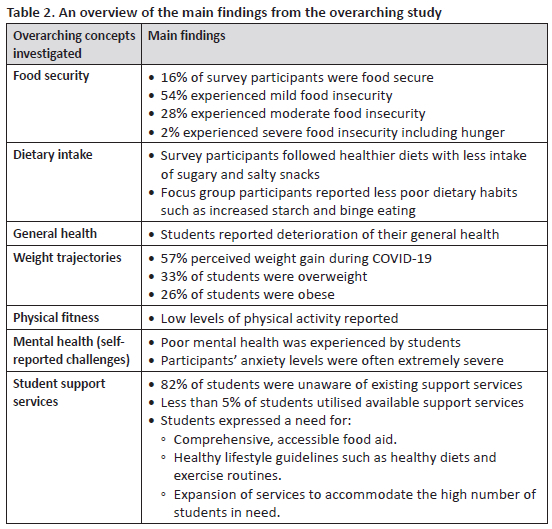
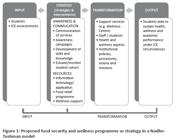
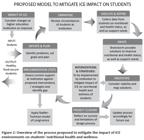
International research has identified numerous impacts of the COVID-19 circumstances on students, such as decreased activity, food insecurity and self-reported poor mental health. This article proposes an intervention programme that universities could apply to prepare for similar future situations. Design thinking and project management processes were integrated towards a proposed intervention to respond to the challenges found in the mixed method research study. Strategies were developed within two areas, awareness and communication, and resources. In the awareness and communication category the following strategies were suggested: increasing communication, awareness campaigns, developing skills/knowledge and ensuring adequate capacity. The resources category consisted of a wellness software application, an adequate, accessible food relief programme, and a wellness support programme. The proposed programme should be implemented according to the Nadler-Tushman (NT) model of congruence. The programme is adaptable, enabling institutions to respond in alignment with their specific contexts and ensure congruence amongst all elements. A programme is proposed to institutions through reflection on their current support service structures, and amendment thereof to suit the specific circumstances. The proposed programme serves as a point of departure for institutions aiming to ensure student health and wellness, as well as academic performance during future isolated, confined and extreme (ICE) events. Furthermore, this programme contributes towards the third sustainable development goal: good health and well-being.
COVID-19; higher education; transformation; design thinking; project management; Nadler-Tushman model
 Thumbnail
 Thumbnail