Retrospective analysis of selection tools in the School of Therapeutic Sciences at a leading South African university
Abstract
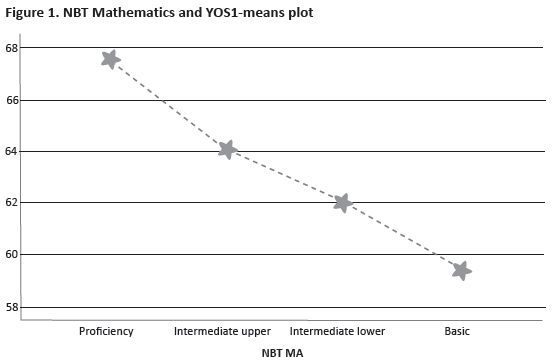
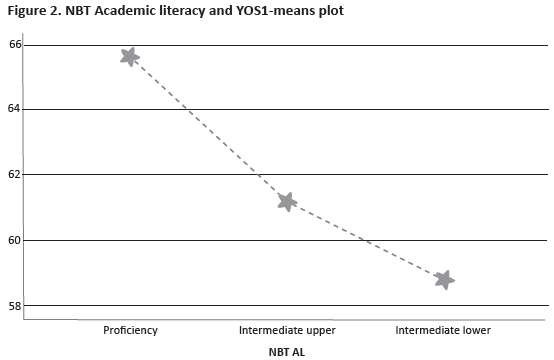
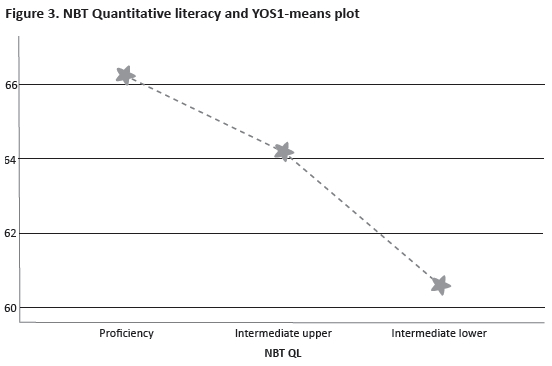
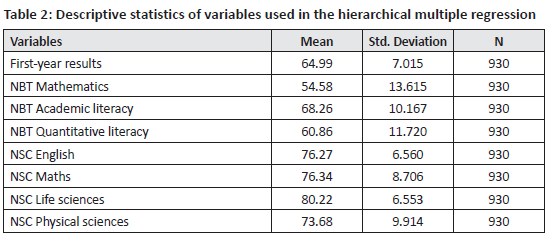
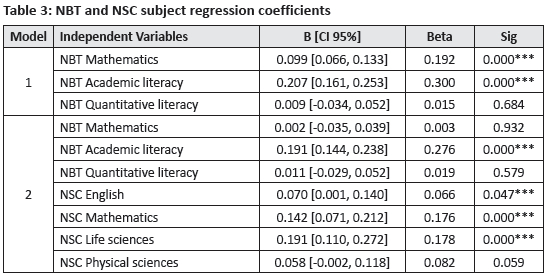
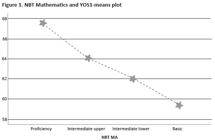
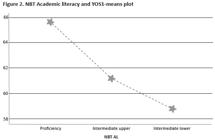
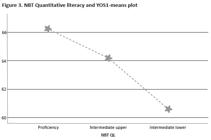
The Faculty of Health Sciences at the University of the Witwatersrand uses the National Senior Certificate (NSC) and the National Benchmark Test (NBT) to select and place students for academic programmes. The NBT assesses students' skills in three domains: (1) mathematics, (2) academic literacy, and (3) quantitative literacy. While selection tests are often criticised for restricting access to education, they help assess preparedness and identify students in need of support. This study examined the predictive value of NBT domains and four NSC subjects on first-year performance among Pharmacy, Occupational Therapy, and Physiotherapy students (2012-2018). The NBT domains and the four NSC subjects accounted for 15% and 12% of the variance in first-year academic performance. Hierarchical regression showed that these variables explained 28% of the variance R2 = 0.278, F(7, 922) = 50.638, p < 0.001. ANOVA revealed significant performance differences based on NBT domains, emphasizing their role in identifying students at risk. These findings highlight the NBT's value in guiding academic interventions and supporting students with lower preparedness levels to improve their success.
Admission tests; health sciences; NSC; NBT; predictive validity
 Thumbnail
 Thumbnail
 Thumbnail