Disorienting dilemmas, self-efficacy and well-being: Exploring student teachers' perceptions of unpreparedness to teach English
Abstract
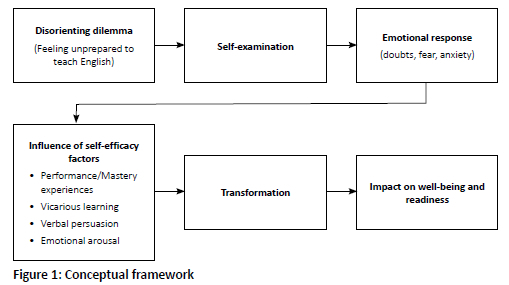
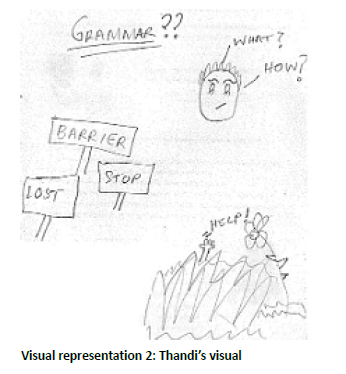
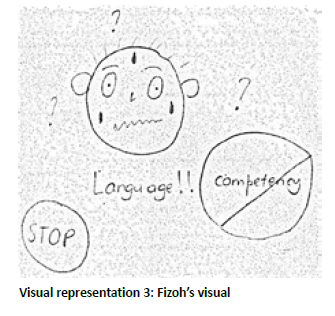
The transition from student to teacher can be a challenging journey. This article explores how perceived unpreparedness - experienced as a disorienting dilemma - influences final-year student teachers' self-efficacy and overall well-being. Using an interpretive paradigm and a qualitative approach, data were generated through questionnaires, visual representations, and focus group discussions with twelve student teachers at a South African higher education institution. A conceptual framework is developed by merging Mezirow's transformative learning theory and Bandura's self-efficacy theory. The case study reveals that while most student teachers initially felt prepared to teach English, self-examination of their preparedness based on teaching practice experiences exposed feelings of anxiety, low self-confidence, and self-doubt, impacting their self-efficacy. The findings reveal that enhancing student teachers' self-efficacy is essential for their well-being, as higher self-efficacy promotes resilience, confidence, and preparedness for teaching. Emotional health and psychological support are critical for fostering student teachers' sense of hope, resilience and self-efficacy. Addressing these challenges can help higher education institutions foster self-efficacy development, ensuring that student teachers transition from uncertainty to confidence. This article advocates for a holistic approach to teacher preparation, highlighting the role of higher education institutions, student affairs, and counselling services in strengthening self-efficacy and reducing anxiety through targeted support.
Well-being; teaching readiness; student teachers; disorienting dilemmas; self-efficacy
 Thumbnail
 Thumbnail
 Thumbnail
 Thumbnail