Disorienting dilemmas, self-efficacy and well-being: Exploring student teachers' perceptions of unpreparedness to teach English
Abstract
The transition from student to teacher can be a challenging journey. This article explores how perceived unpreparedness - experienced as a disorienting dilemma - influences final-year student teachers' self-efficacy and overall well-being. Using an interpretive paradigm and a qualitative approach, data were generated through questionnaires, visual representations, and focus group discussions with twelve student teachers at a South African higher education institution. A conceptual framework is developed by merging Mezirow's transformative learning theory and Bandura's self-efficacy theory. The case study reveals that while most student teachers initially felt prepared to teach English, self-examination of their preparedness based on teaching practice experiences exposed feelings of anxiety, low self-confidence, and self-doubt, impacting their self-efficacy. The findings reveal that enhancing student teachers' self-efficacy is essential for their well-being, as higher self-efficacy promotes resilience, confidence, and preparedness for teaching. Emotional health and psychological support are critical for fostering student teachers' sense of hope, resilience and self-efficacy. Addressing these challenges can help higher education institutions foster self-efficacy development, ensuring that student teachers transition from uncertainty to confidence. This article advocates for a holistic approach to teacher preparation, highlighting the role of higher education institutions, student affairs, and counselling services in strengthening self-efficacy and reducing anxiety through targeted support.
Well-being; teaching readiness; student teachers; disorienting dilemmas; self-efficacy
Abstract
ISISHWANKATHELO Utshintsho lokusuka kukuba ngumfundi ukuya kubutitshala kunokuba luhambo olucela umngeni. Eli nqaku liphonononga indlela ukungalungeli - okufunyanwa njengengxubakaxaka ephazamisayo -ekuphembelela ngayo ukusebenza ngokuzithemba nokuphila kakuhle kwabafundi abaqeqeshelwa ubutitshala abakunyaka wokugqibela. Kusetyenziswa indlela yokulinganisa izinto (paradigm) yokutolika kunye nophando lohlahlelohlobo, iinkcukacha ziqokolelwe ngephephamibuzo, iinkcazo ezibonwayo, neengxoxo zamaqela ekugxilwe kuwo kunye nabafundi abaqeqeshelwa ubutitshala abalishumi elinesibini kwiziko lemfundo ephakamileyo eMzantsi Afrika. Isakhelo sengqiqo siphuhliswe ngokudibanisa isithako sokuhlalutya sikaMezirow, ukufunda okuguqula izinto (transformative learning), kunye nesikaBandura, sokusebenza ngozithemba (self-efficacy). Nakubeni uphandomba lutyhila ukuba ngelixa uninzi lwabafundi abaqeqeshelwa ubutitshala ekuqaleni babeziva bekulungele ukufundisa isiNgesi, ukuzihlola kokulungela kwabo okusekwe kumava okuziqhelanisa nokufundisa kutyhile iimvakalelo zonxunguphalo, ukungazithembi, nokuzithandabuza, okunefuthe ekusebenzeni ngokuzithemba kwabo. Iziphumo zophando zityhila ukuba ukuphuculwa kokuzimela kwabafundi abaqeqeshelwa ubutitshala kubalulekile kwintlalontle yabo, njengoko ukuzimela okuphezulu kukhuthaza ukomelela, ukuzithemba, kunye nokulungela ukufundisa. Impilo yeemvakalelo kunye nenkxaso yengqondo ibalulekile ekukhuthazeni abafundi abaqeqeshelwa ubutitshala ukuba babe nethemba, ukomelela kunye nokuzimela. Ukujongana nale mingeni kunganceda amaziko emfundo ephakamileyo akhuthaze uphuhliso lokuzimela, nokuqinisekisa ukuba abafundi abaqeqeshelwa ubutitshala basuka ekungaqinisekini baye ekuzithembeni. Eli nqaku likhuthaza indlela equka konke yokulungiselela ootitshala, liqaqambisa indima yamaziko emfundo ephakamileyo, imicimbi yabafundi, kunye neenkonzo zengcebiso ekomelezeni ukuzimela nokunciphisa ixhala ngenkxaso ekujoliswe kuyo.
Intlalontle; ukulungela ukufundisa; abafundi abaqeqeshelwa ubutitshala; iingxubakaxaka eziphazamisayo; ukusebenza ngokuzithemba
Introduction
The ability to succeed in teacher training programs depends on student teachers' emotional and psychological aspects. Critical factors are their emotional well-being and their teaching self-efficacy. These factors are interrelated; a low self-efficacy can lead to feeling that tasks are more difficult than they are, which heightens stress, while a strong self-efficacy can alleviate the effects of stress (Hitches et al., 2022). Exploring these dynamics is important for understanding student teachers' challenges and resultant perceptions of preparedness to teach.
Teaching anxiety is prevalent amongst prospective teachers, significantly affecting both their performance and overall well-being (Soriano, 2023). One reason student teachers leave their programs before graduating is due to a decline in their well-being and rising levels of emotional exhaustion (Hartl et al., 2022). This underscores the urgent need to prioritise teacher well-being and respond to both their emotional and professional needs as the emotional strain can make it difficult for them to continue their training, ultimately resulting in student teachers abandoning the profession before even entering the classroom.
The challenges are closely linked to a decrease in teaching self-efficacy, which refers to the belief in one's ability to plan, execute, and manage successful teaching experiences (Bandura, 1977). Self-efficacy is an important personal resource that influences the extent to which teachers can effectively utilise their skills and abilities (Lipinska-Grobelny & Narska, 2021). Teachers' self-efficacy is primarily influenced by personal factors, such as teaching experience and teaching practice (Chen et al., 2024). Moreover, evidence suggests that there is often a disconnect between the way teacher training is delivered at the higher education institution and the realities student teachers encounter in classrooms (Phillips & Condy, 2023). The gap between training and realities of the classroom needs to be addressed to better prepare future teachers for the challenges of real-world teaching.
Teaching is widely recognised as a high-stress profession, often accompanied by numerous challenges that can negatively impact teachers' psychological well-being (Fourie & de Klerk, 2024). When student teachers encounter this stress early, especially in the context of misaligned training and real-world expectations, it can further undermine their preparedness and mental health, emphasising the need for more supportive and aligned teacher education programs. Thus, the emotional and mental well-being of student teachers is crucial to their development and success as educators.
This article forms part of a broader study that explored final-year student teachers' perceptions of preparedness to teach English the following year. The larger study explored various aspects influencing preparedness, and documented both the areas in which student teachers felt prepared to teach and those in which they felt unprepared. This article specifically examines how student teachers' perceived unpreparedness to teach English, often due to inadequate training to deal with the realities of the classroom, leads to emotional strain, including stress, self-doubt, and anxiety. The article begins by unpacking the conceptual framework. Subsequently, the literature concerning student teachers' perceived unpreparedness, anxiety, and well-being is examined. The methodology is then outlined followed by findings, discussion, limitations of the study, suggestions for future research, and conclusion and recommendations.
Mezirow's transformative learning theory and Bandura's self-efficacy concepts
The broader study was grounded in transformative learning theory. The present article also incorporates Bandura's self-efficacy theory to examine student teachers' perceived unpreparedness to teach English. While Mezirow's theory explains the process of self-examination in response to disorienting dilemmas, highlighting how students revise their perspectives (Mezirow, 2009), Bandura highlights that self-efficacy beliefs are evaluated through four primary sources: (i) performance/mastery experience, (ii) vicarious experience, (iii) verbal persuasion, and (iv) emotional and psychological states (Bhati & Sethy, 2022). By combining aspects of these theories, this article provides a comprehensive view of how student teachers not only reflect on their teaching practice experiences and perceptions of unpreparedness, but also how components that impact self-efficacy influence their teaching readiness.
Mezirow's (2009) transformative learning theory states that it is through personal experiences and experiences with other significant people in education that one can reflect on, and challenge, one's existing perceptions, thus changing the way one thinks or feels about something. Mezirow highlighted that it is not only experiences or situations that aid in transformation, but that one's reaction to such is what causes the transformation.
There are ten phases of transformative learning, according to Mezirow (2000, p. 22):
1. A disorienting dilemma.
2. Self-examination with feelings of fear, anger, guilt or shame.
3. A critical assessment of assumptions.
4. Recognition that one's discontent and the process of transformation are shared.
5. Exploration of options for new roles, relationships and actions.
6. Planning a course of action.
7. Acquiring knowledge and skills for implementing one's plans.
8. Provisional trying of new roles.
9. Building competence and self-confidence in new roles and relationships.
10. A reintegration into one's life on the basis of conditions dictated by one's new perspectives.
This article will consider the first two phases. The transformative journey begins with encountering a disorienting dilemma (the first phase), which refers to a challenge that disrupts the way one understands the world. This often triggers emotional disruption and a sense that things no longer make sense or fit together as they once did (Fleming, 2018). Howie and Bagnall (2013, p. 7) define a disorienting dilemma as "a dilemma that causes a disruption or disturbance in a person." Moreover, the triggering event can be a significant incident, a series of events, a deliberate effort to initiate change, or a natural developmental progression (Cranton, 2006, as cited in Khabanyane et al., 2014). A transformative learning experience can be initiated by such an event or disorienting dilemma (Cranton, 2006; Howie & Bagnall, 2013). This aligns with this article which chronicles how student teachers' perceived unpreparedness to teach English serves as a disorienting dilemma that challenges their existing beliefs and expectations of teaching English.
"Occasionally, or at different stages in life or in response to life events, there emerges an unease or sense that things do not fit and that we may need to change how we construe meanings" (Fleming, 2018, p. 122). In the broader study, student teachers initially felt prepared, but upon participating in teaching practice, they realised gaps in their readiness (disorienting dilemma), leading to anxiety and self-doubt upon self-examination (the second phase). Moreover, teaching efficacy, a construct closely linked to student teachers' preparedness for teaching (Chen et al., 2024), aligns with the self-efficacy framework described by Bandura (1977), which emphasises the role of personal belief in one's teaching abilities in shaping their confidence and effectiveness in the classroom. Therefore, the reaction to their teaching readiness drove their transformation, which was shaped by Bandura's (1977) self-efficacy factors.
Bandura's (1977) four self-efficacy factors can be defined as follows:
1. Performance/mastery experiences is the most influential source of self-efficacy "as it is based on personal mastery experiences" (Bandura, 1977, p. 195). Performance experience refers to the outcomes of one's own direct experiences where successes build self-efficacy and failures lower it. In the current study. when student teachers ponder over their experiences during teaching practice, their perceived successes or challenges in the classroom directly affect their confidence in their ability to teach English. The mastery or lack of mastery in specific teaching skills shapes their self-efficacy.
2. Vicarious experience is a concept that refers to how one's self efficacy may also be influenced by the experiences of others (Bandura, 1977). In other words,
if individuals see others succeed at a task, they are more likely to believe they can succeed as well. Conversely, seeing others fail can reduce self-efficacy, particularly if the observer perceives the failure as tied to personal weaknesses.
3. Verbal persuasion refers to the encouragement and positive reinforcement from others (such as lecturers and teaching practice mentors in this study), as well as negative feedback, that affects efficacy beliefs (Bhati & Sethi, 2022). While positive feedback enhances self-efficacy, negative feedback will do the opposite (Bandura, 1977).
4. Emotional arousal speaks to the emotional and psychological state of a person and is the final element of self-efficacy. It refers to how emotions and stress during tasks can affect someone's belief in their abilities. Bandura (1977) reinforced that elevated stress can negatively influence performance. In essence, high levels of stress or emotional arousal can undermine self-efficacy, whereas the ability to cope with stress can enhance it (Bhati & Sethi, 2022).
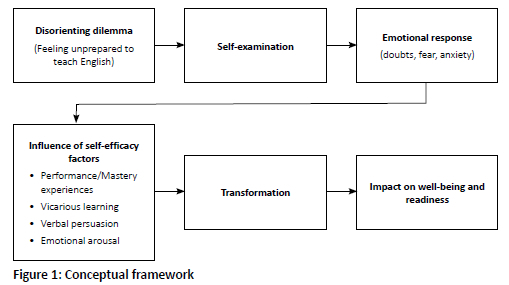
Merging certain concepts from Mezirow's transformative learning theory and Bandura's self-efficacy theory provides a comprehensive conceptual framework (see Figure 1) for understanding the transformative journey of student teachers in this article.
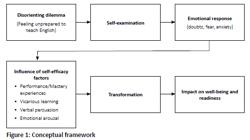
The conceptual framework in Figure 1 represents the process that student teachers navigated when reflecting on their teaching practice experiences in this study. Initially, the student teachers encountered a disorienting dilemma, where they felt unprepared for certain aspects and uncertain in the classroom, causing feelings of anxiety and doubt about their ability to teach English effectively. Drawing on their teaching practice experiences, the broader study, on which this article is based, prompted student teachers to engage in self-examination via multiple data-generation methods, helping them identify specific areas in which they felt unprepared to teach English.
The conceptual framework was not only used to structure the theoretical orientation of this article, but also served as an analytical lens during data analysis. Each stage of the framework was directly aligned with the themes generated from the data. For example, instances of emotional discomfort and pedagogical uncertainty during teaching practice reflected the disorienting dilemmas student teachers expressed in their questionnaire responses, visual representations, and focus group discussions. The phase of self-examination was evidenced in student teachers' reflections on their perceived gaps in teaching English, particularly as they engaged further with the visual representations in the focus group discussions. Themes related to mentorship, peer experiences, and recollections of prior successes or failures were mapped onto the four sources of self-efficacy, as articulated by Bandura. Finally, the theme of heightened awareness without full confidence signalled a nuanced transformation: one that did not resolve into certainty, but rather into a deeper understanding of their developmental needs. This framework thus enabled a systematic engagement with the data, providing coherence between conceptual constructs and empirical findings.
Student teachers' perceived unpreparedness, anxiety and well-being
Student teachers develop their perceptions of teaching readiness throughout their education. However, being prepared to teach is a complex process, which is influenced by individual factors as well as interactions with the context and others around them (Çelik & Zehir Topkaya, 2023; Chen et al., 2024). Teachers play a significant role in shaping their learners' academic, social, and emotional growth; the demands of teaching, like lesson planning and addressing different learning abilities, behavioural, and emotional needs, often lead to high levels of stress for teachers (Zito et al., 2024).
One of the major challenges and stressors that student teachers encounter is teaching practice. This component is crucial for becoming a fully qualified teacher, as it provides student teachers with practical experience in real teaching and learning environments (Maulimora, 2019; Gorospe, 2022). Despite its importance, teaching practice frequently exposes rather than alleviates student teachers' insecurities. Mpate et al. (2023) found that student teachers in Tanzania demonstrated limited skills in lesson preparation and classroom management during their teaching practice. Such limitation in skills may result in lack of preparedness that in turn negatively impacts the student teachers' learning experiences. Similarly, Zito et al. (2024) reported that pre-service teachers identified classroom management and managing learner behaviour as key stressors which impacted their well-being. Furthermore, Pan et al. (2023) further revealed a negative association between well-being and the demands related to teaching responsibilities and student behaviour management. Together, these studies suggest that teaching practice, while pedagogically vital, may also exacerbate stress and reduce confidence when adequate support is absent.
The significance attributed to teaching practice is justifiable, as it provides a context in which student teachers apply and demonstrate the pedagogical skills they have developed, while also receiving feedback to support their professional growth (Koþar, 2021). The effectiveness of teaching practice is closely linked to the mentorship provided. While it offers a context for student teachers to demonstrate their pedagogical skills and receive feedback, this process depends on the mentor teachers' own competencies. Phillips and Condy (2023) found that some mentor teachers lacked the necessary skills to offer timely and constructive guidance. This issue undermines the potential of teaching practice to build teacher efficacy, given that mentor feedback plays a critical role in student teachers' professional growth (Çelik & Zehir Topkaya, 2023).
Anxiety among student teachers is another recurring concern. Soriano (2023, p. 765) reports moderate anxiety levels characterised by "mild to moderate 'uncomfortable feelings' (such as worry, uneasiness, or trepidation)," reflecting a developing self-efficacy rather than debilitating stress. This finding contrasts with research by Zito et al. (2024) and Pan et al. (2023), which associates anxiety with diminished well-being and confidence. The divergence indicates that anxiety may function differently across contexts or individual differences, pointing to the need for a more differentiated understanding of how anxiety impacts teacher readiness and how it can be constructively addressed within teacher education.
The studies above collectively highlight that student teachers face considerable anxiety and challenges during teaching practice, largely related to classroom management and meeting diverse learner needs. Understanding these sources of stress is crucial for designing more supportive learning environments that enhance student teachers' well-being and professional growth (Gorospe, 2022).
Empirical studies demonstrate the potential of targeted interventions to support student teachers' well-being. Hepburn et al. (2021) investigated changes in perceived stress, mindfulness, subjective well-being, and coping among student teachers, and found that a yoga-based intervention, which included breathing techniques, physical postures and guided meditation significantly reduced stress and increased mindful attention. Similarly, Hoferichter and Jentsch (2024) reported that an online positive psychology program improved student teachers' self-efficacy, emotion regulation, and coping skills. In a related study, Briscoe (2019) found that virtual mentor-mentee partnerships enhanced student teachers' professional growth, confidence, and emotional well-being by providing empathetic support and authentic classroom insights. Together, these studies demonstrate the value of proactive, research-informed interventions in building resilience and well-being among future teachers.
While most research focuses on whether student teachers are prepared or not, and the aspects for which they are prepared or not (Koþar, 2021; Gorospe, 2022; Mpate et al., 2023; Phillips & Condy, 2023), limited studies focus on how student teachers' unpreparedness to teach directly influences their self-efficacy or well-being (Soriano, 2023; Gorospe, 2022; Zito et al., 2024). There are several interventions that have been developed for teachers, but there is a clear gap in research and practice concerning proactive, structured well-being programs for student teachers (Wang et al., 2025), suggesting a further gap. This lack limits opportunities to develop essential emotional regulation and resilience skills before student teachers enter the profession.
While resilience and mentoring are recognised as important in teacher education, much of the literature remains conceptual. Mansfield et al.'s (2016) BRiTE framework and Orland-Barak and Wang's (2021) integrated mentoring model offer valuable approaches to supporting pre-service teacher well-being, with some evidence of implementation. However, little empirical research has explored how these frameworks relate specifically to pre-service teachers' perceived preparedness to teach English and its impact on well-being. This suggests a gap in understanding the subject-specific dimensions of preparedness and how they intersect with emotional support in initial teacher education.
Methodology
This study was situated within an interpretive paradigm, using a qualitative case-study approach to explore the perceptions of student teachers. While well-being was not the initial focus of the broader study, the data revealed the significant impact that perceived unpreparedness had on the student teachers' emotional states, including anxiety, self-doubt, and their overall self-efficacy. These factors ultimately influenced their general well-being while grappling with the disorienting dilemma - their perceptions of unpreparedness to teach English. This section unpacks the research paradigm, approach, design, data generation and instruments, ethics, and participants and sampling.
Paradigm
This study adopted an interpretive paradigm, grounded in the view that reality is socially constructed and contextually experienced (Check & Schutt, 2012). Interpretivism focuses on how individuals make meaning of their world rather than seeking a single objective truth. Aligned with transformative learning theory, which emphasises critical reflection and the re-evaluation of assumptions (Mezirow, 2009), this paradigm enabled an exploration of how final-year student teachers perceived their preparedness to teach English. The approach valued participants' subjective interpretations and acknowledged the influence of context and personal experience (Cohen et al., 2011).
Approach
A qualitative research approach supported the study's aim to understand complex, individual experiences; qualitative studies allow researchers to explore the subjective experiences of their subjects (Lim, 2024). Qualitative research privileges depth and context over generalisability, offering insight into participants' beliefs, values, and frames of reference (Creswell, 2009; Johnson & Christensen, 2012). Open-ended tools such as visual representations, questionnaires, and focus group discussions enabled participants to express their experiences narratively, facilitating thick description and thematic analysis (Atieno, 2009).
Design
This study adopted a case-study design to explore a specific, real-world situation (Rule & John, 2011), focusing on final-year student teachers' perceptions of their readiness. The case-study approach was suitable as it allowed for a comprehensive examination using diverse data sources over time, offering rich, contextual insights (Creswell, 2009). In the context of this article specifically, the 'case' refers to the perceived unpreparedness of final-year student teachers to teach English, which falls under the broader category of teaching preparedness. Given the study's focus on investigating this particular phenomenon, the case study method proved to be an appropriate and effective choice.
Data generation and instruments
Data were collected through a combination of questionnaires, visual representations, and focus group discussions, allowing for a rich, in-depth understanding of participants' experiences and reflections on their readiness to teach English. These methods provided valuable insights into the emotional and cognitive processes involved in their transition from student to teacher. The questionnaire and visual representations were completed first, followed by a focus group discussion conducted sequentially. The focus group built on the visual data to further explore participants' responses.
The questionnaire was specifically designed by the researcher for the broader study and based on the aims and objectives. It was given to various members of staff as well as a small group of five students in the English Major 310 class for the purpose of piloting. The questionnaire included both closed and open-ended questions related to students' perceived readiness to teach English. Two sections incorporated Likert-type scales requiring student teachers to indicate their level of preparedness from 'not at all prepared' to 'very well prepared' in relation to teaching specific aspects of the English curriculum, and broader teaching practices. The final section comprised open-ended questions designed to capture reflective, detailed responses. It was anticipated that completing the questionnaire would facilitate a degree of self-examination, the second phase of learning outlined in Mezirow's transformative learning theory (2009).
The second data instrument was a visual representation task designed to elicit student teachers' perceptions of their preparedness to teach English through non-verbal, creative means. All 12 student teachers were invited to use any visual form, such as a poster, collage, mind map, cartoon strip, photographs, or drawings, to represent their thoughts and experiences. Visual representations were used to access the deeper, often unspoken aspects of participants' experiences that might not emerge through words alone. They enabled student teachers to express complex feelings and perceptions about their preparedness to teach English, enriching the data and supporting more reflective, nuanced insights (Theron et al., 2011; Rose, 2016). Student teachers were asked to visually represent their perceived readiness to teach English and provide a brief written explanation to accompany their visual. They were prompted to reflect on the areas of English they felt prepared to teach, exploring the reasons behind this perception and the influencing factors. Likewise, they identified the aspects they felt unprepared to teach, visually representing their lack of confidence and the factors that contributed to it.
A focus group of six participants, randomly selected, was utilised. The focus group discussion was video- and audio-recorded to capture both verbal and non-verbal data. The recordings were carefully reviewed, transcribed, and analysed using transcript-based analysis. The focus group was guided by semi-structured open-ended questions designed to foster a relaxed atmosphere and encourage in-depth discussion of participants' preparedness to teach English. The researcher facilitated the session to support rich, verbal interaction. In this focus group, student teachers were also asked to comment on their own and others' visual representations. Aligned with Mezirow's transformative learning theory, the focus group was designed to foster rational dialogue and critical reflection, providing participants with an opportunity to express their views on their readiness to teach English and to share their personal experiences (Taylor, 2009). The group discussed the similarities and differences in the visuals, exploring how they reflected on their perceived readiness to teach.
Data analysis
In this qualitative case study, data analysis involved transforming raw data into descriptive narratives and thematic categories (Ryan et al., 2007), aligning with the case study design and qualitative methodology (Cohen et al., 2011). Thematic analysis was used, as it is well-suited to qualitative data presented in the form of rich textual descriptions (Creswell, 2009). This method enabled the categorisation of data into central themes, providing a clear and effective way to present the case (Rule & John, 2011).
The researcher conducted all data analysis independently, drawing on skills developed through postgraduate studies, including qualitative research methods and data analysis techniques. Guidance from the research supervisor was also instrumental, particularly in identifying best practices for analysing visual and textual data, as well as relevant literature to support methodological decisions. This collaborative support contributed to a rigorous and informed approach to data interpretation.
Multiple strategies were implemented in the broader study to minimise misinterpretation and over analysis across the three data sources. Questionnaire responses were thematically analysed using participants' own words to preserve meaning and reduce researcher bias. In terms of the visual representations, student teachers were asked to provide a paragraph explanation to accompany their visual, offering insight how it reflected their perceptions of preparedness to teach English. These visual representations were later elaborated on during the focus group discussion, ensuring that these were not misinterpreted by the researcher.
An observer, a lecturer from a different department, was invited to the focus group discussion to make notes that supplemented the recordings, further ensuring that misinterpretation of the data was prevented. Furthermore, member checking, which ensured credibility and trustworthiness of interpretations (Elo et al., 2014), was employed by sharing transcripts, a summary of the study, and key conclusions to student teachers for further verification (Varpio et al., 2017).
Ethics
Gatekeeper permission to conduct research with students in the School of Education was granted by the Registrar. The Humanities and Social Science Research Ethics Committee provided full approval for ethical clearance (Protocol Reference Number: HSS/0624/017M). Consent forms were also presented to all participants in the study and all ethical issues regarding research were obeyed. The consent form outlined key details of the study, including what participation involved, the expected time commitment, participants' rights to voluntarily participate and withdraw at any stage, and assurances of confidentiality and anonymity. To protect participants' identities, pseudonyms were assigned and used.
In recognition of the potentially personal and emotional nature of the broader study, especially in the focus group discussion, student teachers were informed that they could skip any question, pause, or withdraw at any point without consequence. Emotional safety was supported by creating a respectful and non-judgemental environment, and by providing information about the discussion prior.
Research data is stored securely in a locked cupboard in the research supervisor's office. Paper documents containing confidential information are shredded and disposed of, and recordings deleted, in accordance with the institution's ethical guidelines.
Participants and sampling
Purposive sampling was appropriate for this study due to the specific characteristics required of the participant group. The broader study, on which this article is based, investigated final-year English major student teachers' perceptions of preparedness to teach English the following year. Therefore, the sample intentionally included final-year student teachers preparing to complete their formal training and transition into the teaching profession. This aligns with purposive sampling as it entails choosing individuals or groups who possess significant knowledge or experience related to the specific phenomenon being studied (Creswell & Plano Clark, 2011). In essence, the purposive sampling strategy further enabled the collection of thick, meaningful data specific to the context of initial teacher education (Cohen et al., 2011).
The study included 12 students (11%) from the English Major 420 module, the final module in the Bachelor of Education program. These students, part of a cohort of approximately 107 who had completed 7 of the 8 semesters, were nearing graduation and preparing to enter the workforce. This placed them in a unique position to reflect on their readiness to teach, having nearly completed the Bachelor of Education program. Their insights are distinct and cannot be substituted by those of students at earlier stages of study, given the combination of theoretical coursework and practical experience acquired by final-year student teachers. The same group of student teachers was involved across all three data collection phases: the questionnaire, visual representations, and the focus group discussions.
Findings
The student teachers' feelings of unpreparedness revealed emotional responses such as increased anxiety and self-doubt. The influence of self-efficacy factors plays a role in how they process these emotions. Building upon their teaching practice experiences, final-year student teachers engaged in self-reflection through various data generation strategies. This process allowed them to identify specific areas in English where they felt unprepared, drawing from both their own teaching experiences, and observations of mentors (during teaching practice) and lecturers. This is important as feedback from mentors and peers, through verbal persuasion, can not only offer support but also highlight areas where they still lack preparation. Through this process, student teachers experienced transformation; but rather than gaining confidence and preparedness, they became more aware of the gaps in their readiness to teach English. This heightened awareness of their unpreparedness led them to focus on developmental areas.
In the context of this article, the sources of self-efficacy - performance/mastery experience, vicarious experience, verbal persuasion, and emotional arousal - directly relate to student teachers' well-being as they shape their confidence, resilience, and emotional health, influencing their perceptions of preparedness to teach English. Ultimately, this process had a profound impact on their well-being and teaching readiness. While their confidence may not have been immediately restored, the process of self-examination provided student teachers with a guide for ongoing professional development. This reflective practice not only highlighted areas for improvement but also served as a motivational tool, encouraging them to address these aspects for further transformation.
The following sections present an analysis of the data, focusing on how student teachers' perceived unpreparedness impacts their well-being and self-efficacy.
Disorienting dilemma: Reality check after teaching practice
The disorienting dilemma experienced by student teachers following their teaching practice experiences served as a rude awakening in this study, where the gap between theoretical preparation and the challenges of the classroom became evident.
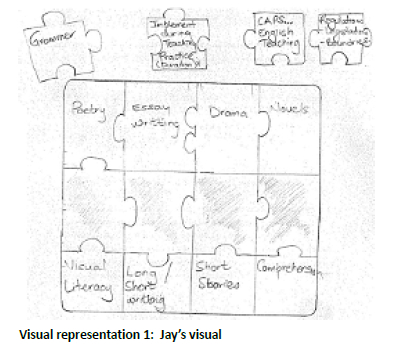
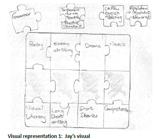
Jay's visual representation (see Visual Representation 1) depicted a puzzle with missing pieces, including "grammer [sic]," which symbolised neglected aspects of the teacher education program. He associated his unpreparedness to teach grammar with these gaps, suggesting that the program fails to fully equip student teachers for teaching English. His description implied that the missing pieces represent areas of knowledge inadequately covered, leaving graduates feeling unprepared for certain aspects of teaching English.
Jay's visual representation illustrates how perceived gaps in the teacher education program serve as a disorienting dilemma (Mezirow, 2009), disrupting his confidence in his preparedness to teach English. This realisation triggers self-examination and uncertainty, key components of transformative learning. If unaddressed, such dilemmas can negatively impact self-efficacy and well-being, highlighting the need for more comprehensive teacher preparation.
In the questionnaire, Ash shared, "Before I enter a classroom, I will have to research and prepare for all of the language sections on my own This reflects a disorienting dilemma, as the lack of support from both the mentor teacher and lecturers in grammar instruction left him feeling unprepared, prompting a process of self-examination where preparedness is concerned and heightened anxiety about his readiness to teach. Similarly, in the focus group, when asked about the link between theory and practice in the classroom, Jay responded:
I think we all strive for getting settled down in schools with our approaches and our strategies and we find ourselves trying to navigate our way and finding new parts to teach learners and ... the expectation is that what we learn in university we take it through into schools, but we find that we are so unsettled in schools that our entire paradigms of learning are upside down.
Jay's use of "unsettled" and "upside down" signals a profound misalignment between expectation and reality, further reflecting the experience of a disorienting dilemma.
In response to a question regarding the relevance of the modules in the Bachelor of Education program at the site of the study, Ashnee indicated that she was "under prepared to teach English next year" because she felt that modules cover a lot of content but seems to be lacking the "how-to." In the same light, Zuko shared, even though she thought modules were relevant, that they did not teach them "exactly how to go about in the classroom" and the program needs more method courses or "how to teach the content".
From the above, it can be inferred that some student teachers perceive the teacher education program as focusing more on content knowledge than on pedagogical methods, an aspect they consider critical for their preparation to teach English the following year. This perceived imbalance in their preparation can be seen as a disorienting dilemma, prompting self-examination and contributing to the fear and anxiety student teachers experience - emotional responses that will be explored further in the following section. These results reflect the idea emphasised by Le (2013) that student teachers' perceptions are transformed when the ideal classroom scenarios portrayed in teacher education programs clash with the realities of the classroom. Resultingly, they undergo a shift in their perceptions of preparedness, highlighting a disorienting dilemma that prompts self-examination of their teaching practice experiences. The disorienting dilemma the student teachers describe may challenge their self-efficacy, but it also offers an opportunity for growth, resilience, and emotional regulation, all of which are crucial for their well-being and readiness for the teaching profession.
Self-examination: Emotional well-being and self-efficacy
Self-examination revealed how student teachers assessed their perceived strengths and weaknesses, shedding light on the interplay between emotional states and their belief in their teaching abilities.
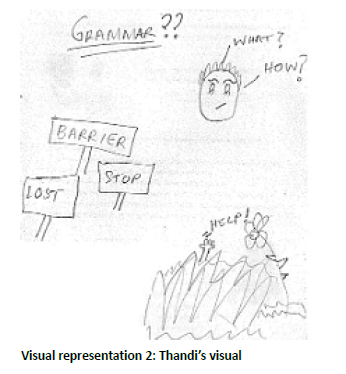
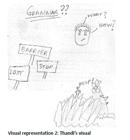
In her visual representation (see Visual representation 2), Thandi expressed her concern about feeling unprepared to teach grammar through a drawing of a person lost in tall grass, with a fearful or worried expression on their face. She included questions like "what?" and "how?" next to the figure, along with words like "barrier," "lost," and "stop," which conveyed a sense of uncertainty and negativity. The image suggests that Thandi feels overwhelmed and in need of help.
Thandi's visual representation illustrates her emotional and cognitive conflict regarding her preparedness to teach grammar. These expressions align with Mezirow's (2009) concept of a disorienting dilemma, where her use of "lost" and "barrier" reflects her internal conflict and perceived challenges. This finding is also in keeping with Bandura's (1997) self-efficacy theory which emphasises the impact of emotional states and perceived competence on one's belief in one's abilities. Thandi's visual highlights the role of emotional support in enhancing self-efficacy, as addressing her feelings of uncertainty can improve her confidence and overall well-being.
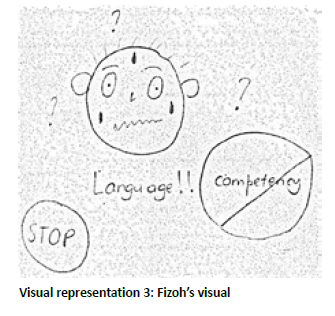
Similarly, Fizoh's visual representation (see Visual representation 3), including a face marked by droplets of perspiration and surrounded by question marks, clearly illustrates her anxiety and fear regarding teaching grammar. In her explanation, she describes feeling "scared, worried, anxious," and even physically sweating when thinking about teaching the language section in English. The term "competency" with a line through it underscores her belief that she is "not competent at all" to teach it. During the focus group discussion, self-examination revealed that Fizoh had to learn certain language sections independently during her teaching practice experience. While she acknowledged that her mentor teacher at the allocated school could have offered support, she felt too "embarrassed" to ask for help, fearing that it would negatively affect her mentor's trust in her and her ability to teach the learners.
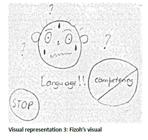
In terms of Bandura's self-efficacy theory, Fizoh's reluctance to seek assistance reflects the influence of emotional arousal on self-efficacy. In this case, her fear of judgement hindered her willingness to seek support, ultimately impacting both her self-efficacy and well-being. In contrast to Usha, who attributed her unpreparedness to the teacher education program, Fizoh's inability to ask for assistance shows how emotional factors, such as fear and embarrassment, can impede the development of self-efficacy and negatively influence well-being.
While this was not a specific code where data analysis is concerned, Thandi and Fizoh's anxieties about teaching grammar, especially Fizoh's reluctance to ask her mentor for help due to feelings of embarrassment, may be rooted in their language backgrounds: both participants indicated that their home language is isiZulu on their biographical information forms. While this theme did not emerge as widespread, it could be noted that their anxiety might also be linked to their linguistic backgrounds and, resultingly, their confidence to teach English.
Discussion
This article highlights that student teachers' perceived unpreparedness to teach English not only affects their professional competence but also significantly impacts their emotional and mental well-being. When student teachers feel unprepared, especially in a high-stakes subject like English, it can lead to self-doubt and stress. This state of uncertainty can trigger a perception of incompetence and feelings of despondency, reducing their confidence as future teachers of English. Ultimately, this emotional strain may lead to burnout, anxiety, and reduced motivation, all of which are indicators of compromised mental and emotional well-being.
From a transformative learning perspective, the feeling of unpreparedness represents a disorienting dilemma that forces student teachers to engage in self-examination of their abilities and beliefs about teaching. While disorienting dilemmas and the process of self-examination are central to personal and professional growth, they can also lead to significant emotional distress. The lack of adequate pedagogical training can exacerbate this, as students struggle to reconcile their theoretical knowledge with their perceived inability to teach effectively. Left unsupported, the emotional strain arising from this reflective process can undermine their self-efficacy and hinder their development into confident, resilient educators.
According to Bandura's theory of self-efficacy, belief in one's abilities is a crucial predictor of motivation and persistence in the face of challenges. When student teachers feel unprepared, their self-efficacy is diminished, which can lead to a lack of motivation, feelings of inadequacy, and difficulty in overcoming obstacles, resulting in prolonged consequences for their future careers in education. Therefore, fostering strong self-efficacy is critical for both their professional development and mental well-being.
Limitations of the study
As with many qualitative case studies, this study is subject to certain limitations. The study was conducted within a single institution, which may limit the generalisability of the findings to other contexts. Additionally, the small sample size, while appropriate for in-depth qualitative analysis, may not capture the full diversity of experiences and perspectives found in broader educational settings. These limitations are acknowledged while emphasising the depth and richness of the insights gained through a detailed exploration of student teachers' perceptions of unpreparedness.
Suggestions for future research
Building on this study's findings, future research could explore the long-term impact of the learning and reflection processes on student teachers as they transition into their professional teaching roles. In particular, studies could explore whether the perceptions of unpreparedness, especially in areas of English teaching, transform during their early years of teaching. Drawing on Mezirow's transformative learning theory, such research could examine whether critical reflection during teacher education leads to perspective transformation and improved teaching practices as novice teachers confront real classroom challenges.
Additionally, given student teachers' references to their mentor teachers and lecturers, some of whom served as negative models, further research should explore the role of modelling, as conceptualised in Bandura's self-efficacy theory, in shaping teaching identity and competence. Future studies might investigate how student teachers internalise both positive and negative modelling from lecturers and mentors, and how these experiences influence their pedagogical choices and classroom behaviours, especially in English language teaching.
Finally, acknowledging that perceptions of preparedness to teach can vary across contexts, it is recommended that this study be replicated in diverse national and international teacher contexts. Comparative studies could provide a broader understanding of how different programs at different higher education institutions influence perceptions of preparedness, the development of teaching competence, and ultimately, the well-being of future English teachers.
Conclusion and recommendations
The intersection of perceived unpreparedness and student teachers' emotional well-being is complex and significant. When student teachers feel ill-equipped to teach, it not only affects their self-efficacy but also hinders their mental and emotional well-being. It is important for teacher education programs to address these issues by placing emphasis not only on content and pedagogical knowledge, but emotional support. Higher education institutions can better equip student teachers to thrive in their training and beyond by fostering self-efficacy, providing reflective spaces, and prioritising well-being.
Based upon the insights in this article, the following recommendations are proposed to better support the emotional and psychological well-being of student teachers: teacher education programs should embed well-being as a core principle by taking a holistic approach that includes mental health support and peer networks for reflection and problem-solving where teaching practice is concerned. Reflective spaces such as mentoring, group discussions, or journaling should be provided to help students process emotions and grow from challenging experiences. Support during school placements must be enhanced through strong mentorship that acknowledges small successes and nurtures self-belief.
In essence, student teachers face various challenges that might impact their well-being (Sulis et al., 2021). Self-efficacy is closely linked to teachers' psychological well-being (Lipinska-Grobelny & Narska, 2021). Therefore, it is crucial to prioritise the development of these competencies in the training of student teachers to ensure their professional and emotional success as future teachers (Lipinska-Grobelny & Narska, 2021). A first step for teacher education programs is to normalise reflection on well-being and to encourage seeking pastoral support from mentors and lecturers. These programs should also equip student teachers with the skills to recognise early signs of stress and burnout. Beyond offering coping strategies, the focus should be on providing clear, proactive guidance aimed at preventing stress-related challenges before they escalate (Sulis et al., 2021).
In conclusion, this article argues that teacher education programs must go beyond content knowledge and focus on the holistic development of student teachers, integrating strategies to support their emotional resilience and self-efficacy. By addressing emotional and psychological needs, teacher education programs can better equip student teachers to manage challenges related to their preparedness for the reality of the classroom and build confidence in their ability to teach.
Ethics statement
All ethical procedures have been followed after obtaining ethical clearance from the institution where this study was conducted.
Potential conflict of interests
The author declares that she has no financial or personal relationships that may have inappropriately influenced the writing of this article.
Funding acknowledgementThe author did not receive any funding for the research undertaken in this project.
Acknowledgement
The study reported on in this article stems from work done while the author was employed by the University of KwaZulu-Natal. Therefore, ethics approval lies with the UKZN and not North-West University, the author's employer at time of publishing.
References
- Atieno, O. P. (2009). An analysis of the strengths and limitation of qualitative and quantitative research paradigms. Problems of Education in the 21st Century, 13, 13-18. Retrieved from https://www.scientiasocialis.lt/pec/node/files/pdf/Atieno_Vol.13.pdf
- Bandura, A. (1977). Self-efficacy: Toward a unifying theory of behavioral change. Psychological Review, 84, 191-215. https://psycnet.apa.org/doi/10.1037/0033-295X.84.2.191
- Bhati, K., & Sethy, T. P. (2022). Self-efficacy: Theory to educational practice. International Journal of Indian Psychology, 10(1), 1123-1128. https://ijip.in/articles/self-efficacy-theory-to-educational-practice/
- Briscoe, P. (2019). Virtual mentor partnerships between practising and preservice teachers: Helping to enhance professional growth and well-being. International Journal of Mentoring and Coaching in Education, 8(4), 235-254. https://doi.org/10.1108/IJMCE-02-2019-0023
- Çelik, H., & Zehir Topkaya, E. (2023). Pre-service English language teachers' state of preparedness to teach and its sources in field experience. Bartýn University Journal of Faculty of Education, 12(2), 372-389. https://doi.org/10.14686/buefad.1059588
- Check, J., & Schutt, R. K. (2012). Research methods in education. Sage.
- Cohen, L., Manion, L., & Morrison, K. (2011). Research methods in education (7th ed.). Routledge.
- Cranton, P. (2006). Understanding and promoting transformative learning: A guide for educators of adults (2nd ed.). Jossey-Bass.
- Creswell, J. W. (2009). Research design: Qualitative, quantitative, and mixed methods approaches. Sage Publications.
- Creswell, J. W., & Plano Clark, V. L. (2011). Designing and conducting mixed methods research (2nd ed.). Sage Publications.
- Elo, S., Kääriäinen, M., Kanste, O., Pölkki, T., Utriainen, K., & Kyngäs, H. (2014). Qualitative content analysis: A focus on trustworthiness. SAGE Open, 4(1), 1-10. https://doi.org/10.1177/2158244014522633
- Fleming, T. (2018). Mezirow and the theory of transformative learning. In V. Wang (Ed.), Critical theory and transformative learning (pp. 120-126). IGI Global.
- Hitches, E., Woodcock, S., & Ehrich, J. (2022). Building self-efficacy without letting stress knock it down: Stress and academic self-efficacy of university students. International Journal of Educational Research Open, 3, 100124. https://doi.org/10.1016/j.ijedro.2022.100124
- Howie, P., & Bagnall, R. (2013). A beautiful metaphor: Transformative learning theory. International Journal of Lifelong Education, 32(6), 816-836. Retrieved from http://hdl.handle.net/10072/59730
- Johnson, B., & Christensen, L. (2012). Educational research: Qualitative, quantitative and mixed approaches. Sage Publications.
- Khabanyane, K. E., Maimane, J. R., & Ramabenyane, M. J. (2014). A critical reflection on transformative learning as experienced by student-teachers during school-based learning. Mediterranean Journal of Social Sciences, 5(27 P1), 452-459. http://dx.doi.org/10.5901/mjss.2014.v5n27p452
- Koþar, G. (2021). Distance teaching practicum: Its impact on pre-service EFL teachers' preparedness for teaching. IAFOR Journal of Education, 9(2), 111-125. https://doi.org/10.22492/ije.9.2.07
- Le, K. (2013). Know thy self. In K. J. Fasching-Varner, H. B. Eisworth, T. H. Mencer, D. R. Lindbom-Cho, M. C. Murray, & B. C. Morton (Eds.). Student teaching: A journey in narratives (pp. 11-24). Sense Publishers.
- Lim, W. M. (2024). What is qualitative research? An overview and guidelines. Qualitative Market Research: An International Journal, 33(2), 199-229. https://doi.org/10.1177/14413582241264619
- Lipinska-Grobelny, A., & Narska, M. (2021). Self-efficacy and psychological well-being of teachers. e-mentor, 3(90), 4-10. https://doi.org/10.15219/em90.1517
- Mansfield, C. F., Beltman, S., Broadley, T., & Weatherby-Fell, N. (2016). Building resilience in teacher education: An evidenced informed framework. Teaching and Teacher Education, 54, 77-87. https://doi.org/10.1016/j.tate.2015.11.016
- Maulimora, V. N. (2019). English pre-service teachers' perception of anxiety in peer teaching: A case study at Universitas Kristen Indonesia. Journal of English Teaching, 5(3), 144. https://doi.org/10.33541/jet.v5i3.1307
- Mezirow, J. (2000). Learning to think like an adult: Core concepts of transformation theory. In J. Mezirow & Associates (Eds.), Learning as transformation: Critical perspectives on a theory in process (pp. 3-34). Jossey-Bass.
- Mezirow, J. (2009). Transformative learning theory. In J. Mezirow & E.W. Taylor (Ed.). Transformative learning in practice: Insights from community, workplace, and higher education. (pp. 18-31). Jossey-Bass.
- Orland-Barak, L., & Wang, J. (2021). Teacher mentoring in service of preservice teachers' learning to teach: Conceptual bases, characteristics, and challenges for teacher education reform. Journal of Teacher Education, 72(1), 86-99. https://doi.org/10.1177/0022487119894230
- Pan, H.-L. W., Chung, C.-H., & Lin, Y.-C. (2023). Exploring the predictors of teacher well-being: An analysis of teacher training preparedness, autonomy, and workload. Sustainability, 15(7), 5804. https://doi.org/10.3390/su15075804
- Rose, G. (2016). Visual methodologies: An introduction to researching with visual materials (4th ed.). Sage.
- Rule, P., & John, V. (2011). Your guide to case study research. Van Schaik Publishers.
- Ryan, F., Coughlan, M., & Cronin, P. (2007). Step-by-step guide to critiquing research. Part 2: Qualitative research. British Journal of Nursing, 16(12), 738-744. https://doi.org/10.12968/bjon.2007.16.12.23726
- Taylor, E. W. (2009). Fostering transformative learning. In J. Mezirow & E.W. Taylor (Ed.). Transformative learning in practice: Insights from community, workplace, and higher education. (pp. 3-17). Jossey-Bass.
- Soriano, A. (2023). An astute analysis of the pre-service teachers' teaching anxiety. Journal for Educators, Teachers and Trainers, 14(3). 759-767. https://jett.labosfor.com/index.php/jett/article/view/1950
- Sulis, G., Mercer, S., Mairitsch, A., Babic, S., & Shin, S. (2021). Pre-service language teacher wellbeing as a complex dynamic system. System, 103, 102642. https://doi.org/10.1016/j.system.2021.102642
- Theron, L., Mitchell, C., Smith, A., & Stuart, J. (Eds.). (2011). Picturing research: Drawing as visual methodology. Sense Publishers.
- Varpio, L., Ajjawi, R., Monrouxe, L. V., O'Brien, B. C., & Rees, C. E. (2017). Shedding the cobra effect: Problematising thematic emergence, triangulation, saturation, and member checking. Medical Education, 51(1), 40-50. https://doi.org/10.1111/medu.13124
Accepted 2 September 2025
Published 5 December 2025