Successful adaptation to higher education: The role of resilience and wellbeing in first-year students' experiences
The first year of university marks a period of rapid and often challenging adjustments for young and developing individuals as they adapt to student life. Although this phase has proven to yield positive experiences for some students, resulting in personal and professional growth, it is also closely associated with the emergence and escalation of mental health issues, often as a consequence of difficulties experienced when individuals are transitioning into a dynamic new environment. Drawing from an interpretive description research design, the study aimed to obtain students' qualitative description of resilience and wellbeing and its contribution to their psychosocial adaptation at a South African university. Three semi-structured, virtual focus group discussions (VFGDs) were conducted with 12 first-year student participants. The data were analysed using inductive thematic analysis. Two core themes were identified: (1) character strengths and personality; and (2) sense of belonging. These themes and their six sub-themes involved internal and external resources that contributed to students' resilience and wellbeing and, ultimately, aided in their successful adaptation to university. The study's findings present valuable insights for developing new policies and interventions geared towards enhancing the wellbeing of university students during the transition process.
Higher education; resilience; wellbeing; student adaptation; qualitative
Ngwaga wa ntlha wa yunibesiti o tshwaya paka ya diphetogo tse di potlakileng le tse gantsi di gwetlhang mo bašwang le mo bathong ba ba tlhabologang fa ba tlwaelana le botshelo jwa baithuti. Le fa kgato eno e itshupile e neelana ka maitemogelo a a siameng mo baithuting ba bangwe, e e lebisang kwa kgolong ya botho le ya seporofešenale, gape e amana thata le go tlhagelela le go oketsega ga mathata a boitekanelo jwa tlhaloganyo, gantsi ka ntlha ya dikgwetlho tse batho ba lebanang le tsone fa batho ba fudugela mo tikologong e ntšhwa e e fetogang. Go tšwa mo morerong wa patlisiso wa tlhaloso, thutopatlisiso e ne e ikemiseditse go bona tlhaloso ya maemo a baithuti ka ga boikanyego le botsogo jwa maikutlo le molemo wa yone mo go ikamaganyeng le maemo a maikutlo le tlhokego ya bona mo yunibesithing ya Aforika Borwa. Dipuisano di le tharo tsa setlhopha sa go tsepamisa mogopolo (VFGDs) di ne tsa tshwarwa le batsayakarolo ba baithuti ba ngwaga wa ntlha ba le 12. Tshedimosetso e ne ya sekasekwa ka go dirisa tlhatlhobo ya dikakanyo ka go simolola mo tlase (inductive thematic analysis). Dintlha tse pedi tsa konokono di ne tsa tlhalosiwa: (1) maatla a semelo; (2) boikutlo jwa go nna le seabe mo botshelong jwa gago. Ditlhogo tseno le ditlhogo tsa tsone di le thataro di ne di akaretsa metswedi ya ka fa gare le ya kwa ntle e e neng ya thusa baithuti go itlwaelana le boitekanelo mme kwa bofelong ba ba thusitse go tlwaelana le yunibesiti. Diphitlhelelo tsa thutopatlisiso eno di neelana ka tshedimosetso e e botlhokwa mo go tlhabololeng dipholisi tse dintšhwa le ditsereganyo tse di ikaeletseng go tokafatsa boitekanelo jwa baithuti ba yunibesiti ka nako ya phetogo.
Thuto ya Maemo a a kwa Godimo; boitsetsepelo; boitekanelo; go tlwaelana ga baithuti; patlisiso ya boleng
Successful adaptation to higher education: The role of resilience and wellbeing in first-year students' experiences
Katlego ya go tlwaelana le thuto ya godimo: Seabe sa boitshokelo le boitekanelo mo maitemogelong a baithuti ba ngwaga wa ntlha mo thutong ya godimo
Tebello MdudumaI; Johan PotgieterII; Werner de KlerkIII
ILecturer: Psychology, Department of Psychology, University of the Free State; PhD candidate: Faculty of Health Sciences, North-West University, South Africa. Email:
IIClinical Psychologist; Professor, North-West University, South Africa. Email:
IIIAssociate Professor: Psychology; Research Psychologist, North-West University (Potchefstroom Campus), South Africa. Email:
The first year of university marks a period of rapid and often challenging adjustments for young and developing individuals as they adapt to student life. Although this phase has proven to yield positive experiences for some students, resulting in personal and professional growth, it is also closely associated with the emergence and escalation of mental health issues, often as a consequence of difficulties experienced when individuals are transitioning into a dynamic new environment. Drawing from an interpretive description research design, the study aimed to obtain students' qualitative description of resilience and wellbeing and its contribution to their psychosocial adaptation at a South African university. Three semi-structured, virtual focus group discussions (VFGDs) were conducted with 12 first-year student participants. The data were analysed using inductive thematic analysis. Two core themes were identified: (1) character strengths and personality; and (2) sense of belonging. These themes and their six sub-themes involved internal and external resources that contributed to students' resilience and wellbeing and, ultimately, aided in their successful adaptation to university. The study's findings present valuable insights for developing new policies and interventions geared towards enhancing the wellbeing of university students during the transition process.
Keywords: Higher education, resilience, wellbeing, student adaptation, qualitative
TSHOBOKANYONgwaga wa ntlha wa yunibesiti o tshwaya paka ya diphetogo tse di potlakileng le tse gantsi di gwetlhang mo bašwang le mo bathong ba ba tlhabologang fa ba tlwaelana le botshelo jwa baithuti. Le fa kgato eno e itshupile e neelana ka maitemogelo a a siameng mo baithuting ba bangwe, e e lebisang kwa kgolong ya botho le ya seporofešenale, gape e amana thata le go tlhagelela le go oketsega ga mathata a boitekanelo jwa tlhaloganyo, gantsi ka ntlha ya dikgwetlho tse batho ba lebanang le tsone fa batho ba fudugela mo tikologong e ntšhwa e e fetogang. Go tšwa mo morerong wa patlisiso wa tlhaloso, thutopatlisiso e ne e ikemiseditse go bona tlhaloso ya maemo a baithuti ka ga boikanyego le botsogo jwa maikutlo le molemo wa yone mo go ikamaganyeng le maemo a maikutlo le tlhokego ya bona mo yunibesithing ya Aforika Borwa. Dipuisano di le tharo tsa setlhopha sa go tsepamisa mogopolo (VFGDs) di ne tsa tshwarwa le batsayakarolo ba baithuti ba ngwaga wa ntlha ba le 12. Tshedimosetso e ne ya sekasekwa ka go dirisa tlhatlhobo ya dikakanyo ka go simolola mo tlase (inductive thematic analysis). Dintlha tse pedi tsa konokono di ne tsa tlhalosiwa: (1) maatla a semelo; (2) boikutlo jwa go nna le seabe mo botshelong jwa gago. Ditlhogo tseno le ditlhogo tsa tsone di le thataro di ne di akaretsa metswedi ya ka fa gare le ya kwa ntle e e neng ya thusa baithuti go itlwaelana le boitekanelo mme kwa bofelong ba ba thusitse go tlwaelana le yunibesiti. Diphitlhelelo tsa thutopatlisiso eno di neelana ka tshedimosetso e e botlhokwa mo go tlhabololeng dipholisi tse dintšhwa le ditsereganyo tse di ikaeletseng go tokafatsa boitekanelo jwa baithuti ba yunibesiti ka nako ya phetogo.
Mafoko a botlhokwa: Thuto ya Maemo a a kwa Godimo, boitsetsepelo, boitekanelo, go tlwaelana ga baithuti, patlisiso ya boleng
Introduction and literature overview
Internationally, first year university students are known to be particularly susceptible to adaptation challenges (Brett et al., 2022; Hernandez-Torrano et al., 2020). The first-year student cohort in South Africa is no exception (Dlamini et al., 2020; Van Breda, 2018). A global increase in severe student mental health difficulties which can be attributed to challenges associated with the transition into university has been well-documented (Credé & Niehorster, 2012; Levin et al., 2017; Sivertsen et al., 2023; Wong et al., 2006). Flatt (2013, p. 1) goes so far as to characterise this trend as a "mental health crisis" in higher education. Students in institutions of higher learning are increasingly being diagnosed with severe mental disorders, such as acute depression and debilitating anxiety (Duffy et al., 2020; Worst & Thompson, 2024).
The developmental stage that students find themselves in when negotiating this transition process plays an important role in the mental health challenges many of them experience when entering the university context. Arnett (2000, p. 469) terms this developmental stage, which typically occurs between ages 18 and 25 years, as "emerging adulthood" (Patel et al., 2009). The onset of numerous mental health disorders typically occurs during this developmental phase, aligning well with the average age of students entering higher education (Kessler et al., 2005). Emerging adulthood is, therefore, a critical developmental period because of its association with the start of various psychological difficulties (Lipson & Eisenberg, 2018). Several challenges that students typically face during this period have been offered as explanations for the observed increases in the occurrence of mental health concerns. These include academic pressures (Pedrelli et al., 2015), changes in living conditions (e.g. separation from families), financial matters, and more personal issues such as having to learn how to interact and develop relationships with others whilst developing an increased responsibility towards, and understanding of, oneself (Romm et al., 2020). The transition to the university environment is accompanied by various expectations. These expectations encompass not only anticipations regarding university life but also academic performance, originating from both the students themselves and their surrounding communities (Campbell et al., 2022). Amongst other factors, these expectations are often so demanding and pressure-driven that they undermine student well-being (Douwes et al., 2023; Poots & Cassidy, 2020).
Crede and Niehorster (2012, p. 132) associate this transitional period with the ability to navigate a new social environment, develop an orientation towards the institution of which they are now a part, become productive members of the university community, adapt to new roles and responsibilities (e.g. managing own finances), manage the separation from friends, and engage in the process of making career decisions.
Owing to the prevalence of psychological disorders experienced by young people attending university, which is mainly attributed to adaptation difficulties (Levin et al., 2017; Pedrelli et al., 2015), there has been a call for service providers (including health professionals, educators, and policymakers) to explore various ways to equip students and ensure a successful adaptation process during university entry (Seligman et al., 2009). Students' ability to successfully adapt in higher learning institutions has become a concern and focal point for different service providers and key role players in the university community (Goodman, 2017). Although the student mental health crisis has been recognised for years (Kadison & DiGeronimo, 2004; Martin, 2010; Lastoria, 2005), unfortunately, the student population continues to be subjected to long waiting lists for care, with many students not receiving mental health services that would effectively support successful navigation of this new and demanding environment (Campbell et al., 2022; Goodman, 2017; Levin et al., 2017).
Despite the numerous challenges associated with transitioning to adulthood and university, some of the literature attests to young people's ability to overcome psychosocial risks through maintaining wellbeing and cultivating resilience (Barnova & Tamasova, 2018; Lee et al., 2012; Morales-Rodriguez et al., 2020; Morales-Rodriguez et al., 2021; Ungar, 2008). In light of this, the concept of protective factors has been attracting attention (Sarker & Fletcher, 2014; Theron et al., 2022; Vanderbilt-Adriance & Shaw, 2008). Protective factors can be conceptualised as "buffers" that mitigate the impact of adversity (Vanderbilt-Adriance & Shaw, 2008, p. 2). This can involve resources or processes that help individuals cope better with difficulties that they face in their everyday lives (Sarker & Fletcher, 2014). Wellbeing has been recognised as a protective factor for university students (Esteban-Gonzalo et al., 2020; Sabina & Banyard, 2015). Possibly due to the mental health crisis prevalent in universities (Evans et al., 2018), the past decade has seen a rapid growth in interest regarding wellbeing amongst university students (Hernandez-Torrano et al., 2020). Student wellbeing in higher education refers to a sustainable state marked by a positive mood, attitude, and resilience despite the mentioned pressures (Douwes et al., 2023). This state is nurtured by sociocultural factors such as diverse individual experiences, interpersonal relationships, and support mechanisms (Kiuru et al., 2019). Both internal and external resources play a role in fostering these factors, potentially contributing to a student's success at university (McKay et al., 2021; Noble et al., 2008).
In addition to wellbeing, resilience has also emerged as an important protective factor, involving individuals' internal abilities and external resources, which are accessed to help them recover from significant challenges (Masten et al., 2021; Walsh, 2003). The principal interest in resilience research is in understanding the ability that some people have to adapt positively through difficulties while others cannot (Afifi, 2018; Walsh, 2003). Within student contexts, resilience has not only been found important for successfully transitioning into university but also for navigating university life and then transitioning from university into the world of work (Bates & Miles-Johnson, 2010). Its potential role in facilitating a positive and successful transition into university has been found crucial for students to stay the course in higher education and achieve successful outcomes (Parker et al., 2017). In contrast, a decrease in protective factors risks compromising an individual's resilience, making the transition even more challenging (Bates & Miles-Johnson, 2010). Woolf et al. (2019) opine that, in recognition of the significance of resilience in aiding students to navigate the challenges inherent in adapting to their new academic and cultural environment, the cultivation of resilience in undergraduate students necessitates deliberate and thoughtful strategies.
It is important to note the reciprocal relationship that exists between wellbeing and resilience in various contexts. Wellbeing can be both a consequence of resilience and a precursor to resilience, just as resilience can be both a consequence and precursor to wellbeing (Klainin-Yobas et al., 2021; Konaszewski et al., 2021; Mak et al., 2011). This has indeed been confirmed in a preceding quantitative study (Phase 1) conducted at the same South African institution, which laid the foundation for the current qualitative exploration. Where it was found that resilience and well-being have strong associations across subscale scores for personal resilience (PR) and relational resilience (RR) as measured by the Adult Resilience Measure-R (ARM-R), and across the emotional (EWB), psychological (PWB) and social wellbeing (SWB) subscales of the Mental Health Continuum Short-Form (MHC-SF). Specifically, both PR and RR showed significant and reciprocal associations with the EWB, SWB and PWB of students. On the other hand, SWB showed a significant association with both PR and RR, while PWB showed a moderate association with the PR subscale. Although previous studies have accumulated critical knowledge on student wellbeing and resilience (see Kassymova et al., 2023; McKay et al., 2021; Rayani et al., 2024), research focusing on the association between resilience and wellbeing during the transition into university remains scarce, particularly in the South African context. Exploring wellbeing and resilience in first-year students, not only as distinct constructs but also in terms of their possible interconnection, could help support a successful transition process as students enrol in South African universities. Studying students' experiences and perceptions of these concepts could ultimately contribute to a positive student experience.
In light of the above, the present study aimed to qualitatively explore and describe participants' experiences regarding wellbeing, resilience, and their contribution to the psychosocial adaptation of first-year students at a South African university.
Methodology
Approach and design
This study represents Phase 2 of a PhD study and builds upon the results from phase 1 of a preceding study which quantitatively determined the levels of resilience and wellbeing of first-year students from different demographic groups upon their arrival at a South African university, as well as the associations between these variables. The present study used a qualitative research approach (Teherani et al., 2015) to understand students' descriptions of resilience and wellbeing, and their contribution to first-year students' psychosocial adaptation at a South African university. The study drew from an interpretive description research design (Burdine et al., 2020). This design allows for an understanding of "complex experiences and interactions, through a discovery of recurring patterns and shared realities" (Burdine et al., 2020, p. 336) that have the potential to "inform practice and identify strategies that can protect against health-related issues" (Burdine et al., 2020, p. 337). The design allowed the researcher to comprehend complex student experiences and interactions by uncovering recurring patterns and shared realities related to student wellbeing and resilience, and their contributions to their psychosocial adaptation. The purpose of this design was to gather data that could eventually be used to guide practices and strategies to address students' psychosocial challenges, with the hope of ultimately promoting students' successful adaptation.
Data collection and sample
Data were collected through semi-structured, virtual focus group discussions (VFGDs) between June 2022 and June 2023. The results from the preceding quantitative study informed the development of a number of introductory questions and these included: Thinking back to your experience as a first-year student when you arrived at_____, what was it like? What challenges did you experience as you entered the university? What success stories can you share about your entry into the new environment? What is well-being to you? What positively and negatively contributed to your well-being? What is resilience to you? What positively and negatively contributed to your resilience? How do you think well-being relates to resilience? How do you think resilience relates to well-being? The discussions aimed to elicit reflective observations of students' experiences regarding their resilience and well-being, as well as the role these concepts played in their psychosocial adaptation processes. The VFGDs were held online via Zoom and Microsoft Teams video calls, this was necessary due to COVID-19 restrictions. The online platform made participation easier for students from different locations. In the quantitative study a non-probability, convenience (availability) sampling approach was employed. Recruitment through various student committees and email invitations resulted in a total of 369 participants. However, for the current qualitative study a purposive sampling approach was followed, and a random representative subsample was then drawn from the 369 participants in consultation with the Statistical Consultation Services (SCS), and these selected individuals were invited to take part in the VFGDs.
A number of VFGDs were scheduled to involve more participants, but COVID-19 restrictions, connectivity issues, and academic commitments prevented some sessions from taking place. Ultimately, three focus groups were successfully conducted, with a total of 12 participants (seven females and five males), and these discussions generated rich and valuable insights. The sessions were facilitated by the primary researcher, a lecturer and counselling psychologist with prior experience at a student counselling and development unit at the same South African university. This background allowed for a deep understanding of the context and its challenges, enabling effective follow-up questions and a productive interview process. The facilitator followed a standard interview protocol and was supported by a research team (research promotor and an assistant research promotor). To minimise bias, each VFGD was followed by an information session in which the research team shared notes and discussed preliminary interpretations. This collaborative approach helped ensure that multiple perspectives were considered, enhancing objectivity and reducing the risk of subjective interpretation.
Data analysis
The qualitative data accumulated from VFGDs were recorded and transcribed verbatim by the primary researcher. An inductive data analysis approach was followed, and themes were identified using Braun and Clarke's (2006) approach to thematic analysis. The approach consisted of six steps: (1) familiarisation with data. This was done through the process of transcribing qualitative data verbatim and reading and re-reading transcripts until the researcher had a thorough understanding of the content and its meaning; (2) identifying aspects within the data that aligned with the research question and creating codes according to their importance; (3) identifying and clustering codes that touched on similar ideas to derive themes within the data; (4) naming themes; (5) defining the themes; and finally, (6) producing the final report. To ensure reliability and validity, co-coding was conducted within the Community Psychosocial Research (COMPRES) entity at the Faculty of Health Sciences of the South African university where the data were collected. This process involved independent coding, theme development, and refinement, with regular consultative meetings (between the entity and primary researcher) to ensure rigorous and trustworthy interpretations while minimising the influence of research bias. ATLAS-ti software (Version 23.2.2.2.7458) was used to organise transcripts and support the verification of the themes already identified, rather than as the primary tool for analysis.
Ethical considerations
Ethical approval for the research project was obtained from the Health Research Ethics Committee (HREC) and the Research Gate Keepers Committee (RGKC) of the South African university at which the study was conducted. The present study followed the guidelines of the South African Ethics in Health Research: Principles, Processes and Structures (National Department of Health [NdoH], 2024) and other international ethical guidelines applicable to this study. The study was conducted through the Faculty of Health Sciences, making adherence to these health research ethics standards particularly relevant to ensure the protection and wellbeing of all participants. All the participants provided informed consent prior to participation. Furthermore, as the student population is considered a vulnerable population, a registered psychologist was available for students who required mental health support during, or after their participation in the interviews.
Findings and discussion
Participants' responses to the semi-structured VFGD questions mentioned above provided qualitative descriptions of resilience and wellbeing, and how they contributed to the participants' ability to adapt to the university context. At the beginning of the VFGDs, participants' descriptions of what wellbeing and resilience involved showed a high degree of overlap.
General descriptions of resilience and wellbeing
Most students involved in the VFGDs saw resilience from two different perspectives. Two quotes, in particular, capture the essence of these descriptions. One participant referred to resilience as a person's ability to: " … adapt to like small things like cooking for yourself, not being told when to wake up, not being told to go to school, not being told to even do homework or whatever", emphasizing the ability to take responsibility. Another referred to it as: " … being strong and also like keep on going no matter how bad you did in that previous test or how bad your feeling or what happened to you the previous day. It's about being strong and remember who you are." This second description centres on finding a sense of identity through perseverance, where individuals develop a lasting understanding of themselves through sustained resilience, especially in the face of challenges.
These descriptions contribute to personal growth in unique ways and strongly correspond with descriptions found in the literature, which identify the ability to take responsibility and develop a sense of identity during difficult times as fundamental qualities of resilience (Breakwell, 2021; Wong, 2019). Throughout the conversations with participants, it was clear that students understood the phenomenon of resilience during the admission period as pushing through limits, standing up, trying again (i.e. persevering in goal pursuit), and maintaining momentum without giving up.
Participants also seemed to share similar views on wellbeing. Most student participants seemed to understand wellbeing as an ability to balance between various facets that potentially contribute to a positive university life experience. One participant's contribution, in particular, echoed the views of many others, describing wellbeing as: " … taking care of yourself mentally and physically and um, just being in the right state of mind and just like it's the balance of taking care of ourselves and all those aspects and just like improving your outlook on life and etcetera." A number of the participants focused on a sense of balance in their descriptions of wellbeing, which strongly aligns with those found in the literature (Hill, 2004; McMillan & Hillman, 2004; Rowe et al., 2004; Sawyer, 2004; Wright & Cropanzano, 2004), specifically as it applies within the student population (Olasupo et al., 2017; Punia & Malaviya, 2015; Salehi et al., 2017). An example of such literature is a study by Douwes et al. (2023), which examined students' perspectives on wellbeing in higher education. This study defines well-being as a multifaceted construct rooted in the fulfilment of certain basic needs. Similarly, Keyes (1998), who has extensively researched wellbeing, describes it as encompassing emotional, psychological, and social dimensions and the balance between them.
According to De Oliveira Durso et al. (2021), a resilient student exposed to significant stress in the academic space should be able to access protective mechanisms, internal and external to them. Effective strategies or programmes aimed at ensuring successful transition and wellbeing in higher education should, therefore, be able to help students identify and utilise protective factors, both internal and external, during this significantly stressful time. Further analysis of participants' shared experiences revealed a number of factors, again both internal and external, which facilitated the resilience and wellbeing of students and their successful adaptation during the start of the academic year.
Specific factors associated with resilience and wellbeing
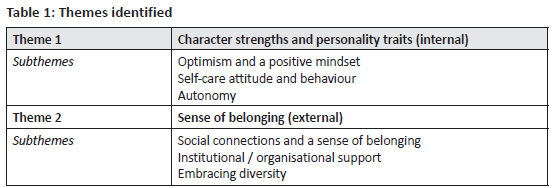
Whilst the university experience posed significant challenges for the student participants, it appears that these difficulties also functioned as a catalyst for personal growth for most of the participants. Students appeared to use several specific and unique characteristics and resources (both internal and external to themselves) to overcome challenges as they transitioned into university life. The themes emerging from the conversations were identified as key contributors to wellbeing and resilience, which in turn seemed to have contributed to the successful psychosocial adaptation of the students. Two core themes and six sub-themes emerged from the thematic analysis of the VFGDs (see Table 1).
Theme 1: Character strengths and personality (attributes internal to participants)
In their descriptions of resilience and wellbeing, the participants discussed various internal attributes that contributed to their resilience and wellbeing, helping them to successfully adapt to university. A number of participants in the study reported on the importance of having an optimistic mindset when they enrolled into university. Amongst others, the following two quotes highlighted this common experience best. One participant stated: "Ultimately, there are people I surround myself around, and obviously if they have positive energy, I will have the positive energy. Cause it like falls back on me. And just having a positive attitude, positive mindset, because I always like to tell myself, I shouldn't worry about things I cannot fix it is out of my control." This was echoed by another participant who added: "You know, you're not motivated to do a lot of things, you know, but I pushed through because, you know, I had hope, I had known it's going to be okay." The literature attests that having an optimistic mindset is an essential tool to push through challenges and achieve positive outcomes, especially within the student population (Molinero et al., 2018). An optimistic mindset is closely related to a growth mindset, which involves being open to change and viewing life's challenges as opportunities for improvement, motivation and engagement (Kapasi & Pei, 2022). This is opposed to the so-called fixed mindset, which is typically characterised by a focus on performance goals aimed at proving competence, a tendency towards self-defensive behaviour, and, ultimately, a decline in performance over time (Dweck & Molden, 2017). The findings from this study would suggest that adopting an optimistic (growth-oriented) mindset can serve as a protective barrier against the adverse life events experienced by students as they arrive on campus.
Another internal attribute that played a significant role in the participants' psychosocial adaptation was that of maintaining a self-care attitude and behaviour. When students were asked to share their success stories about transitioning into the new university environment at the start of the year, they often described a willingness to make use of opportunities to engage in non-academic activities to support their self-care, strengthen their resilience, and enhance their overall wellbeing. One participant highlighted sport as an important factor, stating: "So, I'm currently playing chess for the____. Since from high school chess is the one that boosted my confidence, my self-esteem." Another participant added: "I think my hobby, because I like to eat food. So, every time I go out, I would go out and eat food, come back less stressed, as I say." Participants confirmed that their willing engagement in extracurricular activities that enhance their wellbeing naturally contributed to their self-esteem, self-confidence, and resilience. These elements appear to be vital components of self-care. A previous study linked improvement in student self-esteem, resilience, mental health, and psychological self-care to access to external resources, such as opportunities to build supportive relationships with friends and families while at university (Auttama et al., 2021). This suggests that both the willingness to engage in these activities (an internal factor referred to as a "self-care attitude and behaviour") and the availability of such opportunities (an external factor) play crucial roles in fostering student wellbeing. These findings suggest that self-care education and the provision of related opportunities can be essential components in helping students manage stressors during the orientation period, potentially contributing to successful psychosocial adaptation.
Closely related to the previous attribute, a majority of participants reported that a sense of autonomy greatly contributed to their wellbeing and resilience. This sense of autonomy empowered them to take control of their lives, make their own decisions, and successfully adapt to university life. Two quotes in particular highlight this perspective: " … managing to speak out about the things that were making me to have problem. So, I managed to speak out. By speaking out, that's when my wellbeing became strong." Another went on to say, "So when it comes to this side of university, no one is going to think for you. No one is going to think for you or to come after you that you must do your schoolwork and stuff. So, this side you have to think for your own self for your own future. That's where you have to stand up on your own." Autonomy is a key part of self-determination theory (SDT) (Deci & Ryan, 2000) and is an essential component for the development of intrinsic motivation (Ryan & Deci, 2020). Autonomy has direct applicability in educational settings, leading to positive outcomes (Ryan & Deci, 2020). According to Ryan and Deci (2017), students are more likely to be intrinsically motivated when they feel empowered to make decisions that align with their goals and interests. During the VFGDs, it emerged that in the same environment that has been proven to be challenging to adjust to, students were motivated to push towards their goals and interests as long as they had a sense of autonomy. In line with this, Evans and Boucher (2015, p. 87) opine that throughout a variety of "academic outcomes and student populations, positive impacts have been seen when student autonomy is promoted through meaningful and personally relevant choice". Recognising the potential benefit of creating opportunities for and instilling a sense of autonomous decision-making during the process of transitioning to higher education could support and promote optimal student adaptation in their first year of study.
Theme 2: Sense of belonging (resources external to participants)
In their descriptions of wellbeing and resilience and their potential role in the participants' adaptation to university life, the participants touched on a number of external factors. Forming social connections and a sense of belonging represents a recurring theme. The following two quotes highlight a common expression of connection and belonging amongst first-year students: " … it was like this heart-warming experience, knowing that even though these people are not related to me in a biological sense, they love me, and they will always be here for me". Another mentions a connection with a residence caregiver: "I'm not always open with her as we have very differing opinions about religion and stuff like that. But at least I know that if I have something great to tell, she will be excited with me and she'll be, I don't know. She'll be ululating around me when I tell her." These students appear to value experiences that foster a sense of inclusion and acceptance within the university environment. This finding aligns with the literature showing that students in higher education who feel a stronger sense of social connection and a sense of belonging typically demonstrate higher motivation, greater academic self-confidence, increased academic engagement and better achievement (Pedler et al., 2022). This has also been found to contribute to sustained well-being, resilience and successful adaptation of students at the university (Douwes et al., 2023; Enochs & Roland, 2006; ul Hasan & Channa, 2021; Wimpenny & Savin-Baden, 2013).
Students also identified institutional and organisational support as a crucial factor contributing to their wellbeing and resilience during their first months of university life. For most students, being well-oriented, aware, and prepared for their environment was key. The following quotes underline this sentiment shared by participants. One participant, who initially questioned the meaning and purpose of certain tasks assigned to her which caused her considerable discomfort, expressed that the support she eventually received from the residential committee enhanced her understanding of these tasks, making it easier for her to get involved in residential activities. She remarked: "I didn't understand why must we do telephone duty and what not but now that I understand it, it's much easier because usually when you don't understand what you're doing, why you are doing it, you always find a reason to complain about it. Like why must I sit telephone duty? But once you understand why you are sitting in and what it means to the residence you become more involved." Another participant, who seemed to have benefited from guidance during the admission period, conveyed: "I'd say like the R & O period is very beneficial. I, I would tell everyone to attend it, to participate in it because it helps you settle into university quicker. Firstly, obviously your first year, you may be coming from a different province, you do not know anything. But during R & O there are people, the house committee telling your parents this is what, this is where, this is what it makes you know like what stuff out on campus where everything is." Most students found lack of familiarity with the new environment to be a stumbling block. However, it appears that gradually gaining knowledge and understanding of the institution and its processes contributes to student adaptation, and institutional support offered in this regard was beneficial to students. Elliot and Shin (2002) and Kakada et al. (2019) also find that positive institutional support contributes to students being satisfied with their university experience. Owusu et al. (2014) support this and emphasize the crucial role played by the institution and its orientation programmes in addressing transitional issues experienced by a typically diverse group of students.
Lastly, another key factor that students discussed as a contributor to their wellbeing and resilience and, ultimately, their adaptation process was embracing diversity. The following quote reflects this experience for most students: "what I can say is that I ended up understanding that we have different cultures in this place, and we do things differently. So, I had to tell myself that I will only concentrate on what I know and then learn what I don't know." Another student conveyed: "This small town that I came from was …, well, violently racist, sexist and homophobic and I was always different cause I did not subscribe to racist behaviour or, Um, gender stereotypes and stuff like that. So, coming to _________, coming to university and seeing that. Wow, I'm not the weird one. [Laughing] I am not the [inaudible: 00:12:30] that does not believe in racism. What? So, [Laughing] [I: Hmm] It was eye opening in a manner that I never fit in, I never fit in when I was younger. But here, on the campus, there's at least two or three places where you walk by and find people that who are like you." It is clear that students found it challenging but also welcoming to be in an environment very different from what they were used to. Gradually adapting to and learning to accept different cultures, languages, and sexual orientations made the experience easier. Mampane (2019) agrees with this and highlights how crucial the ability to embrace diversity is to integrate into university life, especially for previously disadvantaged and minority groups in South Africa. This seems to be especially important in the South African context because of the racial and cultural diversity and the potential conflicts arising from the diversity which negatively impact education at all levels, particularly higher education (Mampane, 2019). According to Vandeyar and Mohale (2016), managing diversity has become one of the most significant challenges for higher education institutions. These authors state that the difficulty lies in fostering institutional cultures that genuinely respect and appreciate differences and diversity. Although it is highlighted as a challenging task in higher education institutions, the finding emphasizes that embracing students' unique and diverse lived experiences is an essential component for successfully transitioning at the start of the year. Considering this can potentially inspire ideas for creating opportunities for meaningful interactions in the new environment.
Conclusion
The present study aimed to qualitatively explore and describe students' experiences of resilience and wellbeing, and how they contribute to the psychosocial adaptation of first-year students at a South African university. The students' understanding of wellbeing and resilience was, to a large degree, aligned with definitions of these concepts as found in existing literature, and also alluded to a strong association between these concepts. In addition to this, the findings also shed light on several factors that could protect the resilience and wellbeing of students in higher education. These potential protective or buffer factors, both internal and external to the individual, could assist the student in transitioning to university life and, in so doing, help address the mental health crisis experienced by students in higher education. Both studies indicate that internal and external resources contribute directly or indirectly to students' successful transition at the beginning of their first year of university. Universities would, therefore, do well to encourage optimistic and positive mindsets, self-care attitudes and behaviours, autonomy, social connections, a sense of belonging and embracing diversity, while offering institutional/organisational support programmes aimed at improving students' adaptation.
Limitations and recommendations
The 12 participants who took part in the study were selected through a statistically randomised sampling of participants that formed part of a preceding quantitative study. The challenges experienced in gaining access to a sample large enough to represent the university population were a key limitation of the study. Although this sample was intended to be representative and potentially include more participants, the recruitment process posed challenges mainly due to potential student participants' reluctance to participate. The campus council office assisted as independent facilitators. The student participants often had other responsibilities and academic activities that ran concurrently with data collection which led to poor attendance at the various VFGDs that were presented. The findings may, therefore, not represent the experiences of the broader South African university community. Further, the study was conducted in English, and the ability to read and speak English formed part of the inclusion criteria. Therefore, participants were able to engage with the study in English. Thus, the other key limitation that arose during the VFGDs, was the research team's choice to describe resilience and wellbeing to the first-year student participants, with the intention of helping participants understand the constructs being explored. The descriptions of resilience and well-being were provided to establish a common understanding of these psychological constructs rather than to accommodate language proficiency. However, this may have influenced some of the responses given by the students. To address this, in cases where participants offered descriptions of resilience and wellbeing similar to those provided at the start of the VFGDs, further probing was conducted to explore their subjective understanding of the constructs. A recommendation in this regard is for future researchers to avoid describing these constructs at the beginning of the interviews; if they have to do so, keep the description as short as possible.
A key recommendation from this study would be for higher education to support the successful transition of first-year students by utilising these findings when developing programmes and procedures for student registration and orientation. These findings can aid the development and implementation of guidelines for such interventions, programmes, policies and practices aimed at providing essential support and promoting the resilience and wellbeing of students upon their arrival at the university.
Ethics statement
Ethical approval for the research project was obtained from the Health Research Ethics Committee (HREC) and the Research Gate Keepers Committee (RGKC) of the South African university at which the study was conducted.
Potential conflict of interests
The authors declare no potential conflicts with respect to the research authorship, and or publication of this article.
Funding acknowledgementThe authors received no financial support for this article's research, authorship, and/or publication.
Acknowledgements
The research team would like to thank the participants who shared their sensitive life experiences in the process of navigating a difficult phase in their lives.
References
- Afifi, T. (2018). Individual/relational resilience. Journal of Applied Communication, 46(1), 5-9. https://doi.org/10.1080/00909882.2018.1426707
- Arnett, J. J. (2000). Emerging adulthood: A theory of development from the late teens through the twenties. American Psychologist, 55(5), 469-480. https://psycnet.apa.org/doi/10.1037/0003-066X.55.5.469
- ATLAS.ti Scientific Software Development GmbH. (2023). ATLAS.ti Mac (version 23.2.1) [Qualitative data analysis software]. https://atlasti.com
- Barnova, S., & Tamasova, V. (2018). Risk and protective factors in the life of youth in relation to resilience. Psychology and Pathology of Child, 52(1), 50-59.
- Bates, M., & Miles-Johnson, T. (2010, June 27-30). First year student resilience as a factor in retention and engagement [Conference paper]. Proceedings of the 13th Pacific Rim first year in higher education conference (FYHE), Australia, Adelaide. QUT Publications. https://researchers.westernsydney.edu.au/en/publications/first-year-student-resilience-as-a-factor-in-retention-and-engage/
- Braun, V., & Clarke, V. (2006). Using thematic analysis in psychology. Qualitative Research in Psychology, 3(2), 77-101. https://doi.org/10.1191/1478088706qp063oa
- Breakwell, G. M. (2021). Identity resilience: Its origins in identity processes and its role in coping with threat. Contemporary Social Science, 16(5), 573-588. https://doi.org/10.1080/21582041.2021.1999488
- Burdine, J. T., Thorne, S., & Sandhu, G. (2020). Interpretive description: A flexible qualitative methodology for medical education research. Medical Education, 55, 336-343. https://doi.org/10.1111/medu.14380
- Campbell, F., Blank, L., Cantrell, A., Baxter, S., Blackmore, C., Dixon, J., & Goyder, E. (2022). Factors that influence mental health of university and college students in the UK: A systematic review. BMC Public Health, 22, 1778. https://doi.org/10.1186/s12889-022-13943-x
- Credé, M., & Niehorster, S. (2012). Adjustment to college as measured by the student adaptation to college questionnaire: A quantitative review of its structure and relationships with correlates and consequences. Educational Psychology Review, 24, 133-165. https://doi.org/10.1007/s10648-011-9184-5
- Deci, E. L., & Ryan, R. M. (2000). The "what "and "why "of goal pursuits: Human needs and the self-determination of behavior. Psychological Inquiry, 11(4), 227-268. https://www.tandfonline.com/doi/epdf/10.1207/S15327965PLI1104_01?needAccess=true
- de Oliveira Durso, S., Afonso, L. E., & Beltman, S. (2021). Resilience in higher education: A conceptual model and its empirical analysis. Education Policy Analysis Archives, 29(August - December), 156. https://doi.org/10.14507/epaa.29.6054
- Dlamini, B. I., Tom, R. F., Nel, K. A., & Zogli, L-K. J. (2020). Adjustment experiences of first-year students in South Africa. Academy of Educational Leadership Journal, 24(2), 1-10. https://openscholar.dut.ac.za/server/api/core/bitstreams/901f88c5-6499-48b6-8289-6503030e4bb6/content
- Douwes, R., Metsalaar, J., Pijnenborg, G. H. M., & Boonstra, N. (2023). Well-being of students in higher education: The importance of a student perspective. Cogent Education, 10(1), 2190697. https://doi.org/10.1080/2331186x.2023.2190697
- Duffy, A., Keown-Stoneman, C., Goodday, S., Horrocks, J., Lowe, M., King, N., Pickett, W., McNevin, S. H., Cunningham, S., Rivera, D., Bisdounis, L., Bowie, C. R., Harkness, K., & Saunders, K. E. A. (2020). Predictors of mental health and academic outcomes in first-year university students: Identifying prevention and early-interventions targets. BJPsych Open, 6(3), e46. https://doi.org/10.1192/bjo.2020.24
- Dweck, C. S., & Molden, D. C. (2017). Mindsets: Their impact on competence motivation and acquisition. In A. J. Elliot, C. S. Dweck, & D. S. Yeager (Eds.), Handbook of competence and motivation: Theory and application (2nd ed., pp. 135-154). The Guilford Press.
- Elliot, K. M., & Shin, D. (2002). Student satisfaction: An alternative approach to assessing this important concept. Journal of Higher Education Policy and Management, 24(2), 197-209. https://doi.org/10.1080/1360080022000013518
- Enochs, W. K., & Roland, C. B. (2006). Social adjustment of college freshmen: The importance of gender and living environment. College Student Journal, 40(1), 63-73. https://www.researchgate.net/publication/234616414_Social_Adjustment_of_College_Freshmen_The_Importance_of_Gender_and_Living_Environment
- Esteban-Gonzalo, L., Esteban-Gonzalo, S., Esteban-Cornejo, I., Izquierdo-Gomez, R., Padilla-Moledo, C., Castro-Pinero, J., & Veiga, O. L. (2020). Wellbeing as a protective factor of adolescent health. The Up & Down Study. Child Indicators Research, 13, 1453-1467. https://doi.org/10.1007/s12187-019-09711-w
- Evans, T. M., Bira, L., Gastelum, J. B., Weiss, L. T., & Vanderford, N. L. (2018). Evidence for a mental health crisis in graduate education. Nature Biotechnology, 36, 282-284. https://www.nature.com/articles/nbt.4089
- Flatt, A. K. (2013). A suffering generation: Six factors contributing to the mental health crisis in North American higher education. College Quarterly, 16(1), 1-17. https://archive.org/details/ERIC_EJ1016492
- Goodman, L. (2017). Mental health on university campuses and the needs of students they seek to serve. Building Healthy Academic Communities Journal, 1(2), 31-44. https://doi.org/10.18061/bhac.v1i2.6056
- Hernández-Torrano, D., Ibrayeva, L., Sparks, J., Lim, N., Clementi, A., Almukhambetova, A., Nurtayev, Y., & Muratkyzy, A. (2020). Mental health and well-being of university students: A bibliometric mapping of the literature. Frontiers in Psychology, 11, 1226. https://doi.org/10.3389/fpsyg.2020.01226
- Hill, B. V. (2004). Core values in practice [Paper presentation]. Research conference 2004: Supporting student well-being, Adelaide, South Australia. ACER. https://research.acer.edu.au/cgi/viewcontent.cgi?article=1001&context=research_conference_2004
- Kadison, R., & DiGeronimo, T. F. (2004). College of the overwhelmed: The campus mental health crisis and what to do about it. Jossey-Bass: A Wiley Imprint.
- Kakada, P., Deshpande, Y., & Bisen, S. (2019). Technology support, social support, academic support, service support, and student satisfaction. Journal of Information Technology Education: Research, 18, 549-570. https://doi.org/10.28945/4461
- Kapasi, A., & Pei, J. (2022). Mindset theory and school psychology. Canadian Journal of School Psychology, 37(1), 57-74. https://doi.org/10.1177/08295735211053961
- Kassymova, G. K., Arpentieva, M., Zhigitbekova, B., Schachl, H., Kosherbayeva, A. N., Aganina, K. Zh., Vafazov, F. R., Menshikov, P. V., Golubchikova, M. G., & Korobchenko, A. I. (2023). Building resilience in students: Managed and minimised stress in students. OBM Neurobiology, 7(4), 1-28. http://dx.doi.org/10.21926/obm.neurobiol.2304193
- Kessler, R. C., Berglund, P., Demler, O., Jin, R., Merikangas, K. R., & Walters, E. E. (2005). Lifetime prevalence and age-of-onset distributions of DSM-IV disorders in the National Comorbidity Survey Replication. JAMA Psychiatry, 62(6), 593-602. https://doi.org/10.1001/archpsyc.62.6.593
- Klainin-Yobas, P., Vongsirimas, N., Ramirez, D. Q., Sarmiento, S., & Fernandez, Z. (2021). Evaluating the relationships among stress, resilience and psychological well-being among young adults: A structural equation modelling approach. BMC Nursing, 20(1), 119. https://doi.org/10.1186/s12912-021-00645-9
- Konaszewski, K., Niesiobędzka, M., & Surzykiewicz, J. (2021). Resilience and mental health among juveniles: Role of strategies for coping with stress. Health and Quality of Life Outcomes, 19(1), 58. https://link.springer.com/article/10.1186/s12955-021-01701-3
- Lastoria, M. (2005). College of the overwhelmed: The campus mental health crisis and what to do about it. Growth: The Journal of the Association for Christians in Student Development, 5(5), Article 11. https://pillars.taylor.edu/acsd_growth/vol5/iss5/11
- Lee, T. Y., Cheung, C. K., & Kwong, W. M. (2012). Resilience as a positive youth development construct: A conceptual review. The Scientific World Journal, 2012(1), 1-9. https://doi.org/10.1100/2012/390450
- Levin, M. E., Haeger, J. A., Pierce, B. G., & Towhig, M. P. (2017). Web-based acceptance and commitment therapy for mental health problems in college students: A randomized controlled trial. Behaviour Modification, 41(1), 141-162. https://doi.org/10.1177/0145445516659645
- Lipson, S. K., & Eisenberg, D. (2018). Mental health and academic attitudes and expectations in university populations: Results from the healthy minds study. Journal of Mental Health, 27(3), 205-213. https://doi.org/10.1080/09638237.2017.1417567
- Mak, W. W. S., Ng, I. S. W., & Wong, C. C. Y. (2011). Resilience: Enhancing well-being through the positive cognitive triad. Journal of Counseling Psychology, 58(4), 610-617. https://psycnet.apa.org/doi/10.1037/a0025195
- Mampane, S. T. (2019). Managing diversity in South African higher education institutions. Diversity within diversity management. Diversity within diversity management: Country-based perspectives (pp. 139-156). Emerald Publishing Limited. https://doi.org/10.1108/S1877-636120190000021008
- Martin, J. M. (2010). Stigma and student mental health in higher education. Higher Education Research Development, 29(3), 259-274. https://doi.org/10.1080/07294360903470969
- Masten, A. S., Lucke, C. M., Nelson, K. M., & Stallworthy, I. C. (2021). Resilience in development and psychopathology: Multisystem perspectives. Annual Review of Clinical Psychology, 17, 521-459. https://psycnet.apa.org/doi/10.1146/annurev-clinpsy-081219-120307
- McKay, L., O'Bryan, S., & Kahu, E. R. (2021). "My uni experience wasn't completely ruined": The impacts of Covid-19 on the first-year experience. Student Success, 12(3), 1-13. https://doi.org/10.5204/ssj.1762
- McMillan, J., & Hillman, K. (2004). The emotional wellbeing of young people: School, further study, work and beyond. In Support student wellbeing: What does the research tell us about the social and emotional development of young people? Conference proceedings (pp.85-88). Australian Council for Educational Research. https://research.acer.edu.au/research_conference_2004/3/
- Morales-Rodriguez, F. M. (2020). The relationship between psychological well-being and psychosocial factors in university students. International Journal of Environmental Research and Public Health (IJERPH), 17(13), 147-154. https://doi.org/10.3390/ijerph17134778
- Morales-Rodriguez, F. M. (2021). Fear, stress, resilience and coping strategies during Covid-19 in Spanish university students. Sustainability, 13(11), 5824. https://doi.org/10.3390/su13115824
- National Department of Health (NdoH). (2024). South African ethics in health research guidelines: Principles, processes and structures (3rd ed., p. 137). National Department of Health of the Republic of South Africa. https://www.health.gov.za/nhrec-home/
- Noble, T., Wyatt, T., McGrath, H., Roffey, S., & Rowling, L. (2008). Scoping study into approaches to student wellbeing: Final report. Australian Catholic University and Erebus International. Retrieved from https://researchers.westernsydney.edu.au/en/publications/scoping-study-into-approaches-to-student-wellbeing-final-report/
- Olasupo, M. O., Idemudia, E. S., & Dimatkakso, M. (2017). Adjustment. psychological well-being and mental health of first year students in a South African university. North American Journal of Psychology, 20(1), 55-68. https://repository.nwu.ac.za/items/bcaef90f-b2b5-4267-888c-f2ad9b09829e
- Parker, H., Hughes, A., Marsh, C., Ahmed, S., Cannon, J., Taylor-Steeds, E., Jones, L., & Page, N. (2017). Understanding the different challenges facing students in transitioning to university particularly with a focus on ethnicity. New Directions in the Teaching of Physical Sciences, 12(1). https://doi.org/10.29311/ndtps.v0i12.2450
- Patel, C. T., Ramgoon, S., & Paruk, Z. (2009). Exploring religion, race and gender as factors in life satisfaction and religiosity of young South African adults. South African Journal of Psychology, 39(3), 266-274. https://doi.org/10.1177/008124630903900302
- Pedler, M. L., Willis, R., & Nieuwoudt, J. E. (2022). A sense of belonging at universities: Student retention, motivation and enjoyment. Journal of Further and Higher Education, 46(3), 397-408. https://doi.org/10.1080/0309877X.2021.1955844
- Poots, A., & Cassidy, T. (2020). Academic expectation, self-compassion, psychological capital, social support and student wellbeing. International Journal of Educational Research, 99, 1-9. https://doi.org/10.1016/j.ijer.2019.101506
- Punia, N., & Malaviya, R. (2015). Psychological well-being of first year college students. Indian Journal of Education Studies: An Interdisciplinary Journal, 2(1), 60-68. https://www.academia.edu/66922052/Psychological_Well_Being_of_First_Year_College_Students
- Rayani, A. M., Alodhailah, A. M., & Alreshidi, S. M. (2024). A cross-sectional study of resilience and well-being amongst nursing students in Saudi Arabia. SAGE Open Med, 12. https://doi.org/10.1177/20503121241245224
- Rowe, K. S., Rowe, K. J., & Pollard, J. (2004). Literacy, behaviour and auditory processing: Building "fences" at the top of the "cliff" in preference to "ambulance services" at the bottom. In Supporting student wellbeing: What does the research tell us about the social and emotional development of young people? Conference proceedings (pp. 34-52). Australian Council for Educational Research. https://research.acer.edu.au/research_conference_2004/6
- Ryan, R. M., & Deci, E. L. (2017). Self-determination theory: Basic psychological needs in motivation, and wellness. Guilford Publishing. https://books.google.co.za/books?hl=en&lr=&id=Bc_DDAAAQBAJ&oi=fnd&pg=PP1&ots=QJhejblO4f&sig=Bm5oApw3QPmBQ0_AXAWtBzfaUYc&redir_esc=y#v=onepage&q&f=false
- Sabina, C., & Banyard, V. (2015). Moving toward well-being: The role of protective factors in violence research. Psychology of Violence, 5(4), 337-342. https://doi.org/10.1037/a0039686
- Salehi, A., Marzban, M., Sourosh, M., Sharif, F., Nejabat, M., & Imanieh, M. H. (2017). Social well-being and related factors in students of School of Nursing and Midwifery. International Journal of Community Based Nursing & Midwifery, 5(1), 82-90. https://pmc.ncbi.nlm.nih.gov/articles/PMC5219568/
- Sarker, M., & Fletcher, D. (2014). Psychological resilience in sport performers: A review of stressors and protective factors. Journal of Sports Science, 32(15), 14-34. https://doi.org/10.1080/02640414.2014.901551
- Sawyer, M. (2004). The mental health and well-being of young people in Australia [Paper presentation]. Research conference 2004: Supporting student well-being, Adelaide, South Australia. ACER. https://research.acer.edu.au/cgi/viewcontent.cgi?article=1001&context=research_conference_2004
- Seligman, M. E. P., Ernst, R. M., Gillham, J., Reivich, K., & Linkins, M. (2009). Positive education: Positive psychology and classroom interventions. Oxford Review of Education, 35, 293-311. https://doi.org/10.1080/03054980902934563
- Sivertsen, B., Knudsen, A. K. S., Kirkøen, B., Skogen, J. C., Lagerstrøm, B. O., Lønning, K. J., Kessler, R. C., & Reneflot, A. (2023). Prevalence of mental disorders among Norwegian college and university students: A population-based cross-sectional analysis. The Lancet Regional Health-Europe, 19(34), 100732. https://doi.org/10.1016/j.lanepe.2023.100732
- Teherani, A., Martimianakis, T., Stenfors-Hayes, T., Wadhwa, A., & Varpio, L. (2015). Choosing a qualitative research approach. Journal of Graduate Medical Education, 7(4), 669-670. https://doi.org/10.4300/JGME-D-15-00414.1
- Theron, L., Murphy, K., & Ungar, M. (2022). Multisystemic resilience: Learning from youth in stressed environments. Youth & Society, 54(6), 1000-1022. https://doi.org/10.1177/0044118X211017335
- ul Hasan, N., & Channa, M. A. (2021). Relationship between college students' sense of belonging and academic resilience. Journal of Development and Social Sciences, 2(3), 426-439. https://doi.org/10.47205/jdss.2021(2-III)36
- Ungar, M. (2008). Resilience across cultures: Research notes. The British Journal of Social Work, 38(2), 218-235. https://doi.org/10.1093/bjsw/bcl343
- Van Breda, A. D. (2018). Resilience of vulnerable students transitioning into a South African university. Higher Education, 75(6), 1109-1124. https://doi.org/10.1007/s10734-017-0188-z
- Walsh, F. (2003). Family resilience: A framework for clinical practice. Family Process, 42(1), 1-8. https://doi.org/10.1111/j.1545-5300.2003.00001.x
- Wimpenny, K., & Savin-Baden, M. (2013). Alienation, agency and authenticity: A synthesis of the literature on student engagement. Teaching in Higher Education, 18(13), 311-326. https://doi.org/10.1080/13562517.2012.725223
- Wong, J. G. W. S., Cheung, E. P. T., Chan, K. K. C., Ma, K. K. M., & Wa Tang, S. (2006). Web-based survey of depression, anxiety and stress in first-year tertiary education students in Hong Kong. Australian & New Zealand Journal of Psychiatry, 40(9), 777-782. https://doi.org/10.1080/j.1440-1614.2006.01883.x
- Wong, P. T. P. (2019). Responsibility is the key to surviving and thriving in dangerous times. Positive Living Newsletter. https://www.meaning.ca/article/what-is-the-greatest-need-today/
- Woolf, S., Zemits, B., Janssen, A., & Knight, S. (2019). Supporting resilience in first year of university: Curriculum, consideration and cooperation. Journal of Academic Language & Learning, 13(1), A-108-A-123. https://journal.aall.org.au/index.php/jall/article/view/505
- Wright, T. A., & Cropanzano, R. (2004). The role of psychological well-being in job performance: A fresh look at an age-old quest. Organizational Dynamics, 33, 338-351. http://dx.doi.org/10.1016/j.orgdyn.2004.09.002
Accepted 11 December 2025
Published 18 August 2026