Enhancing student engagement support through advising learning communities: A multi-campus experience
Abstract
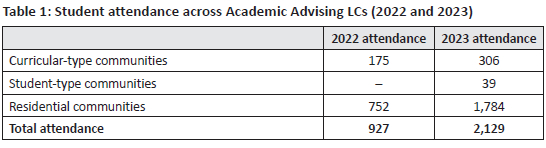
Student engagement includes both the actions of students and the practices of institutions. Learning communities (LCs) are educational programmes that combine both curricular and co-curricular experiences for students and serve as a way to increase participation in high-impact practices to boost engagement and help students transition into university. This reflective case study offers a framework to enhance student engagement by providing targeted support strategies through the Central Academic Advising Learning Communities (CAALC) project at the University of the Free State (UFS). The article shows how themes of student engagement, supported by Astin's Student Involvement Theory (SIT), were used to develop the said project for undergraduate students. Between 2022 and 2023, a total of 2,129 students from the residential communities and 927 students from the curricular and student-type communities participated in all the project initiatives. Residential communities are on-campus housing arrangements, where students enrolled in two or more shared programmes reside closely together. In contrast, curricular and student-type communities are tailored for specific groups, such as students who are co-enrolled in multiple courses (often from different fields) unified by a common theme, such as students with disabilities, commuter students, probationary students, and so forth. In the first two years of the project's implementation, participation trends and feedback were collected at the end of each year, with the students' voices informing the strategy for the following year. The results indicated that student behaviour, sense of belonging and peer support, learning outcomes, and institutional support influence students' level of engagement in learning. The study recommends a framework that potentially enhances institutional perspectives on student engagement and could be used to support the creation of environments more conducive to learning and fostering a sense of belonging through intentionally designed initiatives and the sharing of effective, evidence-based practices.
Academic advising; learning communities; student engagement; student involvement theory
Abstract
Go nna le seabe ga baithuti go akaretsa ditiro tsa baithuti mmogo le ditsela tsa go bereka tsa ditheo. Mekgatlho ya go ithuta ke mananeo a thuto a a kopanyang maitemogelo a dithuto le a a kwa ntle ga phaposi-borutelo, mme a bereka e le tsela ya go oketsa go nna le seabe mo ditirong tse di nang le le kakanyo e kgolo go godisa kgatlhego le go thusa baithuti go fetela mo yunibesithing. Thutopatlisiso eno e fana ka letlhomeso la go tokafatsa go nna le seabe ga baithuti ka go fana ka tshegetso e e totobetseng le dikano ka porojeke ya bogare ya go gakolola mekgatlho ya go ithuta mo theong ya thuto e e kwa godimo. Atikele eno e bontsha kafa merero ya go nna le seabe ga baithuti, e e tshegeditsweng ke Tiori ya go nna le seabe ga baithuti (SIT) ya ga Astin, e dirisitswe go tlhabolola porojeke e e umakilweng ya baithuti ba dikirii ya ntlha kwa yunibesithing ya Freistata (UFS). Magareng ga ngwaga wa 2022 le 2023, palogotlhe ya baithuti ba le 2,129 go tswa mo mekgatlhong ya bonno le baithuti ba le 927 go tswa mo mekgatlhong ya dithuto le ya mofuta wa baithuti ba nnile le seabe mo matsapeng otlhe a porojeke. Mekgatlho ya bonno ke thulaganyo ya go nna mo khamphaseng mo baithuti ba ba ikwadisitseng mo mananeong a le mabedi kgotsa go feta ba nnang mmogo gaufi. Go farologana le moo, mekgatlho ya dithuto le ya mofuta wa baithuti e diretswe ditlhopha tse di rileng, jaaka baithuti ba ba kwadisitseng dithuto tse di tshwanang (gantsi go tswa mo mafapheng a a farologaneng) mme ba kopanngwa ke morero o le mongwe, jaaka baithuti ba ba tshelang ka bogole, baithuti ba ba tswang kwa gae, baithuti ba ba tlhokometsweng ka ntlha ya maduo, jalo le jalo. Mo dingwageng tse pedi tsa ntlha tsa go diragatsa porojeke eno, dipoelo tsa kopanelo le maikutlo di ne tsa kgobokanngwa kwa bokhutlong jwa ngwaga mongwe le mongwe, mme mantswe a baithuti a ne a tlhotlheletsa maano a ngwaga o o latelang. Diphetogo di ne tsa bontsha tsholofelo ya baithuti ba ba ratang go nna karolo ya setšhaba le komuniti, segolobogolo mo palong e e oketsegileng ya maloko. Mokgwa o o tlhalositsweng wa go tlhama porojeke eno, o tla oketsa maitemogelo a institushene mabapi le boikgatsatso jwa baithuti, mme o ka dirisiwa go tshegetsa tlhokego ya go tlhola mafelo a a siametseng go ithuta le go rotloetsa maikutlo a go nna karolo ya sengwe, ka matsapa a a tlhamilweng ka maikaelelo le go abelana ka ditsela tse di nang le bosupi le tse di nayang maduo.
Tlhokomelo ya thuto; mekgatlho ya go ithuta; go nna le seabe ga baithuti; tiori ya go nna le seabe ga baithuti
Introduction and background
The University of the Free State (UFS) is a multi-campus institution located in the Free State, South Africa, with two campuses in Bloemfontein and a rural campus in Qwaqwa. In 1904, it was designed for 8,000 students but over the past 121 years, it has grown to host approximately 41,900 students across seven faculties (UFS, 2025). Over a relatively short period, too, the UFS has shifted from being a predominantly white, Afrikaans-speaking university - in the late 1980s and early 1990s - to one where, currently, 90% of its students are black African, the majority of whom are first-generation students, meaning they are the first in their families to receive tertiary education. This shift in the student demographics at the UFS has come about as South African higher education focused extensively on widening access, promoting further inclusivity, and driving economic development. Part of widening access has also been to support students financially. The National Student Financial Aid Scheme (NSFAS) provides financial support to students whose families earn less than a particular threshold income. Approximately seventy per cent of the undergraduate student population is supported by NSFAS funding, illustrating the socio-economic backgrounds and environments from which the students come (Mokgotho et al., 2023).
As a consequence of this widened access, the sector has experienced increased student enrolment, particularly from commuter students, as reported by the Council on Higher Education (CHE) (2022). As aforementioned, the UFS has also experienced a rapid increase in the number of students it accommodates. However, access to higher education is not enough, as students need to persist and succeed in their studies. Therefore, as commuter student enrolment increases, it becomes crucial for institutions to adjust and provide tailored curricular and co-curricular support to ensure student success and engagement (Van Zyl & Fourie-Malherbe, 2021). This is particularly important because commuter students frequently encounter challenges in integrating into the university environment, which hinders their engagement and sense of belonging (Pokorny et al., 2017; Ishitani & Reid, 2015; Tinto, 1997).
The literature supports that once students have accessed a university and engaged in co-curricular activities, they experience several advantages, including higher average marks than their peers, being more connected to the university and their classmates, being retained at a higher rate, feeling closer to faculty, and making a smoother transition to university (Stassen, 2003; Williams, 2000). Furthermore, from an international perspective, Kuh (2008) has listed 11 educational activities as high-impact practices, which include learning communities (LCs) that help students develop essential skills such as critical thinking, active learning, collaboration, integration of prior knowledge, and a sense of belonging. While students often start higher education eager to earn a degree, they may not be sufficiently prepared to succeed (Weinstein et al., 2011). Thus, participating in learning communities helps address this issue by offering a strong support network that serves as a foundation for developing self-sufficiency and achieving student success. O'Regan (2023) also confirms that LCs have emerged as an effective framework for enhancing student engagement and fostering a sense of community among students.
Zhao and Kuh (2004) and Scardamalia and Bereiter (2021) describe learning communities as courses where faculty and students learn together through purposeful activities designed to foster engagement in both academic and social learning, inside and outside the classroom. By taking courses together and regularly discussing their experiences within a structured programme, students' involvement in a learning community is believed to create better opportunities for meaningful undergraduate experiences at university (Ross & Okojie, 2023). As South African higher education focuses on promoting inclusivity and driving economic development, equity should mean more than access to HE; that is, it must incorporate equal opportunities - environments in which all students genuinely have every chance of succeeding through academic support, excellent teaching and mentoring, and other initiatives (CHE, 2022). The overarching aim of this study is thus to explore how participation in academic advising LCs influences student engagement by examining the experiences, perceptions, and interactions of students with academic advisors within these communities.
Conceptualising academic advising and student engagement
To explore how participating in academic advising LCs influences student engagement, it is important to understand that the foundation of student engagement revolves around the interaction between students' involvement in effective educational behaviours and the degree to which institutions establish environments that encourage students to engage in these effective educational behaviours. This implies a sense of accountability on the part of institutions to plan interventions, design spaces, and compile curricular and co-curricular high-impact practices to best support students' optimal learning and development (CTL, 2018). In this study, student engagement refers to both the actions of students and the practices of institutions (CTL, 2018; Kuh, 2008). Academic advising is one way to achieve student engagement. Based on the teaching and learning mission of higher education, academic advising is a series of intentional interactions with a curriculum, a pedagogy, and a set of student learning outcomes. As a high-impact practice, advising synthesizes and contextualises students' educational experiences within the frameworks of their aspirations, abilities, and lives to extend learning beyond campus boundaries and timeframes. (NACADA, 2024). Determining which practices have an impact on student success has been well researched internationally, but context matters. According to Naidoo and McKay (2018), graduating in the minimum time has been the main indicator of student success. Until recently, however, with the change and transformation that have taken place in higher education globally, and certainly in South Africa, a redefinition of student success is required.
Nationally, efforts to improve student engagement are useful for identifying which practices are effective investments in student success. As one of these investments, academic advising is seen as one of the best ways to foster students' intellectual, personal, and social growth. It is a service that connects students' academic and personal lives, promoting overall development (CTL, 2018; Tiroyabone & Strydom, 2021). According to a 2018 report from the UFS Centre for Teaching and Learning, students engaged in advising programmes generally develop better relationships with various staff members, particularly academic and support staff, as well as their peers (CTL, 2018). In South Africa, Tiroyabone and Strydom (2018, p. 4) state that the purpose of academic advising is "to empower students in their learning development process to explore and align their personal, academic, and career goals." Within this framework, academic advising aims to enhance student involvement and enrich their understanding of various concepts (Tiroyabone & Strydom, 2021; CTL, 2018; Strydom et al., 2017).
Student Involvement Theory as a framework for designing learning communities
The guiding framework of this study is Student Involvement Theory (SIT) through which Astin asserts that students "learn by being involved," meaning that when students are actively participating in their learning, they derive more benefits from their college experience (Astin, 1984, p. 33). Characteristics of students who are involved include those who devote considerable energy to studying, spend a lot of time on campus, participate actively in student organisations, and interact frequently with faculty members and their peers (Astin, 1984). This supports the study's purpose to confirm that student participation in LCs influences their engagement, particularly involvement in both curricular and co-curricular learning activities. This study further confirms that LCs contribute to both students' academic and social integration into the institution, ultimately enhancing their engagement. In higher education (HE), Astin's paper on student involvement is often cited as one of the founding approaches for student engagement; his theory was proposed to support efforts in HE to design effective learning environments (O'Regan, 2023). Astin (1984) highlights five postulates in his theory that apply to this study:
• Involvement includes physical and psychological energy that can either be very general or specific.
• Involvement occurs along a continuum, and students manifest different degrees of involvement, which vary depending on the individual and the situation.
• Involvement can be measured qualitatively or quantitatively.
• The level of development and learning associated with a programme is directly related to the quality and quantity of involvement within that programme.
• Any educational policy's success is inextricably linked to its ability to increase involvement.
According to Astin's findings, students who invest more in their university experience get more out of their university experience, which ultimately influences their overall development (Johnson, 2022). Similarly, a student's actions during their time at university hold significance, but so do their emotional experiences and the establishment of a strong sense of belonging within the institution and community (Berry et al., 2024; Sithaldeen et al., 2022).
Although the theory holds considerable influence, it has faced criticism for its Western-centric perspective and its limited relevance in diverse sociocultural settings. For example, in the context of higher education in South Africa, which comprises first-generation students and commuters from various ethnicities, languages, religions, and cultural traditions, students may engage in ways that differ from Astin's original sample of students in the United States. Additionally, the theory emphasizes observable behaviours such as participation in campus activities, which may not align with the values or lived realities of students from collectivist cultures or marginalised backgrounds (Hernandez et al., 1999). However, given that South Africans are influenced by African philosophies such as ubuntu and first-generation students are usually from marginalised backgrounds, the SIT aligns with the values of South African students.
Contrastingly, Tinto's (1993) model of Student Retention highlights the role of academic and social integration in student persistence; however, it has also been critiqued for its limited consideration of systemic inequalities and non-traditional student experiences (Berger & Milem, 1999). However, compared to Tinto's model, Astin's SIT offers more nuanced understandings of student engagement and retention, particularly in multicultural and structurally diverse educational environments. Thus, the academic experience is often narrowly focused on classroom activities, but it should also encompass involvement in campus events, sports, and opportunities for professional growth. Astin's framework proves beneficial for this study as it aids practitioners in creating environments that better promote student learning (Johnson, 2022) and offers valuable insights into how LCs can be structured and implemented to enhance and support the engagement of diverse student groups (first-generation, residential, commuter, or probation, etc.).
Purpose of the study
The South African HE sector needs to develop new pathways for student success that are inclusive, transformative, responsive, and relevant (Wilson-Strydom, 2015). Students arrive at university with various needs that can influence their chances of achieving academic success (Kuh et al., 2006; Tinto, 1997). Traditionally, meeting these needs has been the responsibility of student affairs practitioners, who provide a variety of co-curricular services, including academic advising (AA) (Schreiber, 2014). Co-curricular programmes create safe spaces where students can connect, share experiences, and build support networks (Bowman & Rosser, 2019). The informal nature of such programmes allows for quick adaptation to emerging student needs (Schreiber, 2014). However, this informality can also foster a less rigorous academic mindset and hinder efforts to generate scholarly work on these practices. Without proper research on the application of LCs in national higher education and academic advising-focused contexts it becomes challenging to share best practices and gather empirical evidence on how and why impacts are achieved, which is essential for encouraging institutional investment in effective strategies.
Considering this, the Central Academic Advising (CAA) office at the UFS sought to implement a project offering strategies to enhance the engagement and success of undergraduate commuter students in a higher learning institution. The Central Academic Advising Learning Communities (CAALC) project was established in 2022. According to Lenning and Ebbers (1999), learning communities can take place in the following forms:
• Curricular learning communities are made up of students co-enrolled in two or more courses (often from different disciplines) that are linked by a common theme;
• Residential learning communities organise on-campus living arrangements so that students taking two or more common courses live in close physical proximity; and
• Student-type learning communities are specifically designed for targeted groups, such as academically underprepared students, historically underrepresented students, students with disabilities, or students with similar academic interests, for example women in math, science, etc.
Owing to the longstanding relationship between the CAA and Residence Life (Housing and Residence Affairs) offices, the majority of the students connect through on-campus residential living by attending academic workshops offered by the advisors and requested by the elected student leaders. This increases the opportunities for out-of-class interactions and supplementary learning opportunities. The other student populations that connect in the curricular communities consist of commuter (off-campus) students who voluntarily sign up for membership at the beginning of each academic year.
Signing up for CAALC membership includes receiving communication from the senior advisor/project lead, which is related, but not limited, to upcoming initiatives, activities of the project, workshops offered by other student support offices, and vacancies for student jobs and volunteering opportunities on campus. The student-type communities include students who connect through specifically designed student organisations and associations (i.e. bursary-funded organisations, student-athletes, and faculty-specific student chapters, etc.) who request ad-hoc group academic advising support from the senior advisor/project lead. The students in the residential and student-type learning communities are not required to be members signed up to CAALC.
The project activities begin post-registration, usually on 1 March, with the official marketing and CAALC membership sign-up. The marketing of the membership takes place through the UFS student news marketing platform and the advising social media platforms (i.e. Facebook and Instagram). Regarding membership statistics, the total number of students who signed up in 2022 was 496 and 531 in 2023. This indicates an increase of 35 students from 2022, with 387 of these students being from the Bloemfontein campus, and 144 from the Qwaqwa campus. Additionally, the LCs also engage with the following student-type groups; 10 students funded by the Old Mutual Education Fund, 24 students from the Empower Campaign (high-performing football athletes), 10 students funded by the Rural Education Access Programme (REAP), and the Law female students affiliated with the South African Women Lawyers Association (SAWLA) student chapter. Although the project involves three forms of LCs, the study will focus specifically on the curricular learning communities with the following objectives:
• To explore how CAALC enhances the engagement of undergraduate commuter students (from a student involvement framework) to meet their varying needs within the university context.
• To contribute to the underexplored impact of LCs in national HE and advising contexts.
• To contribute to empirical evidence on the how and why of impact achievement and generate national scholarly work on student engagement support programmes and practices.
Methodology
Research design
This study employed a qualitative approach to gain a comprehensive understanding of how academic advising learning communities influence student engagement. The rationale for using qualitative methods is that they are superior to other approaches for identifying assumptions, expectations, and behaviour (Ivala & Kioko, 2013), which justifies the need to capture both measurable outcomes and rich, contextual insights aligned with Astin's Theory of Student Involvement, emphasizing both the behavioural and psychological investment of students in learning.
Sample
The sampling process began with an open call for participation communicated to all registered undergraduate students via the Blackboard Student Organisation announcements and the Academic Advising Office's social media platforms (Instagram and Facebook). This broad outreach aimed to ensure the visibility and accessibility of the Central Academic Advising Learning Communities (CAALC) project across the student population. Students who responded to the invitation and voluntarily signed up for membership - either at the beginning of the first or second semester - formed the initial pool of potential participants. From this pool, purposive sampling was employed to select participants for the study. This method was chosen to ensure fair representation across:
• Mainstream and extended programmes,
• All seven faculties,
• Different academic years, and
• Both Bloemfontein main and Qwaqwa campuses.
Response rates varied depending on the semester and the effectiveness of the communication channels utilised. Voluntary sign-up processes typically resulted in self-selection bias, where students who were more motivated, engaged, or aware of academic advising support services were more likely to participate. This might possibly have led to an overrepresentation of students who were already proactive in seeking academic support. Furthermore, the following potential biases were acknowledged:
• Self-selection bias: Students who opted into the CAALC project may differ systematically from those who did not, particularly in terms of academic motivation, awareness of support services, or digital literacy.
• Digital access bias: communication relied heavily on online platforms, which may have excluded students with limited internet access or low engagement with institutional social media platforms.
• Campus representation bias: although efforts were made to include students from both campuses, logistical and contextual differences between Bloemfontein and Qwaqwa might have influenced participation rates.
• Programme imbalance: despite purposive sampling, some programmes or faculties might have had higher or lower representation due to varying levels of student interest or awareness.
To mitigate these biases, the sampling strategy prioritised diversity and representation, and the study design included contextual analysis to interpret findings within the scope of these limitations.
Data collection
Two forms of feedback surveys were used to determine students' experiences and perceptions from engaging in the webinars, workshops, and LC activities. The surveys were adapted from students' lived experiences within advising learning communities. The surveys included only biographical items and open-ended items that were aligned with Astin's Theory of Student Involvement, focusing on:
• Perceived value of the learning communities.
• Sense of belonging and peer support.
• Psychological motivation and academic identity.
• Engagement with faculty and advisors.
The use of the two surveys enabled data triangulation, which strengthens the research findings by cross-referencing information from different participants' experiences, thereby enhancing the credibility and depth of the results. The instruments were chosen to align with the study's theoretical framework and to capture both measurable outcomes of the project and nuanced student perspectives. The two surveys were created on the Questback survey solution and feedback platform; the links were shared with the participants at the end of the facilitated activities and via email following the activities. Between 2022 and 2023, approximately 520 participants completed both surveys. The first survey was filled out by all students who had attended the project's activities, whether they were members or not, excluding students from the residential communities. The second survey was completed solely by students who were members in 2022 or 2023, sharing their perceptions and experiences of membership.
Data analysis
The qualitative data collected through open-ended survey responses were analysed by the researcher/project lead advisor using thematic analysis, following the six-phase approach outlined by Braun and Clarke (2006). This method involves systematically identifying, analysing, and reporting patterns (themes) within the data to provide a rich and detailed account of student perceptions and experiences. The latent level of thematic analysis was conducted to explore the underlying ideas, assumptions, and conceptual frameworks that shape students' engagement in academic advising learning communities (LCs). This approach enabled the project lead to uncover deeper insights into the factors that enhance or hinder student interest and involvement. The initial coding was conducted by the researcher, who was familiar with the context of the study and trained in qualitative analysis. The researcher read the data multiple times to become immersed in the content and then generated initial codes independently. The researcher then compared the codes and discussed collaboratively with an independent researcher to identify areas of agreement and resolve discrepancies. To enhance the trustworthiness and reliability of the thematic analysis, the project lead/researcher ensured the following:
• The use of investigator triangulation, where an independent researcher contributed to the development of the themes to reduce individual bias.
• The development and repeated refinement of a codebook to ensure consistency in coding across the dataset.
• The maintenance of an audit trail, documenting decisions made during the coding and theme development process to ensure transparency and replicability.
Through this rigorous and collaborative process, the project lead refined and validated the final themes, ensuring that they accurately represented the data and aligned with the research aims.
Ethical considerations
During the implementation of this project and study, all participants were treated with respect and sensitivity. Activities carried out during the study were communicated to the participants, and voluntary informed consent was sought from every student who participated through the completion of an RSVP link for each initiative and membership registration. The anonymity of participants was also assured. It is noteworthy that, when the project was carried out, the Centre for Teaching and Learning (where the case study was conducted) did not require ethical clearance. Nonetheless, the Director of Student Success in the department provided permission for the study to proceed based on the ethical considerations outlined above.
Results and discussion
The following four themes were identified through data analysis, which was done using the latent level of thematic analysis (Braun & Clarke, 2006): (1) student behaviour/attitude; (2) sense of belonging and peer support; (3) learning outcomes; and (4) institutional support.
Student behaviour/attitude
The student behaviour/attitude theme aligns with postulates one and two of the SIT. These postulates relate to involvement, looking at how much physical and psychological energy a student invests in their academic life, and how students' levels of involvement occur along a continuum and vary based on the individual and the situation. The data revealed that 33 out of 335 students, after participating in the CAALC initiatives, recognised mistakes they had made in their learning and negative habits that led to poor academic performance. Furthermore, the students expressed that setting goals for the upcoming semester felt attainable, and they experienced reduced anxiety and increased motivation to enhance their situation by developing a solid schedule, effective study strategies, and maintaining a healthy diet. Only one student explicitly remarked on feeling engaged during one of the project initiatives, which is insufficient to represent the entire student sample group. Consequently, the data support the first and second postulates, that students exhibit differing levels of involvement, likely influenced by a variety of factors including their interests, external circumstances, and institutional support.
Table 1 shows that most students who participated in the CAALC initiatives between 2022 and 2023 came from residential communities, followed by those from curricular-type and student-type communities. The literature indicates that living arrangements are an important aspect of student engagement because of the unique opportunities available in the environment (Astin, 1984; Chickering, 1974; Pascarella & Terenzini, 2005; Worsley et al., 2021). As a result of the living arrangements, institutional housing, and residential programmes, it is clear that residential communities would experience the highest attendance. Interestingly, student participation from the curricular-type communities grew over the two years, while students from the student-type communities initially were not involved with CAALC in the first year but took part in the following year. This illustrates that students are not equally engaged in all facets of their education; they tend to be more committed to their curricular (academic) activities, while their co-curricular participation may vary or even be non-existent. Again, these student behaviours align with Astin's postulates that students show varying degrees of involvement (engagement) depending on the individual and the context.
Sense of belonging and peer support
The sense of belonging and peer support theme corresponds with the second and third postulates of the SIT. As previously mentioned, the second postulate indicates that students' levels of engagement occur on a spectrum and differ based on individual circumstances. In contrast, the third postulate asserts that engagement can be assessed both qualitatively (e.g. depth of involvement) and quantitatively (e.g. time spent in class) (Astin, 1984). Schudde (2011) discovered that students residing on campus experience greater social support and have more opportunities for co-curricular activities compared to commuter students. This finding aligns with the abovementioned discovery and highlights the differences observed in attendance between students from residential communities and those from curricular and student-type communities. Nonetheless, about 16 out of 335 participants noted how the CAALC initiatives encouraged extensive interaction, allowing the sharing of ideas and solutions for student improvement and learning from peers' experiences.
The low number of student responses in this theme aligns with Astin's second postulate, which suggests that students' levels of engagement vary based on individual circumstances. It may also indicate that most of the 335 students did not feel a sense of belonging and peer support from attending the CAALC initiatives. Additionally, the few insights shared by students involved in the initiatives show that returning to campus post-COVID-19 was difficult, but they managed these challenges with the support and guidance provided through the project. Berry et al. (2024) and Sithaldeen et al. (2022) confirm that student engagement is crucial to what students experience at university, including how they feel and whether they develop a strong sense of belonging to the institution and its community.
Learning outcomes
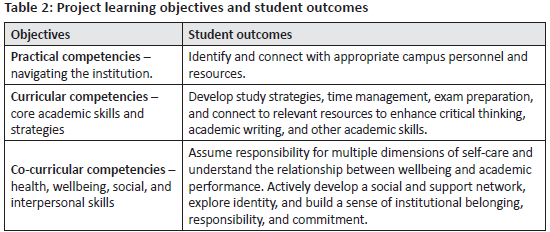
The learning outcomes theme aligns with the fourth postulate of the SIT. This postulate suggests that the level of development and learning associated with a programme is directly related to the quality and quantity of involvement within that programme. It further emphasizes the direct link between involvement and educational outcomes. The learning objectives and outcomes of the project can be understood through the competencies shown in Table 2.
Based on the data collected, 251 out of 335 student responses to the open-ended survey revealed that participating in the CAALC initiatives and being members provided them with valuable insights into effective academic skills and strategies, as well as an understanding of how their wellbeing relates to their academic performance. Studies indicate that students often prioritise other activities, like socialising or academic responsibilities, over sleep, leading them to place less importance on rest compared to their daily engagements (Paterson et al., 2019; Pegado et al., 2025). With that said, consistent with the learning outcomes of the project, students remarked that, besides finding ways to improve their time management skills, they also gained insights about non-academic matters, such as maintaining a healthy diet and establishing healthy sleeping habits.
The 'Road to Exams' webinar emerged as the most sought-after initiative, with 73 students sharing their insights on the webinar, which equipped them with practical strategies for exam preparation and educated them about the application of institutional exam policies to excel in their mid-year and year-end examinations. Aligning with literature stemming from Astin's SIT, it is recommended that educators focus less on what they do and more on what the student does: how motivated the student is and the amount of time and effort they invest in the learning experience. Consequently, increased and enhanced engagements from students correlate with greater learning and development outcomes (Astin, 1984, 1999).
Institutional support
The theme of institutional support aligns with the second and fifth postulates of the SIT. The second postulate addresses the varying levels of student engagement, which can be affected by a variety of factors, including the support provided by institutions. In contrast, the fifth postulate asserts that the effectiveness of any educational policy is fundamentally tied to its capacity to enhance student involvement. For any educational policy or programme to succeed, it must promote increased participation among students. This connection links the theory to institutional practices and decision-making processes (Astin, 1984).
Twenty-two out of 335 students indicated that the institutional support they received played a role in their engagement levels: this included gaining awareness of the available support services, especially in health and wellness; interacting with student support professionals who provided important contact information; understanding the various forms of academic advising; and making regular visits to the office. These results support Kuh's (2001) argument that institutional environments that are perceived by students as inclusive and affirming may lead to higher levels of student engagement in their studies. Contrastingly, some students identified institutional factors that hindered their engagement, such as experiencing unstable internet connectivity during the webinars when participating remotely, a need for content that includes more concrete examples of applying study skills across various subjects/modules, and a preference for face-to-face initiatives due to challenges with load shedding off-campus. The findings above highlight the significance of institutional policies and practices in influencing student engagement levels in learning (Pascarella & Terenzini, 1991; Astin, 1984).
Limitations
A significant limitation of the study is the small sample group of students from the curricular learning communities, which is not representative of the broader undergraduate student population at the institution. Furthermore, Yin (2014, as cited in Priya, 2021) notes that case studies, like experiments, are generalisable to theoretical propositions rather than populations. This implies that the findings from this university case study can contribute to the refinement or development of broader theories but cannot be directly generalised to all similar contexts or institutions.
In addition to these limitations, the study relied heavily on self-reported survey data, which introduces the possibility of response bias, as participants may have provided socially desirable answers or misremembered details. The voluntary nature of participation also raises concerns about selection bias, as those who chose to participate may differ in meaningful ways from those who did not. Moreover, the study lacked formal institutional ethical clearance, which may affect the credibility and ethical robustness of the research process.
Despite these constraints, the findings offer valuable insights that can inform strategies to enhance student engagement and support theoretical and practical developments in national higher education institutions (HEIs).
Conclusion
This study highlights the multifaceted nature of student engagement at the UFS, revealing that student behaviours and attitudes, sense of belonging, peer support, learning outcomes, and institutional support all play critical roles in shaping their engagement with learning. However, students also identified institutional barriers that hindered their participation, such as unstable internet connectivity - particularly on the rural Qwaqwa campus - load shedding challenges during remote learning, and a need for more tailored academic content with practical examples across modules. These findings reinforce the importance of institutional policies and practices in either enabling or constraining student engagement (McCay, 2020; Astin, 1984).
The study involved a substantial number of participants: 2,129 students from residential learning communities and 927 from curricular and student-type learning communities. Among these, 335 qualitative responses from students across the Bloemfontein and Qwaqwa campuses provided rich insights into the lived experiences of those in curricular learning communities. These responses affirmed that, while not universally popular, a sense of community and belonging remains deeply valued by many students, especially those whose backgrounds align with the communal realities these learning communities reflect. Importantly, this study contributes original insights into the limited but growing body of literature on high-impact practices in South African HE contexts. It highlights the potential of academic advising and learning communities as vehicles for fostering inclusive and supportive learning environments. In particular, the study offers a unique perspective on advising and engagement in a structurally diverse, multi-campus university in the Global South - an area that remains underexplored in global scholarship.
To build on these findings, future research could apply Tinto's (1993) Model of Student Retention to explore how engagement and retention intersect in multicultural and structurally diverse educational settings. Furthermore, it would be significant to examine the role of digital infrastructure and access equity in shaping engagement, especially in rural or under-resourced campuses. Staff and advisor perspectives on implementing learning communities and advising models in African HEIs could also be explored. Lastly, a recommendation may be to investigate longitudinal outcomes of students participating in learning communities to assess the sustained impact on academic success and retention. By illuminating the experiences of students in learning communities at the UFS, this study not only informs institutional policy and practice, but also lays the groundwork for more inclusive, context-sensitive approaches to student engagement and development in African higher education.
Ethics statement
The author confirms that ethical clearance was not required in the writing of this reflective practice article.
Potential conflict of interests
The author has no conflict of interests to declare.
Funding acknowledgement
No external funding was received for the research and writing of this contribution.
References
- Astin, A. W. (1984). Student involvement: A development theory for higher education. Journal of College Student Development, 40(5), 518-529.
- Astin, A. W. (1999). Student involvement: A developmental theory for higher education. Journal of College Student Development, 40(5), 518-529.
- Berger, J. B., & Milem, J. F. (1999). The role of student involvement and perceptions of integration in a causal model of student persistence. Research in Higher Education, 40(6), 641-664. https://doi.org/10.1023/A:1018708813711
- Berry, E., Marquina, S., & Walker, W. R. (2024). Student overinvolvement is correlated with lower levels of academic engagement. International Journal of Humanities and Social Science, 14(2), 418-428. https://doi.org/10.30845/ijhss.v14p37
- Bowman, K. J., & Rosser, S. (2019, June). Enhancing gender diversity in STEM requires support from all [Paper Presentation]. ASEE annual conference & exposition, Tampa, FL, United States.
- Braun, V., & Clarke, V. (2006). Using thematic analysis in psychology. Qualitative Research in Psychology, 3(2), 77-101. https://doi.org/10.1191/1478088706qp063oa
- Centre for Teaching and Learning (CTL). (2018). Creating pathways for student success: Academic advising and student engagement. University of the Free State.
- Chickering, A. (1974). Commuting versus residential students: Overcoming educational inequities of living off campus. Jossey-Bass.
- Council on Higher Education (CHE). (2022). Review of higher education in South Africa twenty-five years into democracy. Council on Higher Education. https://www.che.ac.za/sites/default/files/flipbooks/2023/che_review/index.html
- Hernandez, K., Hogan, S., Hathaway, C., & Lovell, C. (1999). Analysis of the literature on the impact of student involvement on student development and learning: More questions than answers? Journal of Student Affairs Research and Practice, 36(3), 184-191. https://doi.org/10.2202/1949-6605.1082
- Ishitani, T. T., & Reid, A. M. (2015). First-to-second-year persistence profile of commuter students. New Directions for Student Services, 2015(150), 13-26. https://doi.org/10.1002/ss.20123
- Johnson, G. E. (2022). Student involvement with social and academic integration of college students (Publication No. 979-8-2098-9220-5) [Doctoral dissertation, Grand Canyon University]. ProQuest LLC, Ed.D. Dissertation.
- Kuh, G. D. (2008). High-impact educational practices: What they are, who has access to them, and why they matter. Association of American Colleges and Universities report. Retrieved from https://navigate.utah.edu/_resources/documents/hips-kuh-2008.pdf
- Kuh, G. D., Kinzie, J. L., Buckley, J. A., Bridges, B. K., & Hayek, J. C. (2006). What matters to student success: A review of the literature. National Postsecondary Education Cooperative.
- Lenning, O. T., & Ebbers, L. H. (1999). The powerful potential of learning communities: Improving education for the future. ASHE-ERIC Higher Education Report Volume, 26, No. 6. The George Washington University, Graduate School of Education and Human Development.
- NACADA: The Global Community for Academic Advising. (2024). NACADA concept of academic advising. https://nacada.ksu.edu/resources/pillars/concept.aspx
- Naidoo, A., & McKay, T. J. M. (2018). Student funding and student success: A case study of a South African university. South African Journal of Higher Education, 32(5), 158-172. https://repository.up.ac.za/bitstreams/05dd7e54-1671-43e6-afe3-463cbc36ab8c/download
- Pascarella, E. T., & Terenzini, P. T. (1991). How college affects students: Findings and insights from twenty years of research. Jossey-Bass.
- Pascarella, E. T., & Terenzini, P. T. (2005). How college affects students: A third decade of research (2nd ed.). Jossey-Bass.
- Paterson, J. L., Reynolds, A. C., Duncan, M., Vandelanotte, C., & Ferguson, S. A. (2019). Barriers and enablers to modifying sleep behavior in adolescents and young adults: A qualitative investigation. Behavioral Sleep Medicine, 17(1), 1-11. https://doi.org/10.1080/15402002.2016.1266489
- Pegado, A., Roberto, M. S., Luz, R., Pereira, C., & Alvarez, M.-J. (2025). Portuguese college students' perceptions of barriers to healthy sleep and strategies to overcome them: A mixed method study. SAGE Open, 15(3). https://doi.org/10.1177/21582440251355368
- Pokorny, H., Holley, D., & Kane, S. (2017). Commuting, transitions, and belonging: The experiences of students living at home in their first year at university. Higher Education: The International Journal of Higher Education Research, 74(3), 543-558. https://doi.org/10.1007/s10734-016-0063-3
- Priya, A. (2021). Case study methodology of qualitative research: Key attributes and navigating the conundrums in its application. Sociological Bulletin, 70(1), 94-110. https://doi.org/10.1177/0038022920970318
- Ross, T. D., & Okojie, F. A. (2023). The impact of learning communities on student engagement efforts at community colleges. Journal of Education & Social Policy, 10(2). Retrieved from https://jesp.thebrpi.org/journals/Vol_10_No_2_June_2023/1.pdf
- Scardamalia, M., & Bereiter, C. (2021). Knowledge building and knowledge creation: One concept, two hills to climb. In S. C. Tan, H. J. So., & J. Yeo (Eds.), Knowledge creation in education (pp. 35-52). Springer.
- Stassen, M. A. (2003). Student outcomes: The impact of varying living-learning community models. Research in Higher Education, 44(5), 581-613. https://doi.org/10.1023A:1025495309569
- Strydom, F., Kuh, G., & Loots, S. (Eds.). (2017). Engaging students: Using evidence to promote student success. Sun Media. https://doi.org/10.18820/9781928424093
- Tinto, V. (1993). Leaving college: Rethinking the causes and cures of student attrition (2nd ed). University of Chicago Press.
- Tinto, V. (1997). Classrooms as communities: Exploring the educational character of student persistence. The Journal of Higher Education, 68(6), 599-623. https://doi.org/10.1080/00221546.1997.11779003
- Tiroyabone, G. W., & Strydom, F. (2018, June 12-14). Academic advising and student engagement. [Conference session]. Siyaphumelela annual conference, Johannesburg, South Africa.
- University of the Free State (UFS). (2025). About the UFS. https://www.ufs.ac.za/about-the-ufs
- Van Zyl, B., & Fourie-Malherbe, M. (2021). Promoting student engagement among commuter students: A South African case study. Student Engagement in Higher Education Journal, 3(2), 119-140. https://sehej.raise-network.com/raise/article/view/1019
- Weinstein, C. E., Acee, T. W., & Jung, J. (2011). Self-regulation and learning strategies. New Directions for Teaching and Learning, 2011(126), 45-53. https://doi.org/10.1002/tl.443
- Williams, L. L. (2000). Student absenteeism and truancy: Technologies and interventions to reduce chronic problems among school-age children. Journal of Children, 7, 23-34.
- Wilson-Strydom, M. (2015). University access and success: Capabilities, diversity, and social justice [eBook edition]. Routledge. https://doi.org/10.4324/9781315780214
Accepted 10 August 2025
Published 18 August 2026