Enhancing student well-being and success through AI-driven mental-health support: A case study of AI mental-health chatbot implementation at a South African university
Abstract
Mental health is a critical determinant of student success in higher education. University students continue to face significant psychological challenges, including anxiety, stress, and trauma, issues further intensified by the Covid-19 pandemic. These realities underscore the need for accessible, scalable, and technology-driven mental-health interventions. This study investigates the implementation of Wysa, an ΑΙ-powered mental-health chatbot, at a South African higher education institution (HEI). Through a mixed-methods design, the research draws on secondary dashboard analytics and primary user survey data to evaluate adoption rates, engagement patterns, and the nature of interventions accessed. Results reveal that ΑΙ-driven mental-health tools can offer cost-effective, confidential, and scalable support to students, with evidence of meaningful usage across diverse student groups. However, amongst some student cohorts, adoption is uneven, influenced by the students' academic disciplines, help-seeking behaviours, and concerns related to data privacy and trust. The study concluded with practical recommendations for integrating ΑΙ chatbots into institutional support services, advocating for a blended care model and student-centred digital mental-health strategies suited to the African higher education context.
Student well-being; mental health; AI chatbots; African higher education; preventive interventions; student success
Abstract
KAKARETŠO Maphelo a monagano ke sehlodi se bohlokwa sa katlego ya moithuti thutong ya godimo. Baithuti ba yunibesithi ba tšwela pele go lebeletšana le ditlhohlo tše dikgolo tša monagano, go akaretša tlabego, kgatelelo ya monagano, le letšhogo, mathata ao a okeditšwego ke leuba la Covid-19. Dinnete tše di gatelela tlhokego ya ditsenogare tšeo di ka fihlelelwago, tšeo di ka katološwago, gape tša maphelo a monagano ao a sepetšwago ke theknolotši. Nyakišišo ye e nyakišiša go tsenya tirišong ga Wysa, Lenaneo la khomphutha la poledišano ya tša maphelo a monagano la bokgoni bja khomphutha bja go dira ditiro la go matlafatšwa ke (AI), go sehlongwa sa thuto ya godimo (HEI) sa Afrika Borwa. Ka moakanyetšo wa mekgwa wya go hlakahlakana, nyakišišo e šomiša diphetleko tša tešepoto tša bobedi tša datha ya phatišišo ya modiriši ya mathomo go lekanyetša dikelo tšeo di amogelwago, dipaterone tša dipoledišano, le mokgwa wa ditsenogare tšeo di fihleletšwego. Dipoelo di utulla gore didirišwa tša maphelo a monagano di ka fana ka thekgo go baithuti yeo e sa bitšego, ya sephiri, gape ya katološo, ka bohlatse bja tirišo ya kwagalo go seleganya dihlopha tša baithuti ba go fapafapana, Le ge go le bjalo, magareng ga dihlopha tše dingwe tša baithuti, kamogelo ga e lekalekane, moo go tutuetšwago ke dithupišo tša thuto tša baithuti, mekgwa ya go tsoma thušo, gammogo le matshwenyego a go amana le datha ya sephiri le tshepo. Nyakišišo e feleletša ka ditšhišinyo tša go tlwaelega tša go tswalanya lenaneo la khomphutha la poledišano la AI le ditirelo tša tša thekgo tša sehlongwa, go šišinya mottlolo wa tlhokomelo yeo e kopantšwego le maano a tša maphelo a monagano a titšithale ao a lebišitšwego go moithuti ao a swanelago kamano ya thuto ya godimo ya seAfrika.
Bophelo bjo bobotse bja baithuti; bophelo bjo bobotse bja monagano; di-chatbot tša AI; thuto e phahameng ya Afrika; ditsenogare tša thibelo,; katlego ya baithuti
Introduction
Mental health is a foundational component of student success across global higher education contexts. In many regions, including African universities, the demand for mental health services increasingly outpaces the availability of qualified professionals and support structures (Browne et al., 2017; Kaminer & Shabalala, 2019). Despite continued institutional efforts to expand services, universities face growing challenges in responding to the evolving mental health needs of diverse student populations. The prevalence of psychological distress among university students is well documented, with anxiety, depression, and trauma ranking among the most commonly reported mental-health conditions (Bantjes et al., 2023). Within the South African context, students must navigate a complex matrix of academic pressure, financial hardship, and interpersonal struggles, contributing to heightened vulnerability (Pillay et al., 2024). These challenges are compounded by the lingering effects of systemic inequality and historical injustices embedded within the South African education system, further constraining access to adequate care (Musakuro & Gie, 2024).
The shift to digital mental-health solutions
The Covid-19 pandemic intensified mental-health challenges and spotlighted the need for scalable, tech-based interventions (Becker & Torous, 2019). While in-person counselling remains essential, it is often insufficient. This has accelerated interest in AI-based solutions that offer timely, accessible, and cost-effective support (van der Schyff et al., 2023). AI mental-health technologies include predictive tools, automated screening, and chatbots (Marsch & Gustafson, 2013). These systems rely on machine learning, natural language processing (NLP), and cognitive computing to simulate human-like interaction and deliver targeted support (Sinchana B U et al., 2024). They help reduce stigma, overcome geographic limitations, and provide real-time assistance (Inkster et al., 2018).
AI chatbots and cognitive behavioural therapy
AI-driven mental health chatbots, many based on cognitive behavioural therapy (CBT), provide 24/7 emotional support in private, judgement-free settings (Inkster et al., 2018). Cognitive behavioural therapy is a widely used, evidence-based psychotherapy that focuses on identifying and modifying maladaptive thought and behaviour patterns (Radhu et al., 2012). It is grounded in the principle that thoughts, emotions, and behaviours are interconnected and that altering negative or distorted cognitions can improve emotional well-being (Boucher et al., 2021). CBT employs techniques such as cognitive restructuring, helping individuals identify and challenge harmful thoughts, and exposure therapy, where individuals gradually face anxiety-inducing stimuli in a controlled way to reduce avoidance behaviours. Although AI lacks the depth and cultural sensitivity of human therapists (Bracha, 2004; Persons, 2008), its immediate accessibility may foster student engagement and self-efficacy (Farzan et al., 2024).
One example of such a chatbot is Wysa, a therapist-informed, neurosymbolic AI-powered platform designed to deliver scalable and evidence-based mental-health support (Marsch & Gustafson, 2013). Neurosymbolic AI combines the pattern recognition capacity of neural networks with the logic-based reasoning of symbolic systems, allowing for more contextually relevant and interpretable responses (d'Avila Garcez et al., 2019). At a South African university, Wysa was implemented as part of a larger institutional response to mental-health needs through the development of the Integrated Mental Health and Wellness Policy (IMHWP) (University of the Western Cape, 2021). This policy emerged from a comprehensive research process that mapped existing mental health service gaps and included consultative engagements with students and staff.
The finalised policy included tailored implementation strategies at the faculty level, ensuring that mental health interventions were responsive to the unique needs of various academic communities. Within this framework, Wysa offers students confidential, stigma-free access to guided self-help tools and conversational support. It functions as an accessible first line of support, offering CBT-informed and mindfulness-based activities while complementing, rather than replacing, counselling services. Through its escalation protocols, cases flagged as high risk are referred to institutional counsellors or external crisis services, ensuring human oversight. Student Support Services staff have been trained to guide students in using Wysa and integrate it as a supplementary referral resource, particularly for students hesitant to engage in formal therapy. Operating alongside peer support programs, campus-based clinical services, and community referral pathways, Wysa forms part of a layered care framework that addresses resource constraints, lowers barriers to early help-seeking, and promotes student well-being within the broader institutional ecosystem.
Ethical and cultural considerations
Despite these advancements, the use of AI in mental-health support also introduces a set of complex ethical and practical challenges. While chatbots provide enhanced access to care, concerns remain about the quality and appropriateness of their responses in sensitive mental-health contexts (Khawaja & Bélisle-Pipon, 2023). Central to these concerns are issues of data privacy, informed consent, and the ethical use of sensitive personal information (Balcombe, 2023). Furthermore, the inability of AI systems to fully replicate the empathy, intuition, and cultural sensitivity of human therapists raises questions about their effectiveness in addressing complex, individualized experiences (Khawaja & Bélisle-Pipon, 2023). Even when AI tools incorporate evidence-based modalities like CBT, the absence of real-time contextual awareness can limit their therapeutic value (Boucher et al., 2021). Mollick (2024) warns against the use of unconsented data, AI-generated misinformation, and the imitation of human responses, emphasising the need for transparent, ethical, and culturally attuned implementation.
In light of these benefits and risks, the integration of AI-driven chatbots into South African university support systems presents a dual narrative. While they offer scalable, low-cost, and accessible mental-health interventions, they also raise critical ethical and cultural considerations. This article explores the potential of AI-powered mental health technologies, specifically chatbots like Wysa, to enhance student well-being and academic success. It contributes to the growing body of scholarship on the use of AI in higher education mental-health contexts and offers insights for developing more culturally attuned, ethically responsible, and contextually relevant digital mental health interventions.
Theoretical perspective
This study draws on the technology acceptance model (TAM) to explore factors influencing student adoption of the AI-powered mental-health chatbot. TAM posits that perceived usefulness and perceived ease of use shape an individual's intention to adopt a technology (Nadal et al., 2020). In this context, TAM provides a lens to examine how students perceive the chatbot's effectiveness in addressing mental-health concerns and its accessibility across platforms.
TAM also acknowledges that external factors such as social influence, organisational support, and individual differences may shape users' perceptions and, by extension, influence technology uptake (Na et al., 2022). For instance, students' awareness of the chatbot's ability to deliver personalised support, reduce stress and anxiety, and align with their needs may enhance perceived usefulness (Nelekar et al., 2021). Similarly, interface design, device compatibility, and required technical skills may affect ease of use (Nadal et al., 2020). However, while TAM helps explain adoption behaviour, it does not fully capture the broader impact on mental-health outcomes.
To bridge this gap, the theory of change (ToC) was integrated not only as a conceptual mapping tool but also as an evaluative framework to connect adoption behaviours with broader well-being outcomes. Conceptually, ToC enabled the mapping of expected pathways from chatbot adoption to improvements in student well-being, by identifying preconditions (e.g. digital access, student readiness), interventions (e.g. engagement with CBT-informed chatbot activities), and outcomes (e.g. reduced anxiety, better coping, academic engagement) (De Silva et al., 2014; Grové, 2021). Operationally, these pathways informed both survey design and analysis: survey questions were structured around ToC elements (e.g. digital readiness, coping, academic engagement), while thematic analysis of open-ended responses examined whether students' reported experiences aligned with the assumed pathways. Dashboard data, presented only in aggregate, was used to describe general engagement patterns (e.g. session frequency, time-of-use trends) that supported or challenged the plausibility of the ToC pathways at a collective level, without linking to individual student responses.
This operationalisation means ToC served a dual role: as a framework for articulating assumptions about how Wysa could create impact, and as a structure against which both aggregated usage trends and reported student experiences were compared. For example, where the ToC assumed that sustained engagement with chatbot-based CBT activities could foster improved coping skills, this was assessed indirectly by examining whether frequent engagement patterns (seen at an aggregate level) coincided with student narratives that described improved stress management and emotional regulation.
Together, TAM and ToC offer a structured and holistic theoretical approach, with TAM explaining initial uptake, and ToC mapping and evaluating how that uptake contributes to improved psychological and educational outcomes. This dual framework allows for a deeper understanding of the drivers, barriers, and impact of integrating AI-driven mental-health tools within existing university support systems (Oghenekaro & Okoro, 2024).
Goal of the study
Given the growing role of digital solutions in higher education, this study explores the implementation and usage of Wysa, an AI-driven mental-health chatbot, at a South African university. While global evidence supports the effectiveness of such tools, limited research exists on their adoption and impact in local contexts. This study investigates student engagement with Wysa, focusing on adoption patterns, perceived usefulness, and barriers to sustained use. It asks: How do students engage with and perceive the usefulness of Wysa in supporting their well-being, and what influences its adoption in South African higher education? The findings aim to inform AI-based mental-health strategies in resource-constrained university settings.
Research design and methodology
This study used a mixed-methods approach to analyse Wysa's adoption and impact at a South African higher education institution. Quantitative data from Wysa's dashboard and user surveys were analysed using SPSS to assess usage patterns across student demographics, including adoption rates, session frequency, and engagement trends. Qualitative data from open-ended survey responses were examined through thematic analysis to capture student perceptions, perceived benefits, and challenges with the chatbot. By triangulating both data sources, the study offers a comprehensive understanding of how students engage with AI-driven mental-health tools in this context.
Data collection and sample
Data collection was conducted in two phases:
1. Dashboard data extraction: Engagement analytics were retrieved from the Wysa platform, capturing user trends since adoption in September 2023. Dashboard reports are generated monthly, and the latest report (April 2025) has been used for this article.
2. User surveys: A structured online survey was disseminated and open for responses for 3 months during the last few months of the 2024 academic year (September to November 2024) to students, targeting those who had interacted with Wysa. A total of 325 users completed the survey, which included undergraduate and postgraduate students with a diverse demographic profile, reflecting diverse perspectives on AI mental-health interventions.
Context and ethics
The student population at this South African HEI largely comprises historically disadvantaged and first-generation students from lower to middle-income households, with varying levels of digital and mental-health literacy (Makgahlela et al., 2021). Most Wysa users are female (approximately 70%), aged between 17 and 25, and span a wide range of academic faculties. While a majority live in university residences or nearby private accommodation, the student body reflects significant linguistic and cultural diversity, with isiXhosa, English, and isiZulu as common home languages. Wysa is integrated into the institution's mental-health support system as outlined in the Integrated Mental Health and Wellness Policy, offering students accessible digital support. The study considers how socio-economic status, digital access, and cultural attitudes influence chatbot engagement.
Ethical approval was obtained from the institutional Humanities and Social Sciences Research Ethics Committee (HSSREC Ref: HS24/3/19), with strict adherence to informed consent, confidentiality, and POPIA (Act 4 of 2013) compliance. For survey participants, an information sheet and consent form were embedded at the start of the online survey, outlining the voluntary nature of participation, confidentiality assurances, and data storage protocols. For dashboard data, no personally identifiable information was collected or accessed. The Wysa platform only generates aggregated analytics that reflect collective usage trends across the student cohort, such as session frequency, time-of-use, and user trends. These datasets do not allow the identification of individual students.
Given the sensitivity of student mental-health data, particular attention was given to issues of vulnerability and algorithmic governance. The chatbot's automated triage function designed to flag potential risk cases and escalate referrals to human counsellors raises ethical dilemmas around accuracy, accountability, and the reliance on AI for high-stakes decisions. While Wysa complies with international data privacy standards, questions of algorithmic transparency and governance remain critical in higher education contexts, where students are both digitally literate and potentially vulnerable. Institutional oversight, transparent communication with students, and adherence to national data protection law were central safeguards, though the study recognises the need for ongoing dialogue around AI ethics in mental-health support.
At the same time, a reflexive stance was maintained regarding the study's limitations. Generalisability is constrained as findings are drawn from a single institution with a specific socio-economic and cultural profile that may not represent other South African or international contexts. The voluntary nature of the user survey introduces the possibility of self-selection bias, as students with particularly positive or negative experiences may have been more inclined to participate, while non-users or passive users are underrepresented. Reliance on self-reported data also carries interpretive limitations, given the influence of recall accuracy, subjective perception, and social desirability bias. Dashboard analytics, while more objective, reflect only surface-level engagement patterns and cannot fully capture the motivations or lived experiences behind usage trends. These limitations highlight the interpretive boundaries of the study while also underscoring the value of triangulating quantitative and qualitative data to generate a more holistic picture of student engagement with AI-driven mental-health tools.
Discussion and analysis
Adoption and engagement trends
Since its introduction in September 2023 until April 2025, Wysa has been adopted by 4,871 users, reflecting an overall adoption rate of 18.73%. Usage data showed an average of 7.1 sessions per user, with each session lasting approximately 25.86 minutes. Engagement levels were particularly high during periods of heightened academic stress, such as examination seasons, as evidenced by survey responses indicating that students found Wysa most beneficial during these critical times. The AI-driven application facilitated access to tools that effectively addressed the mental-health challenges encountered by students and staff, especially during periods of high stress, leading to improvements in emotional regulation and adaptive thinking (Zhang, 2025).
Students highlighted the importance of Wysa in managing stress, with one participant noting, "During exam time, I felt overwhelmed, but Wysa helped me break things down and feel more in control." Another student emphasised its accessibility, stating, "It was reassuring to have something available 24/7 when I needed to vent or get support." These responses align with the literature on digital mental-health interventions, which demonstrate their effectiveness in promoting emotional resilience (Becker & Torous, 2019).
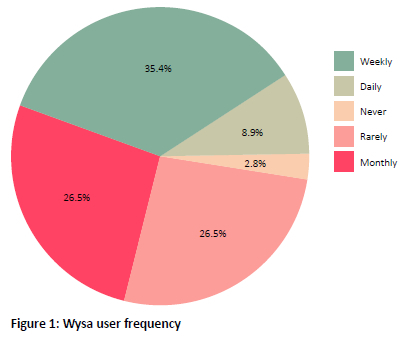
Survey data indicated that weekly usage was the most common frequency, with 35.4% of respondents using Wysa weekly, followed by monthly and rarely (26.5%), daily (8.9%), and never (2.8%). This suggests that while a significant proportion of students engage regularly with Wysa, a notable segment underutilises the resource, necessitating increased awareness and engagement efforts. According to TAM, perceived usefulness and ease of use are critical determinants of technology adoption (Nadal et al., 2020). Low engagement may indicate gaps in students' perceptions of the chatbot's value or usability, highlighting the need for targeted awareness campaigns and user-centred design enhancements to improve uptake and sustained use.
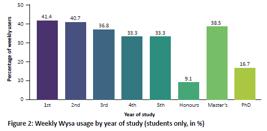
The widespread adoption of Wysa, particularly among undergraduate students, underscores its potential as an accessible and flexible tool for mental health management. However, variations in engagement across student cohorts and academic disciplines emphasise the importance of targeted strategies to ensure equitable access and impact (Becker & Torous, 2019). AI-based mental health interventions can significantly reduce symptoms related to various mental health issues (Alhuwaydi, 2024). One study comparing a text-based chatbot using cognitive behavioural therapy techniques against a control group receiving a psychoeducational e-book demonstrated measurable enhancements in participants' mental health outcomes (Boucher et al., 2021).
User patterns
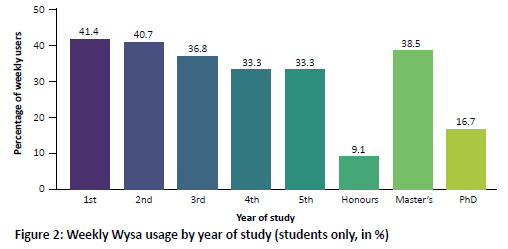
First-year students reported the highest well-being improvements, likely due to their heightened need for stress adaptation during the transition to university (Wada et al., 2019). One first-year student reflected, "Starting university was overwhelming, and Wysa really helped me deal with my anxiety, especially in the first few months." This suggests that AI-powered mental-health interventions can play a crucial role in supporting students during this critical period of adjustment.
Conversely, the lower engagement among postgraduate students suggests a possible preference for traditional face-to-face counselling or alternative support mechanisms (Cooper, 2024). One postgraduate respondent explained, "I prefer speaking to a real person rather than an app, but I can see how it might help undergraduates who are still adjusting." This indicates that future interventions may need to explore hybrid models that integrate AI-based support with human-led counselling to better serve this demographic. According to TAM, perceived usefulness significantly influences technology adoption, meaning that if students perceive a digital tool as less effective than traditional support, their likelihood of using it decreases (Nadal et al., 2020). This highlights the need to address students' perceptions of AI's therapeutic value to improve engagement, particularly among those with a strong preference for in-person support. It further demonstrates the importance of shifting the narrative around non-traditional mental-health offerings to foster broader acceptance (Lattie et al., 2019).
The nature of engagement with Wysa varied across academic disciplines. Students in economic and management sciences, education, and community and health sciences reported greater well-being improvements, aligning with higher engagement in mindfulness-based interventions offered by the app. One student in education commented, "The breathing exercises and self-reflection tools really helped me with stress and classroom anxiety." Conversely, students in law and dentistry reported lower well-being improvements, potentially due to the perceived lack of mental-health support related to legal or ethical concerns within Wysa's framework. A law student noted, "Sometimes, the advice felt too general. It didn't really apply to the pressures of law school."
These faculty-specific differences in usage patterns reveal crucial considerations for enhancing the effectiveness of Wysa. Tailoring the content to incorporate industry-specific stress management techniques, such as addressing ethical dilemmas for law students or managing high-performance anxiety for dental students, could improve engagement and relevance (Basudan et al., 2017). Incorporating AI and machine learning can enable the personalisation of these interventions to improve outcomes (Nepal et al., 2024).
Mental-health impact and well-being contribution
An analysis of mental-health screening data from 2,087 users who completed the Patient Health Questionnaire (PHQ-9) and General Anxiety Disorder-7 (GAD-7) assessments revealed that a significant proportion, 50.79% (PHQ-9) and 59.93% (GAD-7), respectively, screened positive for symptoms of depression and anxiety. Overall, user satisfaction with the Wysa application was high, with 91.24% of respondents rating the app as beneficial in managing stress and emotional well-being.
One respondent shared, "I used Wysa when I was feeling down, and even though it's not a substitute for therapy, it really helped me get through tough days." Another student mentioned, "I appreciated that Wysa gave me practical tools to deal with my anxiety without having to book an appointment or wait for a session."
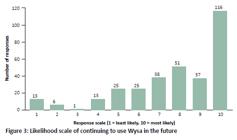
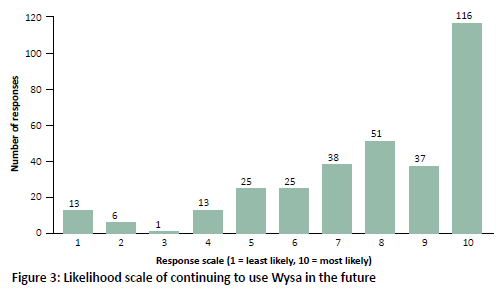
Analysis of user ratings on a likelihood scale provides valuable insights into overall satisfaction and potential for continued engagement with the Wysa mental-health platform. The data reveal a strong inclination among users to keep using Wysa, reflecting its perceived effectiveness and value. This aligns with findings that AI chatbots can offer accessible, scalable support, enhancing emotional well-being and resilience (Manole et al., 2024). Importantly, this aligns with the theory of change (ToC), which emphasises that effective interventions must address key preconditions, such as user trust and perceived usefulness, to achieve long-term impact (Silva et al., 2014). Understanding these user perceptions is critical for refining chatbot features and ensuring ongoing relevance, which in turn supports the sustained behaviour change needed for improved mental-health outcomes (Grové, 2021). This approach also highlights the importance of continuous feedback mechanisms to adapt the platform based on evolving student needs, thereby reinforcing the positive feedback loop essential for long-term adoption and impact (van der Schyff et al., 2023).
Approximately 35.7% of respondents indicated that they were extremely likely to continue using Wysa in the future, underscoring a strong level of user confidence and satisfaction with the platform. The concentration of responses at the upper end of the scale suggests a positive perception of Wysa's capabilities and its potential to address users' mental-health needs. Cumulatively, the higher ratings reveal a generally positive sentiment towards continued engagement, suggesting that a significant majority of users find the platform valuable and intend to maintain their usage. This pronounced positivity aligns with findings that AI-driven mental-health tools can foster therapeutic bonds and engagement, which may lead to improved mental-health outcomes (Farzan et al., 2024). The significant number of users who express strong positivity towards Wysa highlights the platform's potential as an accessible and effective tool for mental-health support, especially in contexts where traditional resources are limited or difficult to access (Sinha et al., 2022).
Such positive engagement may foster not only improved mental health but also greater resilience among students, equipping them with the emotional and psychological resources to navigate academic and personal challenges (Edward & Warelow, 2005). Resilience, often defined as the ability to bounce back from adversity (Srivastava, 2011), is crucial for students facing the pressures of academic life and broader societal challenges. Furthermore, promoting mental-health literacy - the knowledge and understanding of mental-health conditions - and help-seeking strategies can empower students to proactively manage their well-being and build stronger support networks (Grové, 2021). By increasing connections within the adaptive systems in a young person's life, mental-health literacy may promote resilience and positive well-being (Grové, 2021). This is particularly relevant in the context of a South African university, where access to mental-health resources may be limited (Oghenekaro & Okoro, 2024). By providing readily accessible and confidential support, AI chatbots can play a crucial role in promoting student success and overall well-being. The results highlight the platform's potential as an accessible and effective tool for mental-health support, especially in contexts where traditional resources are limited or difficult to access (Sinha et al., 2022).
Implications and future considerations
This study underscores the value of AI-powered mental-health tools as complementary interventions to traditional support services in higher education. With growing evidence supporting their impact on student well-being (Zhang, 2025), integrating digital tools like Wysa into a hybrid support model offers a scalable way to meet diverse student needs. The sustained engagement observed suggests that students benefit from AI tools that foster emotional regulation and adaptive thinking, preparing them for complex academic and social environments (Zhang, 2025).
Future developments should focus on refining features using user data to address specific mental-health concerns and gaps in mental-health literacy. According to TAM, user engagement is closely linked to perceived usefulness and ease of use, suggesting that personalised, context-specific content can significantly enhance adoption and sustained usage (Nadal et al., 2020). Embedding educational modules within the app can improve students' understanding of mental health, making the platform more relevant and valuable (Zhang, 2025). This approach aligns with the ToC framework, which emphasises the importance of addressing foundational preconditions, such as digital literacy and awareness, before achieving meaningful mental-health outcomes (Silva et al., 2014). Personalised interventions that respond to students' academic pressures, emotional states, and help-seeking behaviours can further optimise outcomes, promoting sustained behavioural change and improved well-being (Song & Hu, 2024; Grové, 2021).
Additionally, specialised modules for vulnerable groups such as international students, students with disabilities, and those with pre-existing mental-health conditions are essential for improving perceived usefulness, a critical component of TAM (Ajibade, 2018). For these groups, interventions that foster a sense of personal alignment, such as life-crafting approaches, may enhance motivation and resilience, supporting both mental health and academic success (Studente et al., 2020). ToC further supports this by highlighting the need for structured, goal-oriented interventions that address specific user contexts to drive long-term impact (van der Schyff et al., 2023). Continuous evaluation through feedback mechanisms, including in-app surveys or focus groups, is also critical, as it allows for real-time assessment of user experiences and iterative improvement, ensuring the platform remains responsive to changing student needs (Manole et al., 2024).
Scalability and sustainability of AI interventions also depend on institutional conditions. Adequate digital infrastructure, ongoing technical support, and training for staff are necessary to maintain smooth integration with existing student support services. Differences in digital literacy, resource availability, and policy environments across universities must be considered when implementing similar platforms elsewhere (Boucher et al., 2021). Embedding AI tools into broader mental-health policies and support frameworks, as Wysa has been at this university, promotes institutional buy-in and ensures long-term viability (Inkster et al., 2018). Ultimately, AI-driven solutions can improve the accessibility, responsiveness, and contextual relevance of mental-health support in South African higher education, contributing to an emerging global body of knowledge on digital mental health in academic settings.
Conclusion and recommendations
In conclusion, the study demonstrates that the Wysa AI chatbot has contributed meaningfully to addressing student mental-health needs, especially during high-stress periods. Its accessibility and user-friendly interface have supported a diverse student population, although engagement varies across academic levels and faculties. While adoption and satisfaction rates are generally positive, utilisation gaps, particularly among postgraduate students and those in high-pressure faculties, highlight areas requiring further attention. To enhance effectiveness, institutions should invest in faculty-specific awareness efforts, especially for first-year students, and improve communication about data privacy to build trust among more cautious user groups. Adapting the chatbot's tools to align with the unique stress profiles of faculties such as law and dentistry, and strengthening the integration between AI support and traditional counselling services, will be essential. These measures can create a more responsive, trusted, and comprehensive mental-health support system within South African higher education.
Ethics statement
The study was conducted after researchers received ethical clearance from IREC. Respondents were not coerced into participating in the study.
Potential conflict of interest
The authors declare no conflict of interest.
Funding acknowledgement
No external funding was received to conduct this research.
References
- Ajibade, P. (2018). Technology acceptance model limitations and criticisms: Exploring the practical applications and use in technology-related studies, mixed-method, and qualitative researches. Library Philosophy and Practice, 9. https://digitalcommons.unl.edu/libphilprac/1941/
- Alhuwaydi, A. M. (2024). Exploring the role of artificial intelligence in mental healthcare: Current trends and future directions - A narrative review for a comprehensive insight. Risk Management and Healthcare Policy, 2024, 1339-1348. https://doi.org/10.2147/RMHP.S461562
- Balcombe, L. (2023). AI chatbots in digital mental health. Informatics, 10(4), 82. https://doi.org/10.3390/informatics10040082
- Bantjes, J., Hunt, X., & Stein, D. J. (2023). Anxious, depressed, and suicidal: Crisis narratives in university student mental health and the need for a balanced approach to student wellness. International Journal of Environmental Research and Public Health, 20(6), 4859. https://doi.org/10.3390/ijerph20064859
- Basudan, S., Binanzan, N., & Alhassan, A. (2017). Depression, anxiety and stress in dental students. International Journal of Medical Education, 8, 179-186. https://doi.org/10.5116/ijme.5910.b961
- Becker, T. D., & Torous, J. B. (2019). Recent developments in digital mental health interventions for college and university students. Current Treatment Options in Psychiatry, 6, 210-220. https://doi.org/10.1007/s40501-019-00178-8
- Boucher, E. M., Harake, N. R., Ward, H. E., Stoeckl, S. E., Vargas, J., Minkel, J., Parks, A. C., & Zilca, R. (2021). Artificially intelligent chatbots in digital mental health interventions: A review. Expert Review of Medical Devices, 18(sup1), 37-49. https://doi.org/10.1080/17434440.2021.2013200
- Bracha, H. S. (2004). Freeze, flight, fight, fright, faint: Adaptationist perspectives on the acute stress response spectrum. CNS Spectrums, 9(9), 679-685. https://doi.org/10.1017/S1092852900001954
- Browne, V., Munro, J., & Cass, J. (2017). Under the radar: The mental health of Australian university students. Journal of the Australian and New Zealand Student Services Association, 25(2), 51-62. https://dx.doi.org/10.30688/janzssa.2017.16
- Cooper, K. (2024). Exploration of mental health screening programs and readiness for change by school administrators and school-based mental health professionals. Ball State University.
- d'Avila Garcez, A., Gori, M., Lamb, L. C., Serafini, L., Spranger, M., & Tran, S. N. (2019). Neural-symbolic computing: An effective methodology for principled integration of machine learning and reasoning. arXiv preprint arXiv:1905.06088. https://doi.org/10.48550/arXiv.1905.06088
- Farzan, M., Ebrahimi, H., Pourali, M., & Sabeti, F. (2024). Artificial intelligence-powered cognitive behavioral therapy chatbots, a systematic review. Iranian Journal of Psychiatry, 20(1), 102-110. https://ijps.tums.ac.ir/index.php/ijps/article/download/4007/1256/
- Grové, C. (2021). Co-developing a mental health and wellbeing chatbot with and for young people. Frontiers in Psychiatry, 11, 606041. https://doi.org/10.3389/fpsyt.2020.606041
- Inkster, B., Sarda, S., & Subramanian, V. (2018). An empathy-driven, conversational artificial intelligence agent (Wysa) for digital mental well-being: Real-world data evaluation mixed-methods study. JMIR MHealth UHealth, 6(11), e12106. https://doi.org/10.2196/12106
- Kaminer, D., & Shabalala, N. (2019). Developing a student mental health policy for a South African university: Consultation, contestation and compromise. South African Journal of Higher Education, 33(5), 196-212. https://doi.org/10.20853/33-5-3597
- Khawaja, Z., & Bélisle-Pipon, J.-C. (2023). Your robot therapist is not your therapist: Understanding the role of AI-powered mental health chatbots. Frontiers in Digital Health, 5, 1278186. https://doi.org/10.3389/fdgth.2023.1278186
- Lattie, E. G., Adkins, E. C., Winquist, N., Stiles-Shields, C., Wafford, Q. E., & Graham, A. K. (2019). Digital mental health interventions for depression, anxiety, and enhancement of psychological well-being among college students: Systematic review. Journal of Medical Internet Research, 21(7), e12869. https://doi.org/10.2196/12869
- Makgahlela, M., Mothiba, T. M., Mokwena, J. P., & Mphekgwana, P. (2021). Measures to enhance student learning and well-being during the COVID-19 pandemic: Perspectives of students from a historically disadvantaged university. Education Sciences, 11(5), 212. https://doi.org/10.3390/educsci11050212
- Manole, A., Cârciumaru, R., Brînzaş, R., & Manole, F. (2024). Harnessing AI in anxiety management: A chatbot-based intervention for personalized mental health support. Information, 15(12), 768. https://doi.org/10.3390/info15120768
- Maples, B., Cerit, M., Vishwanath, A., & Pea, R. (2024). Loneliness and suicide mitigation for students using GPT3-enabled chatbots. npj Mental Health Research, 3, 4. https://doi.org/10.1038/s44184-023-00047-6
- Marsch, L. A., & Gustafson, D. H. (2013). The role of technology in health care innovation: A commentary. Journal of Dual Diagnosis, 9(1) 101-103. https://doi.org/10.1080/15504263.2012.750105
- Mollick, E. (2024). Co-intelligence: Living and working with AI. Portfolio/Penguin.
- Musakuro, R. N., & Gie, L. (2024). University staff intentions to adopt e-health tools for digital mental health services in post-pandemic South Africa. South African Journal of Information Management, 26(1), a1897. https://doi.org/10.4102/sajim.v26i1.1897
- Na, S., Heo, S., Han, S., Shin, Y., & Roh, Y. (2022). Acceptance model of artificial intelligence (Al)-based technologies in construction firms: Applying the technology acceptance model (TAM) in combination with the technology-organisation-environment (TOE) framework. Buildings, 12(2), 90. https://doi.org/10.3390/buildings12020090
- Nelekar, S., Abdulrahman, A., Gupta, M., & Richards, D. (2021). Effectiveness of embodied conversational agents for managing academic stress at an Indian University (ARU) during COVID-19. British Journal of Educational Technology, 53(3), 491-511). https://doi.org/10.1111/bjet.13174
- Nepal, S., Pillai, A., Campbell, W. J., Massachi, T., Choi, E. S., Xu, X., Kuc, J., Huckins, J. F., Holden, J., Depp, C. A., Jacobson, N. C., Czerwinski, M., Granholm, E., & Campbell, A. T. (2024). Contextual AI journaling: Integrating LLM and Time Series Behavioral Sensing Technology to promote self-reflection and well-being using the MindScape App. Proceedings of the conference on human factors in computing systems (CHI EA '24) (pp. 1-8). Association for Computing Machinery. https://doi.org/10.1145/3613905.3650767
- Oghenekaro, L. U., & Okoro, C. O. (2024). Artificial intelligence-based chatbot for student mental health support. Open Access Library Journal, 11(5), 1-14. https://doi.org/10.4236/oalib.1111511
- Omarov, B., Zhumanov, Z., Gumar, A., & Kuntunova, L. (2023). Artificial intelligence enabled mobile chatbot psychologist using AIML and cognitive behavioral therapy. International Journal of Advanced Computer Science and Applications, 14(6). https://dx.doi.org/10.14569/IJACSA.2023.0140616
- Persons, J. B. (2008). The case formulation approach to cognitive-behavior therapy. Guidlford Press.
- Pillay, A. M., Madzimure, J., & Chili, M. (2024). Investigating the major contemporary issues facing first-year students at a South African university of technology. E-Journal of Humanities, Arts and Social Sciences, 183-189. https://doi.org/10.38159/ehass.2024532
- Radhu, N., Daskalakis, Z. J., Arpin-Cribbie, C. A., Irvine, J., & Ritvo, P. (2012). Evaluating a web-based cognitive-behavioral therapy for maladaptive perfectionism in university students. Journal of American College Health, 60(5), 357-366. https://doi.org/10.1080/07448481.2011.630703
- Sinchana, B. U., Hiremath, T. G., & Priyanka H V. (2024). SentiSync: A robust system for sentiment detection and analyzing the mental health care with ML-driven algorithms. International Journal of Advanced Research in Science, Communication and Technology, 4(1), 151-157. https://doi.org/10.48175/ijarsct-15324
- Sinha, C., Meheli, S., & Kadaba, M. (2022). Understanding digital mental health needs and usage with an artificial intelligence-led mental health app (Wysa) during the COVID-19 pandemic: Retrospective analysis. JMIR Formative Research, 7, e41913. https://doi.org/10.2196/41913
- Srivastava, K. (2011). Positive mental health and its relationship with resilience. Industrial Psychiatry Journal, 20(2), 75-76. https://doi.org/10.4103/0972-6748.102469
- Studente, S., Ellis, S., & Garivaldis, S. F. (2020). Exploring the potential of chatbots in higher education: A preliminary study. International Journal of Educational and Pedagogical Sciences, 14(9), 768-771.
- University of Western Cape. (2021). Integrated mental health and wellness policy. UWC. Retrieved from https://uwc-za.b-cdn.net/files/files/Integrated-Student-Mental-Health--Wellness-Policy-ISMHW.pdf
- Van der Schyff, E. L., Ridout, B., Amon, K. L., Forsyth, R., & Campbell, A. J. (2023). Providing self-led mental health support through an artificial intelligence-powered chat bot (Leora) to meet the demand of mental health care. Journal of Medical Internet Research, 25, e46448. https://doi.org/10.2196/46448
- Wada, M., Suto, M. J., Lee, M., Sanders, D., Sun, C., Le, T. N., Goldman-Hasbun, J., & Chauhan, S. (2019). University students' perspectives on mental illness stigma. Mental Health & Prevention, 14, 200159. https://doi.org/10.1016/j.mph.2019.200159
- Zhang, X. (2025). The intersection of technology and mental health literacy in social work curriculum: Implications for student well-being and professional practice. Interactive Learning Environments, 33(6), 3925-3939. https://doi.org/10.1080/10494820.2025.2454444
Accepted 28 August 2025
Published 5 December 2025