Navigating identity and adaptation: International student adjustment and success at the University of Namibia
Abstract
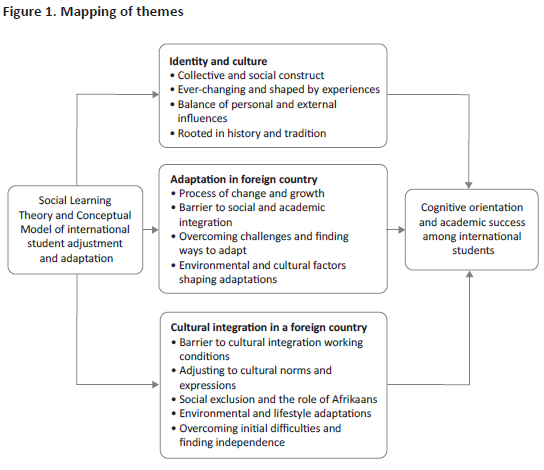
This study examined the cognitive orientation of international students at the University of Namibia main campus in Windhoek, focusing on cultural identity, cultural adaptation and adaptation to university life. Guided by Bandura's Social Learning Theory and the conceptual model of international student adjustment, adaptation was explored as three interrelated processes influencing the success of an international student in a foreign country. A qualitative research design was employed, using semi-structured interviews with 12 international students. The study revealed three main themes: (1) cultural identity, (2) cultural adaptation, and (3) adaptation to university life. Cultural identity was found to carry connotative meanings shaped by geographical influences. Adjustment emerged as a complex process affected by multiple factors, with successful adaptation closely linked to societal support from nationals, institutional structures, and networks with fellow international students. It is recommended that higher education institutions develop tailored programmes and processes responsive to their specific contexts and student populations. Such initiatives should facilitate smoother cultural adaptation and university adjustment while preserving students' cultural identities, as these are critical factors for the academic success of international students.
Cognitive orientation; collectivism; cultural adaptation; cultural identity; emotional affect; psychological impact; Namibia
 Thumbnail