Can a sense of belonging influence institutional attachment among first-year university students? Assessing the moderated mediation effects of social and emotional adjustment
Abstract
This study investigated the relationship between sense of belonging and institutional attachment and the moderated mediated effects of social and emotional adjustment. The sample comprised 209 first -year university students from a South African university (mean age = 25.42 years; SD = 6.19 years). Using a quantitative research approach to enquiry, the multiple linear regression and moderated mediation analyses showed that sense of belonging significantly predicated institutional attachment. Additionally, the results showed that social adjustment partly and significantly mediated the relationship between sense of belonging and institutional attachment. Furthermore, the results revealed that the moderated mediation effects of social and emotional adjustment in the relationship between sense of belonging and institutional attachment were statistically insignificant. The results suggest that sense of belonging is crucial for enabling institutional attachment to the university, underscoring the importance of striving for university environments that are belonging-centred to help first-year students identify with their learning contexts.
Emotional adjustment; first-year students; higher learning; institutional attachment; sense of belonging; social adjustment; university
Abstract
Isifundwesi siphenye ngetjhebiswano phakathi kokuzizwa wamukelekile kanye nokunamathela ngokuthanda isikhungo kanye nemiphumela yemahluko phakathi kwamatjhebiswano wokuzamukela kanye nokusebenzisana kuhle nabanye. Isampula esetjenzisiweko beyimumethe inani elima-209 labafundi bomnyaka wokuthoma eyunivesithi yeSewula Afrika (i-avareji yeminyaka yama-25.42, weminyaka, ukusuka Emgomeni Ojayelekileko = 6.19 weminyaka). Kusetjenziswe umhlobo werhubhululo lekhwantithethivu, indlela ye-mulitiple linear regression kanye nendlela yokuhlahluba imiphumela yemahluko yamatjhebiswano eveze bona ukuzizwa wamukelekile, kutjho kucacise khudlwana ukunamathela ngokuthanda isikhungo. Ngaphezu kwalokhu, imiphumela ibuye yaveza bona ikghono lokusebenzisana kuhle nabanye, ngokwencenye begodu nangendlela ebonakalako kuveza imiphumela yemahluko phakathi kokuzizwa wamukelekile kanye nokunamathela ngokuthanda isikhungo. Godu, imiphumela iveze bona ikghono lokusebenzisana kuhle nabanye ngokwencenye begodu nangendlela ebonakalako, kuveza imiphumela yemahluko phakathi kokuzizwa wamukelekile kanye nokunamathela ngokuthanda isikhungo. Kwamaswaphela, imiphumela iveze bona imiphumela yemahluko phakathi kwamatjhebiswano wokuzamukela kanye namakghono wokusebenzisana kuhle nabanye phakathi kokuzizwa wamukelekile kanye nokunamathela ngokuthanda isikhungo, ngokweembalobalo akukaqakatheki. Imiphumela ikhanyisa khulu bona ukuzizwa wamukelekile kuqakatheke khulu ukwenza iinkhungo zinanyathelwe ngokuthanda bafundi, lokhu kuphakamisa ukuqakatheka kobana amabhoduluko wemayunivesithi ahlelwe ngendlela yokusiza abafundi bomnyaka wokuthoma eyunivesithi bona bahlaliseke kuhle kumajamo wabo wezokufunda.
Ukuzamukela; abafundi bomnyaka wokuthoma; ifundo ephakemeko; ukunamathela ngokuthanda isikhungo; ukuzizwa wamukelekile; amakghono wokusebenzisana kuhle nabanye; iyunivesithi
Introduction
Attending university comes with several challenges that can pose a threat to students' attachment to their institution. Institutional attachment is regarded as students' general satisfaction with the university they attend (Malau-Aduli et al., 2021). It reflects the extent to which they are committed to and buy into the goals of the institution. Institutional attachment plays a crucial role in academic success (Kurland & Sigel, 2020). Students who show high levels of attachment to the institution are inclined to perform better and succeed academically, while those who show less attachment do not (Kurland & Sigel, 2013). Additionally, students who struggle with attachment to the institution are likely to drop out of their studies (Tinto, 1975). Hence, an enquiry into factors influencing students' attachment to university is essential as it could encourage appropriate support interventions for reinforcing attachment and ultimately, student retention and academic success.
While the experience of attending university is generally challenging, it can be more challenging for first-year students (Awung et al., 2024; Mulaudzi, 2023). This is because the first year of university is marked by simultaneous transitions, such as being exposed to a new and an unfamiliar learning environment, separating from old friends and establishing new friendships (Megbowon et al., 2023; Nghiem et al., 2021; Picton et al., 2017), exercising independence and managing new freedoms. First-year students also face new academic demands and financial stressors (Hussey & Smith, 2010; Pretorius & Blaauw, 2020). Duffy et al. (2019) report that transitioning to university is associated with a high likelihood of exposure to psychosocial stressors, developing significant mental health issues and maladaptive coping behaviours. Due to the transitional challenges, first-year students tend to have institutional attachment issues (Dlamini et al., 2020). For example, Belay Ababu et al. (2018) found that first-year students struggle with institutional attachment due to factors such as difficulty socialising, time management challenges and study difficulties. Additionally, Belay Ababu et al. (2018) demonstrated that the institutional attachment problem was the most common disorder among first-year undergraduate students. Hence, it is important that first-year students form an attachment to their institution since institutional attachment difficulties have been found to influence academic failure by way of university dropout (Mtshweni, 2022).
Having a sense of belonging, reportedly, can ameliorate institutional attachment problems (Strayhorn, 2012, 2016). Sense of belonging in the academic context refers to the "perception of feeling valued and respected by other students and feeling like a valued part of the university context" (van Gijn-Grosvenor & Huisman, 2020, p. 377). It is a feeling of being accepted and included by other students as a member of the institutional community (Goodenow, 1993). Sari and ve Bükün (2023) showed that sense of belonging or identifying with the university was positively linked to institutional attachment. Additionally, sense of belonging was found to have a positive effect on institutional attachment factors (Yildirim et al., 2021). Sense of belonging is not the only factor related to institutional attachment. Other factors linked to institutional attachment include social and emotional adjustment. For example, Mtshweni (2022) found that social and emotional adjustment significantly related to institutional attachment. Similarly, Sari and ve Bükün (2023) argued that the social context is important for generating emotional connection to a place, suggesting that social and emotional adjustment could influence institutional attachment. Social adjustment pertains to the ability to deal with a new social environment effectively as shown by positive friendships that one can establish and by being involved in university social activities (Sevinc & Gizir, 2014). Gerdes and Mallinckrodt (1994) posit that social adjustment reflects an integration into the social life of the learning context. On the other hand, emotional adjustment refers to psychological well-being during the university adjustment process that is characterised by the ability to cope with stressors (Baker & Siryk, 1999; Zhao et al., 2022).
Research hints that a sense of belonging, social and emotional adjustment are related to institutional attachment (Blake, 2023; Pedler et al., 2022). Nonetheless, studies investigating the influence of sense of belonging, social and emotional adjustment on institutional attachment are limited. This study aimed to investigate the influence of sense of belonging on institutional attachment. Additionally, the study sought to examine the mediating effect of social adjustment in the relationship between sense of belonging and institutional attachment. Moreover, the study aimed to investigate whether there would be statistically significant moderated mediation effects of social and emotional adjustment in the relationship between sense of belonging and institutional attachment.
Institutional attachment is crucial because it is linked to positive academic outcomes such as academic performance and persistence (Kurland & Sigel, 2013; Suditua & Saftaa, 2023; Tinto, 1975). For first-year students transitioning to university, institutional attachment problems could lead to dropout (Bumbacco & Scharfe, 2023). Hence, investigating explanatory factors that may strengthen students' commitment to the institution is warranted because it could attract appropriate student support responses from universities through cultivating belonging-centred institutional contexts. Institutional settings that are belonging-centred, according to Strayhorn's (2012) theory of sense of belonging, contribute to students' social and emotional well-being. Ultimately, this could enhance students' affinity with the institution, add to a positive learning experience, contribute to retention and academic achievement (Strayhorn, 2012).
Theoretical framework
In higher education institutions, attachment-related behaviours have important implications for academic success (Robey, 2019). This study used Ainsworth and Bowlby's attachment theory to understand the concept of attachment among first-year students (Ainsworth & Bowlby, 1991). The theory has been widely used to understand students' attachment behaviours in higher education (Philips, 2007; Schneider & Schneider, 2024; Tagay & Karata?, 2012). The attachment theory rests on the notion that relationships established with parents or caregivers from infancy affect the formation of relationships with other individuals in the future (Tagay & Karata?, 2012). Additionally, the theory proposes four attachment styles that form during infancy, influenced by an individual's relational patterns with their parents or caregivers. These include secure, preoccupied, dismissive and fearful attachment styles.
• A secure attachment style is characterised by a strong self-concept and high level of trust in others;
• A preoccupied attachment style is characterised by a weak self-concept and high level of trust in others;
• A dismissive attachment style is characterised by a strong self-concept and low level of trust in others;
• While a fearful attachment style is characterised by a weak self-concept and low trust in others (Schneider & Schneider, 2024).
The ability to attach to the institution depends on students' attachment styles. For example, Lopez (1997) and Bartholomew and Horowitz (1991) found that a secure attachment style was linked to positive social outcomes such as stronger social integration and connectedness to the institution, while preoccupied, dismissive and fearful styles were associated with social insecurity and weaker feelings of involvement in/with the university community. Philips (2007) argues that attachment styles are linked to the emotional adjustment and social competence of students during the transition to university. Hence, social and emotional adjustment were found to have a predictive effect on institutional attachment (Maunder, 2018; Drath, 2017). While attachment styles remain stable into adulthood (Robey, 2019), environmental influences can mould attachment style (Picardi, 2020). A secure attachment style is considered important to help students navigate higher education, establish friendships and attach to the institution (Lopez, 1997). Therefore, students need to learn behaviours inclined towards a secure attachment style such as developing trust in others and identifying personal strengths to cultivate a positive self-concept and forge strong attachments to their institution. This, however, needs to be complemented by institutions of higher learning that are student centred and inclusive to encourage feelings of belonging that have been linked to social and emotional adjustment (Jain & Sharma, 2022; Ostrove & Long, 2007).
Sense of belonging and institutional attachment
Despite a sense of belonging being considered a basic human need (Maslow, 1954), Peacock et al. (2020) argue that studies exploring a sense of belonging in higher education are limited. Sense of belonging is a crucial component of students' mental health and overall academic functioning (Strayhorn, 2012, 2019). Additionally, the scholars found that sense of belonging increased institutional attachment factors (Yildirim et al., 2021). Sari and ve Bükün (2023) demonstrated that an increase in sense of belonging was linked to an increase in institutional attachment. Jain and Sharma (2022) posit that a sense of belonging reflects students' integration into the learning environment and that higher feelings of belonging are associated with institutional attachment. On the contrary, Fabris et al. (2023) opine that a low sense of belonging can indirectly influence institutional attachment, suggesting that belongingness plays a critical role in forging feelings of institutional attachment in the learning environment. Similarly, Strayhorn (2012) stresses the need to cultivate a sense of belonging for students to establish strong bonds or attachments with their institutions; therefore, hinting that a sense of belonging could influence institutional attachment.
The mediating role of social adjustment
Sense of belonging helps students acclimatise to the institutional environment (Strayhorn, 2012, 2019). Pittman and Richmond (2008) are of the notion that a sense of belonging is an important component to be featured in a model that predicts university attachment. Related to this, Ostrove and Long (2007) found a statistically significant relationship between sense of belonging and social adjustment, while Cornelissen (2022) found sense of belonging to be a strong predictor of social adjustment. Similarly, research shows that social adjustment has important links to institutional attachment. For example, Drath (2017) found a statistically positive relationship between social adjustment and institutional attachment, suggesting that high social adjustment is linked to high institutional attachment. Maunder (2018) also found that students who reported strong relations with peers in the university demonstrated higher levels of institutional attachment while those who struggled with relationships with peers reported lower levels of institutional attachment; thus, hinting at the importance of social adjustment in strengthening institutional attachment among students.
The moderating effect of emotional adjustment
Research has shown that social adjustment is linked to institutional attachment. For example, studies found that social adjustment significantly predicted and positively related to institutional attachment (Drath, 2017; Mtshweni, 2022; Ostrove & Long, 2007); suggesting that social adjustment may be a precursor to institutional attachment. While this may be the case, emotional adjustment could influence the relationship between social adjustment and institutional attachment. For example, Sari and ve Bükün (2023) opine that the social context, characterised by positive relationships, is important for creating emotional connections and facilitating attachment to a place. Similarly, Mtshweni (2022) also found that social and emotional adjustment were positively associated with institutional attachment among undergraduate students. Nonetheless, a study found that first-year students are emotionally immature and encounter challenges with adjusting to university life (Dlamini et al., 2020), suggesting that emotional adjustment challenges could pose institutional attachment challenges, more so if students struggle with social adjustment problems.
Research hypotheses
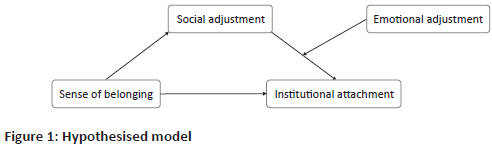
Considering the discussion above, the following hypotheses were tested in this study (see Figure 1):
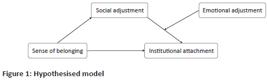
H1: Sense of belonging significantly predicts institutional attachment.
H2: Social adjustment mediates the relationship between sense of belonging and institutional attachment.
H3: There will be statistically significant moderated mediation effects of social and emotional adjustment in the relationship between sense of belonging and institutional attachment.
Methods
Research procedure and participants
The study was conducted with first-year undergraduate students at a South African university. The participants were sampled conveniently, and data were collected using the SurveyMonkey tool. The survey was distributed to approximately 70 000 potential participants by the university's ICT department. About 1 384 responses were received, however, 1 175 were excluded from the analysis for the following reasons: the surveys were partly completed; participants were below the consenting age (i.e. <18 years); or had completed their first year of study. A total of 209 eligible participants was considered for the analysis. The sample comprised 154 (73.7%) females and 55 (26.3%) males. The racial composition of the sample included 146 (69.9%) black, 17 (8.1%) coloured, 11 (5.3%) Indian, 30 (14.4%) white, and 5 (2.4%) identified as "other" races. The age of participants ranged from 18 to 49 (mean = 25.42 years; SD = 6.19 years).
Measures
Sense of belonging
An 8-item Psychological Sense of School Membership (PSSM) scale developed by Goodenow (1993) was used to examine sense of belonging in this study. The scale comprised items such as "I feel proud to belong to my university" and "There is at least one lecturer that I can talk to in my university if I have a problem". The scale items were rated on a 5-point Likert scale with options ranging from 1 ('not at all true') to 5 ('completely true'). The PSSM scale had a reliability coefficient of α=.83.
Social adjustment
A 4-item subscale of the Student Adjustment to College Questionnaire (SACQ) developed by Baker and Siryk (1986) was used to measure social adjustment. The subscale included items such as "I have several close ties at university" and "I feel that I fit in well as part of the university environment". The scale items were rated on a 5-point Likert scale with options ranging from 1 ('strongly disagree') to 5 ('strongly agree'). The social adjustment subscale yielded a reliability coefficient of α=.80.
Emotional adjustment
A 14-item subscale of the SACQ was used to examine emotional adjustment (Baker & Siryk, 1986). The subscale comprised items such as "I worry a lot about my university expenses" and "I have been nervous lately". The items were rated on a 5-point Likert scale with options ranging from 1 ('strongly disagree') to 5 ('strongly agree'). The emotional adjustment subscale had a reliability coefficient of α=.86.
Institutional attachment
A 6-item subscale of the SACQ was used to measure institutional attachment (Baker & Siryk, 1986). The subscale featured items such as "I sometimes find myself thinking about taking a break from my studies" and "I wish I were at another university". The items were rated on a 5-point Likert scale with options 1 ('strongly disagree') to 5 ('strongly agree'). The institutional attachment subscale had a reliability coefficient of α=.80.
Ethical considerations
The study was approved by the University of South Africa's College of Human Sciences Research Ethics Review Committee. The survey contained written informed consent which participants signed electronically before participating in the study. The survey also contained an information letter that stated the purpose of the study. Participants were assured of confidentiality and anonymity. The right to withdraw participation from the study before submitting responses was also guaranteed.
Data analysis
The IBM SPSS version 28.0 was used to analyse the data. Bivariate analysis was conducted to test the relationships between sense of belonging, social adjustment, emotional adjustment and institutional attachment. Multiple linear regression analysis was used to test whether sense of belonging could significantly predict institutional attachment. Mediation analysis was conducted to test for possible mediating effects of social adjustment in the relationship between sense of belonging and institutional attachment using Hayes's (2013) model 4. Additionally, a test of moderated mediation was performed to examine for potential moderated mediation effects of social and emotional adjustment using Hayes (2013) model 14. The 95% confidence intervals (CIs) and 5 000 bootstrap samples were used to determine the statistical significance of moderating and mediating variables (Hayes & Rockwood, 2017).
Results
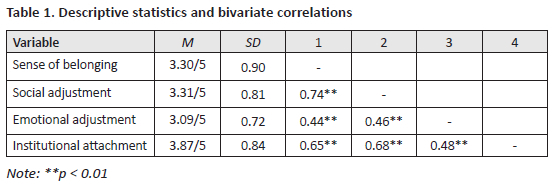
Table 1 presents the descriptive and bivariate correlations of sense of belonging, social adjustment, emotional adjustment and institutional attachment. The results reveal that sense of belonging positively and significantly correlated with social adjustment (r = 0.74, p < 0.01), emotional adjustment (r= 0.44, p < 0.01) and institutional attachment (r = 0.65, p < 0.01). Additionally, the results reveal that social adjustment positively and significantly correlated with emotional adjustment (r = 0.46, p < 0.01) and institutional attachment (r = 0.68, p < 0.01). Furthermore, the results demonstrate that emotional adjustment positively and significantly correlated with institutional attachment (r = 0.48, p < 0.01).
Predicting institutional attachment from sense of belonging
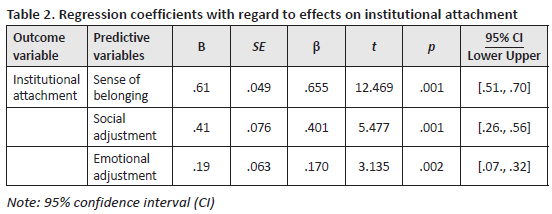
The study tested whether sense of belonging could significantly predict institutional attachment (H1). The results of a multiple linear regression analysis after controlling for the effects of social and emotional adjustment revealed that sense of belonging (B= 0.61, p < 0.01) significantly predicted institutional attachment. These results indicate that sense of belonging could, potentially, influence institutional attachment. Hypothesis 1 was, therefore, supported.
Mediation of social adjustment in the relationship between sense of belonging and institutional attachment
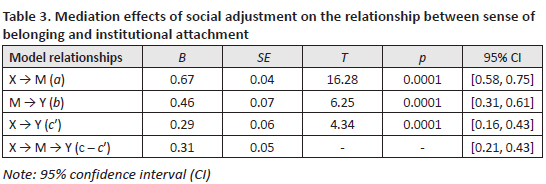
The study assessed whether social adjustment could mediate the relationship between sense of belonging and institutional attachment (H2). The results revealed that sense of belonging had a statistically significant indirect effect on institutional attachment through social adjustment (B = 0.31; 95% BCa CI [0.21, 0.43]). The direct effect of sense of belonging on institutional attachment was also found to be statistically significant (β = 0.29; 95% BCa CI [0.16, 0.43]). These results suggest that social adjustment partly mediates the relationship between sense of belonging and institutional attachment. Thus, hypothesis 2 was partly supported.
Moderated mediation
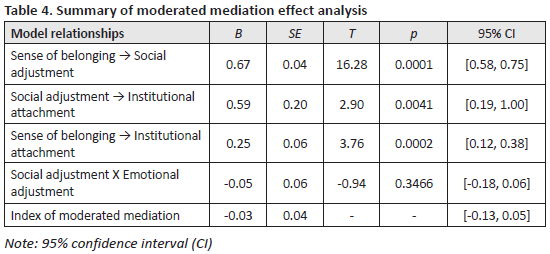
The study assessed the moderated mediation effects of social and emotional adjustment in the relationship between sense of belonging and institutional attachment. The results indicated that sense of belonging had a statistically significant effect on social adjustment (β = 0.67; 95% BCa CI [0.58, 0.75]). In turn, social adjustment had a statistically significant effect on institutional attachment (B = 0.59; 95% BCa CI [0.19, 1.00]). Additionally, sense of belonging was found to have a statistically significant effect on institutional attachment (B = 0.25; 95% BCa CI [0.12, 0.38]), while emotional adjustment had a statistically insignificant effect on institutional attachment (B = 0.38; 95% BCa CI [-0.02, 0.79]). The results further revealed that the interaction between social and emotional adjustment was statistically insignificant (B = -0.05; 95% BCa CI [-0.18, 0.06]).
Moreover, the index of moderated mediation was found to be statistically insignificant (Index = -0.03; 95% BCa CI [-0.13, 0.05]). Hypothesis 3 was, therefore, not supported.
Discussion
The results showed that sense of belonging significantly predicted institutional attachment. This is consistent with previous research, which has found students with a strong sense of belonging to have an attachment to their university (Khaidzir & Ahmad, 2023), suggesting that a sense of belonging can help facilitate and strengthen students' feelings of connection and attachment towards their institution. In the same way, previous research stated that learning environments require students to have a sense of belonging as this can contribute to greater connections with others (Krafona, 2014) and likely, institutional attachment. Hence, Tinto (2017) highlights that developing a sense of belonging early in the first year of study is critical for engendering student engagement in learning.
Social adjustment partly and significantly mediated the relationship between a sense of belonging and institutional attachment. While there is no evidence of previous studies testing this hypothesis, research shows that a sense of belonging is closely related to and strongly predicts social adjustment among students (Hagerty et al., 1996; Ostrove & Long, 2007). Additionally, prior research found social adjustment to have a statistically significant relationship with institutional attachment (Mtshweni, 2022), whereas factors related to social adjustment such as social attachment to peers significantly predicted institutional or university adjustment (Gan et al., 2019). The results suggest that first-year students with a greater sense of belonging also had a greater social adjustment to the institutional environment. In turn, higher levels of social adjustment contributed to higher levels of institutional attachment. This explains why students with a higher sense of belonging tend to be fully engaged in teaching, learning and academic affairs (Strayhorn, 2022).
There was no evidence of moderated mediation in the relationship between sense of belonging and institutional attachment. These results could be explained by the fact that sense of belonging is a basic human need and plays a critical role in buffering emotional and mental health problems (Maslow, 1954; Sargent et al., 2002; Strayhorn, 2012). Similarly, sense of belonging has been shown to contribute towards lessening psychological distress and leading to fewer mental health problems among first-year students (Tholen et al., 2022). This corresponds with Strayhorn's (2012) theory of belonging, which predicates that sense of belonging takes on a heightened importance in learning contexts and is key for reducing psychological distress. In the context of this study, the interaction between social and emotional adjustment could not have influential effects due to the overreaching influence of sense of belonging, which was shown to have a direct and indirect influence on institutional attachment. The results suggest that first-year students should strive to attain belongingness to their learning environment to find adjustment for enhanced institutional attachment (Hoffman et al., 2002).
Implications for research
Research has shown that first-year students are inclined to struggle with institutional attachment problems (Tom, 2015). In addition, first-year students tend to experience adjustment problems characterised by maladaptive emotional responses to stressful situations in the learning environment (Anbesaw et al., 2022). Research has demonstrated that developing a stronger sense of belonging is crucial for boosting students' positive emotions, involvement, higher academic participation (Rehman et al., 2023; Strayhorn, 2012), and thus institutional attachment. This means universities need to cater to first-year students by fostering institutional environments that are welcoming and belonging-centred.
One way of satisfying the need to belong is to encourage students to actively take part in extracurricular activities. This could include, for example, taking part in sporting activities, arts and creativity events, academic clubs and community engagement or service projects. Research has shown that carefully planned and designed extracurricular activities can serve as an effective approach to cultivating a sense of belonging (De Sisto et al., 2022). Further, extracurricular activities contribute to favourable perceptions of social-emotional security and increase students' attachment to the learning context (Martinez et al., 2016). This means that universities need to invest resources in directorates for student affairs and extracurricular activities to make first-year students feel that they belong.
Mntuyedwa (2023) found that first-year students who participate in peer groups have a higher sense of belonging. This is because peer groups provide a space for students to connect and establish mutual interests and struggles. Universities need to encourage first-year students to join university peer groups as an alternative strategy for creating a sense of university belonging. Mntuyedwa (2023) confirms that this could make students feel valued and accepted by their peers and enhance their sense of belonging.
The first year of university is challenging because it requires students to be attuned to several factors in the institution to find belongingness and institutional attachment. Special university programmes for first-year students could be important strategic initiatives for fostering a sense of belonging in new university students. For instance, Blyth (2022) found that a special programme (i.e. transition programme) dedicated to first-year students helped them understand university requirements, acquire new forms of cultural capital and most importantly, improve their sense of belonging.
The attachment theory revealed that a secure attachment style predicted greater ease in forming friendships for students (Parade et al., 2010). In the same way, having relationships that are built on trust is important for university students because it leads to "stronger feelings of social integration and connectedness within the university community" (Lopez, 1997, p. 271). Hence, first-year students should invest in friendships that are based on trust to enhance their feelings of belonging and strengthen their levels of attachment to the learning context. Additionally, university councils should adopt student support policies that mandate student representative organisations to establish annual orientation programmes for first-year students as a strategy to help them integrate into university life.
Limitations and future studies
The limitations of this study are as follows: first, the study used a cross-sectional design; thus, not affording the researcher adequate time to assess participants over a lengthy period. Future studies should consider replicating the study using a longitudinal design. Second, the study used self-report measures which are susceptible to self-report bias. Future studies should consider replicating the study using other data collection techniques to eliminate the possibility of self-report bias. Lastly, the study was conducted at a single higher education institution in South Africa, therefore, its results cannot claim generalisability. Future studies should consider replicating this study focusing on multiple institutions to enhance generalisability.
Conclusion
This study demonstrated that sense of belonging plays a crucial role in influencing institutional attachment, directly and indirectly through social adjustment. The findings draw attention to the importance of developing a sense of belonging among first-year students to eliminate emotional adjustment problems and boost social adjustment and institutional attachment. Further, this study contributes to understanding the theory of attachment and its potential significance in helping universities address emotional and social problems among first-year students. The findings, therefore, encourage universities to invest in initiatives aimed at transforming institutional cultures and creating a welcoming space for first-year students to feel homely and find their belonging niche.
Ethics statement
The study was approved by the University of South Africa's College of Human Sciences Ethics Review Committee.
Potential conflict of interests
The author declares that he has no financial or personal relationships that may have inappropriately influenced him in writing this article.
References
Funding acknowledgement
This study was supported by the National Research Foundation (Grant no. 111747).
Literature review
- Ainsworth, M. S., & Bowlby, J. (1991). An ethological approach to personality development. American Psychologist, 46(4), 333-341.
- Anbesaw, T., Beyene, A., & Kefale, J. (2022). Adjustment problem and associated factors among first-year undergraduates at Wollo University, Ethiopia. Frontiers in Education, 7. https://doi.org/10.3389/feduc.2022.946417
- Awung, F., Felix, A., Botes, W., Fru, R., Wepener, T., & Moloele, R. (2024). Induction-phase challenges faced by South African higher education students: A case study of Sol Plaatje University. African Journal of Inter/Multidisciplinary Studies, 6(1), 1-12.
- Baker, R. W., & Siryk, B. (1986). Exploratory intervention with a scale measuring adjustment to college. Journal of College Counseling Psychology, 33(1), 31-38.
- Baker, R. W., & Siryk, B. (1999). Student adaptation to college questionnaire: Manual. Western Psychological Services.
- Bartholomew, K., & Horowitz, L. M. (1991). Attachment styles among young adults: A test of a four-category model. Journal of personality and social psychology, 61(2), 226-244.
- Belay Ababu, G., Belete Yigzaw, A., Dinku Besene, Y., & Getinet Alemu, W. (2018). Prevalence of adjustment problem and its predictors among first-year undergraduate students in Ethiopian University: A cross-sectional institution based study. Psychiatry Journal, 2018(1). https://doi.org/10.1155/2018/5919743
- Blake, M. E. (2023). Perceived social support and college adjustment: Which source matters most? [Unpublished master's thesis]. California State University San Marcos. https://scholarworks.calstate.edu/downloads/2227mx932
- Blyth, K. M. (2022). Improving first-generation students' sense of belonging at university [Unpublished doctoral thesis]. University of Southern California.
- Cornelissen, N. B. (2022). Grit, sense of belonging and mindfulness as predictors of adjustment and intention to persist at university [Unpublished master's thesis]. Stellenbosch University.
- De Sisto, M., Huq, A., & Dickinson, G. (2022). Sense of belonging in second-year undergraduate students: The value of extracurricular activities. Higher Education Research & Development, 41(5), 1727-1742.
- Drath, A. F. (2017). Attachment styles, resource control strategies and achievement motives predict adjustment to college: A quantitative study [Unpublished doctoral dissertation]. University of Bridgeport. https://www.proquest.com/docview/2125120030/previewPDF/4A0E4169A7DA41AAPQ/1?accountid=14648
- Duffy, A., Saunders, K. E. A., Malhi, G. S., Patten, S., & McDonald, E. (2019). Mental health care for university students: A way forward? Lancet Psychiatry, 6(11), 885-887.
- Fabris, M. A., Settanni, M., Longobardi, C., & Marengo, D. (2023). Sense of belonging at school and on social media in adolescence: Associations with educational achievement and psychosocial maladjustment. Child Psychiatry & Human Development, 55, 1620-1633.
- Gan, S. W., Cheah, M. S., Chen, K. L., & Wong, L. X. (2019). The effects of parental and peer attachment on university adjustment among first-year undergraduate students. Proceedings of the 2nd international conference on intervention and applied psychology (pp. 682-691). Atlantis Press. https://www.atlantis-press.com/proceedings/iciap-18/125916669
- Gerdes, H., & Mallinckrodt, B. (1994). Emotional, social, and academic adjustment of college students: A longitudinal study of retention. Journal of Counseling and Development, 72(3), 281-288. https://doi.org/10.1002/j.1556-6676.1994.tb00935.x
- Goodenow, C. (1993). The psychological school membership among adolescents: Scale development and educational correlates. Psychology in Schools, 30, 79-90.
- Hagerty, B. M. K., Williams, R. A., Coyne, J. C., & Eraly, M. R. (1996). Sense of belonging and indicators of social and psychological functioning. Archives of Psychiatric Nursing, 10(4), 235-244.
- Hayes, A. F. (2013). Introduction to mediation, moderation, and conditional process analysis: A regression-based approach. The Guilford Press.
- Hayes, A. F., & Rockwood, N. J. (2017). Regression-based statistical mediation and moderation analysis in clinical research: Observations, recommendations, and implementation. Behaviour Research and Therapy, 98, 39-57.
- Hoffman, M., Richmond, J., Morrow, J., & Salomone, K. (2002). Investigating "sense of belonging" in first-year college students. Journal of College Student Retention, 4, 227-256.
- Hussey, T., & Smith, P. (2010). Transitions in higher education. Innovations in Education and Teaching International, 47(2), 155-164.
- Jain, v., & Sharma, A. (2022). College sense of belongingness and adjustment of undergraduate students in Covid-19. The International Journal of Indian Psychology, 10(4), 2046-2076.
- Khaidzir, M. F. S., & Ahmad, M. A. (2023). Sense of place: Place identity, place attachment, and place dependence among university students. International Journal of Academic Research in Business and Social Sciences, 13(10), 938-951. http://dx.doi.org/10.6007/IJARBSS/v13-i10/18945
- Krafona, K. (2014). A sense of belonging in a university community: A study of undergraduate students. International Journal of Psychology and Behavioral Sciences, 4(1), 16-20. http://article.sapub.org/10.5923.j.ijpbs.20140401.03.html
- Kurland, R. M., & Siegel, H. I. (2013). Attachment and student success during the transition to college. Nacada Journal, 33(2), 16-28. https://doi.org/10.12930/NACADA-12-252
-
Kurland, R. M., & Siegel, H. I. (2020) Attachment and college academic success: A four-year longitudinal study. Open Journal of Social Sciences, 8(2), 45-55. DOI: 10.4236/jss.2020.812005.
» https://doi.org/10.4236/jss.2020.812005 - Lopez, F. G. (1997). Student-professor relationship styles, childhood attachment bonds and current cademic orientations. Journal of Social and Personal Relationships, 14(2), 271-282. https://doi.org/10.1177/0265407597142008
- Malau-Aduli, B. S., Adu, M. D., Alele, F., Jones, K., Drovandi, A., Mylrea, M., Sfera, K., Ross, S., & Jennings, E. (2021). Adjusting to university: Perceptions of first-year health professions students. PloS One, 16(5). https://doi.org/10.1371%2Fjournal.pone.0251634
- Maslow, A. H. (1954). Motivation and personality. Harper.
- Maunder, R. E. (2018). Students' peer relationships and their contribution to university adjustment: The need to belong in the university community. Journal of Further and Higher Education, 42(6), 756-768.
- Megbowon, F. K., Makhetha-Kosi, P., Kavi, B., & Mayekiso, S. (2023). Challenges of first-year extended curriculum programme students at a university in South Africa. International Journal of Learning, Teaching and Educational Research, 22(4), 178-194.
- Mntuyedwa, V. (2023). Exploring the benefits of joining peer groups for first-year students: A case study of a South African university. Journal of Student Affairs in Africa, 11(1). https://www.ajol.info/index.php/jssa/article/view/256025/241875
- Mtshweni, B. V. (2022). Adjustment and socioeconomic status: How do these factors influence the intention to dropout of university? South African Journal of Psychology, 52(2), 262-274. https://doi.org/10.1177/00812463211059141
- Mulaudzi, I. C. (2023). Challenges faced by first-year university tudents: Navigating the tansition to higher education. Journal of Education and Human Development, 12(2), 79-87.
- Ostrove, J. M., & Long, S. M. (2007). Social class and belonging: Implications for college adjustment. Review of Higher Education: Journal of the Association for the Study of Higher Education, 30(4), 363-389. https://psycnet.apa.org/doi/10.1353/rhe.2007.0028
- Parade, S., Leerkes, E., & Blankson, A. (2010). Attachment to parents, social anxiety, and close relationships of female students over the transition to college. Journal of Youth and Adolescence, 39(2), 127-137.
- Peacock, S., Cowan, J., Irvine, L., & Williams, J. (2020). An exploration into the importance of a sense of belonging for online learners. International Review of Research in Open and Distributed Learning, 21(2), 18-35.
- Pedler, M. L., Willis, R., & Nieuwoudt, J. E. (2022). A sense of belonging at university: Student retention, motivation and enjoyment. Journal of Further and Higher Education, 46(3), 397-408.
- Phillips, C. (2007). Attachment styles and transitioning into college. The Review: A Journal of Undergraduate Student Research, 9, 24-27.
- Picardi, A., Giuliani, E., & Gigantesco, A. (2020). Genes and environment in attachment. Neuroscience & Biobehavioral Reviews, 112, 254-269. https://doi.org/10.1016/j.neubiorev.2020.01.038
- Picton, C., Kahu, E. R., & Nelson, K. (2017, July 2-5). Friendship supported learning - The role of friendships in first-year students' university experiences [Paper presentation]. Students, transitions, achievement, retention & success (STARS) conference, 2017, Adelaide, Australia. https://unistars.org/papers/STARS2017/08A.pdf
- Pittman, L. D., & Richmond, A. (2008). University belonging, friendship quality, and psychological adjustment during the transition to college. The Journal of Experimental Education, 76, 343-342.
- Pretorius, M., & Blaauw, D. (2020). Financial challenges and the subjective well-being of first-year students at a comprehensive South African university. Journal of Student Affairs in Africa, 47-63.
- Rehman, N., Mahmood, A., Andleeb, I., Iqbal, M., & Huang, X. (2023). Sense of belonging and retention in higher education: An empirical study across Chinese universities. Brazilina Journal of Education Technology and Society, 16(14), 1067-1108. https://www.brajets.com/index.php/brajets/article/view/1140#:~:text=A_sense_of_belonging_in,academic_participation%2C_and_better_performance
- Robey, E. A. (2019). Attachment in higher education and the workplace: A literature review [Unpublished honours thesis]. Portland State University. https://doi.org/10.15760/honors.819
- Sargent, J., Williams, R. A., Hagerty, B., Lynch-Sauer, J., & Hoyle, K. (2002). Sense of belonging as a buffer against depressive symptoms. Journal of the American Psychiatric Nurses Association, 8(4), 120-129.
- Sari, E., & ve Bükün, M. F. (2023). Predictors of life quality in university campuses: The role of campus attachment and university identification. Nesne, 11(28), 170-186.
- Schneider, D. E., & Schneider, N. M. (2024). Attachment theory, organizational identification, and communication engagement strategies of successful college students: A retention study. Personality and Individual Differences, 226, 112682.
- Sevinc, S., & Gizir, C. A. (2014). Factors negatively affecting university adjustment from the views of first-year university students: The case of Mersin university. Educational Sciences: Theory and Practice, 14, 1301-1308.
- Strayhorn, T. L. (2012). College students' sense of belonging: A key to educational success for all students. Routledge, Taylor & Francis Group.
- Strayhorn, T. L. (2016). Student development theory in higher education: A social psychological approach. Routledge.
- Strayhorn, T. L. (2019). College students' sense of belonging: A key to educational success for all students (2nd ed.). Routledge.
- Strayhorn, T. L. (2022). Unraveling the relationship among engagement, involvement, and sense of belonging: Implications for students persistence, retention and success. In E. M. Bentyrim, G. W. Henning & K. A. Renn (Eds.), The impact of a sense of belonging in college (pp. 21-34). Routledge. https://www.taylorfrancis.com/chapters/edit/10.4324/9781003447870-3/unraveling-relationship-among-engagement-involvement-sense-belonging-terrell-strayhorn
- Suditua, M., & Saftaa, C. G. (2023). Institutional attachment as a key factor for academic performance. Journal of Educational Sciences & Psychology, 13(2), 95-100. https://jesp.upg-ploiesti.ro/phocadownload/jurnal_2023_2/08.pdf
- Tagay, Ö., & Karataş, Z. (2012). An investigation of attachment styles of college students. Procedia-Social and Behavioral Sciences, 47, 745-750.
- Tholen, R., Wouters, E., Ponnet, K., De Bruyn, S., & Van Hal, G. (2022). Academic stress, anxiety, and depression among Flemish first-year students: The mediating role of sense of belonging. Journal of College Student Development, 63(2), 200-217.
- Tinto, V. (1975). Dropout from higher education: A theoretical synthesis of recent research. Review of Educational Research, 45(1), 89-125. https://doi.org/10.3102/00346543045001089
- Tinto, V. (2017). Reflections on student persistance. Student Success, 8(2), 1-8.
- van Gijn-Grosvenor, E. L., & Huisman, P. (2020). A sense of belonging among Australian university students. Higher Education Research & Development, 39(2), 376-389.
- Yildirim, H. H., Zimmermann, J., & Jonkmann, K. (2021). The importance of a sense of university belonging for the psychological and academic adaptation of international students in Germany. German Journal of Developmental and Educational Psychology, 53(1-2), 15-26.
- Zhao, Y., Ding, Y., Chekired, H., & Wu, Y. (2022). Student adaptation to college and coping in relation to adjustment during COVID-19: A machine learning approach. PLoS One, 17(12). https://doi.org/10.1371%2Fjournal.pone.0279711
Accepted 24 February 2025
Published 28 July 2025