Optimising work-integrated learning environments at community colleges for adult education students
Abstract
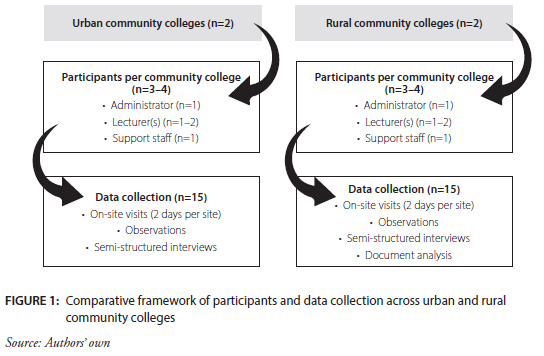
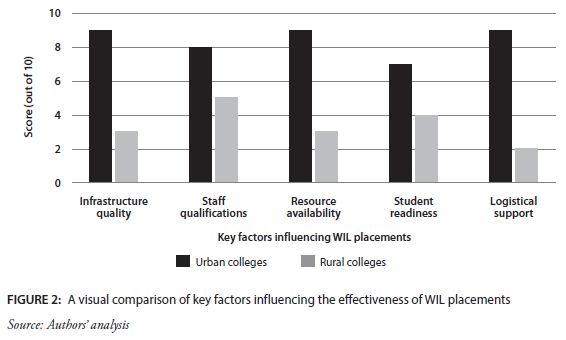
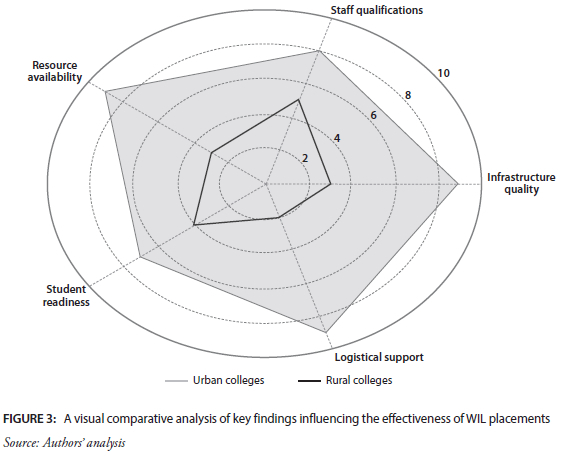
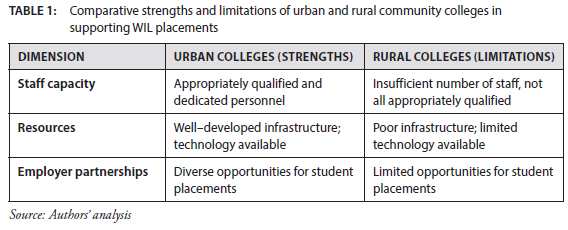
This article evaluates urban and rural community colleges in the Eastern Cape, focusing on their suitability as placement sites for work-integrated learning (WIL) in the Diploma in Adult and Community Education and Training (Dip ACET). Grounded in a qualitative research design, the study employed document analysis, structured interviews and direct observations to assess practical learning conditions. Findings reveal significant disparities in institutional capacity and delivery between urban and rural colleges. The study argues that addressing these disparities requires targeted resource allocation, policy reform and sustainable partnerships. Such interventions are critical to strengthening rural community colleges and ensuring equity in WIL implementation. The article concludes that bridging these systemic gaps is essential for inclusive adult education and for realising South Africa's broader educational transformation goals.
Community colleges; adult education; student placements; educational quality; rural and urban disparities; strategic partnerships
 Thumbnail
 Thumbnail
 Thumbnail