Optimising work-integrated learning environments at community colleges for adult education students
Abstract
This article evaluates urban and rural community colleges in the Eastern Cape, focusing on their suitability as placement sites for work-integrated learning (WIL) in the Diploma in Adult and Community Education and Training (Dip ACET). Grounded in a qualitative research design, the study employed document analysis, structured interviews and direct observations to assess practical learning conditions. Findings reveal significant disparities in institutional capacity and delivery between urban and rural colleges. The study argues that addressing these disparities requires targeted resource allocation, policy reform and sustainable partnerships. Such interventions are critical to strengthening rural community colleges and ensuring equity in WIL implementation. The article concludes that bridging these systemic gaps is essential for inclusive adult education and for realising South Africa's broader educational transformation goals.
Community colleges; adult education; student placements; educational quality; rural and urban disparities; strategic partnerships
Introduction and background
Globally, work-integrated learning (WIL) has become an essential component of higher education, as it complements theoretical knowledge with practical experiential learning (Raghubar, 2021). In the South African context, WIL is particularly crucial to programmes such as the Diploma in Adult and Community Education and Training (Dip ACET); these programmes aim to prepare educators to provide for educational needs in underserved and marginalised adult populations (Benavot et al., 2022). Community colleges, as defined by South Africa's White Paper for Post-School Education and Training (DHET, 2013), play a pivotal role in facilitating adult education. They provide accessible and contextually relevant learning opportunities for adults who have not completed formal schooling or who require additional skills training.
Community colleges in South Africa were established explicitly to deal with literacy, numeracy and vocational skills requirements and to provide broader socio-economic development among adults (DHET, 2013). Their purpose extends beyond conventional education and aims to foster social inclusion, community development and lifelong learning, particularly in historically disadvantaged communities (McGrath et al., 2020). However, while these policy intentions are commendable, the practical implementation of community college mandates has encountered numerous obstacles. Recent enrolment data reveal a significant decline in student numbers; this suggests that these institutions are not yet fully realising their potential, as envisaged in the national policy. According to DHET (2021), only 143 031 learners were registered at continuing education and training (CET) colleges, while more recent estimates by the Helen Suzman Foundation indicate a further decline to 124 638 learners in 2023/2024. These figures highlight a persistent gap between policy goals and actual practice in South Africa's adult education sector (DHET, 2021; Helen Suzman Foundation, 2024). Therefore, any discussion of WIL associated with community colleges must proceed from an awareness of these systemic challenges. These institutions serve as crucial environments in which Dip ACET students can engage practically and apply theoretical frameworks to real-world contexts (Mesuwini, 2021).
Despite the strategic importance and national policy emphasis placed on community colleges, significant disparities persist between the colleges situated in urban settings and those in rural settings in South Africa (Modise, 2023). Urban colleges typically benefit from better-funded infrastructure, superior resource allocation and access to more experienced education personnel, which renders them better suited to the effective implementation of WIL placements (Malale & Sentsho, 2014). However, rural community colleges frequently experience challenges related to inadequate infrastructure, limited staffing, resource constraints and logistical barriers. This has a significant impact on their operational effectiveness and their ability to support practical learning placements effectively (Muzeya & Julie, 2020; Whiteside, 2021).
The existing literature has dealt extensively with the broader implications of urban-rural educational disparities (Mzangwa, 2019; McKay, 2023). However, a notable gap remains regarding targeted evaluations of these disparities, specifically in the context of WIL placements for Dip ACET students. This research responded to this gap by critically evaluating and comparing urban and rural community colleges' capacity to support practical, experiential learning placements effectively. It aimed to provide insights into optimising placement environments to enhance the quality and effectiveness of adult education and to ensure their alignment with both the national educational objectives and the specific practical learning needs of Dip ACET students.
Research aims and objectives
The primary aim of this study was to evaluate the suitability of community colleges in South Africa as placement sites for students enrolled in the Dip ACET programme in South African higher education institutions (HEI). Specifically, this study sought to:
1. Assess the alignment of college programmes with the practical learning needs of Dip ACET students;
2. Evaluate the availability and experience of staff and the adequacy of facilities and resources at these institutions;
3. Identify key disparities between the capacity of urban and rural colleges to provide supportive, safe and resource-rich learning environments; and
4. Propose targeted interventions and strategic partnerships to resolve the identified challenges, particularly in rural colleges, in order to enhance the overall quality of adult education in South Africa.
Work-integrated learning in adult education
WIL is widely recognised as a crucial component of higher education, especially in vocational and professional training programmes. The concept of WIL merges theoretical knowledge with practical experience and enables students to apply classroom-based learning in real-world contexts (Raghubar, 2021). According to Mabungela and Mtiki (2024), WIL promotes deeper learning and enhances employability by equipping students with those essential skills required in professional practice. In the context of adult education, WIL is indispensable; it not only facilitates skills acquisition but also encourages the development of competencies that align with the evolving needs of adult learners. As postulated by Mabungela and Mtiki (2024), the importance of WIL has been reinforced in South Africa by national educational frameworks such as the National Qualifications Framework (NQF) and the Higher Education Qualifications Sub-Framework (HEQSF), which mandate the inclusion of WIL components in many academic programmes, including the Dip ACET (Council on Higher Education, 2011). This integration bridges the gap between theory and practice and enables students to gain hands-on experience in natural educational settings in which they can engage directly with other adult learners from diverse backgrounds.
Community colleges and their role in adult education
Community colleges in South Africa play a fundamental role in providing adult education, particularly in rural and underserved areas. These institutions were established to meet the needs of adult learners who may have missed formal schooling opportunities or who require further education to improve their employment prospects. The White Paper for Post-School Education and Training (DHET, 2013) emphasises that community colleges are integral to achieving the broader goals of the South African National Development Plan (NDP). This plan aims to improve adult literacy, foster skills development and promote lifelong learning (National Planning Commission (NPC), 2013). Community colleges cater to a wide demographic that includes marginalised groups, unemployed adults and those seeking skills-based education to enhance their employability. The strategic role of community colleges in adult education places them at the heart of WIL programmes for the Dip ACET, because they provide ideal environments for practical learning. However, research by McGrath et al. (2020) suggests that these institutions vary significantly regarding their infrastructure, resources and teaching quality. This affects the quality of the education they provide and their suitability as WIL placement sites.
Challenges in urban vs rural educational environments
The disparities between urban and rural education environments in South Africa have been well documented in the academic literature (Nkengbeza, 2017; Duma, 2021; Agumba, 2023; Right for Education, 2024) . Urban educational institutions, including community colleges, often benefit from better infrastructure, resource access and highly qualified staff (Whiteside, 2021). These advantages create conducive learning environments that foster student engagement and success. In contrast, rural institutions face numerous challenges, including inadequate infrastructure, limited access to educational materials and a shortage of qualified staff (Tapala et al., 2021; McKay, 2023). As pointed out by Mzangwa (2019), the South African government has recognised these disparities in the policies that are aimed at improving rural education, yet the gap between urban and rural institutions persists. In the context of adult education, rural community colleges are often hampered by logistical challenges such as poor transport infrastructure, which can hinder both student access and the availability of resources. Furthermore, rural institutions are more likely to face staffing shortages, which have an impact on the quality of instruction and limit professional development opportunities (Lopes & McKay, 2020). These challenges not only affect the day-to-day operations of rural colleges, but also directly influence their capacity to serve as WIL placement sites for Dip ACET students.
The existing literature, including work by Zenda (2024), indicates that rural institutions are often under-resourced, having inadequate teaching and learning materials, and they face significant challenges in ensuring student safety. This is particularly concerning for WIL placements, where students are expected to engage in practical teaching and learning activities in environments that support their professional development. Without adequate resources, rural community colleges may struggle to provide the necessary support for student placements, which could adversely affect the quality of their learning experience (Rush-Marlowe, 2021).
Considerable research has been conducted on the challenges faced by South African educational institutions in both urban and rural contexts. However, there is a notable gap in the literature regarding the specific evaluation of WIL placements in community colleges, particularly for students enrolled in the Dip ACET programme. Much of the existing research focuses on the broader challenges of rural education or the role of community colleges in providing adult education. However, few studies provide a comparative analysis of these institutions' suitability for WIL placements. This study sought to bridge this gap by comprehensively evaluating both urban and rural community colleges in South Africa. The study focuses specifically on the needs of Dip ACET students and aims to provide insights into the way in which these institutions could better align their programmes, facilities and resources with the practical learning requirements of WIL placements. This research is timely, coming at a time when South Africa grapples with the challenge of improving the quality of education in rural areas. This will help to ensure that adult learners are taught the skills and receive the knowledge necessary to contribute to the country's economic and social development.
Methodology
Data collection was conducted through on-site visits, semi-structured interviews and document analysis. On-site visits were carried out at four community colleges: two urban (East London and Gqeberha (formerly Port Elizabeth)) and two rural. During each visit, observations were conducted for approximately two full days per site and they allowed for detailed assessments of the physical infrastructure, learning spaces and student-staff interactions. Semi-structured interviews were conducted with a total of 15 staff members. The sample comprised approximately three or four staff members per college, including one administrator, one or two lecturers and one support staff member at each institution. These participants were purposively selected to represent diverse functional roles and provide a holistic understanding of each institution's capacity to support WIL placements. Document analysis also included institutional placement policies, curriculum documents and internal reports on student support structures.
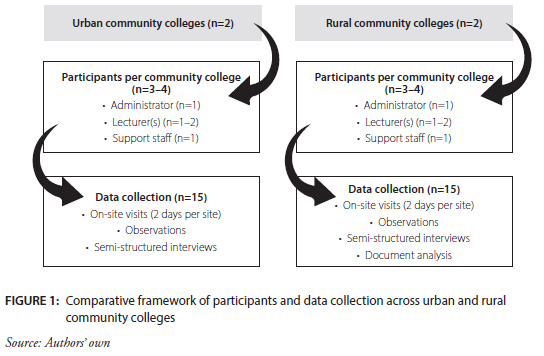
To illustrate the comparative design of the study and the methods applied in both urban and rural contexts, Figure 1 presents a synthesised framework of the participants involved and the data-collection strategies we employed across the four community colleges.
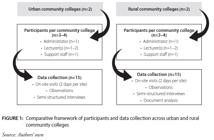
Figure 1 illustrates the comparative structure of WIL environments in two rural and two urban community colleges. Each institution engaged between three and four participants, including one administrator, one to two lecturers, and one support staff member. Data collection involved on-site visits over two days per college, observations of infrastructure and learning processes, semi-structured interviews with 15 staff members across the four colleges and document analysis of placement policies, curriculum materials and institutional reports.
Data-collection methods
Data collection was conducted through on-site visits, structured interviews and document analysis to ensure a comprehensive evaluation of the selected community colleges (Hatch, 2023). On-site visits to four community colleges - two urban and two rural - were conducted to gather direct observations of the institutional environments. These visits allowed for a detailed assessment of the physical infrastructure, available resources and general logistical arrangements to support student placements. The observations were structured to focus on how conducive the facilities were for practical learning, the educational materials and the interactions between staff and students (Farquhar et al., 2020).
In addition to on-site observations, semi-structured interviews were conducted with 15 staff members across the four colleges. These interviewees included vital personnel such as administrators, lecturers and support staff. They were designed to explore several core themes, including programme alignment with Dip ACET, the qualifications and availability of staff, resource constraints and student support mechanisms. Semi-structured interviews provided an opportunity to gather rich qualitative data and allowed staff members to discuss their experiences, challenges and perceptions of their college's capacity to host WIL placements (Priya, 2021). This method proved essential to understanding the operational realities of both urban and rural colleges in a way that quantitative methods would not have captured.
The third data-collection method involved document analysis, which focused on reviewing institutional records such as placement policies, curriculum outlines and strategic plans. The analysis of these documents provided a deeper understanding of the formal structures and frameworks governing WIL placements and shed light on the way in which each institution aligns its operations with the broader goals of the Dip ACET programme. This documentary evidence was instrumental in helping the researchers to understand how institutional policies interact with the practical implementation of WIL placements and how these frameworks influence student experiences.
Sample selection
The study's sample was purposively selected to ensure the representation of both urban and rural community colleges in the Eastern Cape in order to capture the unique educational context of adult learners (Hatch, 2023). Two urban community colleges, one in East London and one in Gqeberha, were chosen for their well-established infrastructure and resources that render them more likely to provide conducive environments for WIL. These urban colleges are critical reference points with which to assess the way in which resource-rich institutions handle student placements and whether their operational structures facilitate compelling learning experiences.
In contrast, two rural community colleges located in remote areas of the Eastern Cape were selected to explore the challenges that under-resourced institutions face. These rural colleges exhibit the typical logistical and infrastructural difficulties experienced by institutions in less-developed regions, including limited access to qualified staff, poor transportation networks and insufficient teaching resources.
This diverse sample made possible a more thorough comparative analysis of the ways in which different institutional contexts influence the capacity of colleges to support Dip ACET students.
Evaluation criteria
The evaluation of the community colleges was guided by specific qualitative criteria designed to assess the suitability of these institutions for WIL placements. One of the key criteria was programme relevance and alignment, which assessed the extent to which each college's curriculum and teaching practices matched the practical learning requirements of the Dip ACET programme. This criterion was particularly important in helping us to evaluate how well these institutions integrated adult education principles into their teaching and learning practices.
Another primary criterion was staff availability and expertise, which focused on whether the colleges have sufficiently qualified and experienced staff capable of providing WIL students with the necessary mentorship and guidance. Given that WIL relies heavily on practical engagement and interaction with experienced practitioners, the availability of qualified staff was essential to implementing student placement successfully.
The adequacy of the facilities and resources was also a critical component of the evaluation and was examined to assess the quality and availability of the physical infrastructure, including classrooms, libraries and access to teaching materials.
The presence of student support mechanisms, such as academic advice, career counselling and health services, was another area of focus, as these support systems play a vital role in ensuring student well-being during placements. The capacity of each institution to provide timely feedback and evaluate student performance during placements was also assessed, as this feedback is critical to students' professional development. The analysis examined the ways in which these institutions managed logistical challenges, including transportation for students placed in rural areas and whether adequate safety measures were in place to protect students during their placements.
Data analysis
The data collected from the interviews, observations and document reviews were analysed using a thematic analysis approach (Gupta, 2024). This method involved coding and categorising the data to identify recurring themes across colleges. Thematic analysis was chosen because it allows for an in-depth exploration of qualitative data and provides insight into the underlying factors that influence the quality and suitability of WIL placements (Priya, 2021). Each interview transcript and observation note was carefully coded to extract critical themes related to programme relevance, staff experience, resource availability and logistical challenges. These themes were then compared across the different urban and rural institutional contexts in order to identify commonalities and divergences in the ways in which WIL is implemented. The comparative analysis highlighted significant disparities between urban and rural institutions, particularly in respect of infrastructure and staff support, which had a direct impact on the quality of the WIL placements. Moreover, a triangulation process was used to ensure the validity of the findings (Moon, 2019). This involved cross-referencing data from multiple sources, interviews, observations and documents to confirm the consistency of the results. Triangulation enhanced the study's credibility by providing multiple perspectives on the same issues to ensure that the findings accurately reflected the realities of the institutions under investigation (Moon, 2019).
Findings
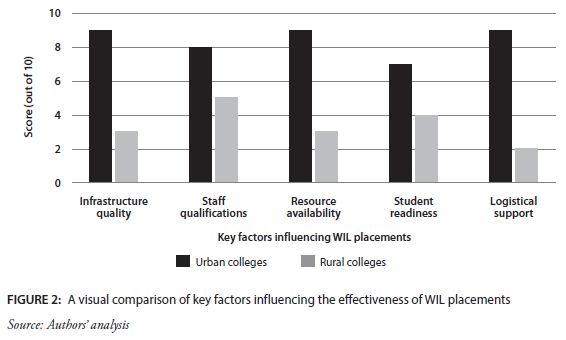
The findings of this study provide an in-depth comparative analysis of the community colleges in the Eastern Cape, focusing on their suitability as placement sites for WIL students in the Dip ACET programme. Several key themes emerged through structured observations, interviews, and document analysis, highlighting significant disparities between urban and rural institutions. Figure 2 compares visually the key factors that influence the effectiveness of WIL placements and illustrates the disparities between urban and rural community colleges across dimensions such as infrastructure quality, staff qualifications, resource availability, student readiness and logistical support.
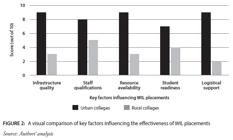
This visual representation underscores how these multidimensional disparities cumulatively affect the quality of WIL placements and reinforces the need for targeted interventions to strengthen institutional capacity, particularly in under-resourced rural community colleges.
Figure 2 presents a comparative analysis of urban and rural community colleges across five critical dimensions: infrastructure quality, staff qualifications, resource availability, student readiness and logistical support. Scores are presented out of 10 per dimension for both urban and rural colleges.
Strong programme relevance and resource availability in urban colleges
The two urban community colleges, one each in East London and Gqeberha, were highly aligned with the practical learning needs of Dip ACET students. These institutions demonstrated strong programme relevance, with curricula that directly supported the principles of adult education and incorporated practical components that benefited WIL students. Staff members at these colleges were generally well qualified, with many lecturers possessing extensive experience in adult education and vocational training. Practical learning activities included supervised micro-teaching sessions where students delivered adult literacy modules, facilitated small-group vocational skills training and participated in community outreach projects such as agricultural extension demonstrations and health education workshops. For example, one urban college lecturer explained:
I have been in adult education for 12 years now, both at community colleges and private training centres. This experience has helped me to adapt my teaching to adult learners who often come from complex educational backgrounds. [Lecturer 1]
Similarly, an administrator added:
Our staff regularly attend DHET workshops on adult learner engagement, curriculum adaptation and competency-based assessments. [Administrator 2]
Such accounts illustrate the ways in which community colleges align with DHET priorities, ensuring that staff are equipped to respond effectively to the needs of adult learners through curriculum adaptation and assessment practices.
Infrastructure and resource disparities
Urban community colleges generally benefit from well-maintained facilities, functional classrooms, Internet access and reliable teaching equipment. In contrast, rural colleges often struggle with degraded infrastructure, limited or outdated teaching materials and insufficient technological resources. One rural participant explained:
We often conduct our sessions in classrooms that have broken windows and no electricity. You cannot use projectors or any teaching aids; everything is done manually. [Participant R2]
This lack of infrastructure directly affects both teaching quality and student preparedness. Another urban student reflected:
At our college, we had access to computers and a library. It helped a lot during our WIL because we could prepare properly and get support. [Participant U1]
Students' support structures and placement coordination
The urban colleges also had robust student support mechanisms, including academic advice, mental health services and career counselling. These support structures played a crucial role in ensuring student success during placements, as they provided students with the necessary guidance and assistance to navigate academic and personal challenges. Interview data revealed that staff at the urban colleges were proactive in offering feedback and evaluations to WIL students, which further enhanced their learning experience. An urban-based participant observed:
Everything was planned for us; the college worked well with other organisations, including the university, and they gave us good orientation. We knew what was expected during WIL. [Participant U2]
However, one challenge identified at the urban colleges was the high student-to-teacher ratio, which occasionally limited the individual attention that WIL students received from their mentors. Nonetheless, this issue did not detract significantly from the overall quality of the WIL placements in these settings.
Rural institutions, in contrast, lack dedicated mentors or formalised support for their students One rural participant explained:
We had to hit the ground running, as my mentor doesn't have a formal qualification in adult education, and sometimes he didn't relate well to adult education. There's no one to help you or check in on your progress. [Participant R4]
Rural colleges: Logistical challenges and limited resources
In stark contrast to their urban counterparts, the two rural community colleges faced significant challenges that affected their capacity to support Dip ACET placements. These challenges were primarily related to infrastructural deficiencies, resource constraints and logistical barriers. Observations at the rural colleges revealed that the facilities were often outdated and poorly maintained, with limited access to technology and insufficient classroom space. Rural students frequently encounter transport and accommodation barriers when accessing WIL placement sites, which are often situated far from their homes or colleges. Urban students, in contrast, generally benefit from their proximity to institutions and transport networks. One rural participant noted:
I had to walk over 8 km daily to reach my placement site because there are no taxis in my area. Sometimes I'd miss days when it rained. [Participant R6]
This practical barrier severely limits student participation, performance and overall learning outcomes.
The absence of well-equipped libraries and computer laboratories also constrained the ability of students to engage in practical learning activities. Moreover, staff shortages were another significant problem at the rural colleges, where a lack of qualified adult education practitioners was prevalent. Interviews with staff members highlighted these colleges' difficulties in recruiting and retaining experienced educators, often due to their remote locations. As one rural lecturer noted:
We often struggle to attract qualified adult educators because many prefer to work in urban areas where salaries, infrastructure and career growth opportunities are better.
An administrator echoed this concern, stating:
In some years, we run classes with part-time facilitators who lack suitable formal qualifications, simply because we cannot currently recruit permanent staff.
This shortage of qualified staff directly affects the quality of WIL placements, as the students at rural colleges often lack adequate mentorship and support during their practical experiences.
Logistical transportation and student safety challenges were also identified as significant barriers at the rural colleges. Many students reported experiencing difficulty in accessing the colleges due to the poor road infrastructure and limited public transport options. In addition, safety concerns were raised by both students and staff, particularly those who had to travel long distances to reach the college. These challenges pose a significant threat to the success of WIL placements, because they create an environment of uncertainty and disruption for students. Despite these challenges, though, the rural colleges displayed a solid commitment to adult education, with staff members expressing a genuine dedication to supporting their students. However, the limited resources and infrastructural challenges faced by these institutions constrain their ability to provide the same support and practical learning opportunities as their urban counterparts.
Comparative analysis: Disparities and commonalities
The comparative analysis of urban and rural colleges highlighted significant disparities in the capacity of these institutions to support WIL placements. Urban colleges, with their superior resources, qualified staff and established support systems, are generally better equipped to provide conducive learning environments for Dip ACET students. These institutions offer well-structured programmes and access to essential learning materials to ensure that their students are able to engage fully in practical learning experiences.
In contrast, rural colleges struggle with infrastructural and logistical challenges that limit their ability to provide high-quality WIL placements. The lack of qualified staff, inadequate facilities and transportation challenges create an environment in which students face significant barriers to the successful engagement with the WIL placement. These systemic deficiencies are not unique; previous research has documented similar challenges in rural education settings, where infrastructural inequities and limited human capital hinder the implementation of experiential learning models (Wedekind & Mutereko, 2016; Papier, 2017). The study's findings suggest that targeted interventions are needed to resolve these challenges and to improve the capacity of rural colleges to support WIL. Strengthening staffing models, enhancing logistical support and fostering local industry partnerships have been recommended as essential strategies to enable equitable access to quality WIL (McGrath et al., 2021).
Discussion
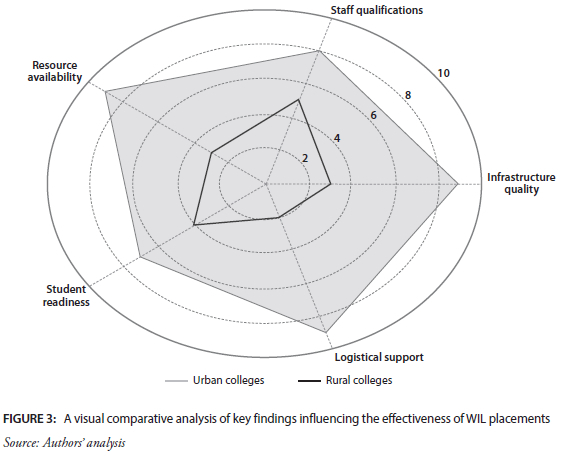
The findings derived from this study provide valuable insights into the complexities of WIL placements in community colleges in the Eastern Cape, particularly as they relate to the Dip ACET programme. Figure 3 provides a visual comparative analysis of those key factors that influence the effectiveness of WIL placements and it illustrates the disparities between urban and rural community colleges across dimensions such as infrastructure quality, staff qualifications, resource availability, student readiness and logistical support.
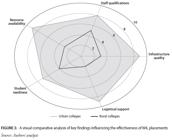
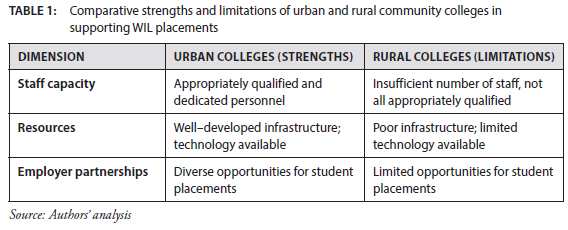
Figure 3 highlights how these interrelated factors contribute to persistent inequities in WIL experiences, emphasising the importance of comprehensive policy responses that resolve both structural and contextual challenges across urban and rural settings. The disparities between urban and rural community colleges highlight both the potential and the limitations of these institutions to support practical learning for adult education students. This section discusses the implications of these findings critically in the context of South Africa's broader educational landscape. It focuses on the urban-rural divide in adult education and the systemic challenges that need to be overcome to improve WIL placement experiences. To provide a concise visual synthesis of these observed disparities and institutional conditions, Table 1 presents a comparative summary of the capacity of urban and rural community colleges to support WIL placements.
As illustrated in Figure 4, urban institutions generally exhibit stronger structural, resource and staff capacities, whereas rural colleges continue to experience resource deficits, logistical barriers and safety concerns. This limits their ability to facilitate equitable WIL experiences effectively for adult education students.
Urban colleges: model for effective WIL placements
The findings suggest that urban community colleges in the Eastern Cape provide a strong model for effective WIL placements, primarily due to their better-resourced environments, experienced, qualified staff and robust support systems. Urban institutions can offer a learning environment that closely aligns with the needs of Dip ACET students and create opportunities for students to engage meaningfully in practical learning activities. These findings are consistent with research by Lembani et al. (2020) who identified urban educational institutions as being better equipped to deliver quality education owing to their access to resources and infrastructure.
The superior infrastructure and the availability of teaching resources in urban colleges reflect the broader socio-economic advantages that urban areas enjoy in South Africa (Altbach et al. 2019; Kajiita & Kang'ethe, 2024). These institutions are more likely to receive government and private-sector support, which enables them to deliver a high standard of education. For Dip ACET students, this translates into a conducive learning environment in which they can apply theoretical knowledge in practice, with access to technology, well-maintained classrooms and libraries that support their educational goals.
However, the urban colleges are not without their challenges. The high student-to-teacher ratios reported in the findings suggest that, even in resource-rich environments, students may struggle to obtain individual attention and mentorship. This challenge, while not as severe as the challenges faced by students at rural colleges, raises concerns about the sustainability of quality education in urban institutions, particularly as the demand for adult education continues to grow in South Africa's urban centres. As Molekwa (2024) argues, even well-resourced institutions must continually adapt to shifting educational needs and increasing student populations to ensure they can maintain their quality standards. Despite these challenges, urban colleges represent a relatively successful model for WIL placements, one that could be replicated or adapted in other contexts, particularly in improving rural institutions through targeted interventions and resource allocation (Wyner, 2019).
Overcoming structural deficits of rural colleges
The stark contrast between urban and rural community colleges underscores the systemic inequities that exist within South Africa's educational landscape. The findings reveal that rural colleges in the Eastern Cape are hampered by infrastructural deficits, limited resources and significant logistical challenges, all of which severely limit their capacity to support WIL placements. These challenges are consistent with the findings of the broader literature on rural education in South Africa, where poor infrastructure, under-resourcing and teacher shortages have been found to be pervasive (Andreas, 2023; Rammbuda, 2023).
The lack of adequate facilities, such as modern classrooms and libraries, has a direct impact on the ability of Dip ACET students to engage in meaningful practical learning. Moreover, the shortage of suitably qualified staff further exacerbates the challenges, as students who are placed in rural colleges often do not receive the level of mentorship and guidance necessary for effective WIL. This aligns with the findings of Du Plessis and Mestry (2019), who noted that rural educational institutions frequently struggle to attract and retain qualified educators, largely due to poor working conditions and lower levels of investment in rural areas.
One of the most significant barriers identified in this study is the logistical challenge of accessing rural colleges. Poor road infrastructure and limited public transport options mean that students often face difficulties in simply getting to and from their placement sites (McKay, 2020). Furthermore, safety concerns, particularly for students travelling long distances, present additional risks that undermine the success of WIL placements. These logistical challenges are compounded by the geographic isolation of many rural communities, which further restricts access to educational materials, professional development opportunities for staff and external support from educational agencies or non-governmental organisations.
Resolving these challenges requires a multifaceted approach. Policy interventions that prioritise the development of the rural education infrastructure are critical. As reported in previous studies, the government acknowledges the need to improve rural schooling through targeted investment, but these efforts need to be expanded to include rural adult education institutions. Strategic partnerships between the government, private-sector stakeholders and civil society organisations could also overcome resource deficits and support rural community colleges in delivering higher-quality WIL experiences (Myende, 2019). Myende (2019) indicates that such partnerships could provide financial, technical and professional development support to bridge the gap between policy intentions and practical outcomes in rural education.
Implications for policy and practice
The findings of this study have significant implications for policy and practice in the field of adult education and WIL placements in South Africa. First and foremost, the disparities between urban and rural community colleges highlight the urgent need for targeted investment in rural education infrastructure (Showalter et al., 2019). We concur with Mgqwashu et al. (2020), who advise that the government's existing policies to improve rural education must be expanded to include community colleges. This is particularly important given the critical role that these institutions play in adult education and skills development. Strategic partnerships will be essential to bridging the resource gaps identified in rural colleges. Public-private partnerships and collaborations with international development agencies could provide the financial and technical resources needed to improve the infrastructure and provide staff training and student support services in rural community colleges (Matshidze, 2021). Furthermore, these partnerships could help to facilitate logistical support, such as improved transportation services, for students placed in remote areas.
In addition, policymakers should develop specific guidelines and support structures for WIL placements in rural settings. This is necessary to maximise the educational value of these placements and to ensure that students are adequately prepared to navigate the security and logistical constraints of such environments. Finally, while generally better resourced, urban colleges must resolve the challenges posed by high student-to-teacher ratios in order to maintain the quality of WIL placements (Patchappan, 2021). This could be achieved through the targeted recruitment of additional staff and the implementation of mentorship programmes that pair students with experienced educators to ensure that they receive the guidance needed for professional growth.
Limitations and areas for future research
While this study offers rich qualitative insights into the suitability of community colleges as WIL placement sites for Dip ACET students, certain limitations should be acknowledged. The research focused on a limited number of colleges - two urban and two rural - in the Eastern Cape, which restricts the generalisability of the findings across the national landscape. In addition, although the purposive sampling approach provided in-depth contextual data, it may not have captured the full diversity of the institutional challenges faced in other provinces. Future studies could broaden the sample across multiple regions and include private and satellite campuses to provide a more comprehensive national picture of community college readiness for WIL.
In addition, this study did not track the long-term professional development trajectories of students post-WIL. Understanding the sustained impact of placement experiences on graduates' employment outcomes, teaching philosophies and confidence to deliver adult education remains an important area for future research. Longitudinal studies, in particular, are necessary to assess whether WIL contributes meaningfully to the development of self-directed learning, professional identity and community engagement among Dip ACET graduates. Researchers could also explore the ways in which institutions adapt their placement models over time in response to policy changes, technological advances or funding shifts. Such investigations would enrich the broader discourse on WIL as a transformative pedagogical strategy in adult and community education.
Conclusion
The findings of this study reaffirm the stark disparities between the capacity of urban and rural community colleges in the Eastern Cape to deliver equitable and pedagogically sound WIL experiences for students enrolled in the Dip ACET. Urban colleges, characterised by relatively stronger infrastructure, well-qualified staff and formalised support structures, are better positioned to facilitate high-impact WIL placements that reinforce theoretical learning with meaningful practice. These institutions are often located in areas with reliable transport, functional amenities and access to a network of placement partners, all of which contribute to enhancing the professional readiness of Dip ACET students.
In contrast, rural community colleges remain structurally marginalised, facing deficits in infrastructure, academic staffing, technological capacity and placement support systems. These limitations compromise the effectiveness of WIL for rural-based students and widen the educational equity gap. Resolving these challenges requires targeted policy interventions that include increased funding, rural staff development programmes and institutionally coordinated placement models. Moreover, multi-stakeholder partnerships between colleges, municipalities, non-governmental organisations and adult education service providers could provide practical mechanisms through which to improve placement conditions and outcomes. Ensuring that all students, regardless of their geographic location, have access to high-quality, contextually relevant WIL opportunities is essential to realising the broader goals of adult education transformation in South Africa. Ultimately, improving the functionality and inclusivity of WIL in the community college sector will be instrumental in equipping future adult educators with the competencies needed to advance social justice, lifelong learning and community empowerment.
REFERENCES
Literature review
- Agumba, E. 2023. Unequal access and participation in higher education in South Africa: Exploring rural student experiences. South African Journal of Higher Education, 37(2):1-15. Available at: <https://doi.org/10.20853/37-2-5245>
- Altbach, PG, Reisberg, L & Rumbley, LE. 2019. Trends in global higher education: Tracking an academic revolution, Volume 22. Brill.
- CHE (Council on Higher Education). 2011. Work-integrated learning. Good practice guide. HE Monitor, 12 August. Available at: <file:///C:/Users/John/Favorites/Downloads/Higher%20Education%20Monitor%2012%20Work_Integrated%20Learning_Good%20Practice%20Guide.pdf>.
- DHET (Department of Higher Education and Training). 2013. White Paper for Post-School Education and Training. Pretoria: DHET.
- Duma, MAN. 2021. The digital divide: ICT challenges in rural schools in South Africa. Open Science Journal, 6(3):1-12. Available at: <https://osjournal.org/ojs/index.php/OSJ/article/view/2984>
- Gupta, A. 2024. Qualitative methods and data analysis using ATLAS. Springer.
- Hatch, JA. 2023. Doing qualitative research in education settings. State University of New York Press.
- Helen Suzman Foundation. 2024. Annual Report 2023.
- Kajiita, RM & Kang'ethe, SM. 2024. Socio-economic dynamics inhibiting inclusive urban economic development: Implications for sustainable urban development in South African cities. Sustainability, 16(7):2803.
- Lembani, R, Gunter, A, Breines, M & Dalu, MTB. 2020. The same course, different access: The digital divide between urban and rural distance education students in South Africa. Journal of Geography in Higher Education, 44(1):70-84.
- Lopes, H & McKay, V. 2020. Adult learning and education as a tool to contain pandemics: The COVID-19 experience. International Review of Education, 66(4):575-602.
- Mabungela, M & Mtiki, V. 2024. Accelerating graduate employability through work-integrated learning. Research in Social Sciences and Technology, 9(1):291-304.
- Malale, M & Sentsho, L. 2014. Perceptions of rural further education and training (FET) college students towards placement at small, medium and micro-enterprises (SMMEs): The South African rural perspective. Mediterranean Journal of Social Sciences, 5(20):683-691.
- McGrath, S, Needham, S, Papier, J, Wedekind, V, Attwal, H & Calitz, M. 2021. Work-integrated learning for TVET Lecturers: A resource guide for South Africa. Cape Town: African Minds.
- McGrath, S Ramsarup, P, Zeelen, J, Wedekind, V, Allais, S, Lotz-Sisitka, H, Monk, D, Openjuru, G & Russon, JA. 2020. Vocational education and training for African development: A literature review. Journal ofVocational Education & Training, 72(4):465-487.
- McKay, T. 2020. South Africa's key urban transport challenges. Urban Geography in South Africa: Perspectives and Theory, 189-207.
- McKay, V. 2023. Adult basic education and training in South Africa. In: RE Rudd, JE Anderson, S Oppenheimer, C Nath, JP Comings, B Garner & CA Smith (eds), Review of Adult Learning and Literacy, Volume 7. Routledge, 285-310.
- Mesuwini, J. 2021. Technical and vocational education and training lecturer learning through work-integrated learning: A study of three colleges in KwaZulu-Natal Unpublished Master's dissertation, Durban University of Technology.
- Mgqwashu, EM, Timmis, S, De Wet, T & Madondo, NE. 2020. Transitions from rural contexts to and through higher education in South Africa: Negotiating misrecognition. Compare: A Journal of Comparative and International Education, 50(7):943-960.
- Modise, CN. 2023. Students' perspectives on the contribution of community education and training colleges to local communities. Unpublished Master's dissertation, University of the Free State, South Africa.
- Molekwa, M. 2024. The legal analysis of the impact of inadequate schools infrastructure on the right to basic education in South Africa. Doctoral thesis. Mankweng: University of Limpopo. Available at: <https://ulspace.ul.ac.za/handle/10386/4574>
- Mzangwa, ST. 2019. The effects of higher education policy on transformation in post-apartheid South Africa. Cogent Education, 6(1):1592737.
- Nkengbeza, D. 2017. Rural education in South Africa: A comparative study of facilities and resources. Creative Education, 8(8):1195-1205. Available at: <https://doi.org/10.4236/ce.2017.88086>
- NPC (National Planning Commission). 2013. National Development Plan 2030: Our future, make it work. Pretoria, South Africa.
- Papier, J. 2017. Bridging college and the workplace: Learning from the experience of college graduates in South Africa. Journal of Education and Work, 30(1):25-38.
- Patchappan, T. 2021. Academics' perceptions of community engagement at a selected University of Technology in South Africa. Doctoral thesis, Durban University of Technology.
- Priya, A. 2021. Case study methodology of qualitative research: Key attributes and navigating the conundrums in its application. Sociological Bulletin, 70(1):94-110.
- Raghubar, A. 2021. Relevance of work integrated learning (WIL) in the geomatics programme at the Durban University of Technology. Doctoral thesis. Durban University of Technology.
- Rammbuda, MC. 2023. Challenges faced by curriculum advisors when offering curriculum support to schools in rural South Africa. International Journal of Research in Business and Social Science (2147-4478), 12(5):354-361.
- Right for Education. 2024 (12 December). Rural schools in South Africa strive for success. Right for Education. Available at <https://rightforeducation.org/2024/12/12/rural-schools-in-south-africa-strive-for-success>.
- Rush-Marlowe, R. 2021. Strengthening rural community colleges: Innovations and opportunities. Association of Community College Trustees (ACCT).
- Showalter, D, Hartman, SL, Johnson, J & Klein, B. 2019. Why rural matters 2018-2019: The time is now. A Report of the Rural School and Community Trust. Rural School and Community Trust.
- Tapala, TT, Van Niekerk, M & Mentz, K. 2021. Curriculum leadership barriers experienced by heads of department: A look at South African secondary schools. International Journal of Leadership in Education, 24(6):771-788.
- Wedekind, V & Mutereko, S. 2016. TVET college lecturers: The 'new' profession and the culture of teaching and learning. Journal of Education, 64:59-84.
- Whiteside, JL. 2021. Becoming academically eligible: University enrolment among first-generation, rural college goers. Rural Sociology, 86(2):204-228.