Reading the "Present Time" as Queer Feminist Refuge in Lien Botha's Eco-Apocalypse
Abstract
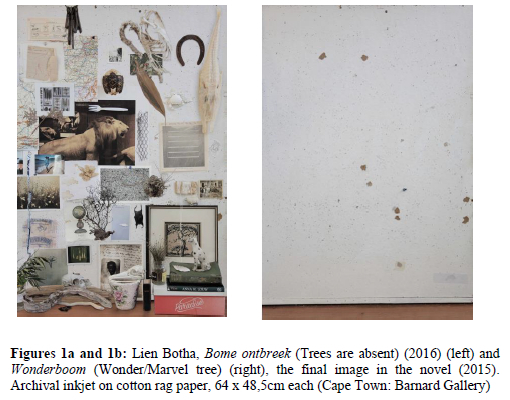
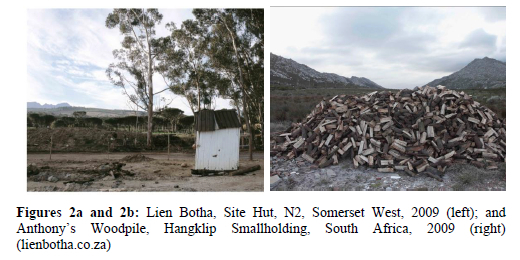
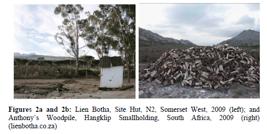
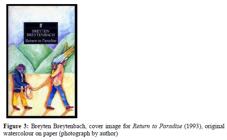
Lien Botha's Wonderboom (2015) explores forgetting as a strategy for undermining linear historiography, and feminine unravelling as a revolt against violent masculinity, colonialism, and environmental decline. This article presents a reading of Botha's debut novel, accompanying visuals, and a selection of photographs from her oeuvre spanning at least 20 years-in counterpoint-to demonstrate how Botha fashions the present as queer feminist refuge in her engagement with troubled pasts and uncertain futures. I conduct my analyses via a postcolonial, queer and feminist framework, in order to highlight Botha's careful engagement with race, gender, and the environment, and employ Barad's hauntology to engage with Botha's disruption of the space-time continuum. To this end, the article elaborates on the many intertextual relationships between Botha's own visual and literary work, and those of a selection of South African and international literary figures. Botha's novel and her photography resist a conception of history that is linear and continuous, instead suggesting experiments with space-time configurations that question social and environmental responsibility. Botha creates a haunted space where past and future become blurred; the present, and the people and landscapes one encounters there, are revealed as a space of possibility for changed relationships with self, others, and nature.
queer feminism; photography; ecocriticism; hauntology; postcolonialism; eco-apocalypse; carnivalesque; space-time continuum; intertextuality
 Thumbnail
 Thumbnail
 Thumbnail