Investigation of Wind Data Resolution for Small Wind Turbine Performance Study
Abstract
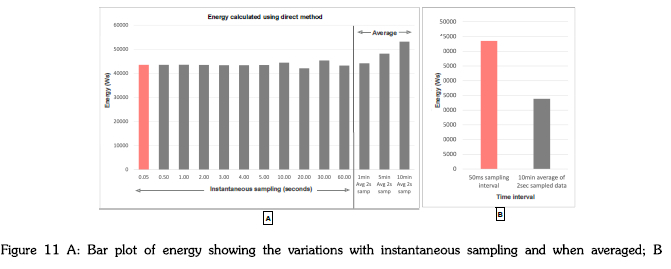
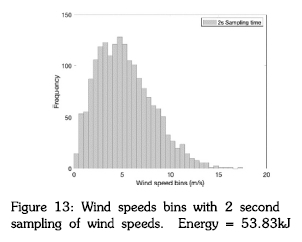
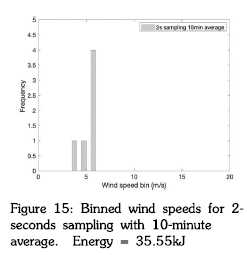
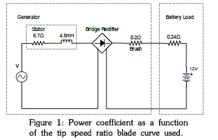
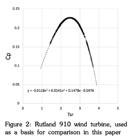
Small wind turbine sites, in general, use a 0.5Hz sampling interval and a 10-minute averaging interval for a feasibility study or turbine testing. Studies have established that the calculated performance variation of small wind turbines when averaging at large time intervals. The performance variation is larger for sites with high wind variability. However, these studies are often based on low sampling frequency and high averaging intervals. In the present study, wind speed data has been measured at a high sampling frequency of 20Hz with an ultrasonic sensor. A dynamic model of a 50W Rutland wind turbine is used to analyse the simulated perfonnance using wind speed data at a range of sampling intervals and some averaging intervals. The wind turbine and the anemometer are installed in a residential area of high wind variability. The energy is calculated and compared directly using the wind turbine model and using the IEC recommended method of bins. The direct method results show that the rise in instantaneous sampling intervals up to 20 seconds has an insignificant effect on the energy output. Whereas, for 2-seconds sampled wind data averaged over 10-minutes, energy overestimates of 19% is observed. However, where only 10-minute interval averaged wind data are available, there is a significant underestimate in energy by 45%. The energy calculated using the method of bins overestimates the energy by 19% for high resolution wind data and underestimates by 22% for 10-minute average data.
Sampling intervals; averaging intervals; direct method; method of bins; energy
 Thumbnail
 Thumbnail
 Thumbnail
 Thumbnail
 Thumbnail
 Thumbnail
 Thumbnail
 Thumbnail
 Thumbnail
 Thumbnail
 Thumbnail
 Thumbnail
 Thumbnail