Developing a small photovoltaic power supply system with adaptive technologies for rural Africa: Design, cost and efficiency analyses
Abstract
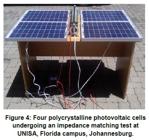
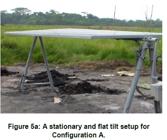
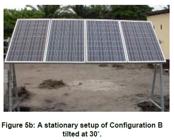
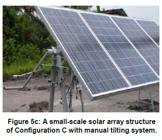
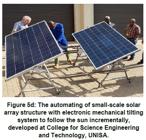
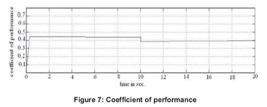
The objective of this stud]; was to design a small-scale photovoltaic system to support electricity supply to a rural village in the Republic of Congo. A simple impedance-matching system and an innovative panel-tilting system were implemented as adaptive technologies to increase the power output of the system and reduce its capital and running costs. The experimentally obtained results showed that the daily energy output of a four-panel, 400 W photovoltaic system could be increased by 15% through a series parallel impedance match configuration, and by 36% from 3.3 kWh per day to approximately 4.5 kWh per day through implementing an automated panel tilting system with always normal incidence of solar irradiation on the panels in an equatorial environment. Implementing these technologies accordingly reduced the cost of energy supplied by the same percentages, with an eventual electricity cost of about ZAR 3.60 per kWhr, as calculated over an operation time often years, and an initial capital outlay of ZAR 37 per watt. These costs are much lower than for installing power grid lines to the village, and the technology also ensures complete autonomy of power supply to the community. The study also identified the potential to generate many new business and job opportunities locally in this community, as well as in the rest of Africa.
 Thumbnail
 Thumbnail
 Thumbnail
 Thumbnail
 Thumbnail
 Thumbnail
 Thumbnail
 Thumbnail
 Thumbnail
 Thumbnail
 Thumbnail