Theoretical investigation of a combined Kalina and vapour-absorption cycle
Abstract
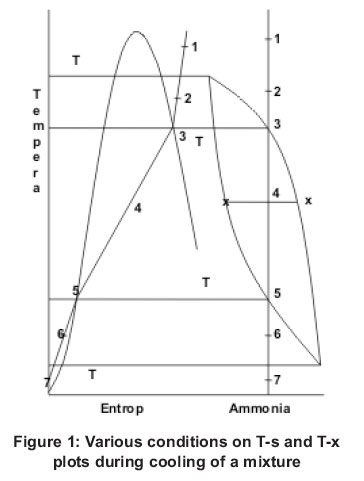
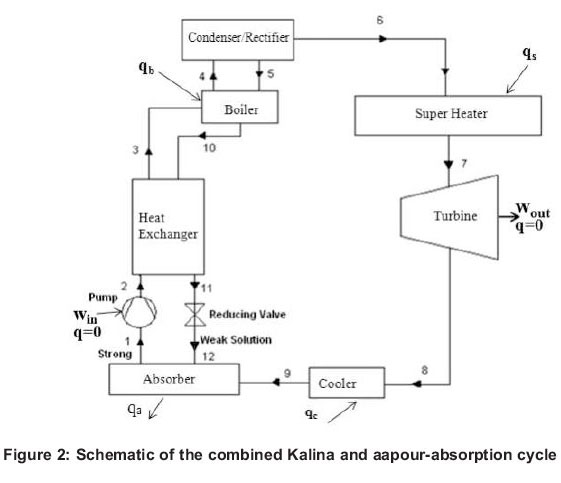
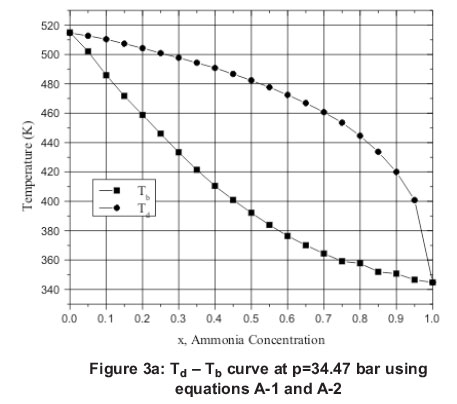
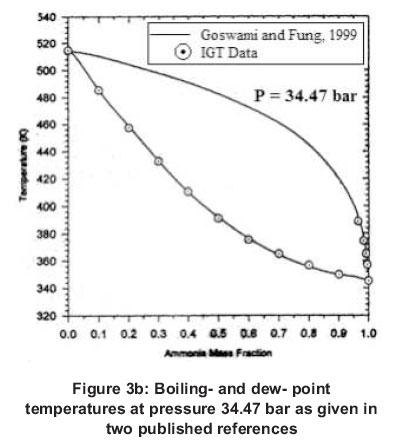
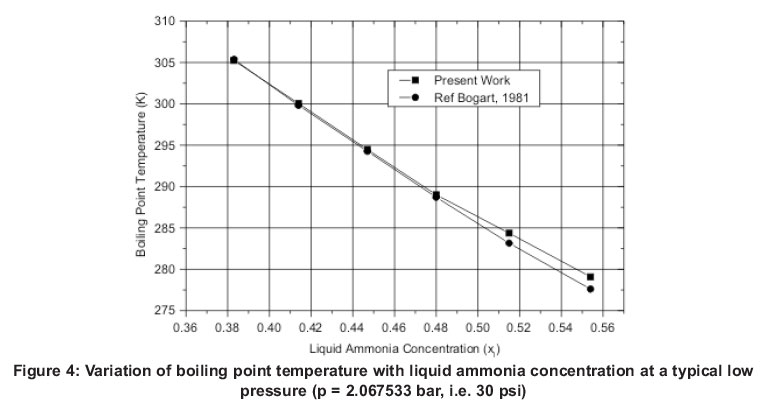
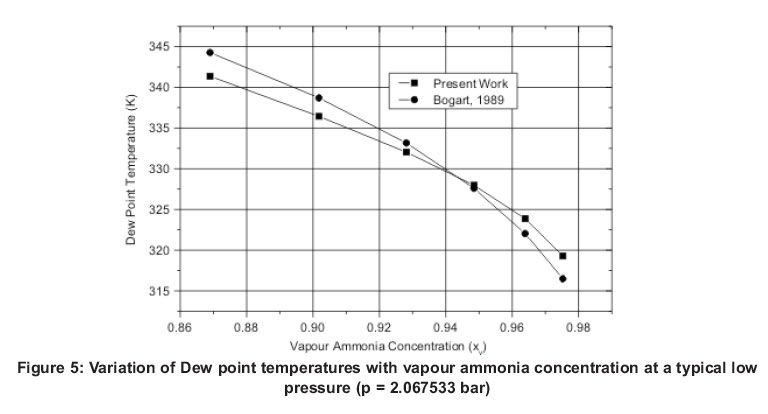
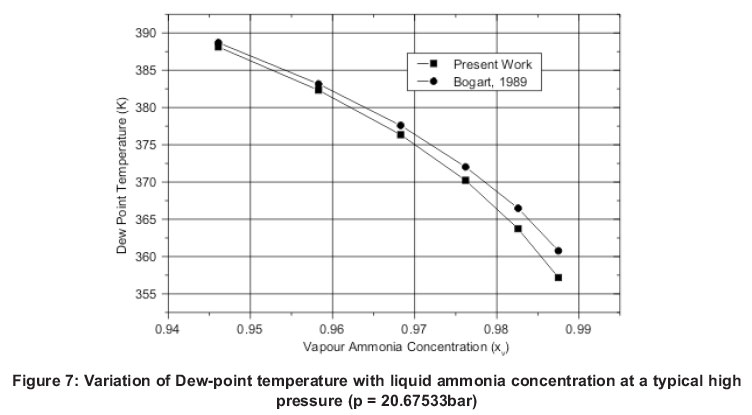
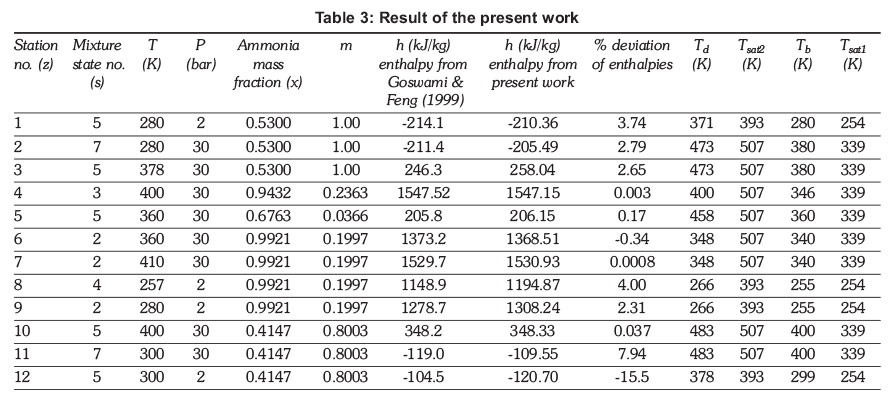
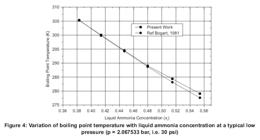
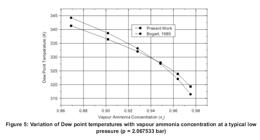
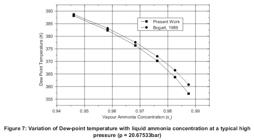
A program has been developed to calculate enthalpies at the salient points (later referred to as stations) of a combined power and cooling cycle provided pressure, temperature, mixture concentration and condition are known at these points. The ammonia-water mixture, which is taken as the working fluid, may be at one of the following seven conditions namely, superheated vapour mixture, mixture of superheated component of ammonia and pseudo vapour component of water, saturated vapour mixture, wet vapour mixture, saturated liquid mixture, mixture of subcooled water and pseudo liquid ammonia and subcooled mixture of sub-cooled components of ammonia and water. The mixture boiling-point temperature and dew-point temperature, needed to establish the condition of the working fluid, are functions of absolute pressure, critical pressure and critical temperature of the mixture; later two depend on the mixture concentration and the corresponding critical values of water at the given station. Using typical values of the variables as listed above, enthalpies at all stations are predicted. The predicted enthalpies are close (within 3%) to those available in the literature except at two stations where the mixture was weak in ammonia and its temperature was either in the near vicinity of the mixture boiling-point temperature or below the saturation temperature of pure ammonia at the concerned pressure. Using the predicted values of enthalpies, thermal efficiency of the combined power and cooling cycle has been calculated.
absorption; ammonia-water mixture; cogeneration cycle; combined power and cooling cycle; energy; refrigeration; Kalina cycle
 Thumbnail
 Thumbnail
 Thumbnail
 Thumbnail
 Thumbnail
 Thumbnail
 Thumbnail
 Thumbnail
 Thumbnail