Determination of oxidation characteristics and decomposition kinetics of some Nigerian biomass
Abstract
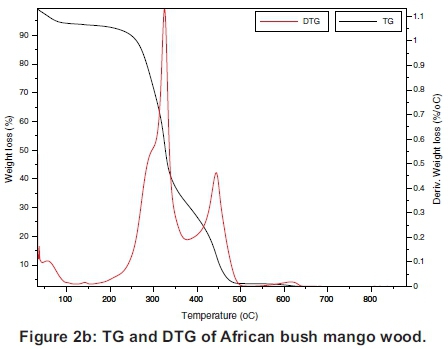
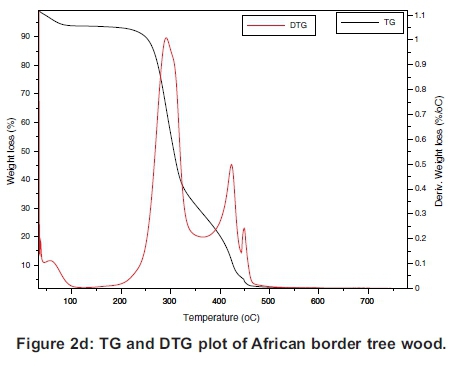
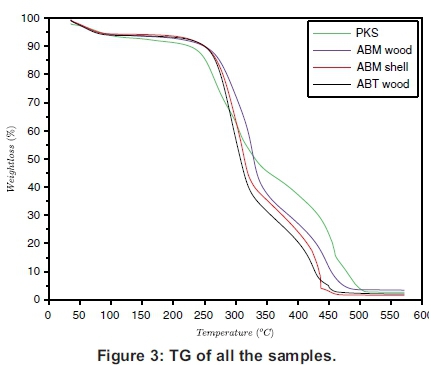
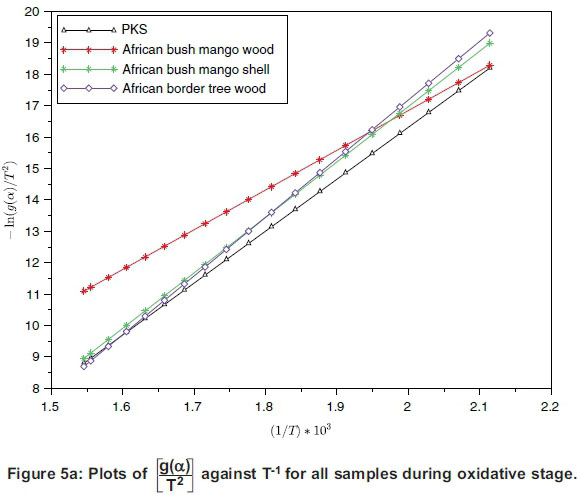
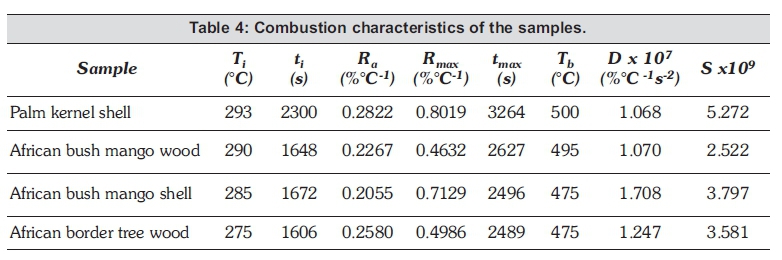
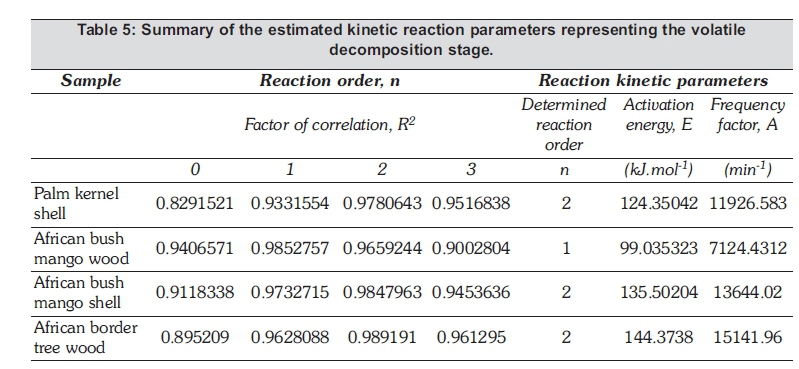
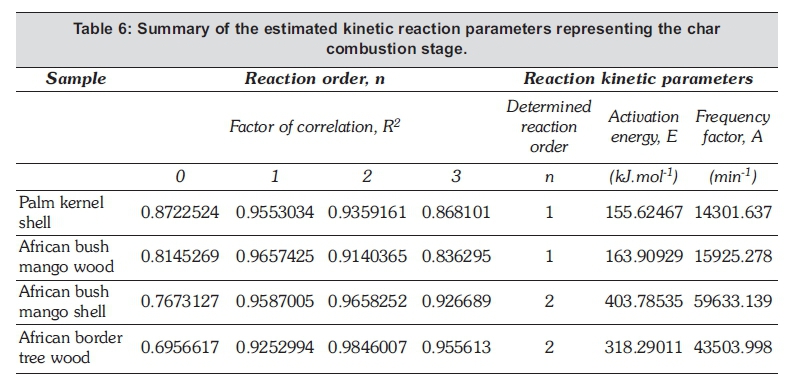
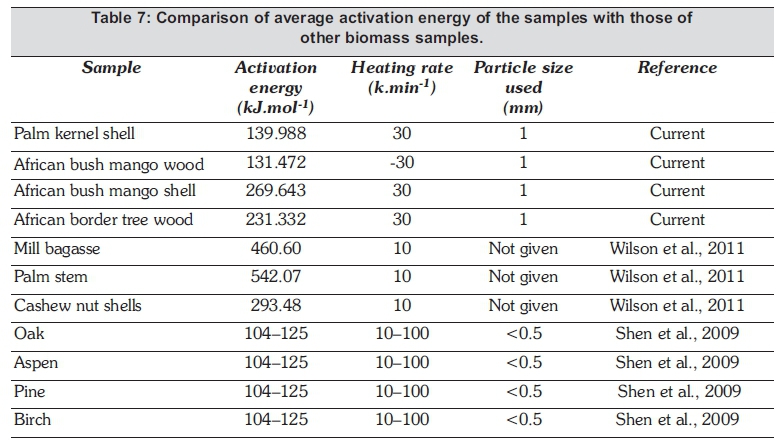
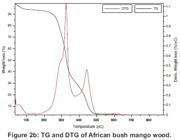
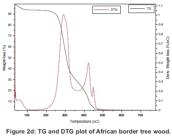
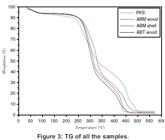
The oxidation characteristics and devolatilisation kinetics studies of palm kernel shell (Elaeis guineen-sis), African bush mango wood and shell (Irvingia wombolu), and African border tree wood (Newbouldia laevis), were carried out by the ther-mogravimetric method. A thermogravimetric analyser TA Q500 instrument was used at a heating rate of 30 °C.min-1 under oxidative conditions. It was observed that all the samples followed a two-stage structural decomposition between 200 °C and 500 °C. The greatest mass loss rate occurred within the oxidation stage (200-375 °C) in all the samples. The ignition temperature of the samples ranged from 275-293 °C while their burnout temperatures ranged from 475-500 °C. During the oxidation stage, African bush mango shell was the most reactive sample, while palm kernel shell was the least. During the char combustion stage (375-500 °C), the reactivity of palm kernel shell was the highest. The average activation energy of the samples for the entire decomposition period are 140, 270, 131 and 231 kJ.mol-1 respectively. The biomass samples considered are thus suitable for combustion purposes for bioenergy production with minimal external energy input.
thermogravimetric analysis; combustion index; activation energy; biomass; bioenergy reaction order
 Thumbnail
 Thumbnail
 Thumbnail
 Thumbnail
 Thumbnail
 Thumbnail
 Thumbnail