Decomposition analysis of energy-related CO2 emissions in South Africa
Abstract
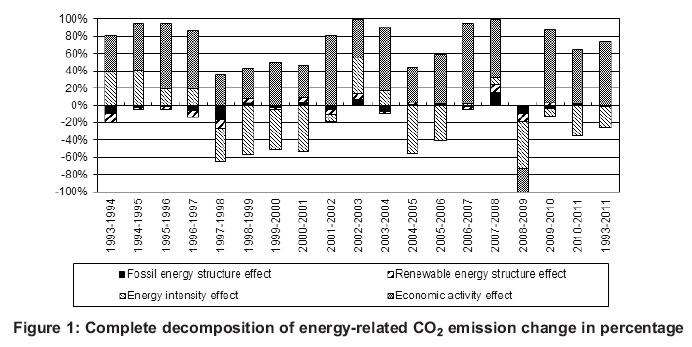
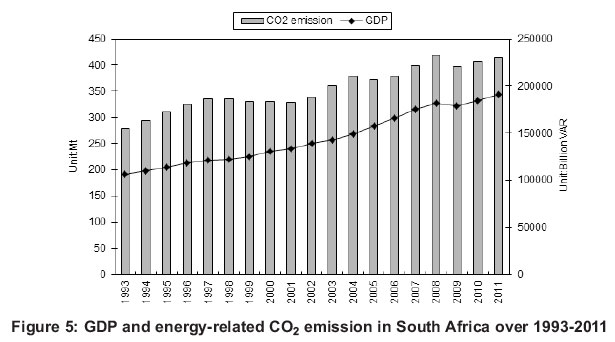
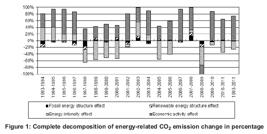
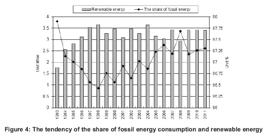
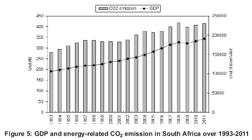
South Africa has become one of the most developing countries in the world, and its economic growth has occurred along with rising energy-related CO2 emission levels. A deeper understanding of the driving forces governing energy-related CO2 emissions is very important in formulating future policies. The LMDI (Log Mean Divisia Index) method is used to analyse the contribution of the factors which influence energy-related CO2 emissions in South Africa over the period 1993-2011. The main conclusions drawn from the present study may be summarized as follows: the energy intensity effect plays the dominant role in decreasing of CO2 emission, followed by fossil energy structure effect and renewable energy structure effect; the economic activity is a critical factor in the growth of energy-related CO2 emission in South Africa.
CO2 emission; LMDI method; South Africa
 Thumbnail
 Thumbnail
 Thumbnail
 Thumbnail
 Thumbnail