The novel design of an energy efficient superconductor-based series reactor for installation at a grid connected research site
Abstract
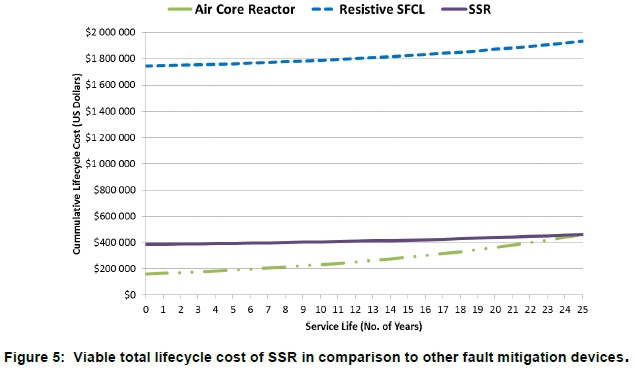
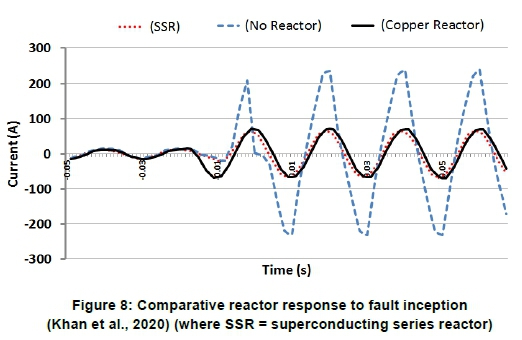
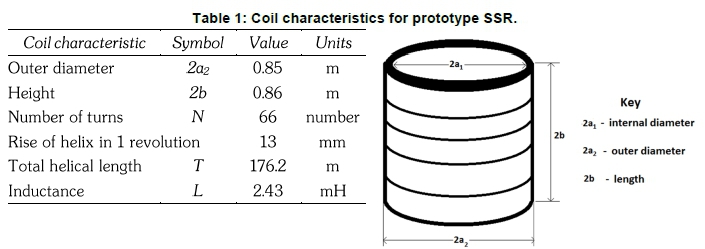
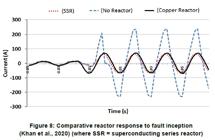
A number of efforts have been devoted to investigating the mechanism and benefits of superconductivity for power system applications. This study explored the construction and application of a desktop superconducting series reactor (SSR) as a pre-cursor to the prototype construction to confirm functionality and design. The calorimetric method of power loss determination was also investigated experimentally, followed by the calculation of the design parameters for a prototype SSR that would reduce the fault current on a 22-kV network from 25 kA to 10 kA. The desktop SSR, when compared to a copper reactor of equal inductance, was found to have an equivalent reduction in fault current. It was also confirmed through an experiment that the resistance of the SSR was four times lower than that of the equivalent copper reactor. The calorimetric method of power loss determination was found to be as effective as the electric method. A further advantage of the calorimetric method was its insensitivity to electromagnetic noise. The cost of the prototype SSR was significantly less expensive than a superconducting fault current limiter. Future development of the SSR would further enhance its viability as a fault current mitigation device on medium voltage networks where consideration has to be given to total lifecycle costs and energy efficiency.Highlights • Design of the first superconducting fault mitigating device in Africa • Proposal for a more efficient fault current management technology • Verification of the calorimetric method for power loss determination.
fault current management; calorimetric power loss method; superconducting power applications
 Thumbnail
 Thumbnail
 Thumbnail
 Thumbnail
 Thumbnail
 Thumbnail
 Thumbnail
 Thumbnail
 Thumbnail
 Thumbnail
 Thumbnail
 Thumbnail
 Thumbnail