Assessing the effectiveness of South Africa's emissions-based purchase tax for private passenger vehicles: A consumer choice modelling approach
Abstract
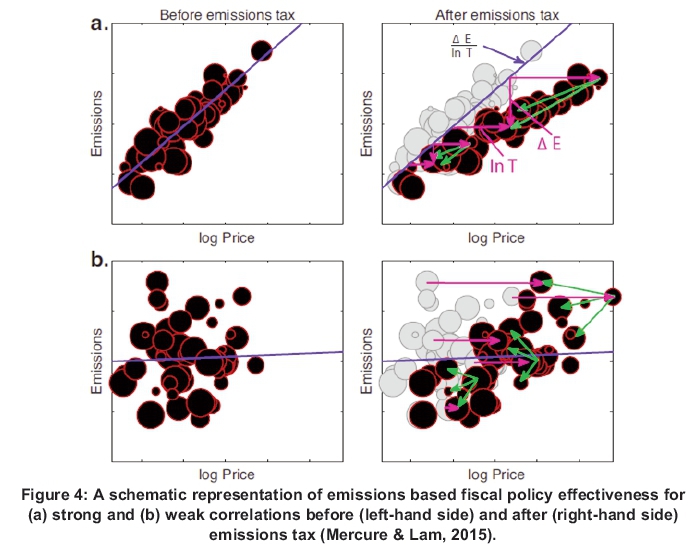
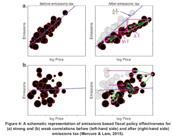
South Africa is an important economy in terms of global greenhouse gas emissions and it has made progressive policy steps to address its national emissions. One significant national fiscal policy is the emissions based purchase tax for private passenger vehicles, implemented in September 2010. There has, however, been little attempt to assess the effect that this key mitigation policy has had on the emissions of new passenger vehicle fleets. This study uses a discrete consumer choice model to assess the effectiveness of this tax policy in changing consumer behaviour and reducing fleet emissions. It finds that the emissions reduction achieved by the tax were negligible compared to the increases in fleet emissions associated with the growing vehicle market. It is demonstrated that the structure of the tax policy does not suit the dynamics of the South African vehicle market and the policy would require restructuring if it is to more effectively reduce fleet emissions. In addition, for the tax policy to effect significant fleet emissions reductions in the future it will require the emergence of low- and zero-carbon vehicle technologies in the lowest price brackets of the market, possibly via subsidy policies.
emissions tax; passenger vehicles; discrete choice modelling
 Thumbnail
 Thumbnail
 Thumbnail
 Thumbnail
 Thumbnail
 Thumbnail
 Thumbnail