Measurement and verification of irrigation pumping DSM projects: Application of novel methodology designs
Abstract
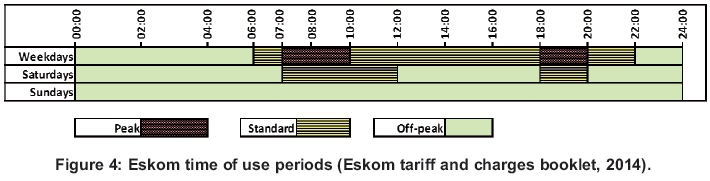
In South Africa the agricultural sector is a significant energy user, with irrigation pumping being the single biggest electricity-demanding farming activity. The agricultural and commercial sectors contribute 6.5% to annual South African electricity sales. Since 2004, Eskom demand side management (DSM) programmes actively engaged farmers to reduce peak period power usage. Farmers with higher power usage were also assisted to move from Landrate tariff structure to Ruraflex in order to incentivise away from peak-period power use. As part of the DSM programme, a number of large evening peak-load-shifting irrigation projects were implemented. Independent measurement and verification (M) assessments were made to establish attained savings over the contracted project life. The M of DSM projects normally have problems that complicate project assessments, but even taking this into account, the M team experienced exceptional difficulties and cumbersome M methodology challenges with certain irrigation projects. Normal baseline development methods were ineffective and novel M methods needed to be devised and developed. This paper explains the normal M methodology used for typical DSM projects and how it is applied. It gives guidance on baseline metering equipment, sampling and metering point selection. Further it demonstrates project specific issues and service level adjustment (SLA) anomalies that render normal M methodologies ineffective. It shows novel and alternative baseline development and SLA methods that were incorporated on DSM projects to accurately quantify project impacts.
load shifting; evening peak; meter sampling; baseline development; energy neutral; service level adjustment
 Thumbnail
 Thumbnail
 Thumbnail
 Thumbnail
 Thumbnail
 Thumbnail
 Thumbnail
 Thumbnail
 Thumbnail
 Thumbnail