Exploring principals' perspectives of school factors affecting student dropout from the Western Cape
Abstract
There are various in- and out-of-school factors that push and pull learners out of the schooling system before obtaining a high school qualification, both in developed and developing countries. In the Western Cape province of South Africa, despite positive retention rates compared to other provinces, school dropout remains a concern. This quantitative study used a survey design to explore principals' perspectives of the in-school factors that impact school dropout. A Likert scale survey was distributed to all 370 secondary schools across the eight education districts in the Western Cape and 135 school leaders responded. Findings indicate that learner dropout is multidimensional, shaped by the complex interaction of school, family, and socioeconomic factors. School factors point to insufficient resources, lack of teacher training, lack of a flexible curriculum, lack of an inclusive culture, and language barriers. These findings are used to shape recommendations to inform guidelines and policy aimed at improving retention throughout secondary schooling.
principals' perceptions; quantitative study; school dropout; secondary education; Likert scale survey
Introduction
A range of in- and out-of-school factors contribute to school dropout, both in South Africa and abroad. In South Africa, research has mainly focused on factors outside of the school that contribute to school dropout, which include socioeconomic inequalities, gangsterism, teenage pregnancy, substance abuse, and anti-social behaviour (De Witte et al., 2013; Gustafsson, 2011; Mnguni, 2014; Zero Dropout Campaign, 2026). Comparatively little research has examined the in-school factors that contribute to dropout, such as the quality of education, resourcing, teacher support, curriculum design, and assessment pressure-factors discussed in detail in the literature review below. This study therefore extends this limited body of work by exploring, from the perspective of principals, the in-school factors that affect student dropout from secondary schools in the Western Cape.
School dropout, also known as early withdrawal or attrition, is defined as "leaving education without obtaining a minimal credential," for example, a high school diploma (De Witte et al., 2013, p. 1). High dropout rates exist even in developed countries despite strategies such as the No Child Left Behind Act in the US, the Lisbon Strategy, and the Europe 2020 strategy, which included measures to reduce the dropout rates (De Witte et al., 2013; Townsend et al., 2007). The trend of secondary school dropout is more prevalent in developing nations where educational opportunities are more restricted and there is pressure to support their families financially (Shi & Sercombe, 2020). Apart from the economic pressure many students are faced with, access to quality education is a key factor that contributes to dropout (Branson et al., 2014). In sub-Saharan Africa where the infrastructure is often deficient, low-quality education and a lack of basic learning materials impact students' decision to drop out (UNICEF, 2021). Where developed countries often have access to greater learning resources, there are inequalities that persist among disadvantaged learners (Aiston & Walraven, 2024).
School dropout is often associated with long-term unemployment, poverty, bleak health prospects, sustained dependence on public assistance, single parenthood, political and social apathy, and juvenile crime (De Witte et al., 2013). There is furthermore a relationship between high school dropout, substance abuse, and bullying behaviours (Townsend et al., 2008). Higher rates of cigarette, alcohol, marijuana, and other drug use are reported among dropouts and students at risk of dropping out, compared to in-school students or graduates (Mohomane et al., 2026). In South Africa, there is a high prevalence of use of tobacco, alcohol, and illicit drugs that relate to dropout (Flisher et al., 2010). This is particularly concerning in farming communities of the Western Cape, where alcohol and substance abuse are pervasive social challenges that may further undermine learners' educational participation and retention (Lubbe et al., 2017; Osuafor, 2021). Research also shows that refugee children, with South Africa serving as a major destination for migrant children from across Eastern and Southern Africa, are more likely to drop out of school due to the instability and insecurity associated with their migratory status (Dryden-Peterson, 2015; UNHCR, 2020; UNICEF, 2020).
Some factors produce lower educational outcomes, particularly for girls. Parental investment, school costs, household work, extra-curricular activities, lack of female teacher role models, inadequate sanitation facilities for girls, teacher attitudes towards girls, early marriage, pregnancy, gender-based violence, and cultural beliefs are factors that impact school attrition (Nyiransabimana et al., 2024; Shahidul & Karim, 2015). In the South African context, teenage pregnancy has a reciprocal relationship with dropout; a longitudinal analysis of young women in rural South Africa found that dropping out of school increased the risk of subsequent pregnancy, while pregnancy in turn increased the risk of subsequent dropout, suggesting the two problems reinforce one another rather than one simply causing the other (Stoner et al., 2019). Gender-based violence within schools has similarly been linked to dropout among South African girls; a qualitative study of secondary schools in Limpopo found that exposure to gender-based violence contributed to poor academic performance and to girls leaving school altogether (Rammbuda, 2023). Inadequate sanitation facilities compound these risks. A mixed-methods study of female learners in Gauteng found that limited access to appropriate menstrual health facilities and products was associated with school absenteeism, which in turn heightens the risk of eventual dropout (Crankshaw et al., 2020). Shahidul and Karim (2015) assert that girls' dropout rates appear to be higher than boys' in most parts of the world.
With respect to school factors, school dropout may be driven by exogenous factors and may even result from systemic flaws rather than factors intrinsic to dropouts themselves. Most often, school-related factors are revealed as determinants of dropout over and above family-related, community, work-related and other proximal and distal factors (De Witte et al., 2013). One of the key issues for learners at risk of dropping out is school engagement, which relates to cognitive and psychosocial characteristics and its association with participation and compliance issues (Archambault et al., 2009). Disengagement amongst students in South Africa, which often leads to falling behind at school, is a strong determinant of school dropout (Branson et al., 2014). A school environment in which there is bullying and violence, alcohol and substance abuse, and other anti-social behaviour also plays a role in learner disengagement and withdrawal (Gustafsson, 2011; Mnguni, 2014). De Witte et al. (2013) suggest that school systems' organisation and its effect on early school leaving is under-explored. The push-out factors (factors that push children out of school) are linked to the poor quality of education for learners from families of low socioeconomic status (du Plessis & Mestry, 2019; Hartnack, 2017). Poor quality of education is often related to large class sizes, and lack of resources such as desks, chairs, and textbooks in under-resourced schools. The quality of education is also affected by teachers lacking training in terms of the basic content knowledge and pedagogical skills. Other factors include the absence of caring teachers and other important stakeholders such as social workers or counsellors who could offer psycho-social support to at-risk and troubled learners (De Witte et al., 2013). The pressure on schools to achieve high pass rates in the National Senior Certificate examinations exacerbates the problem, with some schools encouraging or pressuring learners who are at risk of failing to leave school before reaching Grade 12 (Dieltiens & Meny-Gibert, 2009). Gustafsson (2011) states that poor and inappropriate subject choices can lead to student disengagement, which in turn prompts dropout. In this case, the curriculum is too heavily focused on academics, maths, and science at the expense of the vocational subjects, arts, and more practical skills to suit learners' aptitudes (Gustafsson, 2011). The inability to master the curriculum is a factor that causes learners to become despondent early on in their schooling career and consequently they start questioning the worth of schooling, a crisis of expectations,
where teenagers (and whole communities) lose faith in the value of school, and fail to envisage a healthy life and career path, not only pushes many into drug use, but also provides fertile soil in which gangs exploit young people with the alternative source of belonging, self-esteem and livelihood. (Hartnack, 2017, p. 4)
In South Africa, school dropout is particularly prevalent in the upper secondary grades, especially Grades 10 and 11 (Hartnack, 2017; Shophi & Maforah, 2025). Maforah (2024) reports dropout rates of 14.84% for Grade 10 and 24.08% for Grade 11. Socioeconomic inequalities may shape students' educational experiences and academic support needs. Mbaleki and Mbodila (2025) explain that socioeconomic background, the quality of basic education, family and financial support, and demographic characteristics such as population group, gender and age could lead to academic failure or dropout. South Africa's colonial and apartheid history continues to shape inequalities in educational opportunities. Black students from socioeconomically disadvantaged backgrounds may face significant academic, social and cultural challenges that affect their academic experiences (Zungu, 2022). President Cyril Ramaphosa expressed his concern about these high dropout rates in a recent Education Lekgotla, suggesting that the government is actively pursuing policies to try to address the obstacles hindering progress in basic education (SA News, 2024).
In the Western Cape, despite positive retention rates (Serra, 2026), socioeconomic inequalities remain alarmingly sharp, which often leads to dropout in more economically deprived communities (Desai et al., 2024). In affluent communities, schools are better equipped, and students have access to a broader choice of support services such as career counselling and intervention programmes (Farao & du Plessis, 2024). A comparison of 2018 Central Education Management Information System statistics on learner numbers in public ordinary schools in Grade 7, and the 2023 Grade 12 figures, indicates a dropout of 22,722 students across eight education districts (Western Cape Education Department [WCED], 2024). Earlier research suggests that such losses may be linked to social factors such as teenage pregnancy (33% dropout amongst female learners) and drugs and gangsterism in the Cape (Hartnack, 2017).
Problem statement
South Africa's persistently high school dropout rate exists despite a substantial legislative and policy framework aimed at protecting learners' right to education. Section 29 of the Constitution (Republic of South Africa [RSA], 1996a) guarantees "everyone has the right (a) to a basic education, including adult basic education; and (b) to further education, which the state, through reasonable measures, must make progressively available and accessible," while the National Education Policy Act (RSA, 1996b) mandates the Department of Basic Education (DBE) to develop supporting policy. Yet none of these founding legislative documents explicitly identifies school dropout as an area requiring targeted intervention, and the general regulations governing the provision of education and the welfare of children do not translate into specific measures to address the school-based factors that push learners out of the system.
More recent policy instruments have begun to close this gap. The National Youth Policy 2015-2020 (RSA, 2015) lists high dropout rates and inadequate skills development among its central challenges, while the Guidelines for the Prevention and Management of Sexual Violence and Harassment in Public Schools (Department of Education, 2008), the WCED's (2003) Policy on Managing Learner Pregnancy in Public Schools, and the National School Nutrition Programme (DBE, 2011) collectively aim to create a safe, caring, and enabling teaching environment that supports the retention and re-enrolment of vulnerable learners. In practice, however, these retention policies are seldom accompanied by the remedial education and psychosocial support learners need, which paradoxically contributes to higher rather than lower dropout rates (Mogale & Modipane, 2021). This gap persists despite the commitment in the DBE's sector plan, Action Plan to 2024: Towards the Realisation of Schooling 2030 (DBE, 2020), to using schools as sites of learner well-being and psychosocial support. This points to a disconnect between policy intent and the day-to-day, in-school realities that determine whether a learner remains in school.
This policy-practice disconnect is compounded by a research gap. As outlined above, South African scholarship on dropout has focused overwhelmingly on out-of-school and socioeconomic drivers, while the school-based factors that principals-as the individuals closest to daily school operations-observe and manage remain largely undocumented. Without this evidence, policy and intervention efforts risk continuing to target the wrong levers, leaving school-level drivers of dropout unaddressed. It is this gap that the present study responds to by examining principals' perceptions of the in-school factors contributing to secondary school dropout in the Western Cape.
Aim and objectives
The aim of this study was to explore principals' perceptions of the in-school factors that have contributed to learner dropout in secondary schools over the past five years. The objectives of the study were to: (1) determine whether principals believe there is a correlation between school quintile and learner dropout; (2) identify the factors that principals believe contribute to learner dropout; (3) explore the challenges faced by learners who are at risk of dropping out, as identified by principals; and (4) establish whether principals are aware of the support available for learners identified as being at risk of dropout in Western Cape secondary schools. The study was guided by the following main research question: What in-school factors do principals perceive as contributing to learner dropout in Western Cape secondary schools, and what support is available to learners at risk? The four objectives were translated into the sub-questions that structure the discussion.
Research methodology
This study was framed within a post-positivist paradigm, which assumes that knowledge claims based on observations of human behaviour cannot be regarded as absolute truth but can be approximated through careful measurement, probability, and statistical inference (Creswell & Creswell, 2023). Consistent with this paradigm, a quantitative research approach was employed to reach the aim of the study by collecting and statistically analysing numerical data (Felix & Smith, 2019). This approach assumes that an objective reality of school-level dropout factors exists and can be approximated, tested, and generalised probabilistically, while acknowledging that any single survey administration provides only a partial and revisable estimate of that reality rather than a definitive account.
A research design provides a clear framework for the procedures used to address the research problem (Creswell & Creswell, 2023). The study employed a cross-sectional survey design in which principals' perceptions were measured using a structured online questionnaire comprising Likert scale items. The data were analysed using correlational and cross-tabulation statistics. In collaboration with the WCED, quantitative data were collected through an online survey administered to secondary school principals. The online survey provided a convenient and cost-effective means of gathering data from participants.
The survey instrument was developed from the research questions. The questionnaire, which included items relating to in-school factors associated with school dropout, was distributed to all 370 public secondary schools across all eight education districts of the Western Cape, namely: Eden and Central Karoo, Cape Winelands, Overberg, West Coast, Metro Central, Metro East, Metro North, and Metro South. The survey items were informed by the literature on school dropout, enabling the quantitative analysis of principals' perceptions of the factors contributing to learner attrition. It comprised both multiple-choice questions and five-point Likert scale items, with response options ranging from 1 (least likely) to 5 (most likely) (Felix & Smith, 2019).
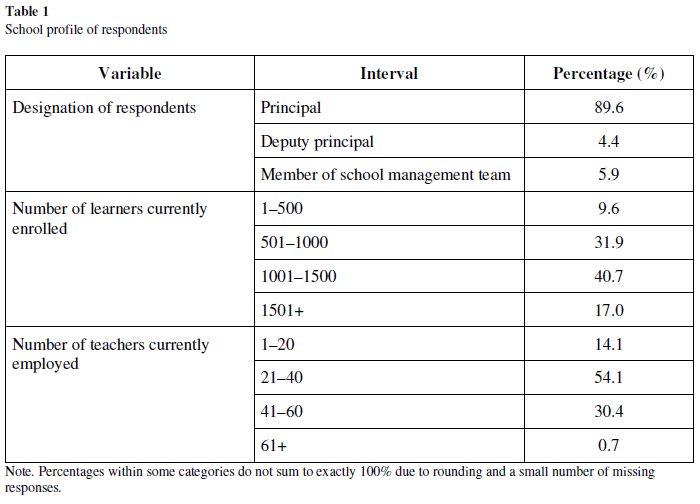
The WCED was responsible for distributing the online survey to the principals to gain quantifiable data from potential respondents. The projected plan for the collection of all survey responses was due March 2025. However, the collection of the data was challenged by a delay in survey-clearance from WCED, a delay in the approval date for WCED to distribute the survey, as well as extensions given for survey responses due to initial low response rates. Time-frames were adjusted accordingly, and the survey responses were collected from 12 March 2025 until the last week of June 2025. Of the 370 distributed surveys, a total of 135 school leaders responded (a response rate of 36.5%), which was considered sufficient to proceed with data analysis. No data were available on the districts, quintiles, or school sizes of non-responding schools, so it was not possible to test whether respondents differed systematically from non-respondents. This limits the extent to which the sample can be assumed to represent all secondary schools in the Western Cape equally, and is addressed further in the limitations section.
Data analysis
The quantitative data were analysed using the computer-based Statistical Package for the Social Sciences (SPSS, Version 30). With the collaboration of quantitative researchers within the WCED, the data collected were transformed into the coding of variables and allocation of labels in preparation for the execution of the analysis in SPSS. The analysis focused on the various school factors associated with secondary school dropout. A coach from the University of the Western Cape (UWC) was consulted during the data analysis process and provided support in analysing the data according to the frequencies of the Likert scale data and the correlation between the various variables indicated in the survey. Furthermore, the use of proportional analysis using the aforementioned statistics was crucial in determining the correlation between the key variables and how it influences learners at risk and learners who have already dropped out of school. Following Evans (1996) and Guilford (1956), correlation coefficients between .20 and .39 were interpreted as weak or low, and those below .20 as very weak or negligible. Associations between principals' estimates of learner dropout and the survey variables were examined using Spearman's rank-order correlation, and associations between categorical variables were examined using Pearson's chi-square test of independence. Statistical significance was set at p < .05.
Validity
The survey instrument was developed from the research questions and an extensive review of the literature on school dropout. This process helped to ensure content validity, which refers to the extent to which the survey items adequately represent the constructs being measured (Mellinger & Hanson, 2020). The questionnaire included items covering the in-school factors associated with secondary school dropout identified in the literature, thereby enhancing the instrument's ability to measure these constructs comprehensively. The questionnaire was reviewed by experts at the WCED in educational research and school dropout to assess the relevance, clarity, and comprehensiveness of the survey items. Their feedback informed minor revisions to the instrument, thereby enhancing its content validity (Mellinger & Hanson, 2020).
Ethical considerations
The UWC Ethics Committee granted permission and ethical clearance to conduct this research. The WCED granted permission for the principals of secondary schools to participate in this study. The WCED circulated the surveys to the schools on the researchers' behalf. A representative from the district educational department, who works closely with the schools, facilitated access to gain consent and collect the data. Informed consent was applied and the participants were knowledgeable of the aims and purpose of this academic study. The participants were informed that their participation in this study was voluntary, and it was their right to withdraw from it at any time without penalty or negative consequences.
Research findings
Factors that contribute to learner dropout
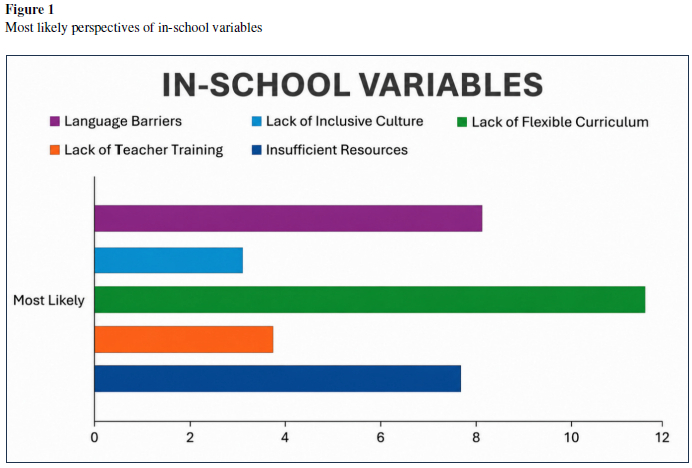
The in-school variables included insufficient resources, inadequate teacher training, an inflexible curriculum, a lack of an inclusive school culture, and language barriers. Overall, principals perceived these factors as being among the least likely contributors to learner dropout. Each of these variables had a mode of 1, indicating that the most frequently selected response was the lowest category on the Likert scale. However, when the in-school variables were compared with one another, the lack of a flexible curriculum emerged as the factor most frequently perceived to contribute to learner dropout. The relative frequencies of the in-school variables are presented in Figure 1.
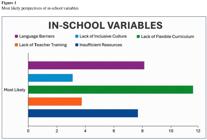
Interestingly, these findings contrast with the correlational analysis presented below. Although principals generally perceived in-school factors as unlikely to contribute to learner dropout, several of these variables showed statistically significant associations with dropout when considered alongside other risk factors. This discrepancy between principals' perceptions and the statistical relationships identified constitutes one of the central findings of this study and is explored further in the discussion section.
Spearman's correlations were calculated between each of the 26 variables and (a) learner dropout and (b) learners at risk of dropping out. Eight variables were significantly correlated with dropout (Table 2a) and 12 with risk of dropout (Table 2b). All of these correlations were weak or very weak, which implies that no single variable on its own can account for dropout. However, the study suggests that the risk of dropout may increase when learners experience multiple in-school risk factors, including a lack of an inclusive school culture, an inflexible curriculum, insufficient resources, and inadequate teacher training. The inferential statistics of learner dropout can be seen in Table 2a, and the inferential statistics of learners at risk of dropout can be seen in Table 2b.
Learner dropout showed a weak or low positive correlation with gangsterism (rs = .225*, p = .011), teenage pregnancy (rs = .223*, p = .011), and lack of inclusive culture (rs = .200*, p = .033) and showed a very weak or negligible positive correlation with food (rs = .198*, p = .029), lack of flexible curriculum (rs = .196*, p = .030) and bullying (rs = .187*, p = .041). The correlations are too weak to suggest that these individual factors increase the risk of dropout; however, these weak but significant associations are consistent with a cumulative-risk interpretation.
However, school quintiles (rs = −.264**, p = .002) and child/foster support grants (rs = .272**, p = .003) show greater statistical significance with a weak or low correlation to dropout. The weak or low negative correlation between learner dropout and school quintile suggests that as school quintile increased, learner dropout rates decreased, indicating that better-resourced schools experienced lower levels of learner dropout. There is a weak or low correlation between dropout and social grant (child/foster) indicating that schools reporting more dropout also more often identified child/foster support grants as a contributing factor.
Learners at risk of dropout showed a weak or low positive correlation with uniforms (rs = .274**, p = .003), food (rs = .233**, p = .010), gangsterism (rs = .372**, p < .001), teenage pregnancy (rs = .310**, p < .001), seeking employment (rs = .240**, p = .007), child/foster support grant (rs = .287**, p = .001), insufficient resources (rs = .211*, p = .021), lack of teacher training (rs = .321**, p < .001), lack of flexible curriculum (rs = .205*, p = .023), lack of inclusive culture (rs = .324**, p < .001), bullying (rs = .342**, p < .001), and learners' poor relationship with teachers and staff (rs = .298**, p = .001). Even though the relationship between learners at risk of dropout and the other variables is weak, the associations were statistically significant, which is consistent with these factors contributing cumulatively to dropout risk. In addition, the proportional analysis looked at both in-school as well as out-of-school factors that influence learner dropout. The cross-tabulation findings through the use of chi-square analysis emphasised the role of out-of-school factors in relation to independent school factors, and how they contribute to learner dropout in the Western Cape. The relationship between out-of-school factors were compared to the same barriers used during frequency analysis: the learner's household, community, and societal context, and how this affects their retention, engagement, and motivation to continue schooling. The relationship between the aforementioned external contributors and independent variables that were highlighted during the study were economic pressures-grades most dropped out of and seeking employment was statistically significant at p = .017 (Table 3a), with Grade 10 learners being the most affected grade group; teenage pregnancy-teenage pregnancy and availability of support was statistically significant at p = .016 (Table 3b). Lastly, exposure to substance abuse and gangsterism both constitute significant external factors that affect learner retention in schools. The chi-square results for the relationship between learners currently enrolled and substance abuse showed a significant association (p = .028; Table 3c), and grades most dropped out of and gangsterism approached, but did not reach, conventional statistical significance (p = .051; Table 3d), which indicates that most of these cross-tabulations are statistically significant, with the exception of the relationship between grade and gangsterism (Table 3d), which showed only a marginal trend. The aforementioned statistically significant data are represented below. Please note that totals vary across items in tables due to missing responses.
According to the data as depicted in Table 3a, the grade most likely for dropout due to seeking employment is Grade 10 with 16 respondents indicating "4-likely", despite an even spread across 1-5 intervals. The grades least likely to be affected by dropout due to seeking employment are Grades 8 (seven responses indicated least likely) and 12 (one respondent indicated neutral).
According to Table 3b, most respondents identified the district department of education as their main source of support (n = 87). Among these respondents, 33 rated teenage pregnancy as a likely or most likely contributor to dropout (21 and 12 respectively), compared with 8 of the 19 respondents whose schools drew support from the community (3 and 5). Very few respondents identified other schools or the WCED as sources of support.
The findings in Table 3c indicate that schools which have 500+ learners are more prone to experiencing substance abuse as a significant factor to dropout. The highest response was category 1001-1500 at 20 and 24 responses between interval "4-likely" and "5-most likely," followed by 501-1000 at 18 responses in Interval 5 despite the seven responses in Interval 1.
According to the data on the relationship between grades most dropped out of and gangsterism (Table 3d), Grade 10 has the majority of likely to most likely responses with 28 for each interval in comparison to the rest of the grades. The next two grades which have likely responses are Grade 9 and 11, with the lowest number of responses in Grade 12, one response in Interval 2.
Although respondents rated in-school variables as least likely to influence learner dropout, the correlational and cross-tabulation results suggest that dropout risk may be greater where several of these factors are present together. The cross-tabulation results derived from proportional analysis illustrated the complex relationship between how social and environmental influences negatively affect a learner's developmental process.
School-related challenges faced by learners who have dropped out or are at risk
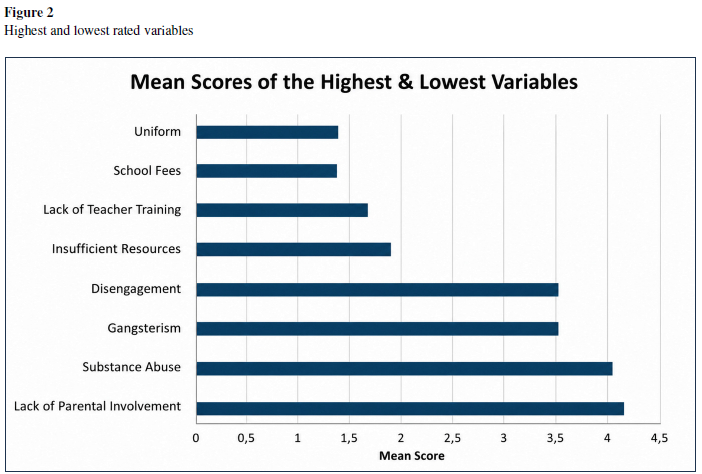
The key variables used in this study were separated into four categories: socioeconomic barriers, family and community barriers, in-school variables, and learner experiences within the school. Upon the analysis of the variables and their frequency from the respondent data, the variables with the highest frequency were the lack of parental involvement (socioeconomic barrier), substance abuse (familial barrier), gangsterism (community barrier), and educational disengagement (in-school barrier). According to the respondents, lack of parental involvement was rated the most important variable contributing to learner dropout. The variables with the lowest frequency were uniforms, school fees, lack of teacher training, and insufficient resources. Respondents rated uniforms as the least important factor contributing to learner dropout. The top four highest rated variables and lowest rated variables are presented in Figure 2.
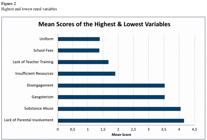
Similarly, from a proportional perspective, the results of this study found that in-school factors, such as bullying and language barriers, differed significantly by type of school (quintile) and by whether foreign national learners had dropped out. The most prominent results found that the relationship between type of school and bullying (p = .024) illustrated in Table 3e was statistically significant, with principals at Quintile 1 schools most often rating bullying as a likely or most likely contributor to dropout (4 of 12), whereas the relationship between nationality and language barriers (p < .001) illustrated in Table 3f is also statistically significant despite the majority of respondents indicating that it is not a contributing factor to learner dropout.
Based on the results, all five quintiles indicated that bullying does not play a significant role in contributing to learner dropout due to high responses across intervals 1-3. However, Quintiles 1 and 4 present responses in Intervals 5 and 4 respectively, which further indicates that despite bullying being perceived as an insignificant impact on learner dropout, some principals, particularly in Quintile 1, still regarded it as a likely contributor.
According to Table 3f, among respondents who did not report foreign national learners dropping out of their schools, most rated language barriers as unlikely to contribute to dropout (46 rated it 1, and 21 rated it 2 and 3 respectively). Among respondents who reported that foreign national learners had dropped out of their schools, responses regarding language barriers were distributed across the ratings of 2 (unlikely), 3 (neutral), and 4 (likely). However, the largest proportion of respondents (n = 5) rated language barriers as 4 (likely) to influence learner dropout.
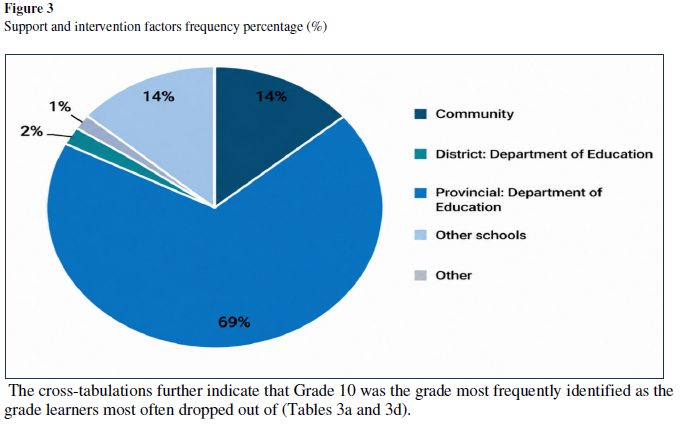
Based on the findings of the survey, 97.8% of respondents indicated that learners have access to some form of support (see Figure 3). The respondents had to select which type of support was provided to their at-risk learners of which the following support systems were listed and selected: district-based support (67.4%), support from the community (14.7%), other forms of support (14.7%), support from other schools (1.6%), and provincial support (1.6%) which had the least responses (n = 129; six respondents did not answer this item).
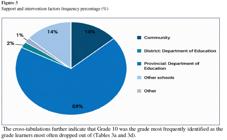
This suggests that district-level structures are the main source of external support available to schools for at-risk learners. The cross-tabulations further emphasised that there are select groups of learners who are more likely to drop out than others and are considered to be particularly at risk, which includes learners affected by teenage pregnancy and exposure to substance abuse. Despite the fact that the majority of respondents indicated that at-risk learners are given more support at a district level, many provincial policies such as the WCED's Learner Pregnancy Policy (2003) as well as the Safe Schools Programme introduced by the WCED (2022) offer significant support to learners experiencing teenage pregnancy and victims of crime or bullying.
Discussion
The findings will be discussed according to the four research questions, namely, 1) Is there a correlation between school quintile and learner dropout? 2) What are the factors that contribute to learner dropout? 3) What challenges do the learners at risk of dropout face in schools? and 4) Is support available for learners identified as at risk of dropout in Western Cape secondary schools?
Associations between school quintile and learner dropout
The findings indicate a statistically significant, although weak, negative association between school quintile and learner dropout (rs = −.264**, p = .002). Principals at lower-quintile schools reported higher levels of dropout than those at better-resourced, higher-quintile schools. This aligns with research showing that socioeconomic inequalities in the Western Cape remain sharp, and that dropout is concentrated in more economically deprived communities (Desai et al., 2024). In more affluent communities, schools tend to be better equipped and learners have access to a wider range of support services such as career counselling and intervention programmes (Farao & du Plessis, 2024). The finding therefore suggests that community context, school placement, and socioeconomic conditions play a prominent role in learners' decisions to leave school.
The factors that contribute to learner dropout
The data analysis revealed no strong relationships between learner dropout and the variables included in this study. However, several variables showed statistically significant associations with learner dropout, indicating that these factors were related to dropout despite the strength of the relationships being relatively weak. The variables that demonstrated statistically significant associations with learner dropout were school quintile, a lack of an inclusive school culture, a lack of a flexible curriculum, bullying, teenage pregnancy, gangsterism, social grants, and food insecurity. Although correlation does not imply causation, these findings suggest that learners who experience a combination of these factors may be at an increased risk of leaving school prematurely.
The challenges learners at risk of dropout face in school
According to the data analysis, schools reporting more learners at risk of dropping out were also more likely to identify a combination of the following factors: insufficient uniform, food insecurity, gangsterism, teenage pregnancy, seeking employment, child/foster support grant, insufficient resources, lack of teacher training, lack of flexible curriculum, lack of inclusive culture, bullying, poor relationships with teachers and staff.
The statistically significant cross-tabulations that support the idea that interconnected variables play more of a contributory factor to learner dropout than one sole variable are: grade and seeking employment, support and teenage pregnancy, school size and substance abuse, school quintile and bullying, and nationality and language barriers. Bullying, substance abuse, teenage pregnancy, and economic pressures reflect the push and pull influence of multiple systems surrounding the learner-particularly those already at risk due to language barriers. In lower-quintile schools, learners' peer interactions and learner-teacher relationships are often reported to be strained due to overcrowding within the classroom (Sibanda & Masinga, 2025).
The support available to learners identified as at risk of dropout
Participants in the study stated that 97.8% of schools that formed part of this study have access to support. However, although principals indicated the source of support, the survey did not allow them to describe the specific support they implement in their schools. The principals indicated that 67.4% of schools sought outside support from their education districts, and 14.7% of schools received their support from within their surrounding communities. Collaboration within the education sector plays a critical role in addressing learner dropout (Bayat et al., 2014; Nzuza, 2023).
This suggests that district-level support plays an important role for schools working with at-risk learners, although this study did not assess whether such support reduces dropout. Because at-risk learners leave school for various school-based and out-of-school reasons, responsive, multi-level support systems may help to address these risks. Learner dropout arises from connections and interactions across multiple layers of a learner's environment which often requires interventions that operate at the same level (DBE, 2023).
Limitations
This study has several limitations worth noting. First, the findings rely on principals' perceptions and estimates rather than learner-level administrative or enrolment records. Principals were asked to estimate dropout numbers and contributing factors from memory and impression, which may introduce recall or social desirability bias and cannot substitute for verified school register or district-level dropout data. Second, with 135 of 370 sampled schools responding (36.5%), and no data available on the characteristics of non-responding schools, it is not possible to rule out non-response bias; principals who chose to respond may differ systematically from those who did not, for instance, in how closely they monitor dropout or how well-resourced their schools are.
Third, the cross-sectional design captures principals' perceptions at a single point in time and cannot establish the direction or timing of the relationships identified; the correlational and cross-tabulation analyses reported here indicate association, not causation, between school factors and dropout. Fourth, the correlations identified throughout this study were consistently weak to low in magnitude. Because 52 correlations were tested without correction for multiple comparisons, some of the weaker associations (p values between .01 and .05) may be chance findings, and these results should be interpreted as indicative rather than conclusive. In addition, several cross-tabulations (Tables 3a-3f) contained cells with expected counts below 5, so these chi-square results should also be interpreted with caution. Finally, this study was limited to secondary schools in the Western Cape, a province with comparatively strong retention rates relative to the rest of South Africa; the findings may therefore not generalise to provinces with different socioeconomic profiles, such as KwaZulu-Natal or the Eastern Cape, where dropout rates are considerably higher.
Recommendations
Although no single factor, in isolation, appears to make a strong contribution to learner dropout, the findings suggest that school dropout results from the cumulative influence of multiple interacting factors. While some factors may seem relatively insignificant when considered independently, their combined presence may substantially increase learners' vulnerability to leaving school prematurely. These findings underscore the importance of adopting a holistic approach to identifying and supporting at-risk learners because seemingly minor challenges can collectively have a profound impact on educational persistence.
Given the influence of gangsterism, bullying, and unsafe communities, stronger partnerships are needed between schools, community organisations, the South African Police Service, and youth development organisations to improve learner safety. To address the lack of curriculum flexibility identified as a notable in-school factor, schools should explore alternative learning pathways including second-chance opportunities, vocational programmes, and catch-up or remedial interventions for at-risk learners. Teacher professional development should also be strengthened to include learner support, trauma-informed practice, inclusive education, dropout prevention, and appropriate referral processes for learners experiencing academic, social, or emotional difficulties.
Additional support should be provided to pregnant learners and young parents through the effective implementation of learner pregnancy policies, targeted reintegration support, counselling services, and childcare referral networks. Poverty-related barriers should be addressed through collaboration with social development agencies to improve access to transport, strengthen food security, provide school uniforms where needed, and alleviate the financial pressures that compel some learners to seek employment. Ultimately, efforts to reduce learner dropout should shift from reactive responses after learners have left school to proactive, data-informed, and learner-centred retention strategies that identify and address risk factors before disengagement occurs.
Conclusion
This study highlighted principals' perceptions of learner dropout from secondary schools in the Western Cape, which contributes to data gathered nationally by the Zero Dropout Campaign's project (Zero Dropout Campaign, 2026) and others (De Witte et al., 2013; Gustafsson, 2011; Mnguni, 2014). With a 36.5% response out of the 370 schools surveyed, the findings of the study are valuable in contributing a detailed picture of factors affecting students at school which leads to dropout.
The study revealed that learner dropout in Western Cape secondary schools is associated with a complex interaction of school, social, and economic factors rather than any single cause. The most prominent factors associated with in-school factors were a lack of an inclusive school culture, and a lack of curriculum flexibility. Learners at risk of dropping out often experience multiple, overlapping challenges, including inadequate school resources, being taught by teachers with insufficient teacher training, and poor relationships with teachers and staff. Other factors relate to bullying, teenage pregnancy, gangsterism, social grants, food insecurity, financial hardship, and pressures to seek employment. Although most principals reported that support mechanisms were available through their schools, education districts, and community organisations, the findings suggest that continued collaboration and proactive, multi-sectoral interventions are essential to address the interconnected factors that place learners at risk of leaving school prematurely.
Declaration
During the preparation of this manuscript, the authors used ChatGPT and Claude to assist with language editing and proofreading, for literature searching, and formatting references. All content was reviewed and edited by the authors, who take full responsibility for the accuracy and integrity of the final manuscript.
Funding information
The authors acknowledge the financial support provided by the Department of Higher Education and Training (DHET) through the Office of the Deputy Vice-Chancellor: Research and Innovation at the University of the Western Cape.
References
Acknowledgements
The authors gratefully acknowledge the Western Cape Education Department (WCED), particularly its Directorate: Research Services, for supporting this study. We thank Mr Meshack Kanzi for facilitating research approval and providing guidance; Mr Krisseelan Govinden for coordinating survey distribution and school access; Mr Redewan Larney for advising on school selection and assisting with fieldwork logistics; and Dr Nomawabo Makapela for her statistical expertise in preparing and cleaning the survey dataset. The views expressed are those of the authors and do not necessarily reflect those of the WCED.
Literature review
- Aiston, S. J., & Walraven, G. (2024). A re-view of educational inequalities. Educational Review, 76(1), 1-12. https://doi.org/10.1080/00131911.2023.2286849
- Archambault, I., Janosz, M., Fallu, J. S., & Pagani, L. S. (2009). Student engagement and its relationship with early high school dropout. Journal of Adolescence, 32(3), 651-670. https://doi.org/10.1016/j.adolescence.2008.06.007
- Bayat, A., Louw, W., & Rena, R. (2014). Investigating the confluence of factors impacting on underperformance at selected secondary schools in the Western Cape, South Africa. International Journal of Educational Sciences, 7(1), 41-55. https://doi.org/10.31901/24566322.2014/07.01.05
- Branson, N., Hofmeyr, C., & Lam, D. (2014). Progress through school and the determinants of school dropout in South Africa. Development Southern Africa, 31(1), 106-126. https://doi.org/10.1080/0376835X.2013.853610
- Crankshaw, T. L., Strauss, M., & Gumede, B. (2020). Menstrual health management and schooling experience amongst female learners in Gauteng, South Africa: A mixed method study. Reproductive Health, 17(1), 48. https://doi.org/10.1186/s12978-020-0896-1
- Creswell, J. W., & Creswell, J. D. (2023). Research design: Qualitative, quantitative, and mixed methods approaches (6th ed.). SAGE.
- Department of Basic Education. (2011). National School Nutrition Programme (NSNP) annual report 2010/11. https://www.education.gov.za/Portals/0/Documents/Reports/NSNP%202010%2011%20Annual%20report.pdf
- Department of Basic Education. (2020). Action plan to 2024: Towards the realisation of Schooling 2030. https://www.education.gov.za/Portals/0/Documents/Publications/Sector%20plan%202019%2015%20Sep%202020.pdf
- Department of Basic Education. (2023). Annual report 2022/2023. https://www.education.gov.za/Portals/0/Documents/Reports/2023/2022_23%20Annual%20Report%20FINAL.pdf
- Department of Education. (2008). Guidelines for the prevention and management of sexual violence and harassment in public schools.
- Dieltiens, V., & Meny-Gibert, S. (2009). School dropout: Poverty and patterns of exclusion. In S. Pendlebury, L. Lake, & C. Smith (Eds.), South African child gauge 2008/2009 (pp. 46-49). Children's Institute, University of Cape Town.
- Dryden-Peterson, S. (2015). The educational experiences of refugee children in countries of first asylum. Migration Policy Institute. https://www.migrationpolicy.org/publication/educational-experiences-refugee-children-countries-first-asylum
- Evans, J. D. (1996). Straightforward statistics for the behavioral sciences. Brooks/Cole.
- Felix, M. S., & Smith, I. (2019). A practical guide to dissertation and thesis writing. Cambridge Scholars Publishing.
- Guilford, J. P. (1956). Fundamental statistics in psychology and education (3rd ed.). McGraw-Hill.
- Gustafsson, M. (2011). The when and how of leaving school: The policy implications of new evidence on secondary schooling in South Africa (Stellenbosch Economic Working Papers 09/11). Stellenbosch University. https://www.ekon.sun.ac.za/wpapers/2011/wp092011
- Hartnack, A. (2017). Background document and review of key South African and international literature on school dropout. DG Murray Trust. https://dgmt.co.za/wp-content/uploads/2017/08/School-Dropout-Background-Paper-Final.pdf
- Lubbe, M., Van Walbeek, C., & Vellios, N. (2017). The prevalence of fetal alcohol syndrome and its impact on a child's classroom performance: A case study of a rural South African school. International Journal of Environmental Research and Public Health, 14(8), 896. https://doi.org/10.3390/ijerph14080896
- Maforah, T. (2024, March 19). ActionSA alarmed by SA's high school dropout rate, urges intervention by the Department of Basic Education. ActionSA. https://www.actionsa.org.za/actionsa-alarmed-by-sas-high-school-dropout-rate-urges-intervention-by-the-department-of-basic-education/
- Mbaleki, C. I., & Mbodila, M. (2025). The value of student profiling in enhancing academic support within the higher education sector. EUREKA: Social and Humanities, 1, 58-72. https://doi.org/10.21303/2504-5571.2025.003670
- Mnguni, I. B. (2014). Investigating the causes of learner dropout at secondary schools in Johannesburg South, Gauteng [Unpublished master's thesis]. University of Pretoria.
- Mohomane, K. E., Napoles, L., Ngcobo, S., & Mbatha, N. A. (2026). Understanding adolescent substance abuse in a Northern Cape township: Educators' experiences and perceptions. Health SA Gesondheid, 31, a3082. https://doi.org/10.4102/hsag.v31i0.3082
- Nzuza, Z. D. (2023). Strategies for creating inclusive learning for learners experiencing barriers to learning. Research and Evaluation in Education, 9(2), 130-140. https://doi.org/10.21831/reid.v9i2.64913
- Rammbuda, M. C. (2023). The impact of gender-based violence on girls in selected secondary schools in Limpopo, South Africa. International Journal of Research in Business and Social Science, 12(5), 295-305. https://doi.org/10.20525/ijrbs.v12i5.2578
- Republic of South Africa. (1996a). Constitution of the Republic of South Africa, 1996. https://www.gov.za/documents/constitution/constitution-republic-south-africa-1996-04-feb-1997
- Republic of South Africa. (1996b). National Education Policy Act 27 of 1996. https://www.gov.za/documents/national-education-policy-act
- Republic of South Africa. (2015). National youth policy 2015-2020. https://www.thepresidency.gov.za/sites/default/files/2022-05/NYP%20Policy%202020%20Report.pdf
- SA News. (2024, March 14). Concern over learner dropouts and repetition. https://www.sanews.gov.za/south-africa/concern-over-learner-dropouts-and-repetition
- Serra, G. (2026, January 21). Why the Western Cape leads in school retention rates. Cape Argus. https://capeargus.co.za/news/2026-01-21-why-the-western-cape-leads-in-school-retention-rates/
- Sibanda, S., & Masinga, P. (2025). A child protection issue: Exploring the causes of school-based violence in South Africa from a bio-ecological systems perspective. Child Protection and Practice, 5, 100186. https://doi.org/10.1016/j.chipro.2025.100186
- Townsend, L., Flisher, A. J., Chikobvu, P., Lombard, C., & King, G. (2008). The relationship between bullying behaviours and high school dropout in Cape Town, South Africa. South African Journal of Psychology, 38(1), 21-32. https://doi.org/10.1177/008124630803800102
- Townsend, L., Flisher, A. J., & King, G. (2007). A systematic review of the relationship between high school dropout and substance abuse. Clinical Child and Family Psychology Review, 10(4), 295-317. https://doi.org/10.1007/s10567-007-0023-7
Accepted: 2 August 2026