Metaphors of becoming: A collaborative self-study of hope and affirmative ethics in times of educational polycrisis
Abstract
Education systems globally are navigating a polycrisis marked by curriculum reform, institutional uncertainty, emotional labour, and intensified accountability demands. This collaborative self-study by South African teacher educators and researchers explores how metaphor and reflexive inquiry can support meaning-making, professional agency, and hope amid educational complexity. Drawing on journal entries and three metaphoric drawings, we question: "How do collaborative self-study and metaphor-based reflection enable teacher educators/researchers to make meaning of their professional experiences within conditions of educational polycrisis?" The metaphors of a cook navigating curriculum reform, a ship sailing uncharted doctoral waters, and a grapevine cultivated through collaborative school leadership serve as analytic lenses for examining experiences of teaching, research, and leadership. Informed by a sociocultural perspective, the findings show that collaborative reflexivity fosters ethical responsibility, emotional resilience, professional learning, and agency. Hope emerges not as individual resilience or heroic endurance, but as a relational and negotiated practice sustained through critical friendship, care, and collaboration. The study argues that metaphor-based self-study offers an affirmative response to educational polycrisis by legitimising emotional, embodied, and contextual knowledge and creating possibilities for educators to navigate uncertainty while cultivating hopeful educational futures.
self-study; polycrisis; metaphoric reflexivity; professional learning; sociocultural theory
Introduction
Engaging in teaching and educational management often feels like standing at the edge of uncertainty because not only the curriculum, but the currents of emotion flowing through every encounter must be negotiated. This polycrisis is exacerbated by institutional precarity, economic constraints, and social inequities that necessitate emotional labour that requires endurance and care. Skakni et al. (2019) aver that post-PhD researchers live with endless anxiety and career uncertainty, while Butler-Rees and Robinson (2020, p. 2) argue that doctoral students navigate the "borderlands of teaching" where they are caught between hope and obligation. Mitchell (2015) reminds us that teaching throbs with hopefulness and suspense, and that each class is a fragile space where tension, anticipation, and self-awareness mingle. Berry and Hodges (2015) aver that the reflexive classroom exposes pieces of the self, making vulnerability unavoidable and necessary. They argue that teaching is profoundly human, delicate, thoughtful, and intimately intertwined with the hopes, anxieties, and uncertainties of those who inhabit educational spaces. Yet, teachers and teacher educators habitually carry their experiences silently, often without pausing to examine how they shape who they are in their teaching. Hence, in this paper we turn inward and invite metaphor as a powerful tool to explore and make sense of our lived experiences as educators and researchers.
In doing so, this paper is positioned as a methodological contribution to collaborative self-study scholarship. Instead of focusing solely on our experiences of educational polycrisis, we examine how collaborative self-study, informed by metaphor-making as an arts-based inquiry practice and guided by affirmative ethics, became the means through which those experiences were explored, interpreted, and reimagined. We are interested in how these methodological approaches facilitated collaborative reflexivity, ethical responsiveness, and the creation of new understandings of professional being beyond what we experienced as teachers and teacher educators. Our work adds to ongoing discussions about the potential of collaborative self-study in uncertain and institutionally precarious contexts by emphasising the methodological methods where knowledge is planted and cultivated.
The paper reflects the cyclical nature of the relationship between metaphors and actions and explores the uncertainty about their causal relationship (Lakoff & Johnson, 2003). Metaphors allow us to speak the unspeakable: to express feelings, insights, and memories that resist straightforward description. Using metaphors, we describe our experiences, challenges, and emotional turmoil to express our deepest understanding of our professional learning and to provide insight into the frequently overlooked emotional and relational aspects of teaching. Supported by earlier scholars (Cook-Sather, 2003; Lakoff & Johnson, 2003; Miller et al., 2002), we believe that the use of metaphors is a tool for analysis and that their implications, when explored critically and carefully, elucidate recommendations for improved practice. The outcomes are rooted in the belief that self-reflection can lead to meaningful transformation when practised honestly and creatively. The findings emerged from the context of educational polycrisis where curriculum reform, institutional pressures, emotional labour, and socio-political demands converge in teachers' everyday lives. We pose the question: "How do collaborative self-study and metaphor-based reflection enable teacher-educators/researchers to make meaning of their professional experiences within conditions of educational polycrisis?"
Re-imagining education curriculum reform for improved educational practices
We understand that curriculum reform is a deeply relational and emotional process that compels educators to interpret, negotiate, and make sense of their practice. Curriculum transformation may be driven by unexpected instability or changes that create uncertainty in society, and the resulting polycrisis requires a fundamental shift in teaching approach to meet learners' needs. According to Mestry (2025, p. 1), curriculum transformation has occurred throughout the 21st century as curricula have shifted beyond content delivery to "core competencies such as critical thinking, collaboration, creativity, and communication." Likewise, Gouëdard et al. (2020) assert that educational leaders now regularly review curricula to equip learners with ever-evolving knowledge, skills, and competencies.
In self-study research, scholars study their practice by critically reflecting on their views and experiences (Schwarz-Franco & Ergas, 2021). In this context, Khoza and Nyamupangedengu (2025) argue that meetings can be conducted not as formal training, but as a necessary tool for self-development and to help participants to face educational uncertainties. Austin and Senese (2004) argue that self-study encourages teachers to yearn for self-development through reflection. Similarly, Butler and Edge (2026) stress that educators must always be eager to learn to improve their teaching practice through professional growth and collaborative learning. Hence, each author worked in collaboration as critical friends according to the tenets of the Jika iMfundo programme, an isiZulu word for the South African initiative "to turn around education" to improve learner outcomes by strengthening curriculum coverage. Implemented primarily in KwaZulu-Natal, it provides training and coaching for teachers and school management teams (SMTs) to monitor teaching, ensure pacing, and foster better, consistent classroom practices in the face of polycrisis (Pillay, 2020).
When teachers and teacher educators face overlapping pressures like curricular change, administrative demands, and students' evolving needs, emotional labour becomes extremely important during periods of educational polycrisis. As a result, teachers and teacher educators not only impart knowledge but also constantly work with emotional difficulties and update their perceptions of their professional identities and experiences. According to Yin (2015) and Bodenheimer and Shuster (2020), an important but frequently disregarded aspect of educators' professional lives is emotional labour, especially in the educational polycrisis context where they experience constant curricular changes, evolving institutional expectations, and emotional stress. As professional standards remain necessary, polycrisis pressures influence both teaching satisfaction and teachers' well-being because they need to juggle relational dynamics while supporting diverse and often anxious students as part of their emotional work (Gkonou & Miller, 2019; Leutwiler et al., 2024).
Emotional labour is not only an individual burden, but a shared, reflective, and relational process that can be lightened through collaborative self-study (Chang, 2009). Hence, working with critical friends creates a supportive space where educators can surface, examine, and make sense of their emotional experiences. In this process, the use of metaphors offers a creative means to express the often tacit and complex nature of emotional labour, enabling teachers/teacher educators to understand and cope with their pressures by navigating interconnectedness (Tidwell & Jonsdottir, 2020). In line with this, we worked collaboratively to deepen our professional learning, and develop creative and empathic pedagogies (Naicker et al., 2024). Thus, metaphor-drawing and reflective journaling have become useful tools for transforming our emotional experiences into professional insight, resilience, and ethical growth. Through collaborative reflection, emotional labour can not only be managed, but re-imagined as a catalyst for deeper understanding, sustained hope, and the fostering of meaningful professional relationships in challenging educational contexts.
Doctoral precarity: Tapping into the unknown
Epistemic uncertainty and doctoral precarity have become key characteristics of contemporary academic life, particularly in neoliberal higher education systems that depend on flexible, frequently unstable labour structures (Ferreira, 2022). In this setting, doctoral candidates often live in a transitional "borderland" where they negotiate conflicting institutional expectations, the need for support, and hybrid identities as students, researchers, and teacher educators (Rao et al., 2021). Because opportunities for academic growth are often incorporated into casual arrangements that offer little stability or recognition, this posture is characterised by uncertainty and risk (Rao et al., 2021). Moreover, this condition has become part of the larger educational polycrisis where uncertainty, institutional instability, financial constraints, policy unpredictability, and increased workloads are rife. Doctoral researchers must constantly balance their conflicting needs. In our experience, this precarity has intensified during the postdoctoral phase, where intellectual and occupational uncertainty causes persistent doubts about the standard of scholarly contributions and recognition alongside structural insecurities stemming from short-term contracts, limited career paths, and ongoing mobility demands. Skakni et al. (2019, p. 1501) argue that postdoctoral researchers consistently "hang tough" in the face of career uncertainty because they have to demonstrate resilience while navigating unstable and competitive academic labour markets. Woldegiorgis (2025) avers that postdoctoral precarity is not simply an individual challenge, but a systemic condition shaped by institutional and policy arrangements that normalise insecurity, marginal positioning, and constrained agency within academia. In the educational polycrisis framework, this positioning is further compounded by overlapping crises, such as rapid curriculum change, shifting accountability regimes, and increasing performance pressures, which singly or collectively disrupt the development of coherent research identities. Consequently, early career scholars must navigate not only identity, precarity, and epistemic doubt, but also a multifaceted crisis ecology that destabilises long-term planning (Enright & Facer, 2017). However, many sustain their commitment to academic work amid instability, competition, and ongoing uncertainty challenges (Skakni et al., 2019).
As postdoctoral educational practitioners, the authors encountered emotional labour along their (our) postdoctoral journey. We shifted from being doctoral students to scholarly practitioners striving to become experts in our field. This journey has taken an emotional toll on us because our efforts often feel invisible. We struggle to balance our feelings and present ourselves positively while working in a high-pressure academic environment.
Tertiary education and school leadership, as dynamic and relational processes, play a pivotal role in navigating the complexities of educational polycrisis. Mufid and Radito (2024) argue that school leadership is fraught with challenges, obstacles, and opportunities that align with policies, values, and evolving dynamics. Shah et al. (2023) explore how educational leaders navigate tensions between institutional expectations and efforts to challenge inequitable practices. Nurlina et al. (2025) confirm that school leaders should create a positive school ethos that supports the learning process. By embracing affirmative ethics, school leaders can create spaces for educators to experiment, learn, and grow, ultimately fostering a culture of collective becoming that promotes hope and transformation in times of uncertainty (van Laren & Pillay, 2025).
Curriculum reform, doctoral and institutional precarity, emotional labour, and the demands of educational leadership are all interconnected expressions of the larger educational polycrisis that shapes professional uncertainty (Lawrence et al., 2024). Although the research now in publication provides valuable insights into hope, resilience, and professional development in difficult times, little is known about how hope could be fostered in relationships through creative inquiry and shared reflection. By examining how collaborative reflexivity and metaphor-building within collaborative self-study generated opportunities for reinventing hope, ethical agency, and professional learning as well as for making sense of uncertainty, this paper responds to this space.
Theoretical framework
Vygotsky's (1978) sociocultural theory emphasises the role of social interactions and cultural contexts in shaping individuals' development and learning. In the educational polycrisis context, the sociocultural theory enhances understanding of how educators navigate the complex, crisis-ridden educational landscape. Furthermore, the sociocultural perspective advocates for vigorous and engaging discourse because it encourages the exchange of a multitude of thoughts and a positive outlook to enrich learning. Based on the tenets of the sociocultural theory, Carabantes (2025) stresses that teachers must be reflective professionals whose teaching practice is informed by sociocultural realities. Against this backdrop, we consider collaborative self-study as a means to understand how educators' lived experiences, identities, and cultural backgrounds intersect with broader sociocultural forces that shape their practices and understandings of hope and ethics. Therefore, using metaphors to underpin our understanding of our becoming as educators, we uncovered the complex interplay between personal and collective trajectories, revealing the affirmative potential of sociocultural theory to inform just and equitable educational practices.
This article is entrenched in teachers' and teacher educators' collaborative learning using metaphoric drawings. Vidal and Alves (2023) posit that the way we perceive, interpret, value, and interact with our environment is influenced by our personal histories and the sociocultural factors that shape our actions. We affirm Nicholson's (2023) view that the sociocultural perspective supports the establishment of conditions that mediate and produce particular educational practices, thus creating possibilities for analysis, understanding, and transformation.
Self-study methodology
This study is situated within a collaborative self-study methodology, which provided the overarching methodological framework for examining our shared experiences as teacher educators and teachers navigating educational polycrisis. Collaborative self-study is particularly complementary to inquiries that seek to understand professional practice through collective reflection, dialogue, and critical examination of lived experience (LaBoskey, 2004). Therefore, the collaborative nature of the inquiry enabled us to co-construct knowledge by engaging one another as thoughtful conversers, challenging assumptions, and creating new understandings through relational dialogue. In other words, we moved away from individuality to a learning community (Samaras, 2011).
The features of self-study, which acknowledge that professional knowledge is situated, reflective, and continuously recreated through interaction with others, are consistent with our methodological choice (Pithouse-Morgan, 2022). Consequently, collaboration was more than just a methodological aspect of the study; it was the process through professional learning, meaning-making, and reflexivity developed. By interacting with each other's metaphors, challenging new interpretations, and re-examining our experiences through affirmative ethical practices, we made it possible to go beyond introspection and toward mutual understandings that neither of us could have formed on our own.
The study from which this paper emanated adopted a self-study methodology that supported practitioner inquiry and facilitated a critical examination of practices that may enhance professional learning (Hamilton & Pinnegar, 1998; Loughran, 2004; Samaras & Freese, 2009). Aligned with the challenges posed by educational polycrisis, self-study enabled us to explore our lived experiences as teachers, leaders, and researchers within our respective sociocultural contexts. Rooted in reflexivity and introspection, this approach recognises the researcher as both practitioner and inquirer, enabling a nuanced, contextually grounded questioning of practice. As proposed by LaBoskey (2004) and Samaras (2011), the study was self-initiated, improvement-oriented, and interactive, with critical friendship at its core to foster dialogue and accountability and to gain a deep insight into our lived experiences.
Metaphor-making served as an arts-based inquiry technique in this group self-study, allowing us to externalise, examine, and rethink our experiences with educational polycrisis. We were able to examine how hope, relationality, and professional being formed during our investigation because of the iterative interaction between collaborative discussion, reflective interpretation, and metaphor-making, which became essential to our process of knowledge production. Collaborative self-study, therefore, provided both the methodological structure and the relational conditions through which new methodological insights were generated.
Metaphor as an arts-based self-study method
Metaphors are a useful research tool because they facilitate meaning-making and allow the researcher to express how the world and social situations are understood (Baker et al., 2024). They are simple yet effective expressions to describe, analyse, and comprehend professional knowledge and practice (Littlemore, 2016; Tidwell & Manke, 2009). According to Pithouse-Morgan (2022), an arts-based self-study approach that uses metaphoric drawings and narratives facilitates expressions of complex, emotional, and relational dimensions of practice that are often difficult to articulate through conventional academic discourse. The metaphors we refer to were both illustrative devices and analytical lenses through which we interpreted our respective professional journeys. These metaphors stimulated creativity, introspection, and reinterpretation, pushing us to challenge conventional wisdom and jointly create new meanings and understanding. The metaphors served as both artistic and epistemological instruments that promoted in-depth research and increased the potential for knowledge production (Lee & Green, 2009; Ramsey-Wade & Cott, 2025).
The data were collected using introspective, collaborative, and creative approaches such as metaphorical drawings and narratives grounded in our lived experiences. Following LaBoskey's (2004) and Pithouse-Morgan's (2022) self-study guidelines, the process was transparent, self-initiated, and focused on improvement using metaphors and reflective journaling. We engaged in continuous critical reflection, inquiry, and collaborative dialogue as proposed by Samaras (2011) and Loughran (2005), allowing our experiences to be questioned and bolstering the study's validity. The process allowed the expression of relational, emotional, and embodied aspects of our professional learning.
The necessity to share and make public the results of self-study research is another distinctive feature of the self-study technique, particularly when employing visual approaches (LaBoskey, 2004). The researcher's actions and research process do not take place in a vacuum; they incorporate others during, in, or after the research process, even though the goal of self-study is to comprehend and transform one's practice through reflexivity (Hamilton & Pinnegar, 1998). Our thoughts and narratives of our practice can influence our own reflections, scholarship, and premises, extending ideas for reflection (Allender & Manke, 2004), while working as critical friends to present our selected metaphors.
Critical friendship in self-study
In collaborative self-study, participants engage in collective self-development with colleagues as critical friends (Samaras, 2011). Baker et al. (2024) aver that critical friendship becomes a valuable tool for engaging in a critical examination of actions and issues that educators encounter in the teaching profession. Hence, we did not only evaluate our challenges but also discovered ways that would guide and support us in our quest for continual professional development. Austin and Senese (2004) are convinced that self-study provides a community of critical friends, which allows researchers and educators to share their knowledge and improve their practice for the benefit of learners. Baker et al. (2024) aver that critical friends play a major role in examining and analysing research findings, and therefore we also relied on one another to evaluate and analyse the envisaged outcomes of this paper.
In this paper, our critical friendship allowed us to explore the metaphoric and engagement of our reflexive interactions, and subsequent collaborative reflection allowed us to make space in our professional and personal lives to rethink more deeply, individually and collectively, about why we do what we do, and thus to position our work in relation to broader societal concerns (Mitchell, 2015). Additionally, we think that because this has been a collaborative self-study process, we will have a much better knowledge of what we can do together in an ethically responsible manner in our future work as colleagues and co-researchers.
Setting the scene
Ostovar-Nameghi and Shelkhahmadi (2016) argue that groups that work collaboratively during self-study allow individuals to activate their cognitive and metacognitive skills. They learn from one another, enhance their communication and leadership skills, foster a sense of belonging and community, clarify misconceptions, and deepen understanding through exposure to multiple perspectives (Al-Jarf, 2026). Hence, our metaphoric drawings were generated in three diverse educational polycrisis settings, focusing on curriculum reform, emotional labour, and school leadership. Nontuthuko's metaphoric drawing focuses on the dynamics of collaborative learning initiated as a curriculum reform pilot project, Jika iMfundo, by the Department of Basic Education in KwaZulu-Natal. She needed to rapidly adapt the new curriculum to ensure a positive impact on her Foundation Phase learners. Ntokozo engaged in collaborative learning on her PhD journey. Her metaphoric drawing of unchartered waters illustrates her uncertainty and the role played by critical friends in offering constructive criticism and advice that guided her study to a safe harbour. Khululekani presents the metaphor of a grapevine to illustrate the process of working with and inspiring his SMT. Khulekani's discussions and interactions with his fellow researchers enabled him to use the knowledge he had gained to validate his management style and bring his SMT and staff on board, paving the way for the effective running of the school in the polycrisis milieu.
Positioning ourselves within the inquiry
We have direct experience with the challenges of teaching, research, and school leadership in the face of the educational polycrisis as teachers and teacher educators employed in South African higher education and schools. Our encounters with institutional precarity, increasing workloads, and the emotional labour of holding onto hope during uncertain times not only provided the context for this inquiry, but they also shaped the environment that gave rise to our questions. We intentionally situate ourselves within the research process because we understand that collaborative self-study prioritises place-based and relational knowledge. As a result, our interpretations are shaped by our shared professional experiences and our devotion to collaborative reflexivity, affirmative ethics, and metaphor-building as strategies for reimagining potential career paths and making sense of our lived realities.
Collaborative practices among critical friends
As advised by LaBoskey (2004) and Samaras (2011), we:
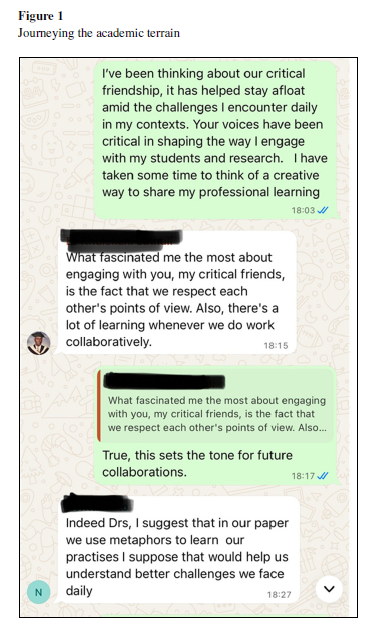
• Met frequently face-to-face to discuss and consider our individual experiences in our research, teaching, and doctoral studies; some discussions took place via email and WhatsApp (see Figure 1).
• Created metaphoric illustrations to represent our respective journeys as teacher-educators and researchers navigating uncharted terrain.
• Wrote reflective journals and shared our experiences as embodied sites of meaning-making and emotional knowledge.
• Offered feedback and support to our critical friends to challenge assumptions and nurture one another's growth.
Metaphoric drawings, narrative accounts, and journal reflections
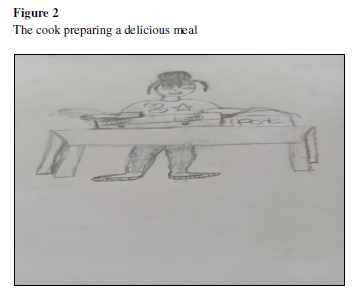
Nontuthuko's metaphoric narrative (see Figure 2)
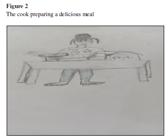
I taught Grade 1 learners for seven years but am now in my third year of teaching Grade 3. When I started teaching, I was excited, thinking it would be easy to teach such young learners. I was happy that I would have my own class and I had many ideas on how I would ensure that my learners would achieve good results and be disciplined, but I soon felt overwhelmed due to many challenges. In my second year of teaching, the new curriculum (Jika iMfundo) was introduced in Pinetown where it was a pilot project. I see myself as a cook or a chef because I associated the new curriculum with food that had to be cooked. The pot that I would cook the food in was the vessel or classroom and I had to use a new recipe, which was the new curriculum. I had to adapt my ingredients to teach, which were the new books and teaching guides and the new class activities that had to be introduced. It was not easy for anyone to come to terms with the changes, and some resisted vehemently. We felt it was too much work because we also had a shortage of teaching resources. As the cook, I did not have enough ingredients to prepare a proper and exceptional meal.
Working in collaboration with my critical friends gave me hope and lifted my misery. They added new ingredients to my recipe, and I could cook up new flavours that helped me to change my perception. They assisted me to understand that, as times change, so do societal needs. I thus had to embrace new developments and learn to adjust.
Despite difficulties, my new confidence made me shine and I was able to serve my learners delicious meals. Sharing ideas with my critical friends equipped me with knowledge to improve my teaching practice regardless of the challenges I experienced. Hence, collaborating with critical friends added value to my cooking skills as I learnt to be creative and use the right ingredients. I began to understand heat and the size of the pot, and I started to measure the right quantities of ingredients to cook delicious and enough food to feed my learners. Therefore, getting to class well prepared and with the right ingredients did not only boost my confidence and assist me to teach well, but also engendered positive learner performance. It gives any cook or chef joy to see people enjoying the meal she has prepared.
Nontuthuko's journal reflections
Journal entry, 10 March 2026
Embracing the discomfort of change has become a necessary aspect of my teaching journey. As a teacher, I see myself as a cook who needs a variety of ingredients and tools, like a stove and pots, to cook and prepare nice meals. As teachers, we face many issues due to policy crises like curriculum reforms, emotional instability, and school leadership responsibilities. I discovered that I need to grow professionally by continuously engaging in formal and informal learning to improve my skills and teaching practice. For example, integrating digital skills into our teaching approach is no longer an indulgence but purposeful because teachers must be proactive in seeking training and support. Therefore, I have learned that the ever-changing landscape of our society demands adaptability from educators, compelling us to evolve our teaching strategies to meet the progressive needs of our students and the world at large. Reflecting on my early years in the classroom, I'm conflicted by the seismic shifts that have transformed education. It's clear that ongoing learning and growth are essential for educators like me.
Journal entry, 15 March 2026
The conversation I had with my critical friends today served as a stinging reminder that polycrisis has far-reaching effects on education, including the numerous challenges instructors and teachers face beyond teaching and learning. Teachers may feel that they are in unfamiliar territory when attempting to manage school administration duties, address professional development concerns, and adjust to changes in the educational system, such as curriculum revisions. Even for experienced teachers like me, the constant pace of curricular change can be intimidating. However, collaborative introspection is most beneficial during these uncertain times. My understanding of the Jika iMfundo curriculum was reframed by a discussion among critical friends, and I found comfort in the metaphor of a cook's creativity in making a delicious dish. Like the cook, creativity is not bound by a single recipe. I realise that my teaching approach can be flexible and responsive to the needs of my students. This realisation has emboldened me to continue reflecting on my practice, seeking innovative solutions and emotional strength to support others on this journey of growth and discovery. Through collaborative self-study, we can cultivate resilience and motivation to thrive amid the complexities of our society.
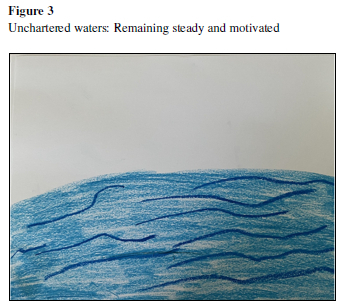
Ntokozo's metaphoric narrative (see Figure 3)
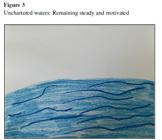
It was like setting sail on a vast, unexplored ocean when I started my PhD voyage. Curiosity, scepticism, and exhilaration swirled together like shifting waves. Every study question was a compass, guiding me toward distant horizons, although waves of uncertainty often left me feeling overwhelmed and nervous. Gradually, I mapped my inner rivers through self-study, analysed my feelings, identified thought patterns, and developed patience, resilience, and self-awareness. In times of uncertainty, these thoughts served as the fulcrum that held me steady.
The other sailors on deck during this voyage were my critical buddies. Their perceptive inquiries and candid criticism occasionally seemed like powerful gusts: uncomfortable, yet essential to my progress. I gained empathy and social awareness from these encounters, along with the ability to listen intently, respond intelligently, and respect viewpoints that differed from my own. Tension-filled and vulnerable moments became opportunities to build trust, improve emotional control, and fortify bonds.
Together, self-study and critical friendship illuminated a path where social and emotional learning became inseparable from scholarly growth. I learned that navigating the complexities of research and the emotions it evokes requires introspection and collaboration. By embracing these challenges, I strengthened my research skills and my capacity for empathy, resilience, and reflective practice, emerging more confident to engage with complexity, uncertainty, and the human dimensions of learning.
Ntokozo's journal reflections
Journal entry, 12 March 2026
The metaphor of uncharted waters emerged as a tool to understand my professional experiences of several demands, such as curriculum change, institutional expectations, and emotional duties. It also reflects my uncertainty of working in a constantly changing environment. Because there is often no obvious path, I find myself traversing uncharted territory while trying to remain calm and productive. As I have learnt to control my own responses and emotions while helping others, I have become more conscious of the emotional labour required in my roles as a researcher and teacher educator. The metaphor bears a sense of intensity, instability, and the difficulty of keeping everything together amid unforeseen circumstances.
Journal entry, 24 March 2026
My perception of this metaphor began to change after conversations with critical friends. I began to see the idea of unexplored waters as an opportunity for learning, even though it initially made me feel uneasy. After some thought and dialogue, I now realise that difficult circumstances can promote development, flexibility, and a deeper professional understanding. The image of these turbid waters helps me make sense of my experiences. I can reframe obstacles and build resilience. This approach has reaffirmed the need for collaborative self-study, and I now see myself as someone learning to find purpose and direction amid uncertainty, and to manage my tasks.
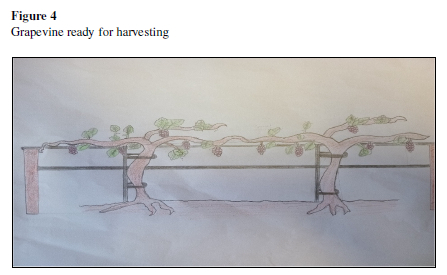
Khulekani's metaphoric narrative (see Figure 4)
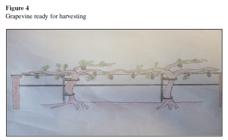
The grapevine metaphor is a relentless reminder of the processes I have to negotiate as a school manager. During my tenure as deputy principal, I was promoted to become the principal of a non-fee-paying school in 2018. The school attracts African learners and teachers who come from a nearby township. There is a SMT comprising a principal, deputy principal, and three departmental heads.
The grapevine metaphor reminds me of professional growth. Grapes thrive in various climates, just like I have learned that a teacher must survive in diverse situations. When cultivating grapes, one needs to choose a sunny area with deep, well-drained soil so the roots will spread and access adequate nutrients. The roots symbolise school policies that are based on national and provincial directives and that are developed by the SMT in consultation with relevant stakeholders. These policies are created to address needs and support the culture of the school.
A grapevine requires a trellis that supports the vines as they grow and expand. Similarly, it is impossible for a principal to manage a school alone because the deputy principal and the departmental heads play vital roles in managing day-to-day school activities. Regular meetings are held to find solutions and assist teachers who are overwhelmed. We learn from one another and create a culture in which individual teachers can develop. The trellis also symbolises the commitment to learn from one another through collaborative interactions.
In the early years, it is prudent to fertilise and prune the vine. Similarly, the SMT needs to undergo vigorous training to stay abreast of new developments. This acts as a fertiliser that stimulates continued collaboration between and among the teaching and management staff to promote a healthy learning milieu. Also, the vine needs sufficient space for adequate growth. SMT members' growth trajectories vary depending on their experiences and opportunities for expansion. Positive growth is attained through relevant management courses.
Grapevines are pruned by removing dead leaves and stems and cutting back new, unnecessary growth. Similarly, school management discourses allow us to get rid of what does not work for the school. For instance, after various obstacles, I realised my school year plan needed the input of every member of staff. This approach enhanced my own professional learning and engendered collaborative planning. Grapes typically begin to produce fruit within three years after planting, and they should be sweet and plump upon harvesting. In the same way, collaborative learning will yield fruitful results in any school. Harvesting sweet and plump grapes is like the euphoric ambience that prevails in a school where the SMT and staff execute their duties with pride, vigour, and confidence.
Khulekani's journal reflections
Journal entry, 16 March 2025
I reflect on my practice not only as a school principal, but also as a professional because I constantly have to re-negotiate my professional identity in the face of tenacious curricular reform, institutional uncertainty, and growing accountability demands. I now understand that leadership is sustained through relational and collaborative growth rather than individual effort. My leadership is grounded in group policy interpretation, SMT collaboration, and sociocultural engagements, much like a vine's deep roots draw nutrients from the soil. I've learned that professional development is not linear, but shaped by emotional labour, ethical responsibility, and shared meaning-making through self-study and interaction with critical friends. Collaboration sustains hope in the face of complexity. Thus, meeting frequently to question my practice has resulted in valuable experiences, [and I now believe] that educators can manage the polycrisis through relational learning, creativity, and care through metaphor-based self-study.
Journal entry, 27 May 2027
Positive leadership is sustained through relational yet organised involvement, particularly in uncertain educational times. Focused discussions, joint planning procedures, and regular reflective sessions serve as collaborative reflexivity settings where knowledge is co-constructed. I have witnessed the value of "pruning" individualistic techniques in favour of group ethical agency while re-examining procedures like staff development and school planning. The harvesting of the grapes in this self-study process symbolises more than just accomplishment; it also reflects the shared and negotiated practice of cultivating optimism, emotional fortitude, and professional agency. These outcomes support my belief that educators may well manage polycrisis through relational learning, creativity, and metaphor-based self-study.
Data analysis and findings
The data analysis process employed the hermeneutic approach (Samaras, 2011, p. 197) during which data collection and analysis occurred concurrently through dialogue. We engaged in reflexivity that involved three phases: before (identifying educational polycrisis as emotional labour, curriculum reform, and school leadership), during (sharing our narratives, metaphoric drawings, and journals entries), and after (identifying patterns and experiences that deepened our understanding through metaphors that served as tools to navigate polycrisis in our educational contexts).
Theme 1: Self-study as an affirmative response to educational polycrisis
This paper underscores the importance of the use of metaphors as a tool that responds to the complexities surrounding teacher education. Furthermore, it validates the existence of emotions and embodied contextual knowledge. Butler and Yendol-Hoppey (2024) argue that self-study that focuses on teachers' practices provides a platform from which practical improvement can be generated. This self-study allowed us to reflect critically on our emotional and contextual experiences. Based on the outcomes, we affirm the value of self-reflexivity as we use our voices to represent teachers'/teacher educators' experiences, thereby offering them a deeper understanding of themselves and the complexities they navigate. Intrinsically, self-study becomes an avenue for teachers and teacher educators to reclaim their narratives and uphold their own knowledge and experiences while responding ethically and creatively to the complexities they face. We agree with van Laren and Pillay (2025) that we need to be ethically responsible scholars who respond in affirmative ways, enabling us to transform our way of thinking when confronted with the realities of polycrisis.
We hope this glimpse into the potential of the arts will nudge other academics to consider creative ways to resolve the polycrisis in education and acknowledge that reconnoitring what can be done differently in educational contexts regarding the curriculum and other managerial responsibilities calls for creative and conceptual courage. In summary, Ntokozo's journal entry captured emotional and embodied experiences, Nontuthuko's journal entry responded to challenges associated with curriculum reform, and Khulekani's journal entry affirmed the need for continued learning and the acquisition of leadership skills.
Theme 2: Ensuring a hopeful future through creativity, care, and collaboration
This theme highlights the need for creativity, care, and collaboration to address the polycrisis in education. Pithouse-Morgan and Samaras (2026, p. 71) state that "artistic representations, collaboratively generated and discussed, also prompt students to think imaginatively about research methods, data collection and analysis, and dissemination." Our metaphoric drawings and narratives echo the imperative that teachers/teacher educators should use creativity to reflect on and make meaning of their experiences during times of uncertainty while nurturing professional agency and learning. This creative approach will allow them to adapt to ever-changing contexts and collaboratively reimagine new possibilities. Moreover, from a relational and emotional perspective on teaching and learning, creativity and care foster a sense of community, engender empathy, and assure support. In this regard, LaBoskey's (2004) fundamental characteristics of self-study emphasise that collaboration is essential in the educational context, particularly when critical friends engage in dialogue that challenges and refines a researcher's interpretations. This collaborative process strengthens reflection, deepens understanding, and enhances the trustworthiness of the research.
This paper thus affirms that working collaboratively with critical friends and engaging in reflective practices (such as journal writing and creating metaphoric drawings) will support professional learning, emotional resilience, and ethical growth. It also agrees that collaboration and creative self-reflection help teachers/teacher educators to develop deep insights into their practice, remain hopeful, and build meaningful, supportive relationships in challenging educational contexts. In summary, Ntokozo's metaphoric drawing and narrative demonstrate that emotional labour needs to be validated in teaching and learning, Nontuthuko's journal entry shows that creativity improves teaching and learning processes, and Ntokozo's journal entry explains how his leadership skills were developed and enriched through self-reflection.
Theme 3: Collaborative reflexivity fosters resilience and agency
By working collaboratively as critical friends, we enriched our professional learning, cultivated emotional resilience, and enhanced our sense of ethical responsibility. Collaborative self-study served as a springboard that set us on a course to cope with the challenges of teaching and leadership. Therefore, we acknowledge that metaphors can be used as a creative tool to shape educators' thinking, guide their actions, and consolidate their relationships. By examining our metaphors collaboratively, we were able to uncover hidden assumptions, challenge limitations, and ignite creative practices to foster collective reflexivity. This process created a space that allowed us to probe our motives and improve our practice. We therefore embrace Delong and Whitehead's (2023) notion that educational theories that encourage reflexivity are the drivers of improved practice. By examining our respective metaphorical representations, we engaged in a reflexive loop where we acted, reflected, learned, and adapted to new conundrums in the face of a daily educational polycrisis.
Essentially, the self-study process allowed us to reflect on and learn from our earlier experiences and our cultural and social backgrounds (Delong & Whitehead, 2023; Vygotsky, 1978). This learning engendered professional agency as we re-shaped our practices through using metaphors that allowed us to first interrogate and then improve our practice. The key drivers of this process were questions such as: "What are we doing?" "Why are we doing what we are doing?" "How can we do better?" "What transformation is needed to better teach and engage with our research, supervision, and positionality as researchers?" This self-study approach encouraged us to take ownership of our development and may well do the same for many who may follow in our footsteps.
Concluding remarks
Nontuthuko's narrative elucidated how critical friends' support and guidance ignited light and hope in her mind and enhanced her teaching practice:
Working in collaboration with my critical friends sustained my hope regardless of feeling miserable. My critical friends' support and my ability to share my concerns with them eased my worries. They added new ingredients and flavour to my teaching and helped me to change my negative perceptions. This made me understand that, as times change, so do societal needs, resulting in the need for continuous curricular developments and for learning to adjust.
Khulekani stated in his journal:
I've learned that professional development is not linear but shaped by emotional labour, ethical responsibility, and shared meaning-making through self-study and interaction with critical friends. Collaboration sustains hope in the face of complexity. Meeting frequently to question my practice has been an invaluable experience.
Ntokozo concluded:
I now realise that difficult circumstances can promote development, flexibility, and a deeper professional understanding... I can reframe obstacles and build resilience. This approach has reaffirmed the need for collaborative self-study, and I now see myself as someone learning to find purpose and direction amid uncertainty, and to manage my tasks well.
Conclusion
The discourse has demonstrated that, within conditions of educational polycrisis, professional becoming is not an individual endeavour, but a socially mediated, relational process shaped through dialogue, reflection, and shared meaning-making. Using a sociocultural lens, the study demonstrated that metaphoric practices that are co-constructed through critical friendship act as mediational tools that enable researchers to interpret, negotiate, and re-examine challenges such as curriculum reform and leadership demands. The findings affirm that self-study research using metaphor-based inquiry creates generative spaces that cultivate hope, ethical agency, and emotional resilience, while also challenging deficit discourses that position teachers as isolated actors stuck in a sea of troubles. Consequently, this work contributes to self-study methodology by foregrounding the transformative potential of collaborative reflexivity and offering a contextually grounded account of how teachers and researchers may sustain possibility and professional agency through caring, creative, and dialogic practices.
The authors used ChatGPT for copy-editing and enhancing language clarity, coherence, and formatting while maintaining the original content's integrity. They take full responsibility for the intellectual content, arguments, and conclusions presented in this work.
References
Acknowledgements
We gratefully acknowledge the support of the College of Humanities (CHUM) at the University of KwaZulu-Natal (UKZN) through the Early Career Scholars Programme, which provided funding for conference attendance and editing fees.
Literature review
- Al-Jarf, R. (2026). Collaborative learning and teaching in digital environments: A systematic review of two decades of research. Journal of Computer Science and Technology Studies, 8(4), 25-40. https://doi.org/10.32996/jcsts.2026.8.4.2
- Allender, J., & Manke, M. P. (2004). Evoking self in self-study: The analysis of artifacts. In In D. L. Tidwell, L. M. Fitzgerald, & M. L. Heston (Eds.), Journeys of hope: Risking self-study in a diverse world: Proceedings of the fifth international conference on self-study of teacher education practices (pp. 20-23). University of Northern Iowa.
- Austin, T., & Senese, J. C. (2004). Self-study in school teaching: Teachers' perspectives. In J. J. Loughran, M. L. Hamilton, V. K. LaBoskey, & T. Russell (Eds.), International handbook of self-study of teaching and teacher education practices (pp. 1231-1258). Springer.
- Bodenheimer, G., & Shuster, S. M. (2020). Emotional labour, teaching and burnout: Investigating complex relationships. Educational Research, 62(1), 63-76. https://doi.org/10.1080/00131881.2019.1705868
- Butler, B. M., & Edge, C. U. (2026). Critical self-study as intensification: Consciousness, method, and advocacy in teacher education. Studying Teacher Education, 1-5. https://doi.org/10.1080/17425964.2026.2642525
- Butler, B. M., & Yendol-Hoppey, D. (2024). Exhibiting care while re/constructing teacher education: A self-study of teacher education leadership. Studying Teacher Education, 20(3), 344-367. https://doi.org/10.1080/17425964.2024.2304141
- Butler-Rees, A., & Robinson, N. (2020). Encountering precarity, uncertainty and everyday anxiety as part of the postgraduate research journey. Emotion, Space and Society, 37, 100743. https://doi.org/10.1016/j.emospa.2020.100743
- Carabantes, L. (2025). Context matters: A sociocultural framework for materials development. Elt Journal, 79(2), 156-171. https://doi.org/10.1093/elt/ccae047
- Delong, J., & Whitehead, J. (2023). You and your living-educational theory: How to conduct a values-based inquiry for human flourishing. Routledge.
- Enright, B., & Facer, K. (2017). Developing reflexive identities through collaborative, interdisciplinary and precarious work: The experience of early career researchers. Globalisation, Societies and Education, 15(5), 621-634. https://doi.org/10.1080/14767724.2016.1199319
- Ferreira, A. (2022). Living on the edge: Continuous precarity undermines academic freedom but not researchers' identity in neoliberal academia. In A. Vatansever & A. Kölemen (Eds.), Academic freedom and precarity in the Global North (pp. 79-100). Routledge.
- Gkonou, C., & Miller, E. R. (2019). Caring and emotional labour: Language teachers' engagement with anxious learners in private language school classrooms. Language Teaching Research, 23(3), 372-387. https://doi.org/10.1177/1362168817728739
- Gouëdard, P., Pont, B., Hyttinen, S., & Huang, P. (2020). Curriculum reform: A literature review to support effective implementation. OECD Working Paper No. 239. https://dx.doi.org/10.1787/efe8a48c-en
- Hamilton, M. L., & Pinnegar, S. (1998). Introduction: Reconceptualizing teaching practice. In M. L. Hamilton (Ed.), Reconceptualizing teaching practice: Self-study in teacher education (pp. 1-4). Falmer Press.
- Khoza, H. C., & Nyamupangedengu, E. (2025). Inducting "self" into the scholarship of teaching pre-service teachers: A self-study of a doctoral student in education. International Journal of Work-Integrated Learning, 26(3), 441-457.
- LaBoskey, V. K. (2004). The methodology of self-study and its theoretical underpinnings. In J. J. Loughran, M. L. Hamilton, V. K. LaBoskey, & T. Russell (Eds.), International handbook of self-study of teaching and teacher education practices (Vol. 2, pp. 817-869). Kluwer. https://doi.org/10.1007/978-1-4020-6545-3_21
- Lakoff, G., & Johnson, M. (2003). Metaphors we live by. University of Chicago Press.
- Lawrence, M., Homer-Dixon, T., Janzwood, S., Rockström, J., Renn, O., & Donges, J. F. (2024). Global polycrisis: The causal mechanisms of crisis entanglement. Global Sustainability, 7, e6. https://doi.org/10.1017/sus.2024.1
- Leutwiler, É. C. V., de Amorim-Ribeiro, E. M. B., & Grangeiro, R. (2024). The emotional labour of higher education teachers: A scoping review. International Journal of Emotional Education, 16(2), 37-56. https://doi.org/10.56300/KJFO7684
- Littlemore, J. (2016). Metaphor use in educational contexts: Functions and variations. In E. Semino & Z. Demjén (Eds.), The Routledge handbook of metaphor and language (pp. 301-313). Routledge.
- Loughran, J. J. (2004). A history and context of self-study of teaching and teacher education practices. In J. J. Loughran, M. L. Hamilton, V. K. LaBoskey, & T. Russell (Eds.), International handbook of self-study of teaching and teacher education practices (pp. 7-39). Springer.
- Mestry, R. (2025). The role of departmental heads in curriculum transformation: Implications for the provision of quality education in South African public schools. South African Journal of Education, 45(4), 1-12. https://journals.co.za/doi/abs/10.15700/saje.v45n4a2701
- Mufid, M., & Radito, G. E. (2024). Collaborative leadership of school principals in developing students' achievement. Proceedings of the International Conference on Islam and Education (ICONIE), 3(1), 2227-2238.
- Naicker, I., Pillay, D., Pithouse-Morgan, K., Masinga, L., Chisanga, T., & Hiralaal, A. (2024). Retracing and re-imagining academic identity narratives in higher education: Arts-based educational research journeys and pathways. In I. Naicker, D. Pillay, K. Pithouse-Morgan, L. Masinga, T. Chisanga, & A. Hiralaal (Eds.), Arts-based educational research narratives of academic identities: Perspectives from higher education (pp. 1-12). Springer Nature.
- Nicholson, P. M. (2023). Pedagogy-as-praxis: A sociocultural framework for researching pedagogy as performance and discourse. International Journal of Research & Method in Education, 46(5), 460-478. https://doi.org/10.1080/1743727X.2023.2167977
- Pillay, V. (2020). Jika iMfundo: A South African study of "turning education around" through improved curriculum coverage. Professional Development in Education, 46(2), 229-244. https://doi.org/10.1080/19415257.2018.1550101
- Pithouse-Morgan, K. (2022). Self-study in teaching and teacher education: Characteristics and contributions. Teaching and Teacher Education, 119, 103880. https://doi.org/10.1016/j.tate.2022.103880
- Pithouse-Morgan, K., & Samaras, A. (2026). Promoting polyvocal co-creative play for qualitative research rationale development. In J. C. Richards (Ed.), Innovative strategies to support all qualitative methods for students' empowerment and success (pp. 57-74). Brill. https://doi.org/10.1163/9789004750869_008
- Ramsey-Wade, C. E., & Cott, M. J. (2025). Student-generated metaphor in research supervision: An arts-based method. Counselling and Psychotherapy Research, 25(1), e12790. https://doi.org/10.1002/capr.12790
- Samaras, A. P. (2011). Self-study teacher research: Improving your practice through collaborative inquiry. SAGE.
- Samaras, A. P., & Freese, A. R. (2009). Looking back and looking forward: An historical overview of the self-study school. In C. A. Lassonde, S. Galman, & C. Kosnik (Eds.), Self-study research methodologies for teacher educators, 3-19. Sense Publishers.
- Shah, V., Aoudeh, N., Cuglievan-Mindreau, G., & Flessa, J. (2023). Tempering applied critical leadership: The im/possibilities of leading for racial justice in school districts. Educational Administration Quarterly, 59(1), 179-217. https://doi.org/10.1177/0013161X221137877
- Skakni, I., Calatrava Moreno, M. D. C., Seuba, M. C., & McAlpine, L. (2019). Hanging tough: Post-PhD researchers dealing with career uncertainty. Higher Education Research & Development, 38(7), 1489-1503. https://doi.org/10.1080/07294360.2019.1657806
- Tidwell, D. L., & Jónsdóttir, S. R. (2020). Methods and tools of self-study. In J. Kitchen, A. Berry, S. M. Bullock, A. R. Crowe, M. Taylor, H. Guõjónsdóttir, & L. Thomas (Eds.), International handbook of self-study of teaching and teacher education practices (pp. 377-426). Springer.
- Tidwell, D., & Manke, M. P. (2009). Making meaning of practice through visual metaphor. In D. L. Tidwell, M. L. Heston, & L. M. Fitzgerald (Eds.), Research methods for the self-study of practice (pp. 135-153). Springer.
- van Laren, L., & Pillay, G. (2025). Academics remaining upbeat amidst the higher education polycrisis context: A co-reflexive arts-inspired collaborative self-study. International Journal of Qualitative Methods, 24, 16094069251370183. https://doi.org/10.1177/16094069251370183
- Vidal, D. G., & Alves, F. (2023). Interdependencies of societies and nature in democratic innovations for the ecological transition. In N. Abbas & Y. Sintomer (Eds.), Deliverable D2.1: Sound practices of democratic innovations (Section 1.4). PHOENIX Project, European Union.
- Vygotsky, L. S. (1978). Mind in society: The development of higher psychological processes. Harvard University Press.
- Woldegiorgis, E. T. (2025). Precarity in the ivory tower: Exploring the challenges of postdoctoral researchers in German higher education. Education as Change, 29(1), 1-24. https://doi.org/10.25159/1947-9417/19341
- Yin, H. (2015). The effect of teachers' emotional labour on teaching satisfaction: Moderation of emotional intelligence. Teachers and Teaching, 21(7), 789-810. https://doi.org/10.1080/13540602.2014.995482
Accepted: 16 August 2026