Critical perspectives on polycrisis in South African education
Abstract
This multi-authored article draws together the expert analyses of 11 field-leading scholars to produce a concise collective assessment of how intersecting historical, social, economic, political, institutional, technological, and ecological crises interact to shape South African education. The article makes no claim to offering an absolute notion of a coherent collective argument. Its strength, however, lies in the presentation of diverse perspectives, some of which align and complement each other, and others that challenge and complicate. The systemic nature of the crisis in/of South African education (in both the school and post-school sectors) is reflected in perennial personnel shortages, infrastructure decay, austerity measures, governance failures, and the widening inequality between private and public provisioning. This crisis is a multi-layered and complex convergence of political, ecological, ethical, and institutional crises, amongst others-some longstanding and some novel. As such, the crisis cannot be understood through a single theoretical or disciplinary lens. South African education is neither uniformly dysfunctional nor beyond creative reimagination. After three decades of post-apartheid transformation initiatives, however, the burden of apartheid's legacy of dysfunction, especially in previously disadvantaged communities, remains an enduring feature that threatens to hold the system in paralysis. While post-1994 policy initiatives have improved access, poverty, unemployment, and food insecurity persist. Asymmetrical geographical development, layered with historical inequalities in race, class, gender, and language, continues to shape educational participation and outcomes. The article strikes a balance between scholarly critique and responsibility to affected communities and institutions, resisting deficit narratives and pathology in favour of recognising the knowledge and agency of learners, teachers, and communities. These critical insights, while not exhaustive, reveal tensions and directions for future policy, practice, and scholarship.
education; polycrisis; inequality; agency
Introduction (Maistry)
This multi-authored article draws together the expert analyses of 11 field-leading scholars to produce a concise collective assessment of how intersecting historical, social, economic, political, institutional, technological, and ecological crises interact to shape South African education. The article makes no claim to offering an absolute notion of a coherent collective argument. Its strength, however, lies in the presentation of diverse perspectives, some of which align and complement each other, and others that challenge and complicate.
The systemic nature of the crisis in/of South African education (in both the school and post-school sectors) is reflected in perennial personnel shortages, infrastructure decay, austerity measures, governance failures, and the widening inequality between private and public provisioning. This crisis is a multi-layered and complex convergence of political, ecological, ethical, and institutional crises, amongst others-some longstanding and some novel. As such, the crisis cannot be understood through a single theoretical or disciplinary lens.
South African education is neither uniformly dysfunctional nor beyond creative reimagination. After three decades of post-apartheid transformation initiatives, however, the burden of apartheid's legacy of dysfunction, especially in previously disadvantaged communities, remains an enduring feature that threatens to hold the system in paralysis. While post-1994 policy initiatives have improved access, poverty, unemployment, and food insecurity persist. Asymmetrical geographical development, layered with historical inequalities in race, class, gender, and language, continues to shape educational participation and outcomes. The article strikes a balance between scholarly critique and responsibility to affected communities and institutions, resisting deficit narratives and pathology in favour of recognising the knowledge and agency of learners, teachers, and communities. These critical insights, while not exhaustive, reveal tensions and directions for future policy, practice, and scholarship.
Polycrisis as conceptual heuristic: Its genesis, generative potential, and inherent potential for unravelling (Maistry)
In this opening piece, I raise the question of the (un)critical use of the social construct polycrisis by tracing its genealogy and the Western, humanist epistemic continuity that might persist in the absence of a meta-awareness of its genesis. I contend that if polycrisis is a crisis of Western modernity, then its epistemic seeding limits its analytical potential. While the meaning of construct polycrisis has morphed over the years, its conception can be traced back to the seminal work of Morin and Kern (1999), who coined the concept, referring to interconnected crises that converge and amplify their individual effects to the extent that the outcomes exceed the sum total of the individual consequences. The concept gained traction and popularity mainly through economic historian Adam Tooze's (2022) scholarship, in which he moves the conceptualisation beyond a recognition of interconnectivity towards more nuanced understandings of how causal feedback loops are systemic and sustain interconnectivity and profundity of outcomes that stretch the adaptive capacity of institutions to cope or manage what can be described as meta-crises.
The concept has since gained prominence in political, economic, and academic discourse, featuring in international policy documents such as the World Economic Forum's (2023) Global Risks Report, and as a thematic anchor for academic conferences. In its original conception, the construct was intended to highlight how macro or global-level crises converge. In contemporary times, the aftermath of the current energy crisis resulting from the war in the Middle East, the Russian-Ukrainian War, the collapse of the international rules-based order, the rise of neoliberalism and neoconservatism, the ascendancy of right-wing nationalism, climate change, recession, poverty, and food insecurity represent a surplus or exaggerated convergence that is likely to be produced. The construct has also been appropriated to make sense of international and local subsystems, such as education, to understand how crises converge and unfold.
The genealogy of the concept and its subsequent appropriation have not been without critique. As a decolonial scholar, also inspired by anti-Blackness theory, and located in a peculiar South African context with its colonial and apartheid heritage, I contend that polycrisis as a social construct is not neutrally innocent despite what might appear at a surface level to be noble intentions to think and theorise anew about the local and global challenges-including those facing the education sector. A key point of departure is that the concept's value-ladenness lies in its etymological structure, which suggests a pre-existing condition of stability that both decolonial and anti-Blackness frameworks contest. This assumption is the outcome of Western modernity's normative impulse to universalise analytical frameworks, a reflection of a historical oblivion to the very situatedness of knowledge. The violent and temporal condition of coloniality and racialisation, it can be argued, is already the outcome of interconnected oppressions, yet contemporary discourse on polycrisis ignores this structural historicity.
If polycrisis is a crisis of Western modernity and is ensnared in its logics, what epistemic delinking (Mignolo, 2011) is possible? What kind of conceptual decentring work might be necessary-scholarship that reveals that it is the exclusive Western normative subject who gets portrayed as a victim of converging crises of capitalism and environmental degradation in what can be described as "emergency discourse." It requires intellectual work that accords due recognition to, and is unapologetic in foregrounding, the longstanding, existential nature of these crises for Southern colonised peoples. It entails a recognition that marginalised Black people in particular have always borne and continue to bear the burden of modernity and colonisation.
In the South African context, given that no fundamental structural change in the social and economic order has occurred in the post-apartheid era, and despite attempts at addressing the inherited crisis of colonial deprivation, slow systemic violence mainly maintains Blacks in zones of abandonment (Mbembe, 2021). Anti-Blackness in this context manifests as pedagogical in the normalisation of failure and low expectations for Blacks and as institutional in the form of language barriers to learning. In essence, converging crises have been an enduring condition for the colonial subject and, in particular, the Black subject, brought on by modernity and (neoliberal) racial capitalism, which serve as its modus operandi. It warrants sceptical recognition that polycrisis masquerades as a novel Western conception but is, in fact, a manifestation of the global effects of colonisation.
Ecologies of collapse, existance, and transgressive learning (Lotz-Sisitka)
The Artemis II image (Figure 1) reminds us that we have only one Earth on which to live, learn, and flourish as species-beings. Yet, one million species face extinction, with extinction rates accelerating. Life-support systems that enable humanity and many other species to flourish on Earth are undermined daily by the increasing violence of colonial-modernity's 500-year trajectory. The foundations of our economies, livelihoods, food security, health, and quality of life are eroding worldwide (Díaz et al., 2019). This polycrisis manifests across time and space, and is experienced painfully in the devastating intersecting effects of perverse technologies, war, disaster capitalism, ecological devastation, and ongoing forms of injustice, exclusion, and coloniality. "Polycrisis" is not just an appropriated metaphor or policy slogan (as in Davos discourse), it has an associated ontological depth of devastation and injustice that demands seriousness.

Edgar Morin's crisology theory suggests that polycrisis is best understood as "a metamorphic hinge where breakdown and transformation unfold together" (my emphasis; Delannoy et al., 2025, p. 1). Out of devastation, alternatives can emerge. But avoiding the emergence of dystopia requires disrupting and transgressing naturalisations and assumptions of seeming inevitability. A "postcapitalist horizon of collective emancipation" (Demos, 2023, p. 9) needs to come into view in which majority world citizens can claim the right to existance or taking a stance on existence. Demos (2023, p. 9) suggests that this horizon is emerging in arenas such as "experimental visual culture, new media expression, aesthetic practices and social movement formations . . . building on traditions far from homogenous or continuous, including the Black radical tradition, Indigenous decolonial praxis, and anti-capitalist socialist opposition" where efforts to "defeat fatalistic nihilism and the clockwork of racialised and colonial economic domination" are underway.
But what of education? How is education to be more transgressively constituted to expand counterpowers of collective transformation to realise emancipatory horizons? Firstly, public education must be protected. But not only protected, it must be reconstituted as a part of the solidarity building infrastructure required to amplify transformation at Morin's (1976) metamorphic hinge, as force for empowering movement(s) for local, national, and global transformation. But, to do this, there is need to re-imagine, practise, and learn solidarity politics. Demos (2023) suggests learning from intersectional social movements (e.g. LaColectiva's, Zapatista's, BlackLivesMatter) that are contesting multifaceted colonial oppressions and breakdown at the nexus of the local and the global. This is not a nostalgia for socialist solidarity; rather, it is a reconstituted form of earth being/eco-socialist solidarity. Here, educational praxis becomes a creative means of living otherwise, of transgressing unsustainable norms that hold injustices, degradation, and oppression in place, one transgressive learning act at a time (Lotz-Sisitka, 2024). The direction of education becomes not a race to provide human capital, but rather a tracing of futures where "solidarity is the compass of change" (Demos, 2023, p. 169) and ongoing ecological destruction is underway.
Demos (2023, p. 181), however, reminds us that solidarity is a "strained category" as "plutocrats and politicians" continue to deploy tactics such as social media atomisation, reactionary identity politics, gig economies, precarity, war, and genocide to divide, rule, and profit. In parallel, education systems deploy standardisation, human capital theory, reductionism and now AI automation to promote elitism and market alignment. Usefully, Demos (2023, pp. 186-193) presents some learnings on modalities of solidarity that can help to guide educational programmes and processes conceptualised otherwise:
• solidarity in embodiment (racialised, gendered, and oppressed bodies-in-relation in sites of shared experience, place, and action, including bodies of the more-than-human).
• solidarity in organising (shared planning, alliance building, and cultivating ethical relationality).
• solidarity in effect (felt and valued experience of lived commitment to engaging and addressing shared matters of concern).
• solidarity in aesthetics (shared sensibility, sound and image, posture, and collective movement).
What Demos (2023) does not cover, however, is solidarity in and through learning. A recent meta-review synthesis of a 10+ year research programme on T-learning shows that reconfiguring transformative, transgressive learning theory and praxis, as outlined in Figure 2 below (cf. Lotz-Sisitka, 2024), can help guide learning aligned with the modalities of solidarity framed by Demos. This requires public educational acts that build solidarity relations with the one million species facing extinction, with life-support systems, and with the victims of global capitalism (Dussel, 2013). For public education to be protected, its purpose needs to be transformed-away from human capital that serves capital, to solidarity relations that serve human and planetary well-being.
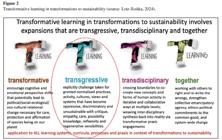
The T-learning framing in Figure 2 (remaining a work-in-progress, cf. Lotz-Sisitka, 2024) points to how education and learning can be reimagined as transformative, transgressive process necessary for Morin's metamorphic hinge to produce actual relations and practices of existance and emergence at the points where breakdown and transformation unfold together (cf. Dellanoy's point above).
Polycrisis and sustainability education (Le Grange)
The neologism polycrisis was first introduced by Edgar Morin and Anne Kern in 1999. They used it to describe the complex intersolidarity of problems and crises that together constituted a planetary predicament. The term was later invoked by other scholars and policymakers, and in 2023, it gained widespread attention after prominent usage at the World Economic Forum's annual meeting. Put simply, polycrisis refers to the compounded impact of multiple crises occurring simultaneously, where their combined effects are greater than the sum of the individual crises. I explore the notion of polycrisis vis-à-vis sustainability education, acknowledging that much of existing scholarship on polycrisis has emerged from the field of sustainability science. I prefer the term sustainability education over the more widely used education for sustainable development because the latter tends to embed education within an instrumentalist logic, positioning it to achieve something external to education itself. By contrast, sustainability education foregrounds education as a generative, relational, and ethical practice, rather than subordinating it to predetermined developmental agendas.
Our understanding of polycrisis continues to evolve, and sustainability scientists such as Lawrence et al. (2024) identify three causal pathways: common stresses, domino effects, and inter-systemic feedbacks. Common stresses are slow-moving pressures that weaken multiple systems simultaneously, leaving them vulnerable to shocks. In South Africa, climate change, inequality, and water scarcity are prominent examples. Climate change intensifies droughts and floods, undermining food systems, displacing communities, and threatening livelihoods. Inequality erodes social cohesion and fosters political instability. Chronic water scarcity means that extreme droughts devastate agriculture and ripple across other systems. These pressures constitute a form of "slow violence" that heightens vulnerability to sudden shocks, as seen in the 2021 unrest in parts of South Africa. Domino effects occur when one crisis triggers a chain of others. The virus SARS-CoV-2 caused the COVID-19 pandemic, which disrupted mobility and trade, crashed markets, strained health systems, and forced emergency remote teaching and assessment. These developments disproportionately affected the poor. A second example is the ongoing war between Israel and the USA against Iran, ostensibly to prevent nuclear weapons development. This conflict has triggered an energy crisis, raising global fuel prices and inflating costs of transport, food, and services, again with disproportionate impacts on vulnerable populations. Inter-systemic feedbacks are reinforcing loops where crises amplify one another. In South Africa, climate change, energy insecurity (load-shedding), and high unemployment interact to compound hardship, particularly for rural communities. This feedback illustrates how crises entangle across systems, producing harms greater than the sum of their parts.
Education is inevitably embedded in the dynamics of polycrisis; it is both impacted by crises and, at times, contributes to them. The implications of policy crises for sustainability education are therefore significant. Regarding common stresses such as climate change, inequality, and resource scarcity, sustainability education must adopt a cross-cutting approach that promotes transversal thinking. Disciplinary boundaries should be blurred, siloed thinking abandoned, and transdisciplinary trajectories invigorated. Learners must be equipped to see how these stresses simultaneously affect food, energy, health, and governance systems. Pedagogically, this requires cultivating systems literacy: the ability to trace how one stress, such as water scarcity, manifests across multiple domains, from agriculture to geopolitics. In relation to domino effects, case studies such as the COVID-19 pandemic can demonstrate how sustainability challenges rarely remain isolated. Scenario-based learning is particularly valuable here, enabling learners to explore how one disruption can trigger others and to cultivate anticipatory thinking. Finally, inter-systemic feedback highlights the need for reflexivity and ethics in sustainability education. Human responses (whether policy, technology, or ideology) can either dampen or amplify feedback loops. Ubuntu as ecosophy (Le Grange, 2012) offers a relational ethic that teaches interconnectedness as not merely a risk factor but also a resource for resilience.
Engendering nonviolent education in dark times (Blignaut)
George Counts (1931, p. 21) declared, "We live in troublous times," urging educators to abandon neutrality. Nearly a century later, we face a similar convergence of crises: violence in schools, mass shootings in the USA, inflammatory political rhetoric, wars in Ukraine, Gaza, Israel-Iran, Myanmar, Sudan, and the Congo, mass displacement, inflationary pressures, the disruptive rise of artificial intelligence, and environmental degradation. When such crises intersect, they form a polycrisis, an intricate web of disruption greater than the sum of its parts.
What are the implications for universities, education, and teacher preparation? International bodies such as the United Nations have failed to prevent armed conflict, while nations like Israel and the USA routinely ignore rulings from the International Court of Justice, the International Criminal Court, and human rights organisations. Should universities not be alarmed when schools are destroyed, and students' education is disrupted? These wars are unprovoked and illegal; their repugnance is self-evident. To remain silent is complicity.
I propose nonviolence education as a counter to pervasive violence. Drawing on Wang's (2023) framework, this approach emphasises interconnectedness, compassion, and the unity of mind and body, and self and other. I extend her vision by embedding critical pedagogy, enabling students to read the world and discern propaganda inherent in war-making. Nonviolence education is not passive resistance; it cultivates dispositions of care and responsibility for the world, echoing Hannah Arendt's (1998) call to assume responsibility for it. Such a framework builds bridges and opens new modes of expression and being.
Nonviolence theory rests on the interconnectedness of life, long present in Indigenous traditions. Wang (2023, p. 16) argues that interconnectedness dissolves violence and "releases the creative energy of imagination, intuitive thinking, experiential understanding, and embodied studies." Compassion, she notes, dissolves violence by cultivating nonviolence in thought, feeling, and action. This ethic guides not only interpersonal and intergroup relations but also reconciles inner divides within the self.
Yet how should students and educators confront the double standards of global politics? Western nations condemned Russia's invasion of Ukraine but hesitated to denounce Israel's assault on Gaza. South African universities, historically the conscience of society, struggled even to pass Senate motions calling for an end to the war. James Baldwin (1974, p. 99) warned: "Neither love nor terror makes one blind: indifference makes one blind." Universities risk blindness through indifference.
Nonviolence education also requires cultivating inner capacities. Albert Camus (1954, p. 169) urged us to embrace the summer within: "In the depths of life's 'winter'-our darkest, most chaotic times-we can discover an 'invincible summer,' a reservoir of strength, hope, and resilience that refuses to be broken." This points to the necessity of political-pedagogical work, agency, and democratic contestation in education to make justice imaginable again.
In times of polycrisis and historical wrongdoing, dominant hegemonic narratives must be challenged through curriculum. The voices of courageous figures who resisted injustice, such as Dietrich Bonhoeffer, the German anti-Nazi dissenter, should be amplified. Nonviolence education must counteract violence before it becomes normalised, lest Edgar Allan Poe's (1845, p. 3) bleak warning be realised:
We stand upon the brink of a precipice. We peer into the abyss-we grow sick and dizzy. Our first impulse is to shrink from the danger. Unaccountably we remain . . . it is but a thought . . . which chills the very marrow of our bones with the fierceness of the delight of its horror.
Nonviolence education, then, is not merely an ethical stance but a political-pedagogical imperative. It insists that universities reclaim their role as bastions of justice and truth, equipping students with the critical and compassionate capacities to resist violence, expose propaganda, and imagine alternative futures. In dark times, education must engender nonviolence, not as retreat, but as active responsibility for the world.
Rethinking higher education in a time of polycrisis: Pathways of hope, care, and transformation in South Africa (Motala & Kimani)
South African higher education is navigating a polycrisis: a convergence of overlapping, mutually reinforcing crises that together produce a reality far more destabilising than any single challenge alone. The crises-social-political-economic precarity, technological inequality, epistemic contestation, and governance fragility-have produced systemic precarity and challenge both the purpose and practice of higher education. With a polycrisis lens, we can understand what is shaping contemporary higher education in South Africa, thereby helping develop appropriate and integrated responses. This contribution argues that the polycrisis, while profoundly threatening, can also serve as a catalyst for reimaging higher education as a site of ethical engagement, epistemic transformation, and hopeful futures.
The achievements of post-apartheid higher education have significantly widened access, and enrolment has expanded dramatically. By 2025, over 1.15 million students were enrolled at public universities, with Black African students comprising approximately 77% of the student body and women representing approximately 60% of the student population. The introduction of free higher education and funding through the National Student Financial Aid Scheme (NSFAS) has expanded access for students historically excluded from the system. However, this "transformative promise" is accompanied by persistent inequalities in access, participation, and outcomes. Massification has not translated into equity of success; high dropout rates of 32.4% persist across universities, low completion rates with only 56% of students completing a three-year degree within six years, and racial disparities with the participation rate of Black youth aged 18 to 29 in higher education standing at 5.5% compared to 17.7% for White youth. The system has failed to adequately address the structural inequality.
At the core of the polycrisis is a contradiction between expansion and sustainability. While student numbers have increased, public funding in real terms has declined, placing severe strain on institutional capacity. The Higher Education and Training budget grew to become the third fastest-growing in government by 2024, but this growth was concentrated in individual student funding through NSFAS rather than in institutional support. University subsidies increased by only 3.9% during the same period, effectively declining in real terms against inflation. This funding precarity undermines the quality of teaching and learning and exacerbates inequalities between institutions. This creates what might be called a paradox of access: students gain entry to a system that lacks the resources to adequately support their success. The so-called "missing middle" - students who earn too much to qualify for NSFAS but cannot afford fees - remains largely unaddressed by current policy frameworks. Simultaneously, broader socio-economic challenges, such as high youth unemployment and the fragile position of the emerging Black middle class, shape students' experiences of higher education, affecting both access and retention. These dynamics reveal how educational inequality is deeply entangled with wider social and economic structures.
The polycrisis is also epistemic. South Africa's higher education system operates within unresolved tensions between Eurocentric curricula and legitimate calls for African-centred, decolonial knowledge. Despite institutional commitments to transformation, curricula often remain disconnected from students' lived realities. Massification has expanded access (Trow, 2020) without producing equity of outcomes. This disjuncture is further complicated by the rapid shift to digital learning during the COVID-19 pandemic, which exposed profound inequalities in access to technology. Students from rural and low-income backgrounds were disproportionately excluded, demonstrating how technological solutions can reproduce, rather than resolve, structural inequities.
Responding to these complexities requires an integrated theoretical framework. Complexity theory underscores the interconnected nature of crises, while the concept of massification highlights the pressures associated with expanding access. Intersectionality draws attention to how multiple forms of disadvantage, race, class, and gender, intersect in shaping educational experiences (Crenshaw, 1989). Importantly, the notion of critical hope offers a normative orientation, emphasising the possibility of transformation even in contexts of deep uncertainty (Bozalek et al., 2014). Together, these perspectives challenge reductionist approaches and call for more holistic and ethically grounded responses.
In this context, research emerges as a crucial pathway of hope. The SARChI Teaching and Learning (Post-Secondary Education and Training) has developed a thematic research response built around three interconnected pillars: epistemic and digital disruption, pedagogy of care and intersectionality, and grounding decolonisation beyond rhetoric. First, research on epistemic and digital disruption reveals the dual challenge of addressing technological inequality while rethinking pedagogical practices. It calls for innovative approaches that integrate digital tools with inclusive, contextually relevant forms of knowledge production. Second, the focus on a pedagogy of care foregrounds the importance of relationality, well-being, and support in the educational process-particularly among women doctoral students navigating funding shortages, family responsibilities, cultural norms, and institutional alienation simultaneously. An affirmative ethics, rooted in agency, collective resilience, mentorship, and care offers a counter-narrative to the impersonal, market-driven logic that currently dominates higher education governance. Third, efforts to move beyond rhetoric in decolonisation emphasise the need for conceptual clarity and empirical grounding. Decolonisation is not simply a discursive project; it requires material and institutional transformation. This includes addressing language barriers, rethinking assessment practices, and aligning curricula with the social realities of the Global South. Such work demands what has been termed "conceptual courage"-a willingness to challenge entrenched norms and imagine alternative futures.
Policy plays a critical role in shaping these possibilities, yet it is marked by paradox. The policy architecture governing South African higher education simultaneously promotes equity and efficiency, autonomy and control, transformation, and neoliberal performance practices. It promises access without adequate support, transformation within neoliberal constraints, and equity while tracking efficiency metrics. This results in fragmented and often contradictory interventions. To address the polycrisis effectively, a more coherent and synergistic approach is needed. Key recommendations include linking funding to student success rather than enrolment alone, strengthening academic and psychosocial support systems, and fostering inclusive institutional cultures that promote belonging.
Responding to the polycrisis requires a shift from fragmentation to alignment. A synergistic model of higher education-one that integrates policy, pedagogy, and research-offers a way forward. It demands conceptual courage-a willingness to reframe policy goals away from output targets toward human development outcomes, to link funding to student success rather than enrolment numbers alone, and to build institutional cultures capable of fostering genuine belonging across lines of class, race, and gender. Such a model would prioritise social justice, epistemic transformation, and human development, recognising that these goals are mutually reinforcing rather than competing.
The silent polycrisis: Teacher well-being and curriculum implementation in South African education (Simmonds)
Within the broader polycrisis confronting South African education, teacher well-being emerges as a critical yet often overlooked dimension of systemic instability. While policy discourse frequently foregrounds visible challenges such as infrastructural deficits, curriculum reform, and learner performance, insufficient attention is given to the conditions (emotional, psychological, and professional) under which teachers are expected to enact the curriculum. This constitutes a silent crisis: one that is less immediately visible than policy failure, yet profoundly shapes the quality of teaching and learning in classrooms. Teacher stress, burnout, workload intensification, and inadequate institutional support directly influence how the curriculum is implemented in practice. Recent scholarship has shown that teachers' understanding of curriculum policy and their capacity to enact it meaningfully are deeply shaped by contextual pressures and professional support systems (Sepadi & Molapo, 2024). In this sense, teacher well-being must be understood not as a peripheral welfare issue, but as a central condition of curriculum implementation and educational justice in South Africa.
The silent polycrisis of teacher well-being becomes most visible in the sphere of curriculum implementation, where institutional pressures directly mediate pedagogical practice. Sohail et al. (2023) argue that teacher burnout is significantly shaped by workload intensification, excessive bureaucratisation, poor collegial support, and diminished professional autonomy. Within the South African context, these pressures are particularly salient as teachers navigate persistent curriculum reform, administrative compliance demands, and unequal school resourcing. Under such conditions, curriculum implementation often shifts from meaningful pedagogical engagement to procedural compliance, where the priority becomes curriculum coverage rather than critical learning. This can result in curriculum narrowing, reduced creativity in lesson design, and limited responsiveness to learners' contextual needs. Teacher well-being, therefore, functions as a structural determinant of curriculum enactment, revealing how the broader educational polycrisis is reproduced through everyday classroom practice.
Teacher well-being as a silent crisis requires moving beyond an event-based understanding of crisis toward one that recognises slow, normalised, and structurally embedded forms of disruption. In sociological terms, silent crises are often characterised by their diffuse temporality and low visibility, emerging not as singular catastrophic events but as gradual erosions of institutional capacity and human well-being (Delannoy et al., 2025). This resonates with contemporary understandings of polycrisis as the causal entanglement of multiple crises across interconnected systems, where harms accumulate and mutually reinforce one another beyond their isolated effects. In effect, economic, social, political, and institutional pressures become deeply interwoven, producing systemic instability greater than the sum of its parts. From this perspective, teacher well-being may be understood as a silent crisis because its effects are often rendered invisible within dominant policy discourses that prioritise measurable outcomes such as learner achievement and curriculum coverage. Yet precisely through this invisibility, deteriorating teacher well-being becomes entangled with broader crises of inequality, institutional fragility, and curriculum reform in South African education.
Delannoy et al. (2025) caution that polycrisis must extend beyond governance and policymaking by recognising how it also shapes responsibility, legitimacy, and the need for adaptive mandates and learning capacities. As such, in South African education, polycrisis should not be understood solely through the language of collapse, disruption, and institutional failure; rather, it also contains generative possibilities for transformation and renewal. As Delannoy et al. (2025, p. 1187) argue, crises must be read as "destructive and creative metamorphic hinges" through which new patterns of order begin to emerge. This framing is particularly productive for South African education, where the intersecting crises of inequality, teacher well-being, curriculum reform, and historical injustice may also create openings for reimagining more socially just educational futures. However, such transformation cannot be technocratic or merely policy-driven. The authors further caution that meaningful crisis response requires confronting distributive injustices and drawing on diverse knowledge systems lest responses simply reproduce existing fragilities. In this sense, the silent polycrisis described here offers a critical opportunity to rethink curriculum, teacher support, and institutional cultures through equity-centred and decolonial approaches that enable substantive educational transformation. Until the silent crisis of teacher well-being is named as a question of justice, power, and recognition, South African education risks reproducing the very exclusions and inequities that a transformative curriculum seeks to undo.
Educating teachers in the age of polycrisis: Considerations for curriculum, teaching, and assessment (Mgqwashu)
As higher education teachers with an intellectual duty to educate teachers who are able to live in the future while operating in the present, and simultaneously with skills and knowledge on how to create optimal educational environments that will centre un-learning, re-learning, and learning, teacher education cannot be confined to technicist approaches. We are challenged to enable our pre-service and in-service student teachers to learn how to learn, not what to learn, and how to think, not what to think. This challenges us to engage in active self-critique, asking ourselves daily not just the right questions but the troubling ones. Polycrisis requires us to trouble our own mindsets, beliefs about those who differ from us, and indeed, even those who differ with us. In this context, our business of educating teachers for all sectors of education may need to commit to avoiding imposing the encapsulating frames (Lotz-Sisitka, 2025) of today and instead, foster learning environments that welcome forward-looking, out-of-the-box cultures. This, amongst other things, challenges us to critically contemplate and re-imagine our educational spaces, re-see the possibilities we have probably missed and/or overlooked, and to re-think, re-visit, re-new, re-fresh our perspectives, and re-define our reason for being as teacher educators and as teacher education institutions. As knowledge producers, polycrisis encourages us to rediscover why we teach, learn, and research in the way we do. It cannot be business as usual.
We are to engage in endless efforts to rid all education sectors of procedures, values, norms, practices, thinking, beliefs, and choices that appear exclusionary, thereby undermining the purpose of educating citizens in line with the imperatives of transformation and decolonisation. Practices that lead to the marginalisation and exclusion of the majority of undergraduate and postgraduate students, and impose hostile managerial processes that undermine the academic and knowledge generation projects, are to be frowned upon. Curriculum reform forms a major part of this work. By curriculum, I refer not merely to the subjects in a qualification, but also to all the aspects that make up a programme of learning, including considerations of which topics are being taught and the texts drawn upon to address them (Boughey, 2022). In the context of a polycrisis, our understandings of learning need to embrace an understanding that learning also happens outside the formally planned curriculum, and that conversations at home, in residences, and experiences on the sports field also have consequences for student learning (Mgqwashu, 2023).
This broad understanding of curriculum allows us to re-see student learning not simply as something students attain and demonstrate through a collection of skills and attributes as a result of the content we taught. Instead, they are people with rich histories, languages, norms, and values that may or may not have been welcomed within the cultures and structures of university lecture halls, laboratories, and libraries. Furthermore, the polycrisis forces us to re-see our research in teaching and learning beyond a perennial diagnosis of the problems at the micro-level, leading to confined surface "solutions." This is a consequence of the gross under-theorisation of research on teaching and learning, and on foundation level provision. Both have led to an absence of a reconceptualisation of the problem (Garraway & Bozalek, 2019). Such a reconceptualisation needs to include questions on what is taught, as well as who teaches, in whose language, how, who is the learner, how they learn, the how of assessment, and why?
The polycrisis also encourages us to create spaces for a re-seeing of the curriculum from epistemology and identity viewpoints (Lange, 2019). A reliance on National Qualifications Framework continues the construction of learning outcomes as a language of description used to inform curriculum design, programme development, and module alignment. In this context, assessment is seen as a neutral set of "innocent" principles. In the age of polycrisis, assessment needs to be seen as a highly complex act, involving the influence of interpretation and positionalities of participants. Thus, assessors and students cannot be seen as autonomous, decontextualised, asocial beings. They are shaped and influenced by social class, race, gender, and cultural backgrounds. This is mainly the reason there is a continued mismatch between enrolments and graduation rates (Council on Higher Education, 2022).
Resilience for whom? Gendered endurance and the reproduction of educational inequality in times of polycrisis (Singh)
Polycrisis in education is frequently accompanied by an intensification of resilience discourse, whereby "resilient systems," "resilient teachers," and "resilient learners" have become increasingly prominent. Educators working within overcrowded classrooms are celebrated; students who achieve academic success despite material deprivation, such as hunger, unsafe transport, and inconducive home environments, are lauded; and institutions that achieve good performance amid infrastructural decline are commended. Consequently, calls for equity are often reframed as complaints and dismissed as insufficient commitment or fortitude (Ahmed, 2021). This discursive shift not only delegitimises structural critique but also reconstitutes inequality as an individualised problem.
However, resilience is not a politically neutral construct. Rather, it functions as an uneven socio-cultural allocation of endurance, frequently framed in terms of empowerment and adaptability while simultaneously reproducing the very inequalities it appears to transcend (McRobbie, 2020). Furthermore, feminist scholarship has long argued that expectations of resilience are profoundly gendered and contribute to the reproduction of educational inequality.
Within schooling systems, resilience is frequently constructed as a moral imperative disproportionately directed at girls and women, particularly those located at the intersections of racialised and classed marginalisation. This normalises the expectation that girls will absorb and manage crisis conditions, effectively reallocating the social, material, and emotional costs of systemic breakdown onto feminised bodies. These dynamics are particularly pronounced in South Africa. For Black girls in rural settings, gender and sexuality-diverse individuals, and those in under-resourced schooling environments, crisis is not experienced as episodic disruption but as an ongoing condition of precarity.
Intersecting crises, including energy insecurity (load-shedding), limited access to potable water, food insecurity, and gender-based violence, not only disrupt schooling but actively reorganise social and economic labour in ways that undermine girls' educational participation. During periods of crisis, girls are more likely to assume expanded domestic responsibilities and face interruptions to their schooling, with some compelled to leave education altogether to take on head-of-household roles. In this way, resilience is not merely an adaptive response but a mechanism through which educational inequality is materially reproduced, as time, energy, and opportunity are systematically diverted away from girls' learning.
Crucially, the celebration of "resilient girls" obscures these dynamics by recasting structural disadvantage as evidence of individual strength. Paradoxically, those who are most disadvantaged are simultaneously those most expected to compensate for that disadvantage. As a result, inequality is reproduced both materially, through diminished access to educational resources and opportunities, and symbolically, through discourses that frame endurance as virtue and critique as failure. For educators, the COVID-19 pandemic further exposed and intensified these inequalities. The shift to remote teaching disproportionately burdened women teachers and academics, who were required to navigate expanded professional responsibilities alongside increased childcare and domestic labour. Concurrently, rising levels of trauma, gender-based violence, and unplanned teenage pregnancy have disproportionately affected girls and young women, thereby extending the pastoral and emotional labour expected of women educators.
The critical question, therefore, is not whether resilience is necessary, but rather from whom it is demanded and at whose expense. In deeply unequal contexts such as South Africa, where inequalities are profoundly gendered and racialised, frameworks that prioritise individual adaptability and resourcefulness risk reproducing systemic injustice. To interrogate resilience is not to diminish the agency, creativity, or strength of girls and women, but to resist its romanticisation within contexts of structural neglect. Until the structural determinants of inequality are meaningfully addressed, resilience will remain less an indicator of strength than an unevenly distributed obligation. For education to move beyond a paradigm of survival, resilience must be reconceptualised not as the capacity to endure inequality, but as a political project that brings together educational authorities, educators, students, and communities in ways attentive to differential vulnerability and oriented toward dismantling, rather than enduring, inequality.
Tentacular curriculum theorising (du Preez)
Polycrisis facing us today reshape what it means to know, create and reason. Climate breakdown, violent social injustice, advanced digital acceleration, geopolitical and economic instability (to name but a few) all co-exist and mutually compound and amplify one another.
These crises do not merely coexist; rather, they intra-act1 and produce unpredictable, system-wide effects that cannot be understood in isolation. What is striking is that, in this troubled context, which demands complex approaches to address compounding crises, our education systems and dominant curriculum theories do not seem to have changed much, and, as Le Grange and du Preez (2023) have argued, Ralph Tyler's (1949) ghost still lingers, meddles, and disrupts curriculum work. In South Africa, as elsewhere, higher-education programmes are compelled to follow an outcomes-based approach, aligning module outcomes with exit-level outcomes through what is called constructive alignment. Regardless of the content, the curriculum is straight-jacketed by development templates that descend directly from the social-efficiency movement of the early industrial era. The pandemic's turn to online learning and the rush toward the so-called Fourth/Fifth Industrial Revolution have intensified that impulse toward speed and control. Tyler's ghost thrives precisely in such times, promising measurable certainty amid complexity, rewarding conformity whilst dismissing difference. Le Grange and du Preez warn that curriculum according to the Tylerian mould is dehumanising, normalising, and colonising, because one way of being becomes the way of being.
This then brings me to the question of what form curriculum theorising could take/give to be more responsive to polycrisis. I explore the potential of tentacular curriculum theorising as an alternative to traditional curriculum theories to respond to the complex, indeterminate context we find ourselves in. Tentacular curriculum theorising draws inspiration from Haraway's (2016) notion tentacular thinking (a form of thinking that reaches out with multiple arms, exploring the complexity of existence without seeking to control or reduce it). It also follows insights from Barad and Gandorfer (2021) who argue that theory is not a noun but a verb. They explain that our theories, our writing, our thinking and even our acts of attention are not separate from the world's becoming; they are part of it.
To theorise curriculum tentacularly then is, firstly, to treat such theory as a verb: as something alive, working, in motion, and becoming through our intra-actions with others, both human and more-than-human. Theory, in this sense, does not pre-exist our intra-actions; it materialises through them. Curriculum theory apt to deal with the complexities of our time should emerge from the thickness of polycrisis and not from some outdated, abstracted, and simplified curriculum theories as has been the case hitherto. Secondly, tentacular curriculum theorising is always situated and attentive to different relations. Such theorising demands humility to stay grounded (in place, in time, and in relation), rather than reaching for totalising explanations (Haraway, 2016) in which one way of curriculum theorising becomes the way of theorising (Le Grange & du Preez, 2023). Thirdly, tentacular curriculum theorising is embodied and multispecies. It embraces thinking and theorising as material acts of connection. Haraway (2016) reminds us that thought and theory are not disembodied, and ideas and worlds are not self-made; they are co-made (sympoietic). Tentacular theorising therefore rejects the myth of autonomy and instead embraces collaboration across species, disciplines, and modalities; something that traditional, dominant curriculum theories such as the Tyler Rationale (1949) have not been able to offer. Fourthly, tentacular curriculum theorising has an affective and experimental orientation. It values curiosity, joy, and generative mess over mastery or certainty. Theory here is not polished and pure; it is "theory in the mud" (Haraway, 2016). To dwell in this recognition is to remain with the complexity of polycrisis, to resist the temptation of simple causality and to practise tentacular theorising to trace relations, rather than isolate symptoms emanating from polycrisis. Finally, when I theorise curriculum tentacularly, I do not try to explain polycrisis from somewhere outside it. Instead, I feel along its threads, write from with/in its knots and attend to co-becomings. Tentacular curriculum theorising is therefore a working ethic of thinking-with, composing-with and staying-with the thick, tentacular trouble produced by polycrisis. In essence, I have argued that dominant, Tylerian curriculum theories are inadequate in addressing the interconnected and unpredictable effects of contemporary polycrisis. Tentacular curriculum theorising as a situated, embodied, multispecies, affective, and experimental practice through which theory emerges from intra-actions rather than being imposed as an abstract, totalising framework, was proposed as an alternative. Curriculum theory is therefore reimagined as a working ethic of thinking-with, composing-with, and staying-with the complex relations and co-becomings of a world in trouble.
Moving boulders off the path: Night thoughts of a lay pedagogue on the low levels of achievement in mathematics learning in our schooling system (Ballim)
My focus is not on a particular aspect of the polycrisis in education, but rather on what I consider an important contributing factor to the character of this polycrisis as it manifests in South Africa. In particular, my concern is with learner development in mathematics across their schooling years, as evidenced by the fact that, over the past 10 or more years, around 22% of learners who take Grade 12 Mathematics will achieve a mark of at least 50% in the final examinations. In trying to understand the factors that influence this low level of performance, my sense is that the following features are not in dispute:
• This is not a reflection of the inherent or genetic inability of young South Africans to understand the principles and processes in mathematical reasoning at Grade 12 level.
• This poor performance has persisted in spite of the significant public and private investment of financial resources and research effort in teachers and teaching.
• The final assessments in mathematics are properly structured and, as Umalusi has recently demonstrated, are of an internationally comparable standard.
Brodie (2010) makes a strong and supportable argument that post-apartheid curriculum reforms in mathematics education have been aimed at promoting equity and social justice in education outcomes through a focus on mathematical proficiency of learners. This approach emphasises the greater importance of developing learners' mathematical reasoning abilities rather than teaching mathematics as simply a process of problem-solving in the so-called language of science. Noble as this intention may be, the persistently poor performance in Grade 12 mathematics and, for those who do pass well enough to enter mathematics-based disciplines of study at university, the shallowness of their mathematical proficiency, indicate that the intended shift in mathematics teaching and learning has yet to find proper expression in the school classroom. Learners are still taught mathematics in a way that focuses on mathematics as the business of finding solutions to predefined problems and that the primary purpose of learning mathematics is to "get to the answer." To my view, the purpose of teaching mathematics is to acculturate learners into the habits of mind of the logical reasoning process that proceeds from the axiom, to the postulate, to the proof. I am of the view that the fact that our learners are expected to use a calculator in mathematics assessments underlines the point that our intellectual posture in the way that we teach mathematics may be flawed. It is difficult to find a successful Grade 12 mathematics learner, who may have passed with very good grades, who can prove the theorem of Pythagoras or who can say how they know that x° = 1. When a proof is shown to them, or the mathematical concept is explained, they easily acknowledge and understand it. The problem is therefore not that the ideas are inaccessible to the learners. It is rather that they were taught in a manner where they were asked to accept mathematical statements without questioning the foundations of such statements. The error is with the expectation that being able to recite the mathematical statement, and then to apply it in arriving at an answer to a predefined problem, is a sufficient demonstration of mathematical learning at Grade 12 level. The essence of mathematical reasoning is lost here and this cannot be good mathematics teaching.
Both Brodie (2010) and Gierdien (2007) point to the importance of teacher development and the teacher's approach to reasoning in mathematics, in translating policy statements into successful classroom practice. Their evidence also points to the fact that the resources available at a particular school are less significant in determining mathematics learning outcomes, even as we acknowledge that school and community resources affect other aspects of learning in many and complex ways. The point is that good teachers show good learning outcomes in mathematics across the range of school classifications by resource availability. And this is perhaps the kernel of the solution-we have to rethink the ways in which mathematics teachers are developed in teacher education programmes at universities. To speculate-it may, for example, be better to build pedagogical approaches on a more solid foundation if we insist that those who teach mathematics at secondary school level must have completed at least the second year of mathematics majors, taught by a university mathematics department.
My closing comment is about the political value of mathematical understanding. A good understanding of mathematics can be a politically empowering experience at the personal level. An understanding of the process by which we arrive at mathematical truths has the effect of empowering citizens, to the benefit of democratic processes in society. In this sense, our education system has fallen short of its social equity intentions. In a South Africa, where the overlaps of race, class, and spatial distribution have persisted after apartheid, the recent Gauteng City Region Observatory study (Hassen et al., 2025) shows, that the further a school is from the urban centres in Gauteng, the more unlikely their learners are to take mathematics as a subject, defaulting to Maths Literacy or Technical Mathematics. Improving the levels of learning in mathematics is therefore an essential part of the social equity and the de-colonisation project in South Africa. Led by those who better understand the education process, we must all assist by bringing mind and muscle to this essential task.
Conclusion
The aim of this article was to offer a collective assessment of how intersecting historical, social, economic, political, institutional, technological, and ecological crises interact to shape South African education. There is a recognition that the burden of South Africa's education crisis is unevenly distributed, with socioeconomic status a key determinant of who bears the brunt. The concatenated argument of this multi-authored work is that the polycrisis is systemic and multifaceted, and that due recognition must be given to the ways in which several factors act in concert to reproduce patterns of achievement and underachievement. The article recognises that colonial and apartheid legacies, and the contemporary neoliberal architecture of the South African economic landscape, shape the educational sphere in particular ways. The authors move beyond a discourse of despair and hopelessness by offering pointed insights for reimagining education in the country. The burden of this crisis is unevenly distributed, falling most heavily on disadvantaged learners, marginalised communities, and education professionals working in under-resourced settings.
A distinct observation is that humanist depictions of the polycrisis shift from the causes of problems to their consequences, or both, suggesting that some crises operate in parallel while others mutually reinforce one another. The posthuman perspectives presented posit entangled relations that produce and sustain crises, resisting cause-and-effect rationales while recognising the agency of material conditions and the interconnectedness of histories, bodies, technologies, economic systems, and relations of power. These varied perspectives invite multiple lines of inquiry, signalling the directions of future scholarship that might address how to transform the conditions that repeatedly reproduce crisis.
Ahmed, S. (2021). Complaint! Duke University Press.
Arendt, H. 1998. The human condition. University of Chicago Press.
Baldwin, J. (1974). If Beale Street could talk. Talk Dial Press.
Barad, K. (2007). Meeting the universe halfway: Quantum physics and the entanglement of matter and meaning. Duke University Press.
References
- Barad, K., & Gandorfer, D. (2021). Political desirings: Yearnings for mattering (,) differently. Theory & Event, 24(1), 14-66. https://dx.doi.org/10.1353/tae.2021.0002
- Boughey, C. (2022). Not there yet: Knowledge building in educational development ten years on. Teaching in Higher Education, 27(8), 992-1004. https://doi.org/10.1080/13562517.2022.2121158
- Bozalek, V., Leibowitz, B., Carolissen, R., & Boler, M. (Eds.). (2014). Discerning critical hope in educational practices. Routledge.
- Brodie, K. (2010). Teaching mathematical reasoning in secondary school classrooms. Springer.
- Camus, A. (1954). L'été [Summer]. Gallimard.
- Council on Higher Education. (2022). Vital stats: Public and private higher education data 2020. https://www.che.ac.za/sites/default/files/publications/PUB_VitalStats%202020_higher%20education_20220831.pdf
- Counts, G. S. (1932). Dare the school build a new social order. The Stratford Press.
- Delannoy, L., Leveugle, J., Maniatakou, S., & Sogaard Jorgensen, P. (2025). More than a buzzword? Mapping interpretations of the "polycrisis." Sustainability Science. https://doi.org/10.1007/s11625-025-01790-9
- Demos, T. J. (2023). Radical futurisms. Ecologies of collapse, chronopolitics and justice-to-come. Sternberg Press.
- Díaz, S., Settele, J., Brondízio, E. S., Ngo, H. T., Guèze, M., Agard, J., Arneth, A., Balvanera, P., Brauman, K. A., Butchart, S. H. M., Chan, K. M. A., Garibaldi, L. A., Ichii, K., Liu, J., Subramanian, S. M., Midgley, G. F., Miloslavich, P., Molnár, Z., Obura, D., . . . Zayas, C. N. (2019). Summary for policymakers of the global assessment report on biodiversity and ecosystem services of the Intergovernmental Science-Policy Platform on Biodiversity and Ecosystem Services. IPBES Secretariat. https://doi.org/10.5281/zenodo.3553579
- Dussel, E. (2013). Ethics of liberation: In the age of globalization and exclusion. Duke University Press.
- Haraway, D. (2016). Staying with the trouble: Making kin on the Chthulucene. Duke University Press.
- Hassen, E.-K., Naidoo, Y., Mkwanazi, N., Bapela, D., Tshabalala, F., Rambau, V., Ramsay, H., & Molefe, N. (2025, July 31). Grade 10 enrolments by type of mathematics in the Gauteng Province. Gauteng City-Region Observatory. https://doi.org/10.36634/JMBG3715
- Lange, L. (2019). The institutional curriculum, pedagogy and the decolonisation of the South African university. In J. Jansen (Ed.), Decolonisation in universities: The politics of knowledge (pp. 79-99). Wits University Press.
- Le Grange, L., & du Preez, P. (2023). Curriculum studies in the posthuman condition/posthuman curriculum (studies). South African Journal of Higher Education, 37(5), 60-77. https://doi.org/10.20853/37-5-5985
- Lotz-Sisitka, H. (2024). Towards a politics of transgression in environmental education research: Meta-review of a T-learning research "archive." Australian Journal of Environmental Education, 40(3), 549-573. https://doi.org/10.1017/aee.2024.62
- Lotz-Sisitka, H. (2025). The ethical worth of an education: Moving beyond encapsulations [Nelson Mandela Legacy Lecture]. South African Educational Research Association (SAERA) Conference, University of KwaZulu-Natal.
- Mbembe, A. (2021). Out of the dark night: Essays on decolonization. Columbia University Press.
- McRobbie. (2020). Feminism and the politics of resilience: Essays on gender, media, and the end of welfare. Polity Press.
- Morin, E., & Kern, A. B. (1999). Homeland earth: A manifesto for the new millennium -advances in systems theory, complexity, and the human sciences. Hampton Press.
- Poe, E. A. (1845). The imp of the perverse. Graham's Magazine.
- Sohail, M. M., Baghdady, A., Choi, J., Huynh, H. V., Whetten, K., & Proeschold-Bell, R. J. (2023). Factors influencing teacher wellbeing and burnout in schools: A scoping review. WORK: A Journal of Prevention, Assessment & Rehabilitation, 76(4), 1317-1331. https://doi.org/10.3233/WOR-220234
Accepted: 4 August 2026