Global competence in higher education: The knowledge, skills, and attitudes South African accounting students need
Abstract
Due to the rapidly evolving technology in the world, higher education in South Africa has a crucial role in preparing accounting students for ever-changing times, a complex profession, and societal challenges. Accounting education programmes in higher education should enable students to thrive in diverse, dynamic, and uncertain environments. Furthermore, accounting is a discipline guided by global standards; therefore, practices must be harmonised across borders. Thus, the aim of this study was to investigate the type of knowledge, skills, and attitudes students need for global competence in accounting education, and how higher education can develop them. Deardorff's intercultural competence theory underpinned this research because it concentrates on illustrating aspects of the lifelong process of developing intercultural competence in educational exchange, with a focus on desired internal and external outcomes. To address this aim, a systematic review of 30 peer-reviewed articles published between 2014 to 2025 was conducted. Articles were sourced from various academic databases, including Google Scholar, Scopus, and Web of Science, using relevant keywords to identify pertinent literature. A thematic analysis approach, following Braun and Clarke's (2006) methodology, was employed to identify patterns and insights. Results showed that accounting students require knowledge dimensions for global competence and international accounting standards, knowledge of utilising digital technologies, and the development of crucial accounting skills. A positive attitude and mindset are also required from students to be globally competent in accounting education. Furthermore, universities must prepare students for global competencies through experiential learning such as collaborative online international learning and professional development. The study concludes by highlighting the importance of South African higher education institutions in preparing students to be globally competent accounting professionals.
global competence; higher education; accounting; knowledge; skills; and attitudes
Introduction
In an increasingly interconnected and globalised world, higher education institutions are faced with the imperative to equip students with the competencies necessary to navigate complex, dynamic, and culturally diverse environments. This includes South Africa. The necessity is particularly noticeable in the accounting education curriculum, where the content is traditionally characterised by standardised practices and regulations that transcend national boundaries (Maringe & Carter, 2007). As globalisation accelerates, the role of education extends beyond imparting financial and economic knowledge to encompass fostering global competence, a multifaceted capacity that includes knowledge, skills, attitudes, and intercultural understanding (Gordon, 2017; UNESCO, 2014). The concept of global competence has gained prominence across educational disciplines as a critical outcome of higher education aiming to prepare students for a workforce that is increasingly international and interconnected (İncirci & Howells, 2018). In the context of accounting education, this entails developing students' capacity to understand and apply international accounting standards, utilise digital technologies such as data analytics and artificial intelligence, and adapt to diverse cultural and economic environments (Goh et al., 2021). As accounting standards become more consistent through International Financial Reporting Standards (IFRS), the demand for globally competent accounting professionals has intensified (Patel & Harrison, 2021). This shift highlights the importance of South African institutions integrating global perspectives within the accounting curriculum to foster not only technical skills but also the attitudes and intercultural competencies necessary for international collaboration and ethical practice.
Additionally, rapid technological advancements and digital transformation further complicate the landscape of accounting education. Digital technologies, including data analytics, artificial intelligence, and the internet, are revolutionising traditional accounting practices and demanding new skill sets from future professionals (Busulwa et al., 2026). Consequently, accounting students must acquire the digital literacy to analyse and interpret financial information and transactions, and adapt to technological innovations relevant to accounting. Goh et al. (2021) argue that digital knowledge and skills are essential for enhancing decision-making processes, increasing efficiency, and maintaining global competitiveness. Hence, knowledge, skills, and attitudes play a vital role in cultivating global competence. Positive attitudes such as openness to diversity, resilience, adaptability, and a global mindset are fundamental for fostering intercultural understanding and collaboration (Deardorff, 2006). A global mindset encompasses an openness to cultural differences, curiosity about international practices, and the ability to view issues from multiple perspectives, which is what accounting students require. According to Patel and Harrison (2021), positive attitudes are essential in accounting students to enable them to understand international practices, navigate cultural sensitivities, and uphold ethical standards in diverse contexts.
South African higher education institutions, therefore, hold a significant responsibility in developing these competencies in accounting students. The accounting curriculum should not only emphasise content knowledge, but also the development of critical thinking, communication skills, teamwork, and intercultural sensitivity. Experiential learning opportunities such as international exchanges, virtual collaborations, case studies, and internships can foster a deeper understanding and practical application of global competencies (Bourn, 2014; Goh et al., 2021). Furthermore, integrating digital literacy and technological skills into the curriculum ensures that students are well-prepared to meet the demands of a technology-driven profession. Despite the growing recognition of global competence in accounting education, there remains a need to systematically investigate the specific knowledge, skills, and attitudes essential for this competency, particularly in the South African context. Previous studies have highlighted various dimensions of global competence, however, a comprehensive synthesis of recent literature is necessary to effectively inform curriculum development and pedagogical strategies in higher education.
This research aims to address this gap by analysing peer-reviewed articles published within the last decade, providing insights into the critical components of global competence in accounting education, and how higher education can facilitate their development. The study is driven by two research questions: "What specific knowledge, skills, and attitudes are necessary for accounting students to develop global competence?" and "How can higher education institutions effectively develop and incorporate global competencies into accounting education programmes?" This paper's uniqueness stems from its discipline-specific, evidence-based, and theoretically grounded exploration of global competence in accounting education. For instance, while much of the existing literature on global competence emphasises broad educational frameworks or general internationalisation strategies, this study makes a significant contribution by focusing explicitly on accounting education. The study's reliance on Deardorff's (2006, 2011) intercultural competence theory offers a rigorous, developmental lens to understand how accounting students acquire, develop, and demonstrate intercultural and global skills.
In addition, this study focuses on the South African higher education context while most existing research is concentrated in Western or developed economies, with limited attention to resource-constrained or developing country settings. The analysis explicitly considers local challenges, cultural diversity, socio-economic realities, and policy frameworks impacting curriculum implementation in South Africa. This contextualisation fills a critical gap in the literature, offering insights relevant to policymakers, lecturers, and institutions operating in similar environments globally. Furthermore, the emphasis on digital skills, artificial intelligence, data analytics, and experiential learning approaches such as collaborative online international learning (COIL) reflects the novelty of this study in understanding the evolving landscape of accounting professions. The paper begins with a review of relevant literature, followed by a discussion of the theoretical framework, research methodology, and interpretation of findings, and concludes with final remarks and recommendations.
Conceptualisation of global competence in higher education
Global competence has emerged as a critical objective in higher education, reflecting the need to prepare students for an interconnected world (Reimers & Chung, 2021). Scholars define global competence as the ability to understand and act on issues of global significance, demonstrating intercultural awareness, open-mindedness, and adaptability (Engel et al., 2019) et al.,. While early frameworks emphasised intercultural communication and cross-cultural understanding (Deardorff, 2006), recent perspectives expand this scope to include global citizenship, ethical reasoning, and sustainability (Pashby & de Oliveira, 2016). In the context of South Africa higher education, global competence can be defined as the integrated capacity of students to critically navigate, synthesise, and apply global technical, digital, and professional standards while remaining ethically grounded, culturally responsive, and actively committed to local social transformation, decolonisation, and sustainable development.
Different theoretical approaches shape how institutions conceptualise global competence. For instance, the developmental perspective views it as a set of skills and attitudes that can be cultivated through curriculum and experiential learning (Braskamp et al., 2014). The transformative perspective emphasises critical consciousness and social justice, urging students to challenge global inequalities (Bourn, 2014). And the competency-based approach focuses on measurable skills such as intercultural communication, critical thinking, and collaborative problem-solving. Institutional strategies vary widely, with many adopting internationalisation initiatives, study-abroad programmes, and intercultural curricula to foster global competence (Knight, 2022). However, challenges persist, including cultural biases, resource disparities, and varying definitions of what constitutes global competence (Brigham & Aboagye, 2013).
The nature of accounting education is guided by global standards
The accounting discipline has increasingly been recognised as a global field, with various scholars emphasising the importance of international standards in shaping accounting theory, practice, and education. Whether in accounting education for training teachers or for other professions such as accountants, the discipline still adheres to global standards. This is evident in the development and adoption of IFRS and the International Standards on Auditing, which serve as global benchmarks for financial reporting and auditing practices (Parker, 2016). Furthermore, accounting education is guided by IFRS, which sets standards that aim to harmonise accounting practices across different jurisdictions, facilitating comparability, transparency, and efficiency in global financial markets.
Research by Jansson (2020) highlights that the widespread acceptance of IFRS signifies the discipline's shift towards a unified global framework, fostering consistency in financial reporting regardless of geographic boundaries. This convergence is driven by the recognition that a common set of standards reduces information asymmetry and enhances the comparability of financial statements, which is crucial for investors, regulators, and multinational corporations (Hail et al., 2010). The authors further allude that the International Accounting Standards Board and the Financial Accounting Standards Board have made concerted efforts to converge their standards, further reinforcing the discipline's movement toward global harmonisation. Furthermore, scholars argue that the discipline of accounting is inherently international due to its foundational principles being rooted in global economic concepts such as transparency, accountability, and integrity (Camfferman & Zeff (2015). The International Standards on Auditing exemplify this internationalisation by establishing uniform auditing practices that transcend national boundaries, ensuring the credibility of financial information worldwide (Knechel & Salterio, 2016). Additionally, the globalisation of financial markets and capital flows necessitates a shared understanding and application of accounting standards, positioning the accounting discipline as inherently international in scope (Tweedie & Whittington, 2020). Research indicates that global standards influence curriculum design, pedagogical approaches, and competency requirements in accounting education (Albrecht & Sack, 2000). Thus the nature of accounting education reflects these global standards. Since accounting standards are global, higher education institutions in South Africa ought to foster global competencies.
Knowledge and skills required by South African students to be globally competent
Preparing South African students for global competence requires a dual-oriented framework that synthesises international technical knowledge with locally responsive 21st-century skills (Department of Higher Education and Training, 2020). According to Reimers and Chung (2021), South African students require domain-specific cognitive knowledge that must be integrated with an understanding of global-local interdependencies to enable meaningful international participation. Furthermore, recent literature highlights digital literacy, big data analytics, and technological proficiency as foundational knowledge dimensions necessary to navigate dynamic, technology-driven global environments (Goh et al., 2021). Beyond technical domain expertise, globally competent South African graduates must cultivate higher-order cognitive and interpersonal skills including cross-cultural communication, cognitive flexibility, and complex problem-solving (Deardorff, 2006; Jiaxin et al., 2024). Within the South African higher education landscape, these skills are intrinsically linked to knowledge capacity to critically interrogate Western-centric standards alongside local and African Indigenous knowledge systems, fostering inclusive, non-exploitative cross-cultural engagement (Govender & Naidoo, 2023; Jooste & Heleta, 2017). Given that South Africa still faces financial constraints, virtual learning serves as an essential pedagogical vehicle to develop digital collaboration, adaptive communication, and cross-cultural leadership (Bourn, 2014; O'Dowd, 2020). Literature demonstrates that nurturing global competence among South African students requires an integrated approach that harmonises international technical proficiency with locally grounded, decolonial, and digital skill sets (Department of Higher Education and Training, 2020; Leask, 2015).
The significance of higher education in preparing students for global competence
Research indicates that exposure to diverse cultural environments within higher education significantly enhances students' intercultural sensitivity and global awareness (Leask, 2015). Internationalisation initiatives, including study-abroad programmes and multicultural campus activities, foster experiential learning that broadens students' worldviews (Maringe & Carter, 2007). Moreover, globally oriented curricula encourage critical thinking about global issues, preparing students for careers in multinational contexts (Braskamp et al., 2014). Empirical studies have linked higher education's focus on global competence with improved employability and leadership skills (Hoffa, 2007). As the labour market becomes more globalised, graduates with intercultural skills are better positioned to succeed and contribute effectively in diverse settings (Yamada, 2025). Consequently, fostering global competence within higher education not only benefits individual students but also supports broader societal and economic development. The theory framing this study is discussed below.
Theoretical framework
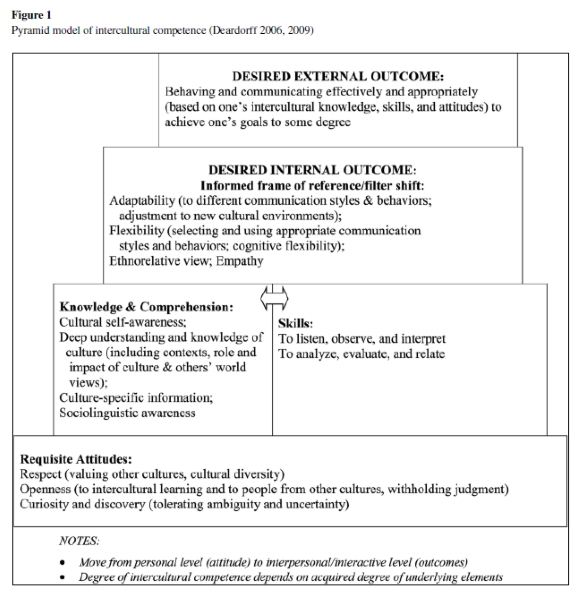
Darla Deardorff's (2006, 2011) intercultural competence theory provides a foundational framework for understanding how individuals develop the ability to communicate effectively and appropriately across diverse cultural contexts. Deardorff's model emphasises that intercultural competence is a dynamic, developmental process involving the integration of knowledge, skills, attitudes, and behaviours. The theory maintains that competence is not static but evolves through intentional learning and reflection, which is crucial for higher education students preparing for globalised professional environments. This theory was developed through extensive research involving cross-cultural training and assessment, primarily by the author herself as an intercultural scholar and educator (Deardorff, 2011). The theory emerged in response to the increasing recognition of intercultural skills as essential in global contexts, particularly in international education and business. The model was designed to guide educators and students in cultivating the intercultural awareness, openness, and adaptability traits vital for effective intercultural engagement.
The development of intercultural competence is a gradual process that begins with awareness and attitudes such as curiosity and openness. It progresses through acquiring knowledge about other cultures, developing skills such as perspective-taking and communication, and ultimately demonstrating behaviours that are effective and appropriate in intercultural interactions (Deardorff, 2006, 2011). Thus the theory is relevant in this study. Additionally, relevance to this study stems from the recognition that accounting students, especially in a globalised context, must transcend technical knowledge to include intercultural competence. This competence enables future accounting professionals to navigate cross-cultural environments ethically and effectively. In the context of this study, integrating Deardorff's intercultural competence framework supports the development of globally competent professionals who can adapt to diverse cultural expectations, communicate across borders, and uphold ethical standards in international accounting settings. Figure 1 is an illustration of the Deardorff's intercultural competence theory.
Bridging the literature to the theoretical framework
While existing literature argues the multifaceted nature of global competence and its importance in higher education and accounting, there remains a need for a systematic, theoretically grounded approach to understanding how these competencies develop over time within discipline-specific contexts. This gap can be addressed by applying Deardorff's (2006, 2011) intercultural competence theory, which conceptualises intercultural competence as a dynamic, developmental process involving attitudes, knowledge, skills, and behaviours. The theory emphasises that competence is built through intentional, reflective learning experiences that foster openness, curiosity, and adaptability traits essential for accounting professionals operating in diverse international environments. By integrating this theoretical framework, lecturers and curriculum developers can better understand how to systematically cultivate global competence, ensuring that technical standards are complemented by the intercultural skills and attitudes of accounting students in South African higher education.
Research methodology
This study employed a systematic review methodology to synthesise existing literature on the knowledge, skills, and attitudes necessary for developing global competence in accounting students. A systematic review was chosen to comprehensively collate, evaluate, and interpret relevant peer-reviewed articles, providing an evidence-based understanding of the current state of research in this domain (Mays & Catherine, 1996; Petticrew & Roberts, 2006). The methodology was structured to ensure transparency, reproducibility, and rigour throughout the review process. Given the fragmented nature of prior research on global competence in accounting education, a systematic review offers a structured framework to identify, analyse, and integrate relevant findings, thereby informing curriculum development and pedagogical strategies.
Literature search strategy
The literature search was conducted across multiple academic databases, including Google Scholar, Scopus, and Web of Science, to ensure broad coverage of relevant publications. The search was guided by a combination of keywords such as "global competence," "accounting education," "higher education," and "skills and attitudes." Boolean operators (and, or) were used to refine the search queries, for example, "global competence and accounting education" and "intercultural competence or intercultural skills." The search was limited to peer-reviewed journal articles published between 2014 and 2025 to capture contemporary perspectives and trends (Gough et al., 2017).
Inclusion and exclusion criteria
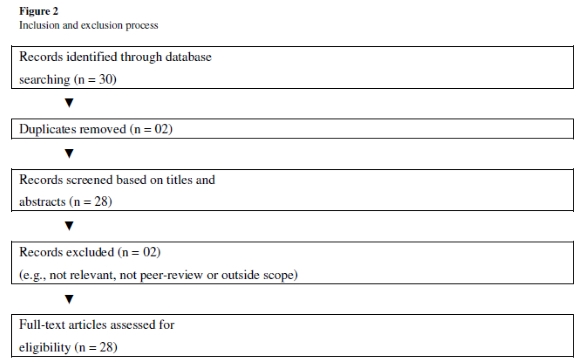
The initial search yielded 30 articles. Following duplicate removal, titles and abstracts of these articles were independently screened by two reviewers against predefined inclusion criteria: (1) peer-reviewed articles published between 2014 and 2025; (2) focus on higher education accounting students or programmes; (3) explicitly address aspects of global competence, intercultural skills, or related attitudes; and (4) published in English. Disagreements in screening decisions were resolved through discussion with a research colleague checking the relevance to the study, ensuring consistency and reducing selection bias (Higgins et al., 2019). The third reviewer was an accounting education academic. After full-text review, 28 articles satisfied all inclusion criteria and were included in the thematic synthesis. The two articles excluded did not sufficiently focus on the discipline-specific context or lacked methodological rigour, further supporting the importance of transparent screening procedures. Figure 2 shows the inclusion and exclusion process.
Data extraction and synthesis
Data extraction was performed systematically using a pre-designed coding sheet, capturing details such as topic, publication year, research focus, theoretical frameworks, and key findings related to knowledge, skills, and attitudes for global competence. The extracted data were then subjected to thematic analysis, a flexible qualitative method suitable for identifying patterns within textual data (Braun & Clarke, 2006; Tarsilla et al., 2021). This approach involved a series of systematic steps to ensure a thorough and credible synthesis of the literature (Nowell et al., 2017). The analysis steps were executed as follows:
1. Familiarisation with data: Executed by repeatedly reading the extracted articles and notes, gaining an in-depth understanding of the content (Braun & Clarke, 2006). This involved noting preliminary ideas and patterns related to the development of global competence.
2. Generating codes: An inductive approach was used to code key features of the data that appeared relevant to the research questions. Codes represented meaningful units such as specific skills, attitudes, or knowledge components identified across the articles.
3. Developing themes: Themes were developed by examining similar codes and grouping them together. For instance, codes related knowledge, adaptability, and communication skills were clustered under a theme of "intercultural skills" (Braun & Clarke, 2006).
4. Reviewing and refining themes: Done through iterative reading, ensuring they accurately captured the underlying data patterns. Data extracts supporting each theme were checked for coherence and consistency, and some themes were combined or redefined for clarity (Braun & Clarke, 2006; Nowell et al., 2017).
5. Synthesising into narrative: The final stage was to synthesise the themes into a coherent narrative that addressed how accounting education can foster global competence.
To enhance the trustworthiness of the review, an audit trail was employed where an established researcher verified the research process (Lincoln & Guba, 1985; Thomas & Harden, 2008). The aim was to ensure the reliability and transparency of the analysis process, consistent with best practices in qualitative research (Nowell et al., 2017). To enhance reliability, data from a subset of articles were recoded, with discrepancies discussed and resolved to ensure consistency (Nowell et al., 2017).
Trustworthiness and credibility measures
To strengthen the trustworthiness of the review, an audit trail was maintained documenting all decisions, coding procedures, and discussions. An experienced researcher (name withheld) reviewed the screening and coding stages to verify accuracy and consistency. Disagreements were resolved through consensus meetings. Reflexivity was practiced by maintaining a research journal to document potential biases and decision rationales (Lincoln & Guba, 1985). Although member checking is less common in literature reviews, the thematic synthesis was reviewed and validated by a peer in academia to ensure credibility and reliability. The results are presented and discussed below.
Results and discussion of Research Question 1
Two questions facilitated this study. The first was: "What specific knowledge, skills, and attitudes are necessary for accounting students to develop global competence?" Four major themes emerged (knowledge dimensions for global competence and international accounting standards, knowledge of utilising digital technologies, development of crucial accounting skills, and positive attitudinal attributes and mindset), and they are discussed below.
Knowledge dimensions for global competence and international accounting standards
The systematic review conducted in this study highlights the critical importance of equipping accounting students with specific knowledge, skills, and attitudes to foster global competence within the context of higher education. The findings showed that a foundational understanding of global systems and international accounting standards is paramount for preparing students to operate effectively in a globalised professional environment (Bourn, 2014; O'Dowd, 2020). According to the literature reviewed from Google Scholar, knowledge about IFRS and global accounting practices enables students to navigate cross-border transactions and multinational organisational structures (Reimers & Schleicher, 2020)
Furthermore, intercultural knowledge is integral to developing global competence among accounting students. Deardorff's (2006) intercultural competence theory indicates that intercultural skills, such as open-mindedness, cultural awareness, and effective communication, are essential for working in diverse global teams and understanding stakeholders from different cultural backgrounds (Reimers & Schleicher, 2020). Foronda et al. (2020) maintain that intercultural knowledge not only enhances interpersonal interactions but also fosters ethical decision-making and adaptability traits that are vital for accounting students across the globe. A profound comprehension of global accounting systems and international standards is essential in an interconnected world. Research by Parker (2016) emphasises that understanding these accounting standards equips students to navigate complex international reporting environments, thus fostering their readiness for global practice. In addition, knowledge of global skills enables students to immerse themselves in diverse cultural contexts, fostering cultural intelligence, adaptability, and interpersonal skills (Leung et al., 2014). In a South African context, intercultural knowledge and experience significantly enhance global awareness and communication skills, which are essential for students in accounting.
Furthermore, the curriculum must be integrated with international standards to give South African students global understanding. One of the foundational steps is the deliberate integration of international standards knowledge and cross-cultural content into the accounting curriculum. This can be achieved by embedding modules on international accounting standards such as IFRS, along with case studies that highlight cross-border financial reporting. Such content not only enhances students' technical knowledge but also fosters a global mindset by exposing them to international practices and regulatory environments (Parker, 2016). Aligning the curriculum with global competency frameworks, such as those proposed by the International Federation of Accountants (2018), ensures that students develop relevant knowledge, skills, and attitudes aligned with professional expectations worldwide.
Knowledge of utilising digital technologies
The integration of digital technologies, including data analytics and artificial intelligence (AI), into accounting education is increasingly recognised as essential for preparing students to meet the demands of a rapidly transforming global profession. The literature emphasises that proficiency in digital tools enhances the ability of accounting students to analyse large volumes of data, derive meaningful insights, and support strategic decision-making processes in complex international environments (Warren et al., 2015). Data analytics has become pivotal in enabling accounting students to interpret financial information with greater accuracy and efficiency, which is crucial for maintaining transparency and compliance across diverse regulatory frameworks (Hsiao & Han, 2023). As the accounting landscape evolves, students must develop competencies in utilising advanced software and analytical techniques to stay competitive in a globalised economy.
Moreover, the advent of AI presents new opportunities and challenges for accounting professionals. AI-driven automation of routine tasks, such as audit procedures and financial reporting, necessitates that students acquire skills in understanding and managing these technologies (Kokina & Davenport, 2017). Literature highlights that accounting students trained in AI applications will be better equipped to oversee automated systems, interpret AI-generated insights, and ensure the ethical use of such technologies (McAfee et al., 2017). Furthermore, AI integration into accounting processes fosters a shift from traditional manual tasks to strategic functions, requiring students to develop higher-order skills in problem-solving, critical thinking, and ethical judgment.
Hsiao and Han (2023) note that the integration of data analytics into the accounting curriculum is critical for enabling students to interpret vast datasets, support decision-making processes, and enhance audit quality for global competence. The rise of AI further necessitates familiarity with automation tools and machine learning algorithms that can streamline routine accounting processes (McAfee et al., 2017). Such technological literacy aligns with the competency requirements of accounting professions across national and international borders, which emphasise digital skills as core for future-ready professionals. Thus, given the importance of digital technologies in accounting education, higher education institutions should incorporate emerging technological tools into their programmes-especially in South Africa.
Critical reflection on knowledge dimensions
While the literature emphasises the importance of understanding international standards and intercultural knowledge, there is limited discussion on the contextual relevance of such knowledge in diverse educational settings, particularly in resource-constrained environments like South Africa (Oosthuizen et al., 2021). There is a tension between adopting imported standards and curricula versus fostering locally relevant knowledge that addresses societal issues such as inequality, unemployment, and social justice (Govender & Naidoo, 2023). Scholars often overlook how global standards can be adapted or challenged within local contexts, raising questions about the universality versus contextualisation of knowledge.
Development of crucial accounting skills
The skills identified in the literature extend beyond intercultural knowledge to include analytical and critical thinking skills tailored to international contexts. For instance, students are encouraged to develop the capacity to analyse international financial statements, assess compliance with global standards, and interpret the implications of regulatory differences (Reimers & Schleicher, 2020). Such skills are essential for ensuring the accuracy and transparency of financial reporting in multinational corporations and for adhering to international compliance requirements. The literature also notes the significance of digital literacy and technological adaptability, given the increasing reliance on accounting software aligned with global standards (Al-Nuaimi, 2014). Accounting education demands that students possess or develop critical-thinking skills, especially in a context characterised by rapid technological changes and complex stakeholder needs (Facione, 2015). As highlighted by Linnenluecke et al. (2020), fostering critical thinking enhances problem-solving capabilities and supports ethical decision-making, which are vital in international contexts fraught with cultural and regulatory variability. Effective communication skills are equally vital, particularly for engaging with diverse stakeholders, clients, regulators, and colleagues from various cultural backgrounds. Deardorff (2009) emphasises that intercultural communication competence involves both linguistic proficiency and intercultural sensitivity, which are crucial for fostering mutual understanding and collaboration in international teams. These skills are increasingly recognised as essential for accounting professions operating in diverse settings.
Another skill highly recognised in the literature is adaptability, which reflects the capacity to adjust to evolving technological, regulatory, and different international conditions (Pucik et al., 2024). In the context of accounting education, adaptability includes staying current with emerging standards and regulatory reforms, which is vital for the different accounting professions.
Although skills such as intercultural communication and digital literacy are prioritised, there is tension in balancing discipline-specific technical skills with broader soft skills, especially in contexts where the curriculum is already overloaded (Linnenluecke et al., 2020). There is conflicting evidence on the most effective pedagogical strategies for cultivating these skills, with debates around virtual exchanges versus face-to-face interactions (Bourn, 2014). The literature reveals a contradiction between the aspirational ideal of global skills and the realities of resource constraints, leading to uneven implementation. Further, there is limited critical examination of whose interests these skills serve, and the empowering of local communities and marginalised groups to reproduce Western-centric norms of professionalism and competence.
Positive attitudinal attributes and mindset
Analysis of literature showed that positive attitudes and mindsets form the backbone of sustainable professional development for accounting professions. According to Leung et al. (2014), a global mindset involves openness to cultural differences, curiosity about other perspectives, and the ability to adapt behaviours accordingly. Ang and Van Dyne (2015) maintain that a positive attitude fosters cultural intelligence and enhances cross-cultural interactions, which are indispensable in international accounting practice. Positive attitudes and mindsets develop students' capacity to acquire adaptive skills and knowledge regarding international practices and systems. Attitudes such as openness, curiosity, and ethical responsibility are also highlighted as vital components of global competence. These attitudes foster a proactive approach to learning about different cultures and a commitment to ethical standards across diverse contexts (Reimers & Schleicher, 2020). Developing such attitudes can be facilitated through curricula that incorporate intercultural experiences, case studies, and discussions on global ethical dilemmas, which collectively foster a mindset attuned to the demands of an interconnected world.
The literature often portrays positive attitudes as universally desirable, without critically examining the potential for cultural resistance or the reproduction of inequalities. There is a need for a more nuanced understanding of how attitudes are shaped by socio-political contexts and how they can both empower and constrain agency. The literature tends to romanticise experiential and internationalisation initiatives without critically assessing their feasibility, sustainability, or potential to reproduce inequalities. A more nuanced analysis must consider local capacity, resource allocation, and power relations in shaping what global competence can realistically look like in South Africa.
Results and discussion of Research Question 2
The second research question was: "How can higher education institutions effectively develop global competencies into accounting education programmes?" In addressing this research question, two themes emerged and are discussed below.
Universities must prepare students for global competencies through experiential learning of COIL
The results indicate that universities should utilise experiential learning approaches, including international exchange programmes, case-based learning with global scenarios, and the integration of emerging technologies, to develop students for global competence (Deardorff, 2006; Kolb et al., 2014). Programmes such as COIL must be used to develop global competencies among accounting students. COIL is an innovative pedagogical approach that fosters international collaboration through online platforms, enabling students from diverse cultural and geographical backgrounds to work together on shared projects (O'Dowd, 2020). This method provides immersive intercultural experiences, allowing students to navigate cross-cultural communication, develop intercultural competence, and understand global perspectives skills that are crucial in today's interconnected professional environment (Deardorff, 2009).
Observations demonstrate that COIL effectively enhances students' intercultural awareness and global mindset by creating authentic international collaboration opportunities that transcend physical boundaries. For instance, O'Dowd (2020) emphasises that COIL facilitates meaningful intercultural exchanges where students learn to negotiate cultural differences, adapt to diverse communication styles, and develop mutual understanding. Such experiential learning not only deepens cultural sensitivity but also promotes teamwork, problem-solving, and adaptability attributes essential for accounting professionals operating in multicultural settings.
Moreover, integrating COIL into accounting education aligns with the broader goal of preparing globally competent professionals who can operate effectively across borders. The collaborative nature of COIL projects encourages students to apply their technical accounting skills in real-world, cross-cultural contexts, thereby bridging theoretical knowledge and practical application (O'Dowd, 2020). This experiential learning approach also cultivates soft skills such as leadership, negotiation, and conflict resolution, which are increasingly valued in the global workforce (Deardorff, 2009). Consequently, universities that incorporate COIL into their curriculum contribute to developing well-rounded accounting graduates who are globally competent, adaptable, and equipped to thrive in diverse international environments. Experiential learning methods, including study-abroad programmes, international internships, and collaborative projects with global partners, are highly effective means of cultivating intercultural competence (Deardorff, 2006). The integration of virtual collaboration tools allows students to develop digital literacy and problem-solving skills in authentic contexts (Hsiao & Han, 2023). Blended and online learning environments also facilitate cross-cultural interactions and collaborative projects, broadening students' perspectives and fostering a global outlook (Kolb et al., 2014). Research by Goh et al. (2021) highlights that curricula should be designed to incorporate intercultural competence development explicitly, with assessments aligned to these competencies. Furthermore, fostering a growth mindset and resilience can be achieved through reflective practices, mentorship, and a culture that encourages experimentation and learning from failure.
Professional development
Higher education institutions play a crucial role in fostering global competencies within students' lives. Therefore, they should invest in ongoing professional development focused on intercultural teaching strategies, global content integration, and technological proficiency (Goh et al., 2021). Workshops and training programmes can enhance instructors' ability to design inclusive, culturally responsive curricula that promote critical thinking, intercultural sensitivity, and ethical awareness (Deardorff, 2009). Additionally, encouraging faculty exchanges and international collaboration can bring diverse perspectives into the classroom and model global engagement. To ensure the effectiveness of these initiatives, higher education institutions must develop staff to adopt assessment tools aligned with global competencies. Reflective journals, intercultural sensitivity scales, and project-based evaluations can gauge students' progress in intercultural communication, critical thinking, and attitudes (Deardorff, 2006). Regular curriculum review and feedback mechanisms enable continuous improvement and alignment with evolving global standards.
Even though the above findings highlight the knowledge, skills, and attitudes required by accounting students to be globally competent, several gaps and tensions were also noted. For instance, South Africa's legacy of apartheid and its ongoing process of transformation (Goh et al., 2021), which influence access to quality education, cultural diversity, and the distribution of resources factors critical to understanding the practicalities of implementing global competence initiatives. Furthermore, policies create both opportunities and tensions for integrating global standards within a locally relevant, culturally responsive curriculum. Moreover, many South African universities face infrastructural limitations that impact the scalability of experiential learning programmes like international exchanges or virtual collaborations (Mahlangu & Goosen, 2023). South Africa's multicultural society presents both opportunities and challenges, necessitating pedagogies that foster intercultural understanding without reproducing colonial or Western-centric narratives (Govender & Naidoo, 2023).
Conclusion
The purpose of this study was to explore the knowledge, skills, and attitudes accounting students need for global competence. Utilising a systematic review method, the results emphasise that preparing accounting students for the globalised world requires a holistic approach integrating global competence and international accounting standards, knowledge of utilising digital technologies, and the development of crucial accounting skills. A positive attitude and mindset are required for students to be globally competent in accounting education. Furthermore, universities must prepare students for global competencies through experiential learning, such as COIL, and professional development. These competencies are interconnected and mutually reinforcing, collectively enabling accounting students to operate ethically, adaptively, and effectively across diverse international contexts. As the profession continues to evolve, higher education institutions must prioritise these dimensions in curriculum design, pedagogical strategies, and assessment frameworks to cultivate globally competent accounting students. Deardorff's (2006) intercultural competence theory, which served as a framework for this study, serves to emphasise the ongoing developmental process of intercultural competence, including attitudes, knowledge, skills, and internal/external outcomes required by accounting students. The theory provided a lens to interpret findings and identify gaps in current educational practices, aligning with the aim of fostering global competence in accounting students.
Recommendations
Based on the findings of this study, it is recommended that South African universities integrate comprehensive global competence development into their accounting curriculum. This can be achieved by embedding modules that focus on digital technologies such as data analytics and artificial intelligence, alongside fostering an understanding of international accounting standards and global systems relevant to the South African and broader African context. Additionally, universities should prioritise the cultivation of essential skills, including critical thinking, effective communication, adaptability, and teamwork, through practical, intercultural exchange programmes and collaborative projects. It is equally important to foster positive attitudes such as resilience, a global mindset, and a commitment to lifelong learning, which are vital for thriving in a dynamic global environment. Policymakers and educators must work together to ensure that curriculum content is complemented by experiential learning opportunities that develop these skills, attitudes, and knowledge holistically. This approach will better prepare South African accounting students to meet the demands of the global profession and contribute meaningfully to both local and international economic development.
References
Albrecht, W. S., & Sack, R. J. (2000). Accounting education: Charting the course through a perilous future (Accounting Education Series, Vol. 16). American Accounting Association. https://doi.org/10.cir.nii.ac.jp/crid/1971149384855091994
Literature review
- Al-Nuaimi, S. I. M. (2014). The effect of contingency factors and activity based costing implementation on organizational performance in the Iraqi banking industry. Journal of Accounting Education, 32(2), 123-135. https://etd.uum.edu.my/9501/3/s95054_02.pdf
- Ang, S., & Van Dyne, L. (2015). Handbook of cultural intelligence: Theory, measurement, and applications. Routledge.
- Bourn, D. (2014). The theory and practice of development education: A pedagogy for global social justice. Routledge.
- Braskamp, L. A., Braskamp, D. C., & Engberg, M. E. (2014). Global perspective inventory (GPI): Its purpose construction, potential uses, and psychometric characteristics. Global Perspective Institute.
- Camfferman, K., & Zeff, S. A. (2015). Aiming for global accounting standards: The International Accounting Standards Board, 2001-2011. Oxford University Press.
- Deardorff, D. K. (2006). Identification and assessment of intercultural competence as a student outcome of internationalization. Journal of Studies in International Education, 10(3), 241-266. http://doi.org/10.1177/1028315306287002
- Deardorff, D. (2009). The SAGE handbook of intercultural competence. SAGE.
- Deardorff, D. K. (2011). Intercultural competence in higher education: Development and assessment. Routledge.
- Department of Higher Education and Training. (2020). Policy framework for internationalisation of higher education in South Africa. https://www.dhet.gov.za/Part%20C%20%20Policies/HIGHER%20EDUCATION/Framework%20for%20Internationalisation%20of%20Higher%20Education%20in%20SA.pdf
- Engel, L. C., Rutkowski, D., & Thompson, G. (2019). Toward an international measure of global competence? A critical look at the PISA 2018 framework. Globalisation, Societies and Education, 17(2), 117-131. https://doi.org/10.1080/14767724.2019.1642183
- Facione, P. A. (2015). Critical thinking: What it is and why it counts. Insight Assessment.
- Foronda, C., Prather, S. L., Baptiste, D., Townsend-Chambers, C., Mays, L., & Graham, C. (2020). Underrepresentation of racial diversity in simulation: an international study. Nursing education perspectives, 41(3), 152-156. https://doi.org/10.1097/01.nep.0000000000000511
- Gordon, S. A. (2017). Knowledge, skills, and competencies required of effective and successful chief student affairs officers in contemporary and future higher education contexts [Doctoral dissertation, University of Pennsylvania]. ProQuest Dissertations & Theses Global.
- Gough, D., Oliver, S., & Thomas, J. (2017). An introduction to systematic reviews. SAGE.
- Higgins, J. P., Thomas, J., Chandler, J., Cumpston, M., Li, T., Page, M. J., & Welch, V. A. (2019). Cochrane handbook for systematic reviews of interventions (2nd ed.). John Wiley & Sons.
- Hsiao, D., & Han, L. (2023). The impact of data analytics and artificial intelligence on the future accounting profession: Perspectives from accounting students. Journal of Theoretical Accounting Research, 19(1), 70-100. https://doi.org/10.www.math.wm.edu/~leemis/2023jtar.pdf#page=72
- İncirci, A. Y. H. A. N., & Howells, K. (2018). The future of education and skills: Education 2030: The future we want. https://doi.org/100./E2030%20Position%20Paper%20(05.04.2018).pdf
- International Federation of Accountants. (2018). The future of professional accountancy: drivers of change and future skills. http://dx.doi.org/10.1108/JAOC-08-2024-0255
- Jiaxin, G., Huijuan, Z., & Md Hasan, H. (2024). Global competence in higher education: A ten-year systematic literature review. Frontiers in Education, 9, 140-782. https://doi.org/10.3389/feduc.2024.1404782
- Jooste, N., & Heleta, S. (2017). Global citizenship and internationalisation of the curriculum in South African higher education. Journal of Studies in International Education, 21(1), 39-51. https://doi.org/10.1177/1028315316637341
- Knechel, W. R., & Salterio, S. E. (2016). Auditing: Theory and practice. Routledge.
- Knight, J. (2022). Knowledge diplomacy in international relations and higher education. Springer.
- Kokina, J., & Davenport, T. H. (2017). The emergence of artificial intelligence: How automation is changing auditing. Journal of Accountancy, 224(2), 24-29. https://doi.org/10.2308/jeta-51730
- Kolb, A. Y., Kolb, D. A., Passarelli, A., & Sharma, G. (2014). On becoming an experiential educator: The educator role profile. Simulation & Gaming, 45(2), 204-234. https://doi.org/10.1177/1046878114534383
- Leask, B. (2015). Internationalizing the curriculum. Routledge.
- Lincoln, Y. S., & Guba, E. G. (1985). Naturalistic inquiry. SAGE.
- Linnenluecke, M. K., Griffiths, A., & Adams, R. (2020). Critical thinking as a driver of responsible management education. Journal of Business Ethics, 161(4), 777-794. https://doi.org/10.1177/0312896219877678
- Mahlangu, B. G., & Goosen, L. (2023). The impact of a lack of information and communication technologies at rural schools: Digitalization in a changing education environment. In A. A. Arinushkina, A. V. Morozov, & I. V. Robert (Eds.), Contemporary challenges in education: Digitalization, methodology, and management (pp. 254-275). IGI Global.
- Maringe, F., & Carter, S. (2007). International students' motivations for studying in UK HE: Insights into the choice and decision making of African students. International Journal of Educational Management, 21(6), 459-475. https://doi.org/10.1108/09513540710780000
- Mays, N., & Pope, C. (1996). Qualitative research in health care. BMJ.
- McAfee, A., Brynjolfsson, E., & Cummings, J. (2017). Machine, platform, crowd: Harnessing our digital future. https://www.futureforwork.com/assets/uploads/2018/10/Rese%C3%B1as-FFWi-N%C3%BAmero-003.pdf
- O'Dowd, R. (2020). A transnational model of virtual exchange for global citizenship education. Language Teaching, 53(4), 477-490. https://doi.org/10.1017/S0261444819000077
- Oosthuizen, H., De Lange, P., Wilmshurst, T., & Beatson, N. (2021). Leadership-in-teams, ready, willing and able: Perspectives of international accounting students. Meditari Accountancy Research, 29(1), 161-182. https://doi.org/10.1108/MEDAR-05-2019-0499
- Patel, C., & Harrison, G. (2021). Theoretical and methodological milestones in international accounting research: The contributions of Jill L. McKinnon. Accounting, Auditing & Accountability Journal, 34(8), 1693-1713. https://doi.org/10.1108/AAAJ-03-2021-5198
- Petticrew, M., & Roberts, H. (2006). Systematic reviews in the social sciences: A practical guide. Wiley.
- Pucik, V., Evans, P., Bjorkman, I., & Morris, S. (2024). The global challenge: International human resource management. SAGE.
- Reimers, F. M., & Chung, C. (2021). Assessing global competence. Harvard Education Press
- Reimers, F. M., & Schleicher, A. (2020). A framework to guide an education response to the COVID-19 pandemic of2020. OECD. https://oecd.dam-broadcast.com/pm_7379_126_126988-t63lxosohs.pdf
- Tarsilla, M., Guest, G., MacQueen, KM, & Namey, EE (2012). Applied thematic analysis. Canadian Journal of Program Evaluation, 29(1), 141-143. https://utppublishing.com/doi/pdf/10.3138/cjpe.29.1.141
- Thomas, J., & Harden, A. (2008). Methods for the thematic synthesis of qualitative research in systematic reviews. BMC Medical Research Methodology, 8, 45. https://doi.org/10.1186/1471-2288-8-45
- Tweedie, D., & Whittington, G. (2020). Developing new accounting standards for M & A: A standard-setters' perspective. In A. Amel-Zadeh & G. Meeks (Eds.), Accounting for M & A: Uses and abuses of accounting in monitoring and promoting merger (pp. 57-78). Routledge.
- UNESCO. (2014). Global citizenship education: Preparing learners for the challenge of the 21st century. https://www.unesco.org/en/articles/global-citizenship-education-preparing-learners-challenges-twenty-first-century?utm_source=chatgpt.com
Accepted: 11 August 2026