Intermediate phase pre-service teachers' interpretations of a learner's verbal statement about unit fractions: Conversion and treatment of semiotic representations
Abstract
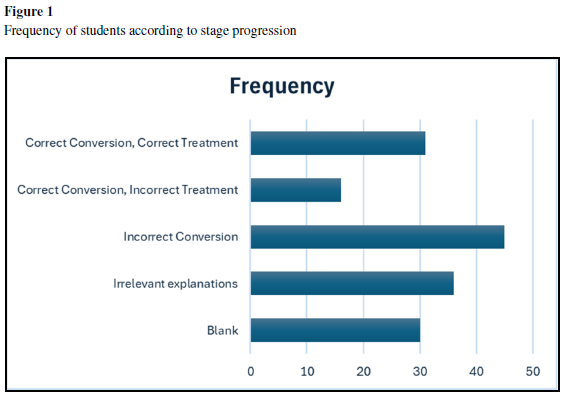
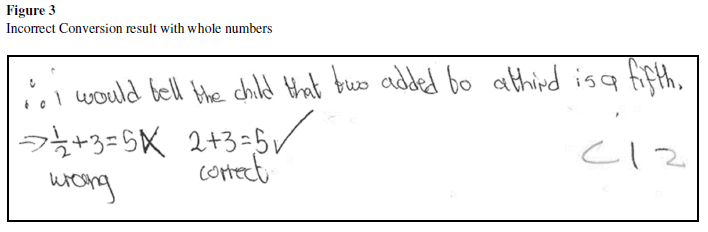
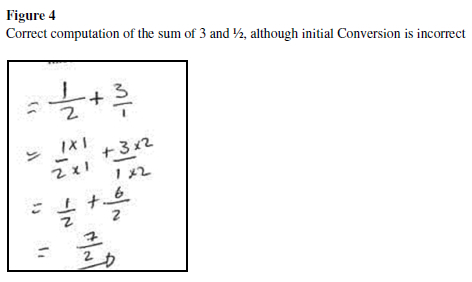
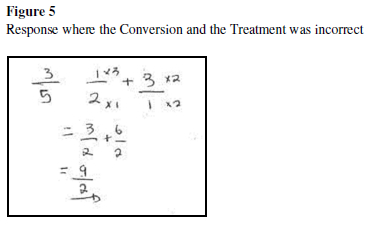
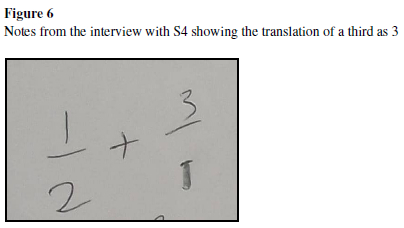
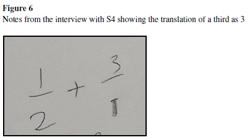
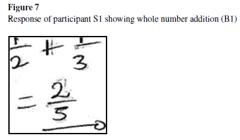
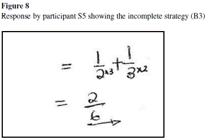
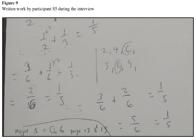
Understanding fractions is important for the effective teaching of primary mathematics, and unit fractions are foundational to reasoning about rational numbers. Drawing on Duval's (2006) theory of semiotic representations, this study examines how Intermediate Phase pre-service teachers (PSTs) negotiate fraction language when moving between verbal and symbolic representations of unit fractions. Data were drawn from 158 intermediate phase PSTs' written responses to an assessment item where they were to identify and address a misconception embedded within a given verbal statement, followed by semi-structured interviews with 13 participants. Only 20 per cent of the 158 PSTs provided correct responses, with most struggling with conversion from the verbal to the symbolic register. A common error was conflating a third with 3 and a fifth with 5, suggesting a slippage between ordinal and fractional meaning. Sixteen participants successfully completed the Conversion but faltered during the Treatment transformations within the symbolic register, with errors revealing conceptual and procedural instability. Previous research on the linguistic forms of fractional concepts in local African languages suggests that certain linguistic forms reinforce whole-number reasoning and contribute to difficulties in fraction representations. Explicit engagement with the relationships between fraction language, symbolic representations, and whole-number reasoning are therefore recommended for PST education.
conversion; treatment; semiotic representations; registers; unit fractions
 Thumbnail
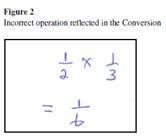 Thumbnail
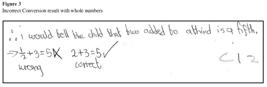 Thumbnail
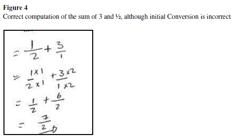 Thumbnail
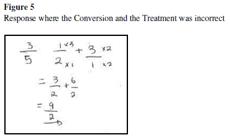 Thumbnail
 Thumbnail
 Thumbnail
 Thumbnail
 Thumbnail