Torn between my Africanness and the Eurocentric curriculum
Abstract
This interpretivist study explores the interplay between African spirituality, ancestral calling, and the well-being of high school students in Mankayane, Eswatini. Grounded in Indigenous knowledge systems (IKS) theory, the study employed semi-structured interviews with a snowball sample of 12 students to explore the intricate relationships among spirituality, purported giftedness, and academic performance. The findings indicate that African spirituality is often marginalised in formal education, yet profoundly shapes the students' lives. The experience of ancestral calling is associated with negative psychosocial and health outcomes, including unexplained illnesses that often disrupt academic pursuits and can contribute to early school dropout. The study highlights the critical need for a decolonised education system that formally acknowledges and integrates African spirituality to foster holistic development and improve well-being among Eswatini youth. It further underscores the need for Africanised psychosocial support services to effectively address the unique challenges students face as they navigate traditional spiritual obligations in a modern academic setting.
Indigenous knowledge systems; African spirituality; ancestral calling
Introduction
African spirituality, particularly when manifested through an ancestral calling, can be overwhelming for adolescents navigating the demands of formal education. South African media reports incidents in high schools involving students with ancestral calling, which often presents as physical ailments, mental health challenges, and undiagnosable illnesses that significantly impair academic participation and persistence (Montueli, 2025). South African schools report incidents in which educators are caught off guard when students with an ancestral calling fall ill in class and must call a traditional healer who uses imphepho-a plant of the Helichrysum genus, a traditional incense herb that connects the living with the ancestors (Montueli, 2025). The tension between traditional spiritual responsibilities and Eurocentric schooling remains largely unaddressed within Eswatini's education system. Nweke and Okpaleke (2019) argue that there is high competition between the shrines and Western religions such as churches and mosques. Along the same lines, Murove (2023) argues that Christianity demonises African spirituality.
The current study explored the effects of African spirituality and ancestral calling on the well-being and educational experiences of high school students in Mankayane, Eswatini. The high dropout rates among high school students in the region, often attributed to the challenges faced by those students with a calling, necessitate a deeper understanding of this phenomenon. Anchored in African epistemology, which values lived experience, Indigenous ways of knowing, dreams, and ancestral communication as legitimate sources of knowledge (Mutwa, 2003), its aim is to illuminate how students experiencing an ancestral calling negotiate formal schooling while fulfilling spiritual obligations. To contextualise the inquiry, the following sections define African spirituality and ancestral calling, and document their effects on mental well-being and academic performance.
What is African spirituality?
Schiele (2002) conceptualises African spirituality as a non-material force permeating the universe and shaping every dimension of human life, including academic performance, through deeply embedded cultural norms and values. Spirituality can be seen as a personal quest for ultimate meaning and connection to the transcendent, which may or may not involve organised religious rituals or communities (Hufford, 2005). Hufford distinguishes spirituality as the broader construct encompassing religion, whereas religion comprises organised beliefs, practices, rituals, and symbols designed to foster closeness to the divine.
Bae and van der Merwe (2008) emphasise the African worldview's two interconnected realms: the physical-material world of the living and the spiritual realm of ancestors, spirits, and the Creator. In this study, learners' physical world encompasses their schooling, which remains inextricably linked to the spiritual realm. Students experiencing a calling often encounter the spiritual realm through dreams and unexplained physical ailments that serve as ancestral communication. Spirituality thus functions as a philosophical framework that connects individuals to their higher selves and elevates consciousness, while requiring harmony between the physical and spiritual realms to maintain balance (Knoetze, 2019).
Calling and ancestors in African spirituality
In African spirituality, a calling represents an individual's sacred journey toward the ideal self and divine purpose (Sigida & Sodi, 2023). This process involves rituals that invite ancestral intervention, facilitating social and psychological transformation, and preparing the individual for reintegration into society through divination and healer training. The calling originates from the spiritual realm or lineage-specific ancestors (Bae & van der Merwe, 2008) and constitutes a binding contract with the divine. Answering it demands dedication, training, rituals, and adherence to ethical codes.
Manifestation of ukuthwasa
Mdletshe (2023) identifies three main stages of ukuthwasa. The first manifests in two different ways. The person with a calling may experience illnesses that do not respond to standard Western medications and treatments (Hammond-Tooke, 1989; Rabkin, 1970; Schweitzer, 1977). And the second could be through mysterious dreams in which the called person may dream of departed ancestors, large snakes, or a specific river. Such signs are usually discussed with family members or an experienced gobela (traditional healer) for further guidance.
The second stage, according to Mdletshe (2023), is the initiation phase, which is the most critical stage of the ukuthwasa process. In this stage, the gobela instructs the family to identify a hut where the initiate can stay in seclusion; the family also brews large quantities joala (a traditional sorghum beer also known as umqombothi). At dawn, the gobela, together with the initiate and others, visit a nearby river to introduce the initiate to the morena oa metsi (the king of the water, who happens to be a snake) carrying offerings that might include pouring 20 litres of umqombothi in the river, to appease the morena oa metsi. Once the offerings are made, the group claps and beats drums while awaiting affirmation from the morena oa metsi that the offerings have been accepted, after which they return home to celebrate the acceptance.
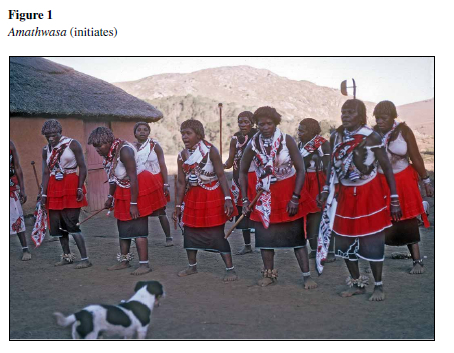
The third stage is ho fehlelloa (the accreditation or training process) and involves ho kena lefehlong (the main training process) in isolation with the gobela in which the initiate learns the different types of healing, and how to gather and prepare herbs for various ailments (Mdletshe, 2023). This is the stage that prepares the initiate to become a fully-fledged traditional healer. Figure 1 presents the accreditation phase and the artistic ways in which initiates dress from initiation through the post-graduation phase.
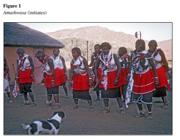
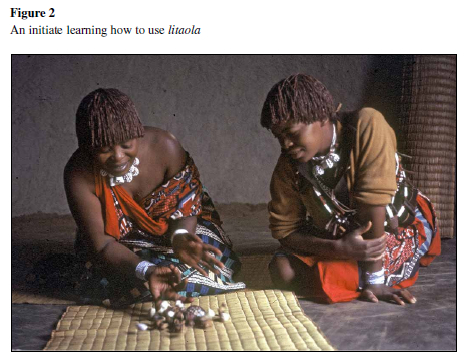
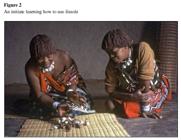
Initiates learn how to sing and dance the ukuthwasa way, and the initiate applies letsoku (red ochre) on their body to mark the initiation process. In some countries, such as Lesotho, they are also required to undergo lebollo (traditional initiation school) so that they will also be able to provide services at a mophatong (initiation school site). This third stage includes local science; the main focus of the stage being the conscious creation of knowledge to use local technologies to improve lives. One such example is the throwing of litaola (traditional bones) to diagnose ailments, which serves a similar purpose to that of a Western stethoscope (see Figure 2). The litaola are thrown to connect the ailing individual with the spiritual realm of their ancestors who then diagnose problems and recommend mitigation strategies such as traditional medication or slaughtering an animal for cleansing rituals (Pitikoe & Preece, 2016).
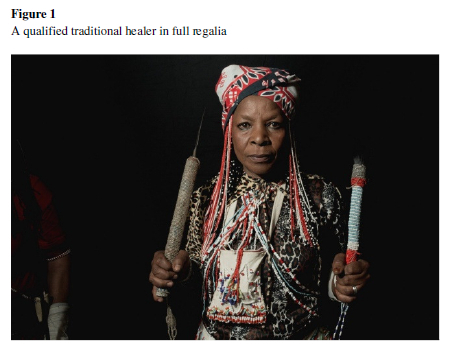
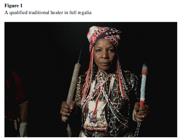
When the initiate is ripe for graduation, they will see a specific animal in their dreams (for Basotho, a cow), which is slaughtered in celebration of hotsoa lefehlong (the graduation ceremony, see Figure 3), the culmination of ho fehlelloa (Mdletshe, 2023). In Basotho culture, the initiate's skills are put to the test: the animal they saw in their dreams is hidden somewhere, and they must use those skills to find it, a painful and lengthy process. Once the animal is located, slaughtering and celebration begin. High school learners also had to go through this painful journey, which often entails trials that conflict with academic demands and can contribute to high dropout rates.
Initiation under the guidance of a gobela marks a liminal psychosocial phase of identity reconstruction (Turner, 1969). Jung's (1990) concept of the collective unconscious further links individual experience to cultural and ancestral memory, while Mlisa (2009) frames the calling as a transformative process that transforms misfortune into a healer identity as well as other significant gifts such as leadership skills. Ancestors (amadlozi in isiZulu, balimo in Sesotho, vadzimu in Shona, and ndichie in Igbo) are compassionate living-dead spirits who continue to influence descendants by offering guidance, protection, and blessings while demanding proper veneration (van Dyk, 2001). Neglect may result in misfortune, including illness, underscoring the relational ontology central to African cosmology.
Effects of African spirituality on mental well-being
Spiritual disturbances, persistent dreams of the departed, spiritual messages, and illnesses unresponsive to Western medicine can serve as both psychological buffers and sources of distress for young people (Bryant et al., 2003). These experiences intersect with social environments, particularly family and peer networks that shape identity (DuBois et al., 2002; Pitikoe & Preece, 2016). Yet limited research explores how families and peers support learners experiencing a calling. Historical epistemic displacement under Eurocentric systems has further marginalised African ways of knowing, fostering negative perceptions of spiritual callings and obscuring the knowledge held by those called (Mutwa, 2003).
Effects of African spirituality on academic performance
Although schooling imparts technical skills alongside emotional, social, and moral development, spirituality remains under-researched in education (Astin & Astin, 2004). African spirituality is essential for developing a complete individual with purpose and direction (Hlalele, 2012; Oloyede & Ofole, 2016). Studies in other contexts suggest that accommodating spiritual needs does not impair academic outcomes and may even enhance engagement (Lehihi et al., 2025). However, these findings do not address how ancestral calling interacts with formal schooling in Eswatini.
Statement of the problem and significance of the study
Ancestral calling is prevalent in Eswatini's rural schools, where reverence for ancestors is strong. Learners who experience a calling often drop out to fulfil spiritual obligations, fearing misfortune if they refuse. Discrimination arising from wearing calling attire further exacerbates disengagement. Despite Africans' reliance on traditional healers alongside Western medicine (Podolecka, 2021), the education system lacks frameworks to validate and accommodate African spirituality, resulting in unaddressed psychospiritual distress and academic disruption.
The findings of this research may inform educational policy changes to accommodate the needs of students undergoing calling initiation, creating inclusive learning environments that promote both academic success and holistic well-being.
Theoretical framework
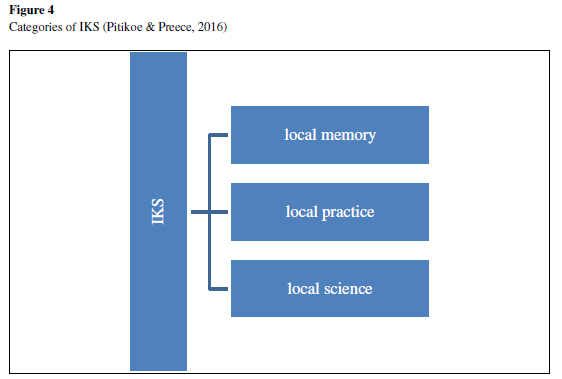
This study is grounded in Indigenous knowledge systems (IKS) theory. IKS comprise the bodies of knowledge developed and sustained by Indigenous peoples over generations to ensure survival and well-being (Mapara, 2009; Pitikoe & Preece, 2016). Within this framework, African spirituality and ancestral calling are understood as Indigenous ways of knowing and living. Pitikoe and Preece (2016) identify three overlapping categories of Indigenous knowledge (see Figure 4): local memory (oral, socialised knowledge such as folklore and customs), local practice (unconscious trial-and-error knowledge, including arts and crafts), and local science (conscious application of local technologies).
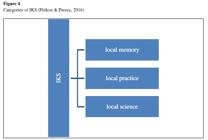
In this study, local memory socialises children into the sacred role of ancestors and the consequences of disregarding a calling. Local practice is evident in the design and beading of initiates' attire, which symbolises the orientation and stage of the calling. Local science manifests in practices such as bone-throwing, which connects the physical and spiritual realms for diagnosis and healing. These categories illustrate the richness of African IKS and the oral, context-specific nature of knowledge that Eurocentric systems have historically marginalised.
Research methodology
The study adopted a constructivist/interpretivist paradigm, which aligns with qualitative inquiry by emphasising participants' construction of meaning from lived experience (Abdal-Haqq, 1998; Creswell, 2015). This paradigm was chosen because it privileges students' own voices in defining the meaning and impact of ancestral calling within their cultural context.
Creswell (2015) defines a research approach as the overall plan for a study, encompassing broad assumptions about specific data collection, analysis, and interpretation methods. This study employed a qualitative research approach to capture the complexity and nuanced lived realities of spirituality that quantitative methods cannot adequately convey (Denscombe, 2007; Mohajan, 2018). A qualitative case-study design was utilised, enabling in-depth exploration of the phenomenon within its real-life educational and cultural context (Creswell & Plano Clark, 2007).
The study was conducted in the Manzini region of Eswatini, specifically in the Mankayane area, and involved two purposively selected schools: one rural and the other semi-urban. These sites were chosen because rural areas preserve cultural practices more strongly, while urban proximity allows comparison of spiritual experiences across contexts. The target population comprised all learners at the two schools with a total enrolment of approximately 800. Non-probability purposive and snowball sampling were employed to identify students experiencing ancestral calling. Head teachers and teachers assisted in initial identification. Snowball sampling was then used to locate students who had already dropped out or were absent due to the calling. Twelve students participated (six from each school). This size enabled rich, in-depth data while remaining manageable for qualitative analysis. Semi-structured interviews were used, allowing flexibility while ensuring coverage of key topics (Smith, 1995; Willig, 2001).
A covering letter, a consent form with a confidentiality clause, and an institutional permission letter were provided to all participants. Worth noting is that the participants were students who were under parental guardianship. Therefore, the researchers requested an isibaya (a community gathering with the parents) to explain what the study was about, how the interviews would be conducted, and for how long. Afterward, the researchers consulted the individual families whose children were to participate in the study to obtain parental consent, followed by signing the consent form. Ethical approval was obtained from the University of Eswatini. Informed consent, voluntary participation, confidentiality, and the right to withdraw were upheld throughout.
The interviews were conducted face-to-face at times convenient to participants, primarily during lunch breaks for those still in school, to minimise disruption to schooling. Arrangements were made for those who had already dropped out of school to identify their preferred places. Each interview lasted approximately 30 minutes. The study had sampled six students from each of the two schools, however, three students were in seclusion, the stage where they only talk to their gobela. Anonymity while allowing traceability within the dataset was preserved by coding the remaining nine participants as Respondent 1 to Respondent 9. Thematic analysis was applied (Clarke & Braun, 2006). Interviews were transcribed verbatim, coded, and organised into emergent themes and patterns.
Findings
The findings are presented below, organised by the three themes. This structure was deliberately chosen because it directly mirrors the study's objectives, facilitates clear alignment between data and questions, and enables systematic identification of patterns across participants' narratives. Participant responses are subdivided under these themes, supported by verbatim quotations (identified by respondent number) to preserve authenticity and illustrate recurring patterns.
Theme 1: Manifestation of ancestral calling and its impact on well-being
The findings under this theme revealed the different ways through which African spirituality and calling manifest as a range of physical symptoms and that, in each individual, they occur in variable sequences, frequencies, and severities. Participants also reported that having the calling has resulted in mental disturbances because ancestors communicate with them through prophetic dreams and voices. The illnesses could not be treated with Western medicine. These symptoms became severe the longer it took for them to accept and acknowledge that they have a calling. Students described the calling as manifesting through severe, undiagnosable physical and psychological symptoms.
I had persistent headaches from as young as 10 years. I was taken to a Western doctor for assessment and diagnosis, but the headache kept coming back. I always believed I wasn't drinking enough water or lacking certain vitamins until I got sick almost every day, which meant I missed a lot of school. I would faint in class, and I was taken to a traditional healer as I was not responding to Western treatment. The healer reported that I have an ancestral calling and that the only way I could be delivered from the illness is by considering attending an initiation school, as successful completion of the initiation process will promote recovery. (Respondent 1)
I suffered from headaches, and I was told I needed to wear beads to ease the headache. When I wore the beads to school, other kids would make fun of me. I can barely focus in class because I am always tired and sleepy, since at night I am disturbed by visions and by hearing voices in my ears. (Respondent 2)
I suffered from migraines, and I would sleepwalk at night. I would wake up next to a river almost every day, which would make me late for school. I would be woken up by my mother, who knew where to find me when I was not in my room. (Respondent 3)
I became very sick with a mysterious illness that Western doctors could not diagnose. I also suffered from migraines. I got thinner and would even hear and dialogue with voices that only I could hear and understand. I started having problems at school, and I was struggling to see what was on the board. When I sleep, I would have dreams of brown snakes. I would get nosebleeds and random episodes of seizures. (Respondent 4)
I started getting hectic migraines and was dependent on anti-inflammatories for pain relief. The Western doctor who was treating my headache was very confused as to why my headaches were not responding to his treatment. He referred me to a neurologist who did a CT scan on me and found that there was nothing wrong with me. Until my uncle took me to a Zion church, he was a member of. I felt very scared and wasn't keen on going there simply because they were different from my church; anyway, I decided to give it a shot, as exams were approaching and I couldn't study because of the headache. I was told I have an ancestral calling, and at night, it would be hard to sleep because my body would ache. (Respondent 5)
I had palpitations and a sharp stabbing pain in my chest. I went to the hospital and was diagnosed with peptic ulcers. I would get hungry a lot and eat too much. I took medical treatment, but the situation got worse, and I was prophesied by a man who told me that I needed to be taken to the river for initiation, or the sickness wouldn't stop. (Respondent 7)
These accounts reveal a consistent pattern of psychospiritual distress that Western medicine could not alleviate, reinforcing the cultural interpretation of symptoms as ancestral communication.
Theme 2: Effects on academic performance
The findings under this theme revealed the negative effects of spirituality on students' academic performance and well-being. Participants revealed how the calling had compelled them to take a gap year, repeat a class, or have outbursts during school hours. They further lamented that, while they want to remain in school and continue their studies, their calling always finds a way to disrupt their studies. When asked to share their experiences on the effects of the calling on their performance they had this to say:
At times when I am in class, I would hear a gentle whistling followed by a ringing sound in my ears. I remember one time, while in class, I saw an old woman standing next to me . . . I walked out of the classroom and spent a few days away from school. (Respondent 6)
I took a gap year because I would get sick every other day, and I could not focus at school since a lot was happening, and I had to decide if I was undergoing initiation or not. (Respondent 1)
I would suffer from seizures and outbursts, which resulted in disturbance of the class, as teachers and learners would then turn their focus and attend to me. (Respondent 2)
I have taken a gap year since I went partially blind. Everything that I knew was my life crashed. I went for initiation, and that is when I regained my eyesight. (Respondent 3)
I missed one term because I suffered from leg paralysis, and I struggled to walk for a couple of months. (Respondent 7)
These five experiences indicate that the calling led to repeated absenteeism, difficulty concentrating, class disruptions, and, in several cases, grade repetition, gap years, or permanent dropout.
Theme 3: Institutional support needs
Participants discussed what they believe could assist them academically as they undergo their African spirituality journey. They stated that they would be happy if their studies were not put on hold; that they would be able to do their work outside traditional classrooms. The findings revealed the following subthemes: online and blended learning, culturally inclusive curriculum, and psychosocial support programmes.
Online and blended learning
Given that spiritually affected participants spend most of their time at home dealing with spirituality and the effects that come with it, they recommended programmes that would allow them to accept this while also continuing with their studies.
I prefer blended learning because I can always try to understand certain subjects on my own, and whenever I feel they don't make sense, I can seek clarity through face-to-face learning. (Respondent 2)
I prefer online classes because I can learn from home. (Respondent 1)
I prefer using both face-to-face and online methods for better understanding. (Respondent 3)
Participants agreed that incorporating digital elements into traditional education to accommodate students' diverse needs is necessary. In addition, using these platforms could help such students focus on their spiritual journey while pursuing their education from the comfort of their homes.
Culturally inclusive curriculum
This sub-theme emerged because the respondents reported facing derision from fellow schoolmates and, at times, suspension from school.
I wore traditional beads to school because they assist in preventing me from getting sick and being affected by other people's energies, and I was discriminated against and told not to come back to school. (Respondent 1)
Classmates would give me nasty stares and make fun of me, and teachers never took this matter seriously. (Respondent 2)
I would cry for no reason and would get bullied. (Respondent 3)
The majority of the participants reported being discriminated against, made fun of, and bullied for having a spiritual calling. However, the need for mental care was also emphasised.
Psychosocial support and counselling
Students viewed counselling and psychosocial support as practical means of accommodating both spiritual journeys and academic continuity.
There have been many misfortunes in my life, and nothing has seemed to work out. I think psychosocial support will help me to open up and talk about the pain that comes with the calling, which I share with my family. Instead, I project the pain through hurting others; counselling would do me good. (Respondent 5)
Everything that I used to enjoy before the calling has faded. I feel like psychosocial support is mandatory for everyone undergoing an ancestral awakening. We tend to be disturbed mentally, emotionally, and physically. (Respondent 2)
There have been many misfortunes in my life, and nothing has seemed to work out. I think psychosocial support will help me talk about things that are hurting me but can't say them, instead I project the pain through hurting others, counselling would do me good. (Respondent 3)
Respondents reported experiencing events indicating a spiritual calling and noted that these experiences require guidance and psychosocial support, given what they have been through. Some participants reported not getting support from home, and families not believing in the Indigenous wellness system. Thus, psychosocial support is an important aspect of showing guidance and support in response.
Discussion
Manifestation of ancestral calling and its effects on well-being
The findings revealed that participants experienced unexplained or unusual illnesses that were not cured by modern treatments, which affirms Jung (1990)'s extended theory of the unconscious beyond the individual to the collective, calling it the shadow, as well as Schweitzer (1977) who states that African spirituality and calling are associated with sickness or disintegration that is initiated by the ancestors. Similarly, Hammond-Tooke (1989) argues that the series of symptoms becomes persistent until the calling is accepted. The findings on sleepwalking are consistent with the literature. For instance, Hufford (2005) laments that sleep paralysis is a visionary spiritual experience that cannot be explained away by irrational beliefs.
Effects on academic performance
However, researchers espouse the overall and academic benefits that accrue to students when educators not only condone spiritual self-expression on the part of their students, but also actively attend to their students' spiritual needs in the classroom (Hindman, 2002; Katz, 2004).
Culturally inclusive curriculum
These findings attest to the literature arguing that Black students deserve a curriculum that critically engages with their African heritage knowledge, connects them with accurate information that enriches and meaningfully affirms their connection to the African diaspora, while deepening their sense of self-worth and self-efficacy (Mutwa, 2003).
Psychosocial support
The findings confirm that ancestral calling generates profound psychospiritual distress and academic disruption, consistent with Bryant et al. (2003), who note that spiritual disturbances can negatively affect academic outcomes. The call for culturally congruent counselling addresses the epistemic gap highlighted by Mutwa (2003), and responds to Oloyede and Ofole's (2016) advocacy for spirituality as integral to holistic development. Similarly, Hlalele (2012) states that psychosocial support is a process that focuses on the psychological, emotional, spiritual, and social development of individuals towards achieving positive human beings. Participants experienced, but couldn't understand, the ongoing sickness, sleep paralysis, hallucinations, outbursts, and disturbing visions that plagued them. Until that understanding came, their lives were intermittently torn apart by psychospiritual stress and depression, reducing them to dysfunctionality. Without appropriate guidance, participants experienced severe emotional and psychological trauma, which, in worst cases, led to academic exclusion.
Online or blended learning
The preference for blended learning and Africanised psychosocial support constitutes new empirical insight generated by this study. While COVID-19 accelerated the adoption of online and hybrid models globally, participants in this rural Eswatini context articulated their specific utility in balancing initiation rites with schooling-an accommodation rarely discussed in the existing literature.
Conclusion
African spirituality significantly influences the well-being of high school students in Mankayane. The calling to engage with African spirituality often provides these students with a sense of purpose and belonging, which can positively impact their overall well-being. This sense of purpose and belonging can help students navigate the challenges of adolescence and develop a stronger sense of identity. Additionally, the principles and practices of African spirituality, such as the importance of community and belief in a higher power, can help students develop greater resilience and coping skills, contributing to their overall well-being.
On the other hand, students experiencing ancestral calling endure severe, diagnostically elusive illnesses that resist Western treatment. The calling exerts devastating effects on academic performance, frequently resulting in repetition, gap years, or dropout. Participants expressed a clear preference for flexible learning arrangements and culturally responsive psychosocial support to reconcile spiritual and academic demands.
Recommendations
African spirituality and the calling can be integrated into adult education to create culturally sensitive and inclusive learning environments in several ways. First, educators can incorporate elements of African spirituality, such as storytelling and rituals, into their lessons to create a more engaging and meaningful learning experience for students. Secondly, educators can create spaces for dialogue and discussion where students can share their experiences and perspectives on African spirituality, fostering a more inclusive and culturally sensitive learning environment. Educators can incorporate the principles and values of African spirituality, such as community and compassion, into their teaching practices to create a more positive and supportive learning environment for all students.
Schools could implement awareness programmes that normalise African spirituality and foster respect for students who are experiencing a calling. Holistic, inclusive education policies must provide flexible accommodations such as blended learning options so that learners can fulfil spiritual obligations without sacrificing academic progress. Finally, Indigenous psychosocial support programmes should be developed and resourced to help students understand and balance their calling with educational aspirations. These recommendations, if implemented, will contribute to a truly decolonised and equitable education system in Eswatini.
Abdal-Haqq, I. (1998). Professional development schools: Weighing the evidence. Corwin Press.
Astin, A. W., & Astin, H. S. (2004). A research report on spirituality development and the college experience. Higher Education Research Institute, University of California.
References
- Bae, C., & van der Merwe, P. J. (2008). Ancestor worship is it biblical? HTS Teologiese Studies/Theological Studies, 64(3), Article 63. https://doi.org/10.4102/hts.v64i3.63
- Bryant, A. N., Choi, J. Y., & Yasuno, M. (2003). Understanding the religious and spiritual dimensions of students' lives in the first year of college. Journal of College Student Development, 44(6), 723-745. https://doi.org/10.1353/csd.2003.0063
- Clarke, V., & Braun, V. (2006). Using thematic analysis in psychology. Qualitative Research Psychology, 3(2), 77-101. https://doi.org/10.1191/1478088706qp063oa
- Creswell, J. W. (2015). A concise introduction to mixed methods research. SAGE.
- Creswell, J. W., & Plano Clark, V. L. (2007). Designing and conducting mixed methods research. SAGE.
- Denscombe, M. (2007). The good research guide: For small-scale social research projects (3rd ed.). Open University Press.
- Hammond-Tooke, D. (1989). Rituals and medicines: Indigenous healing in South Africa. A. D. Donker.
- Hufford, D. J. (2005). Sleep paralysis as spiritual experience. Transcultural Psychiatry, 42(1), 11-45. https://doi.org/10.1177/1363461505050709
- Jung, C. G. (1990). The archetypes and the collective unconscious (R. F. C. Hull, Trans., 2nd ed.). Princeton University Press.
- Knoetze, J. J. (2019). African spiritual phenomena and the probable influence on African families. In die Skriflig/In Luce Verbi, 53(4), Article a2505. https://doi.org/10.4102/ids.v53i4.2505
- Lehihi, T. G., Tsabedze, W. F., Oduaran, C. A., & Onyencho, V. C. (2025). Exploring the spirituality and academic resilience among university undergraduate students. Frontiers in Education, 10, Article 1671316. https://doi.org/10.3389/feduc.2025.1671316
- Mapara, J. (2009). Indigenous knowledge systems in Zimbabwe: Juxtaposing postcolonial theory. The Journal of Pan African Studies, 3, 139-155. https://www.scirp.org/reference/referencespapers?referenceid=4098953
- Mlisa, L. N. (2009). Ukuthwasa initiation of amagqirha: Identity construction and the training of Xhosa women as traditional healers [Doctoral dissertation, University of the Free State]. http://hdl.handle.net/11660/2171
- Mohajan, H. (2018). Qualitative research methodology in social sciences and related subjects. Journal of Economic Development, Environment and People, 7(1), 23-48. https://doi.org/10.26458/jedep.v7i1.571
- Montueli, L. (2025). An examination of ancestral callings in Gauteng public schools and their associated impact through spiritual manifestations [Doctoral thesis, University of Pretoria]. http://hdl.handle.net/2263/109475
- Murove, M. F. (2023). African spirituality and ethics: Decolonising a false dichotomy. Palgrave Macmillan.
- Mutwa, C. V. (2003). Zulu shaman: Dreams, prophecies, and mysteries. Destiny Books.
- Nweke, K. C., & Okpaleke, I. P. (2019). The re-emergence of African spiritualities: Prospects and challenges. Transformation: An International Journal of Holistic Mission Studies, 36(4), 246-265. https://doi.org/10.1177/0265378819866215
- Oloyede, G., & Ofole, N. M. (2016). Media usage, religiosity and gender as determinants of performance in Chemistry subject. Journal of Education and Practice, 7(7), 47-56. https://eric.ed.gov/?id=EJ1095260
- Pitikoe, S., & Preece, J. (2016). Herder identity in Lesotho: Implications for non-formal education. International Journal of Lifelong Education, 35(6), 607-628. https://doi.org/10.1080/02601370.2016.120383
- Podolecka, A. (2021). The role of lethuelas/sangomas in Lesotho: "Traditional" beliefs, spiritual professions and Christianity among the Basotho. Studies in African Languages and Cultures, 55, 159-184. https://doi.org/10.32690/SALC55.7
- Rabkin, R. (1970). Do you see things that aren't there? Construct validity of the concept "hallucination." In W. Keup (Eds.), Origin and mechanisms of hallucinations. Springer.
- Schiele, J. H. (2002). Mutations of Eurocentric domination and their implications for African American resistance. Journal of Black Studies, 32(4), 439-463. https://doi.org/10.1177/002193470203200405
- Smith, J. A. (1995). Semi-structured interviewing and qualitative analysis. In J. A. Smith, R. Harra, & L. van Langenhove (Eds.), Rethinking methods in psychology (pp. 9-26). SAGE.
- Turner, V. (1969). The ritual process: Structure and anti-structure. Aldine.
- van Dyk, A. C. (2001). Traditional African beliefs and customs: Implications for AIDS education and prevention in Africa. South African Journal of Psychology, 31(2), 60-66. https://doi.org/10.1177/008124630103100208
Accepted: 2 August 2026