Humanising artificial intelligence for enhancing engagement and retention in open and distance learning in sub-Saharan Africa
Abstract
The integration of artificial intelligence (AI) into open and distance learning (ODeL) is reshaping engagement and retention in sub-Saharan Africa and offering new opportunities while also presenting significant constraints. In this conceptual paper, we examine how humanising AI can be embedded into ODeL design to strengthen dialogue, agency, care, and belonging. The study was guided by Freire's notion of critical pedagogy (1968/2000) and a human-centred AI perspective in aligning the use of technology with pedagogical goals, educator practices, and student needs. We employed a conceptual and interpretive design, supported by a narrative literature review, to generate theoretical insights rather than empirical findings. The key findings indicate that explainable learning analytics, intelligent tutoring systems, adaptive feedback, and conversational agents can personalise student support and identify early disengagement, while complementing rather than replacing human pedagogical presence. These technologies can enhance responsiveness in ODeL environments when integrated thoughtfully. The main implication is that their effectiveness depends on culturally relevant and ethically grounded implementation. We recommend strategies that consider infrastructural constraints, build educator capacity, and account for linguistic diversity to strengthen student engagement and retention in ODeL contexts in sub-Saharan Africa.
humanising pedagogy; artificial intelligence; distance education; student retention; ODeL
Introduction
ODeL has developed in African universities, improving access to higher education for students in remote and underserved areas, especially where traditional options are limited (Aboderin et al, 2025; United Nations Educational, Scientific and Cultural Organization Global Education Monitoring, 2023). However, persistent challenges remain, particularly regarding the relationship to student engagement and retention. Scholars have reported high rates of early dropouts in South African higher education (Branson & Whitelaw, 2024; Ntema, 2022), but these figures should be viewed as approximate rather than exact. This discussion focuses on the teaching and structural factors that lead to withdrawal (see Le Roux, 2024). Similar to global patterns, ODeL students often face isolation, inadequate academic support, and unequal access to digital technologies (Olugbara et al., 2022). These conditions contribute to disengagement and increase the chances of withdrawal (Mpungose, 2025; Nampila, 2021). As Childs and Valeta (2023, p. 1) have noted, "[o]pen and distance learning (ODL) is a mechanism with strong potential for accelerating the reach of appropriate higher education to meet that demand.".
Institutions are responding to these pressures by exploring AI-based solutions. AI can personalise learning, offer timely feedback, and identify students at risk. New tools, like intelligent tutoring systems, predictive learning analytics, and natural language technologies show potential to provide customised support and enable early intervention (Maity & Deroy, 2024; World Economic Forum, 2024). AI-powered assistance, including chatbots and virtual advisors, also extends support beyond typical work hours. These tools help students navigate learning materials and stay motivated. Analytics can detect early signs of disengagement, allowing tutors to intervene proactively (Bilquise et al., 2024; Xu et al., 2023).
Despite these advances, the extent of AI adoption in African higher education remains unclear. According to reports that emerged in 2022 and 2025 from the United Nations Educational, Scientific, and Cultural Organization (UNESCO), gaps in infrastructure, limited funding, and varying degrees of policy capacity continue to restrict widespread implementation. Current research also tends to have a strong Western focus. Few studies examine the material, linguistic, and cultural factors that affect ODeL in sub-Saharan Africa. In this paper, we promote a Freirean, humanising view of AI. Drawing on Freire's (1968/2000) idea of education as a practice of freedom, we argue that AI should not exist mainly as a tool for automation or institutional efficiency but should instead serve as a teaching resource that enhances dialogue, learner agency, and care in ODeL (Aboderin et al., 2025). From this perspective, the value of AI lies less in its technical sophistication and more in its ability to foster human connection, maintain learner dignity, and encourage participation. These ideas align with UNESCO's call for human-centred AI that promotes equity and inclusion (United Nations Educational, Scientific and Cultural Organization Global Education Monitoring, 2023).
Meaningful improvements in engagement and retention require consideration of context. For effective ODeL in Africa, low-bandwidth, mobile-first, multilingual, and culturally sensitive systems are needed. These systems should enhance human presence rather than replace it. We synthesise the literature on engagement, retention, and educational technology to identify ongoing challenges, including isolation, uneven access, and limited support. We develop a humanising AI framework for ODeL based on explainable analytics, dialogic feedback, and tutor-mediated interventions that prioritise care. Our study aligns AI with principles of equity, dignity, and inclusion. We also specify design and governance practices that can inform policy, system structure, and future research in sub-Saharan Africa.
Problem statement
Student dropout remains a major problem in higher education. In South Africa, several studies, including that of Le Roux (2024), have shown high early attrition rates among first-year students. This issue is especially evident in ODeL, where learners often experience academic isolation, unequal access to digital resources, and limited institutional support (Mpungose, 2025). These conditions have a negative impact on academic performance and on feelings of belonging and commitment, leading to higher dropout rates. Reduced engagement often turns into disengagement and, eventually, withdrawal; there is a clear link between engagement and retention. Patterns of marginalisation and exclusion exacerbate these challenges. Masutha (2022) pointed out that emotional stress, structural barriers, and insufficient support push many learners to drop out before completing their studies. Similarly, poor course design, low student engagement, and infrastructure issues contribute to dropout rates in distance education (Núñez-Naranjo, 2024; Rahmani et al., 2024; Zeragaber et al., 2024). Internal factors also play a role. Motivation, self-confidence, and emotional resilience influence students' ability to continue with their studies (Roman et al., 2022).
Recent research shows the potential of predictive analytics and AI to identify at-risk students and allow for timely, personalised support (Addison & Williams, 2023). From a Freirean perspective, these technologies should improve dialogue, agency, and care, instead of functioning merely as automation tools. Explainable, tutor-guided, and participatory analytics can help reduce isolation and foster a sense of belonging, both of which are vital for ongoing engagement and persistence in ODeL. Despite global interest in AI in education, there is limited context-specific research on how AI can be humanised in ODeL in sub-Saharan Africa. Existing studies focus primarily on efficiency and automation in Global North contexts, overlooking relational, human-centred pedagogies essential for meaningful engagement in distance learning.
In African ODeL settings-marked by large enrolments, infrastructural constraints, and diverse learning contexts-there is insufficient evidence of how humanised AI can be ethically and culturally integrated with teaching practices to enhance student engagement and retention.
Research questions
The following research questions guide this study:
1. How can humanised AI be designed and implemented to enhance learner engagement and improve student retention in ODeL environments across sub-Saharan Africa?
2. How can humanised AI be governed and implemented to uphold learner dignity and agency while improving engagement and retention in ODeL systems across sub-Saharan Africa?
Methodology
We used an interpretive conceptual review in which a systematic documentary analysis was undertaken to examine how AI can be humanised in ODeL in sub-Saharan Africa (see Ahmed, 2010). Papers from International and African Journals (2020-2026), EBSCOhost, Google Scholar, and Web of Science platforms were used for this review (see Pietersen et al., 2025). This approach enabled the synthesis and critical interpretation of interdisciplinary knowledge in helping to identify gaps and develop conceptual insights in an under-researched field. The use of this kind of methodology also provided a contextually grounded and ethically informed framework for applying human-centred AI in diverse, resource-constrained ODeL settings, making it essential to future research and practice. This design supports theoretical development and the critical analysis of existing research rather than the collection of new empirical data (Maher, 2025; Whittemore & Knafl, 2005). The interpretive approach allowed for a detailed investigation of how AI relates to pedagogy, cultural context, and structural conditions in emphasising meaning-making, dialogue, and learner agency. We excluded empirical methods since the study focuses on developing a framework informed by Freirian (1968/2000) principles rather than on measuring variables or testing hypotheses.
Theoretical framework
Foregrounding this study is the theoretical framework of Freire's humanising pedagogy (1968/2000), which considers education a practice of freedom centred on dialogue, agency, and care (see Pietersen, 2022). From this perspective, AI in ODeL should serve not as an instrument of automation but as a tool that enhances human relationships and upholds learner dignity (Freire, 1968/2000; United Nations Educational, Scientific and Cultural Organization, 2023). The Freirean approach emphasises that students learn most effectively through dialogic engagement, critical reflection, and meaningful interaction. However, ODeL students in sub-Saharan Africa frequently face isolation, limited support, and unequal access to resources (United Nations Educational, Scientific and Cultural Organization, 2023; United Nations Educational, Scientific and Cultural Organization Global Education Monitoring, 2023). AI can help overcome these challenges when it is designed to promote dialogue with reflective prompts, foster agency through transparent, explainable analytics, and support care through tutor-mediated feedback and encouraging communication (Morales-Tirado et al., 2024; United Nations Educational, Scientific, and Cultural Organization, 2023). According to Freire (1968/2000), these humanising principles ensure that learners remain active participants in their educational journeys rather than passive recipients of algorithmic decisions. More justifiable is the fact that many students in sub-Saharan Africa face digital constraints. The Freirean approach encourages the development of context-aware, low-bandwidth, multilingual, and culturally responsive AI tools that extend, rather than replace, human presence (United Nations Educational, Scientific and Cultural Organization, 2023; United Nations Educational, Scientific and Cultural Organization Global Education Monitoring, 2023). By grounding AI design in this philosophical framework, we highlight how technology can enhance engagement, create inclusive learning environments, and support persistence and retention in African ODeL systems (United Nations Educational, Scientific and Cultural Organization Global Education Monitoring, 2023; Morales-Tirado et al., 2024).
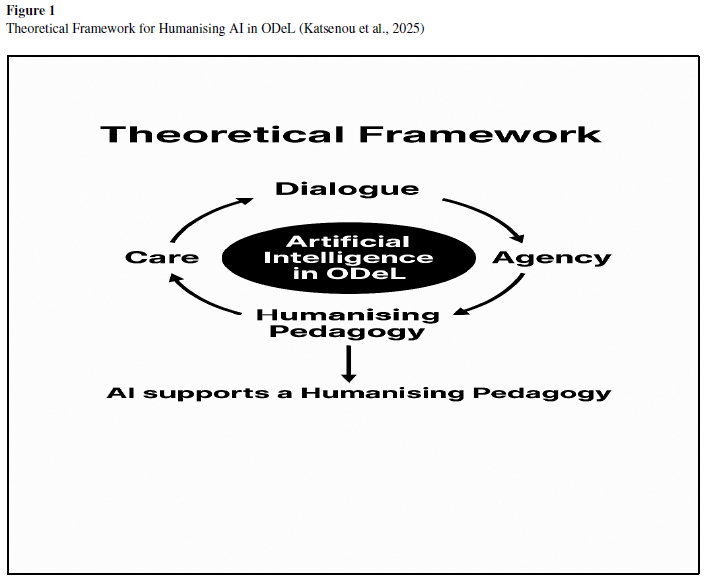
Figure 1 supports a conceptual framework for humanising AI in ODeL through the three key concepts of care, dialogue, and agency. Care emphasises empathetic, inclusive support; dialogue highlights interactive, co-constructed learning through AI; and agency focuses on empowering students as active, ethical users of AI. Together, these elements position AI as a tool that enhances, rather than replaces, human-centred teaching and learning in sub-Saharan Africa (Katsenou et al., 2025).
The current state of open-distance learning in African universities
Distance learning in African universities has advanced from early correspondence-based models to systems supported by digital technologies and AI (Distance Learning Institute, 2025; International Centre for Higher Education Innovation, 2025). However, this progress has been uneven and strongly influenced by historical legacies. Before digital technologies became widespread, distance education depended mainly on print-based correspondence models (Tracey & Richey, 2005). The University of South Africa's postal tuition system, launched in 1946, serves as the most notable example (Jansen, 2023; University of South Africa, 1946). Although this method increased access, it offered limited interaction and inconsistent academic support. Earlier accounts show that rural learners faced disadvantages; they experienced long communication delays, slow feedback cycles, and weak institutional engagement (Bozkurt et al., 2020; Tadesse & Muluye, 2020). UNESCO also pointed out in 2021 that these structural issues undermined both learner participation and institutional credibility. The study suggests that these historical constraints still influence how ODeL institutions approach and implement digital transformation.
Distance education practices before the digital era were largely print-based, offered delayed feedback, and provided limited opportunities for interaction, which constrained learner engagement and participation (Bozkurt et al., 2020). In our view, the contemporary ODeL systems continue to reflect elements of these older models. Many programmes still rely heavily on printed materials and end-of-semester examinations. Choycawen et al. (2024) have shown that these practices often lead to declining submission rates after initial assignments. This pattern reduces sustained engagement and challenges learner persistence. The COVID-19 pandemic exposed these weaknesses more starkly. Institutions were forced to switch swiftly to online and ICT-based delivery modes (Crawford et al., 2020), but this change took place in a context of widespread digital inequality. Only a small proportion of African households had reliable internet access, and many learners did not own personal computers (United Nations Educational, Scientific, and Cultural Organization, 2021). We note that digital tools alone cannot eliminate structural inequities. Effective transformation requires investment, supportive policies, and strong institutional capacity.
By the mid-2020s, many African universities had adopted blended and fully online learning. This shift responded to rising student demand and broader digitisation across the continent (Ng'ambi et al., 2021; United Nations Educational, Scientific and Cultural Organization Global Education Monitoring, 2023). Institutions invested in digital infrastructure, staff training, and quality assurance frameworks to improve online learning, reflecting broader efforts to strengthen technology-enhanced education across African higher education systems (Africa Centre of Excellence on Technology Enhanced Learning, 2024). Regional gatherings such as the eLearning Summit in 2025 stressed the need for context-sensitive digital innovation (Association of African Universities, 2025). We agree with the view that imported technologies cannot be deployed without adaptation; they must be aligned with local realities and pedagogical traditions. During this period, universities also expanded their programme offerings. According to the Association of African Universities (2025), online MBAs and professional development courses became increasingly common. These developments suggest that African institutions are repositioning themselves in the global higher education landscape.
AI-driven tools such as learning analytics systems, adaptive platforms, and LXPs now support personalised learning and provide real-time feedback (Villegas-Ch. et al., 2024; Xu et al., 2023). These technologies also reshape academic roles; educators must now develop skills in prompt engineering, ethical decision-making, and data literacy. However, we contend that the pedagogical impact of AI remains uneven. Many African ODeL systems continue to grapple with limited interaction, weak support structures, and fluctuating engagement levels (Crawford et al., 2024; Mpungose, 2025; United Nations Educational, Scientific and Cultural Organization Global Education Monitoring, 2023). It is our view that, without intentional redesign, AI may unintentionally replicate the old correspondence model in digital form. It may prioritise automation over dialogue and efficiency over human presence. For these reasons, it is our considered view that the current period is a contested transition rather than a complete transformation. Digital and AI-enabled systems hold significant promise, but their value depends on thoughtful and contextually grounded design. Meaningful improvement must foreground learner dignity, agency, and relational presence. In our view, technological innovation must enhance, and not replace, the human dimensions of teaching and learning in African ODeL contexts.
In light of these persistent challenges, attention is increasingly shifting toward artificial intelligence as a potential means of transforming ODeL. However, its effectiveness depends on how it is pedagogically integrated, as we explore in the following section.
Applications of AI in open-distance learning environments
Salameh (2025) explained that intelligent tutoring systems and learning analytics enable personalised learning pathways. They also provide adaptive, timely feedback that responds to learners' needs and performance (Dogan et al., 2023; Xu et al., 2023). However, much empirical work remains technology-driven. In the experience of Dogan et al. (2023), it often gives insufficient attention to pedagogy and ethics. This concern is acute in ODeL, where tools that prioritise platform activity over interaction may not improve engagement or retention. AI that optimises behaviour without supporting dialogue risks reproducing digital forms of the so-called banking model of education. Based on our observations, activity metrics tend to increase even as conceptual understanding stagnates, especially in environments in which dialogic scaffolding and pedagogical design are underdeveloped.
Education either functions as an instrument to bring about conformity, or it becomes the practice of freedom, the means by which people deal critically and creatively with reality and discover how to participate in the transformation of their world (Freire, 1968/2000, p. 34).
Guided by this humanising pedagogy, AI in ODeL should operate as a practice of freedom. According to Freire's (1968/2000) view, it should advance dialogue, learner agency, and care, instead of reinforcing conformity through automation. This view aligns with human-centred AI agendas that promote equity, dignity, and inclusion. From a Freirean perspective, AI acquires educational value only when it strengthens human relationships and upholds learner dignity. It can be contended that personalisation generates actual learning gains only when it amplifies human presence and agency, rather than substituting them with automated compliance.
Du Boulay (2023) has argued that fairness, accountability, and the protection of learners' rights are foundational to trust in AI. Ethics should guide design from the outset; it should not be added after implementation. Jamalova et al. (2022) highlighted fragmentation in AI-in-education research and called for frameworks that connect theory, practice, and policy. El Azhari et al. (2025) attended to this by proposing models that align AI with learning goals and students' needs. In sub-Saharan African ODeL, alignment must also be low-bandwidth, multilingual, and culturally responsive or systems risk reinforcing inequities. Furthermore, Göçmez and Okur (2023) showed that many AI studies lack strong theoretical foundations, thereby weakening pedagogical coherence. Literature indicates that integrating ethics and contextual constraints during the design stage is the most reliable means of mitigating exclusionary effects while maintaining system transparency and auditability.
AI now supports communication, assessment, and academic decision-making. As Garlinska et al. (2023) cautioned, poorly implemented analytics can widen digital divides and weaken learner autonomy. These risks echo critiques of practices that control rather than empower. Opaque analytics may also create perceptions of surveillance and erode trust. Evidence shows that AI can support lifelong learning and personalised instruction (Adewale et al., 2024; Pratama, et al., 2023).
Effectiveness, however, depends on pedagogy and educator capacity. Personalisation without meaningful human mediation can limit learner agency. Wang (2021) reported improved engagement in English distance education using machine learning, whereas Ayasrah et al. (2024) found that AI is most effective when paired with teacher training, infrastructure, and inclusive policy. Escotet (2024) offered an optimistic view but stressed ethical and social responsibility. Evidence across ODeL contexts indicates that outcomes tend to mirror institutional readiness and transparency. Where capability, clarity, and care converge, analytics are more likely to facilitate supportive intervention than reproduce surveillance-oriented practices.
Taken together, in our view, the literature indicates that AI's potential in distance education is realised only within humanising, pedagogically grounded frameworks. Technological advancement alone is insufficient. Meaningful transformation calls for designs that foster dialogue, support agency, and extend pedagogical care. These needs are especially pressing in resource-constrained ODeL contexts. Without such commitments, AI may produce systems that are efficient and scalable, yet pedagogically weak and ethically fragile. It can be contended that sustainable impact depends on pairing technical scale with relational pedagogy and ethics to prevent efficiency from outpacing quality and equity.
These applications demonstrate the growing role of AI in reshaping ODeL practices, particularly in relation to personalisation and support. In the following section, therefore, we consider how these developments translate into meaningful student engagement.
Promoting student engagement via artificial intelligence in open-distance learning settings
Sylvia (2026) suggested that AI can enhance student engagement in distance learning by facilitating personalised learning pathways, timely feedback, and adaptive interaction. In virtual classrooms, these features can sustain participation and strengthen community, and both are essential to ODeL (Adamakis & Rachiotis, 2025). Nguyen et al. (2024) showed that AI-enabled personalisation and adaptive feedback increase interactivity and accessibility. However, they cautioned against uncritical adoption given privacy risks and over-reliance on automation. This suggests that gains in interactivity tend to level off when privacy safeguards and human facilitation are weak; students participate more, but trust and depth of learning do not keep pace.
AI technologies now support personalized learning pathways, enhance instructional efficiency, and improve academic productivity by facilitating tasks such as automated grading, adaptive feedback, and academic writing assistance (Adamakis & Rachiotis, 2025, p. 2).
From a Freirean perspective, engagement improves only when AI supports dialogue and human presence and not when it replaces them. Evidence from hybrid and online settings reinforces this point. Almusaed et al. (2023) reported that AIED can strengthen engagement by integrating online and face-to-face learning when implemented intentionally. The literature indicates that efficiency gains become educational gains only when automation amplifies (rather than displacing) dialogic contact.
In fully remote African ODeL, achieving similar benefits requires low-bandwidth, mobile-first, and culturally relevant designs. Mirdad et al. (2024) found that adaptive learning paths and real-time analytics can enhance engagement and academic performance. These gains, however, depend on transparency, explainability, and tutor mediation. Analytics should assist learners rather than operate as invisible surveillance systems. Evidence shows that transparent, explainable analytics invite collaboration and agency, whereas opaque systems trigger resistance and erode trust.
Conversational AI has gained increasing attention for its ability to support interaction, motivation, and self-directed learning. Khurma et al. (2024) demonstrated that tools like ChatGPT can enhance critical thinking and autonomy, while also raising concerns about integrity. Such agents should therefore act as scaffolds for dialogue and not as substitutes for educators. In language-learning contexts, Wang and Xue (2024) reported improved motivation and participation in underscoring the importance of multilingual and culturally sensitive design in ODeL. The literature indicates that conversational agents expand practice opportunities, but without ethical guardrails and educator presence, they risk promoting shortcut behaviours rather than sustained inquiry.
Intrusive monitoring approaches, including behavioural or physiological inference systems, pose significant ethical challenges. They can erode trust, weaken autonomy, and create environments that convey a surveillance-oriented rather than supportive feeling (Dai et al., 2025; Heiser et al., 2026). Engagement strategies must therefore prioritise agency, transparency, and dialogic interaction. When analytics are used, they should be interpreted with students to ensure data support and meaningful conversation, rather than one-sided judgment.
Across the literature, a consistent pattern emerges: AI can indeed enhance engagement, but only when shaped by pedagogical choices and contextual realities (Long et al., 2026; Garzón et al., 2025). Findings from traditional or hybrid environments cannot be applied directly to fully remote, resource-constrained ODeL settings. Research must therefore emphasise digital access, learner agency, and socio-cultural diversity, rather than assume universal transferability of technology. Context-blind adoption regularly underdelivers in ODeL; design must begin with access conditions, languages, and local learning norms. These insights show that ODeL engagement is best supported by a humanising approach to AI.
In this model, AI acts as a practice of freedom: it facilitates dialogue, enhances agency, and sustains care. This aligns with UNESCO's human-centred AI principles that prioritise autonomy, equity, and cultural and linguistic diversity. Engagement, in this sense, is not merely behavioural; it is relational and ethical, grounded in learners' experience of being supported and valued. To ensure that engagement leads to learning progress, AI-mediated interactions should be embedded in transparent formative assessment cycles. Clear criteria, timely feedback, and collaborative interpretation of analytics help transform data into dialogue rather than control. We agree that when formative assessment is transparent and co-owned, analytics become prompts for reflection and growth, not instruments of compliance.
While these insights highlight the potential of AI to enhance engagement, sustained participation is tied closely to student persistence. In the next section, therefore, we examine how AI can contribute to improving student retention in ODeL contexts.
Promoting student retention via artificial intelligence in distance learning settings
Increasingly, scholars have argued that the very mechanisms that support engagement, dialogue, personalised support, timely feedback, and learner agency also underpin retention in ODeL. Engagement and retention form a continuum in which sustained interaction and early relational support decrease the likelihood of withdrawal. Within this framing, AI contributes to retention by helping educators to identify emerging patterns of disengagement and respond proactively. Villegas-Ch et al. (2024) showed that AI can enhance retention by improving participation and feedback processes. However, its effectiveness depends on context and learner characteristics. Their findings highlight the need for pedagogically grounded, human-mediated practices in ODeL. Evidence indicates that AI improves retention only when it reinforces relational, human-centred pedagogies and not when it functions as a standalone technical tool.
Predictive analytics further extends the engagement-retention link. Sihare (2024) argued that early detection of behavioural changes enables institutions to support students before disengagement becomes entrenched. Predictive systems must remain transparent and dialogic to prevent categorising students in ways that undermine autonomy. From a Freirean standpoint, predictions should prompt discussion, and analytics must be explained in accessible, culturally appropriate ways. Similarly, Arqawi et al. (2022) showed that AI-based forecasting requires careful human interpretation and contextual awareness. These insights confirm that retention improves when analytics enrich educator judgment rather than replace it. It can be contended that predictive analytics is pedagogically meaningful only when learners and educators co-interpret data through transparent and dialogic processes.
The substitution of human interaction with automated systems in online education risks intensifying student isolation, which remains a critical factor in attrition and disengagement (Crawford et al., 2024, p. 6). Warnings about technological overreach also reveal the fragility of retention in distance education. Crawford et al. (2024) cautioned that excessive automation can intensify isolation and loneliness, thereby undermining persistence. For ODeL learners facing limited support, socioeconomic barriers, and digital constraints, reduced human interaction can negate the benefits of timely analytics. Hooda et al. (2022) found that AI-mediated assessment and feedback support succeed only when paired with transparent systems, meaningful feedback loops, and sustained instructor involvement. These findings show that retention cannot be achieved through efficiency-driven AI deployment. It requires systems that extend human presence and cultivate a sense of belonging. The literature indicates that human connection, not automation, remains the decisive factor in retention, and that AI supports persistence only when it strengthens a sense of belonging and emotional presence.
Post-pandemic studies offer additional insight. Sato et al. (2023) argued that as AI-supported distance learning expands, institutions must remain flexible and inclusive. Flexibility is important to accommodate students' material conditions, emotional experiences, and socio-cultural contexts. When engagement structures are weak, AI-based retention strategies risk normalising exclusion rather than focusing on the factors that push learners out. Debates on generative AI reinforce this concern. Dempere et al. (2023) and Qadir (2023) noted that tools such as ChatGPT can enhance interactivity but also pose risks related to dependency, inequity, and reduced critical engagement. Without careful pedagogical design, these tools may increase short-term participation while weakening the agency needed for long-term persistence. We propose that post-pandemic AI adoption must be critically reflexive to avoid reinforcing inequities or diminishing the agency required for long-term persistence.
Our argument throughout this study is that the literature shows that the retention results from a sustained, relational engagement are possible. AI does not humanise or dehumanise learning on its own. Its effects depend on institutional values, governance practices, and pedagogical choices (Küçükuncular, 2026). Therefore, for us, it is very important that in ODeL systems serving marginalised learners, retention improves when predictive tools and analytics are embedded in transparent, human-mediated, and agency-oriented practices. Students should have opportunities to question, contextualise, and challenge interpretations of their data. Interventions should function as collaborative processes rather than corrective measures.
Meaningful retention work requires more than technical innovation. It requires an environment in which learners feel that they are noticed, supported, and able to exercise authorship over their learning journeys. When aligned with humanising pedagogy, AI can help identify students who need support and guide educators toward timely, relational intervention (Pietersen et al., 2023). When misaligned, AI can amplify inequities and reinforce disengagement. Sustained retention in African ODeL depends on integrating AI within justice-oriented pedagogical frameworks that extend, rather than diminish, human presence. It can be contended that justice-oriented, dignity-affirming pedagogy is essential for AI to enhance retention in African ODeL since technology must amplify rather than replace human presence.
Recommendations
Based on this study, we propose two recommendations. First, African ODeL institutions should ground their AI policies, following Freire (1968/2000), in humanising pedagogy to ensure that AI strengthens dialogue, learner agency, and care, rather than surveillance or efficiency-driven practices. This involves transparent, explainable tools supported by tutor mediation and student participation, alongside context-aware, low-bandwidth, mobile-first, multilingual, and culturally responsive designs (Mhlanga, 2023; Morales-Tirado et al., 2024; United Nations Educational, Scientific and Cultural Organization, 2023; United Nations Educational, Scientific and Cultural Organization Global Education Monitoring, 2023). Second, strong governance frameworks must protect privacy, fairness, informed consent, and human oversight (Du Boulay, 2023; Ungerer & Slade, 2022), while professional development enables educators and students to use AI ethically and relationally (United Nations Educational, Scientific and Cultural Organization, 2023). Collectively, these measures foster a justice-oriented ODeL system that promotes dignity, agency, and meaningful participation.
Conclusion
This conceptual paper has examined how Artificial Intelligence (AI) can support student engagement and retention in African ODeL systems. The analysis shows that the value of AI depends on humanising pedagogy, not technology alone. Freirean principles, dialogue, agency, and care, offer ethical guidance for designing AI that affirms learner dignity. When used transparently and with the participation of both tutors and learners, tools such as learning analytics and intelligent tutoring systems can strengthen interaction and reflection. However, surveillance-driven or uncritical uses risk reducing learners to data points and weakening autonomy. Future work should deepen participatory design, safeguard ethical practices, and ensure AI enhances, rather than replaces, the human relationships central to meaningful ODeL learning.
References
Literature review
- Aboderin, O. S., Pietersen, D., & Langeveldt, D. (2025). Exploring the promotion of skills development in an ODeLspace Vis-À-Vis 4IR technologies in Sub-Saharan Africa. International Journal of Learning, Teaching and Educational Research, 24(9), 584-600. https://doi.org/10.26803/ijlter.24.9.29
- Adamakis, M., & Rachiotis, T. (2025). Artificial intelligence in higher education: A state-of-the-art overview of pedagogical integrity, artificial intelligence literacy, and policy integration. Encyclopedia, 5(4), 180. https://doi.org/10.3390/encyclopedia5040180
- Addison, L., & Williams, D. (2023). Predicting student retention in higher education institutions (HEIs). Higher Education, Skills and Work-Based Learning, 13(5), 865-885. https://doi.org/10.1108/HESWBL-12-2022-0257
- Adewale, M. D., Azeta, A., Abayomi-Alli, A., & Sambo-Magaji, A. (2024). Impact of artificial intelligence adoption on students' academic performance in open and distance learning: A systematic literature review. Heliyon, 10, 1-19. https://doi.org/10.1016/j.heliyon.2024.e40025
- Africa Centre of Excellence on Technology-Enhanced Learning. (2024). ACETEL eLearning Conference 2024: Advancing digital pedagogy in African higher education. Association of African Universities. https://acetel.nou.edu.ng/elearning-conference-2024.
- Almusaed, A., Almssad, A., Yitmen, I., & Homod, R. Z. (2023). Enhancing student engagement: Harnessing "AIED"'s power in hybrid education. A review analysis. Education Sciences, 13(7), 632. https://doi.org/10.3390/educsci13070632
- Arqawi, S. M., Zitawi, E. A., Rabaya, A. H., Abunasser, B. S., & Abu-Naser, S. S. (2022). Predicting university student retention using artificial intelligence. International Journal of Advanced Computer Science and Applications, 13(9), 315-324. https://doi.org/10.14569/IJACSA.2022.0130937
- Association of African Universities. (2025). eLearning Summit 2025: Strengthening digital education in Africa through quality, collaboration, and workforce development. AAU. https://blog.aau.org/elearning-summit-2025-strengthening-digital-education-in-africa-through-quality-collaboration-and-workforce-development/
- Ayasrah, F. T., Alarabi, K., Yousef, J., Fortuna, A., Novaliendry, D., & Aljermawi, H. N. (2024). Harnessing AI for effective distance Learning: Teachers' perspectives on covid-19's impact on education. In 2024 International Conference on Intelligent Computing, Communication, Networking, and Services (ICCNS) (pp. 228-235). IEEE. https://doi.org/10.1109/ICCNS.2024.10776546
- Bilquise, G., Ibrahim, S., & Salhieh, S. E. M. (2024). Investigating student acceptance of an academic advising chatbot in higher education institutions. Education and Information Technologies, 29(5), 6357-6382. https://doi.org/10.1007/s10639-023-12076-x
- Childs, A., & Valeta, J. (2023). What makes high quality (digital) open and distance learning content, and what are the challenges to achieving it? Lessons from open and dual mode universities across Sub-Saharan Africa (Background paper for the 2023 GEM Report). Paris: United Nations Educational, Scientific, and Cultural Organization. https://doi.org/10.54676/BLEE1995
- Choycawen, M., Pagdawan, R., & Canuto, P. P. (2024). Unveiling the benefits and challenges of using printed modules during the pandemic: Examining university teachers' experiences in a higher education institution. Pakistan Journal of Life and Social Sciences, 22(2), 14595-14621. https://doi.org/10.57239/PJLSS-2024-22.2.001051
- Crawford, J., Butler-Henderson, K., Rudolph, J., Malkawi, B., Glowatz, M., Burton, R., Magni, P. A., & Lam, S. (2020). COVID-19: 20 countries' higher education intra-period digital pedagogy responses. Journal of Applied Learning & Teaching, 3(1), 1-20. https://doi.org/10.37074/jalt.2020.3.1.7
- Crawford, J., Allen, K. A., Pani, B., & Cowling, M. (2024). When artificial intelligence substitutes humans in higher education: The cost of loneliness, student success, and retention. Studies in Higher Education, 49(5), 883-897. https://doi.org/10.1080/03075079.2024.2326956
- Dai, R., Krehl, M., Thomas, E., & Rawolle, S. (2025). Revisiting Foucault's panopticon: How does AI surveillance transform educational norms? British Journal of Sociology of Education, 46(5), 650-668. https://doi.org/10.1080/01425692.2025.2501118
- Dempere, J., Modugu, K., Hesham, A., & Ramasamy, L. K. (2023). The impact of ChatGPT on higher education. Frontiers in Education, 8, Article 1206936. https://doi.org/10.3389/feduc.2023.1206936
- Distance Learning Institute. (2025). The evolution of distance learning in Africa's universities. https://distancelearning.institute/growth-philosophy/evolution-of-distance-learning-in-africas-universities/
- Dogan, M. E., Goru Dogan, T., & Bozkurt, A. (2023). The use of artificial intelligence (AI) in online learning and distance education processes: A systematic review of empirical studies. Applied Sciences, 13(5), 3056. https://doi.org/10.3390/app13053056
- Du Boulay, B. (2023). Artificial intelligence in education and ethics. In J. M. Spector, B. B. Lockee, & M. D. Childress (Eds.), Handbook of open, distance and digital education (pp. 93-108). Springer. https://doi.org/10.1007/978-981-19-2080-6_6
- El Azhari, K., Hilal, I., Daoudi, N., & Ajhoun, R. (2025). An integrated artificial intelligence specification to improve distance learning. International Journal of Engineering Pedagogy, 15(1), 41-55. https://doi.org/10.3991/ijep.v15i1.51881
- Escotet, M. Á. (2024). The optimistic future of artificial intelligence in higher education. Prospects, 54(3), 531-540. https://doi.org/10.1007/s11125-023-09642z
- Freire, P. (1968). Pedagogia del oprimido. Siglo XXI Editores.
- Freire, P. (2000). Pedagogy of the oppressed (D. Macedo, Intro., M. B. Ramos, Trans.). Continuum. (Original work published 1968) http://www.bloomsbury.com/us/pedagogy-of-the-oppressed-9780826412768/
- Göçmez, L., & Okur, M. R. (2023). Artificial intelligence applications in open and distance education: A systematic review of the articles (2007-2021). Asian Journal of Distance Education, 18(1), 1-32. https://asianjde.com/ojs/index.php/AsianJDE/article/view/665
- Heiser, R. E., Underhill, G. R., & Dello Stritto, M. E. (2026). Power, privacy, and transparency in communicating learning analytics in higher education: A critical discourse analysis. American Journal of Qualitative Research, 10(1), 246-265. https://doi.org/10.29333/ajqr/17463
- Hooda, M., Rana, C., Dahiya, O., Rizwan, A., & Hossain, M. S. (2022). Artificial intelligence for assessment and feedback to enhance student success in higher education. Mathematical Problems in Engineering, 2022(1), 5215722. https://doi.org/10.1155/2022/5215722
- International Centre for Higher Education Innovation. (2025). Digital transformation of African higher education in an AI era: Snapshots on progress. https://en.ichei.org/Uploads/Download/2025-05-28/6836aad35f79c.pdf
- Jamalova, G., Aymatova, F., & Ikromov, S. (2022). The state-of-the-art applications of artificial intelligence in distance education: A systematic mapping study. In Proceedings of the 6th International Conference on Future Networks & Distributed Systems (pp. 600-606). ACM. https://doi.org/10.1145/3584202.3584292
- Jansen, J. D. (2023). Historical roots of dysfunction: Shaping the South African university. Cambridge University Press. https://www.cambridge.org/core/books/corrupted/historical-roots-of-dysfunction-shaping-the-south-african-university/B5EFF2253784559ECF9B1260588631EC
- Katsenou, R., Kotsidis, K., Papadopoulou, A., Anastasiadis, P., & Deliyannis, I. (2025). Beyond assistance: Embracing AI as a collaborative co-agent in education. Education Sciences, 15(8), 1006.
- Le Roux, S. G. (2024). Juggling access vs retention and academic performance: The experience of a lecturer teaching in an open, distance e-learning institution. South African Journal of Higher Education, 38(2), 176-195. https://doi.org/10.20853/38-2-5761
- Long, D. Y., Wang, S., Md Rashid, S., & Lu, X. T. (2026). Artificial intelligence in higher education: A systematic review of its impact on student engagement and the mediating role of teaching methods. Frontiers in Education, 10, Article 1648661. https://doi.org/10.3389/feduc.2025.1648661
- Maher, A. J. (2025). Rigour in interpretive qualitative research in education: Ideas to think with. British Educational Research Journal. https://doi.org/10.1002/berj.4156
- Maity, S., & Deroy, A. (2024). Generative AI and its impact on personalized intelligent tutoring systems (arXiv:2410.10650). arXiv. https://doi.org/10.48550/arXiv.2410.10650
- Masutha, M. (2022). Highs, lows, and turning points in marginalised transitions and experiences of noncompletion amongst pushed dropouts in South African higher education. Education Sciences, 12(9), 608. https://doi.org/10.3390/educsci12090608
- Mhlanga, D. (2023). Open AI in education: The responsible and ethical use of ChatGPT towards lifelong learning. In D. Mhlanga (Ed.), FinTech and artificial intelligence for sustainable development: The role of smart technologies in achieving development goals (pp. 387-409). Springer.
- Mirdad, K., Daeli, O. P. M., Septiani, N., Ekawati, A., & Rusilowati, U. (2024). Optimizing student engagement and performance using AI-enabled educational tools. Journal of Computer Science and Technology Application, 1(1), 53-60. http://dx.doi.org/10.31544/jtera.v9.i2.2024.101-112
- Morales-Tirado, A., Mulholland, P., & Fernandez, M. (2024). Towards an operational responsible-AI framework for learning analytics in higher education (preprint). (arXiv:2410.05827). arXiv. http://doi.org/10.48550/arXiv.2410.05827
- Ntema, R. P. (2022). Profiling students at risk of dropout at a university in South Africa. Journal of Student Affairs in Africa, 10(2), 1-17. https://doi.org/10.24085/jsaa.v10i2.4077
- Núñez-Naranjo, A. F. (2024). Analysis of the determining factors in university dropout: A case study of Ecuador. Frontiers in Education, 9, Article 1444534. https://doi.org/10.3389/feduc.2024.1444534
- Olugbara, C. T., Letseka, M., & Akintolu, M. (2022). Student support as a panacea for enhancing student success in an open distance learning environment. UNESCO Chair on ODL, University of South Africa. https://doi.org/10.9743/JEO.2023.20.3.9
- Pietersen, D., Ndofirepi, A., & Langeveldt, D. C. (2025). Philosophical perspectives of cultural imperialism, hegemony, and knowledge colonization in the African university. International Journal of Learning, Teaching and Educational Research, 24(9), 570-583. https://doi.org/10.26803/ijlter.24.9.28
- Pietersen, D. (2022). Engaging Paulo Freire on deliberative democracy: Dialogical pedagogy, deliberation, and inclusion in a transformative higher education online education space. Transformation in Higher Education, 7, 211. https://doi.org/10.4102/the.v7i0.211
- Pietersen, D., Langeveldt, D. C., & Van Wyk, A. (2023). Techno-rationalism and higher educational law: Examining legal frameworks in Southern African universities from a Freirean critical pedagogy perspective. Journal of Culture and Values in Education, 6(3), 163-178. https://doi.org/10.46303/jcve.2023.26
- Pratama, M. P., Sampelolo, R., & Lura, H. (2023). Revolutionizing education: Harnessing the power of artificial intelligence for personalized learning. Klasikal: Journal of Education, Language Teaching and Science, 5(2), 350-357. http://doi.org/10.52208/klasikal.v5i2.877
- Qadir, J. (2023). Engineering education in the era of ChatGPT: Promise and pitfalls of generative AI for education. In 2023 IEEE Global Engineering Education Conference (EDUCON) (pp. 1-9). IEEE. https://doi.org/10.1109/EDUCON54358.2023.10125121
- Rahmani, A. M., Groot, W., & Rahmani, H. (2024). Dropout in online higher education: A systematic literature review. International Journal of Educational Technology in Higher Education, 21(1), 19. https://doi.org/10.1186/s41239-024-00450-9
- Sato, S. N., Condes Moreno, E., Rubio-Zarapuz, A., Dalamitros, A. A., Yañez-Sepulveda, R., Tornero-Aguilera, J. F., & Clemente-Suárez, V. J. (2023). Navigating the new normal: Adapting online and distance learning in the post-pandemic era. Education Sciences, 14(1), 19. http://doi.org/10.3390/educsci14010019
- Sylvia, B. (2026). Personalized learning in distance education: The impact of AI-powered tools on engagement and self-regulation. Open Praxis, 18(1), 146-165. https://doi.org/10.55982/openpraxis.18.1.925
- Tracey, M. W., & Richey, R. C. (2005). The evolution of distance education. In R. A. Reiser & J. V. Dempsey (Eds.), Trends and issues in instructional design and technology (2nd ed., pp. 153-159). Pearson Education.
- Ungerer, L., & Slade, S. (2022). Ethical considerations of artificial intelligence in learning analytics in distance education contexts. In L. Ungerer (Ed.), Learning analytics in open and distributed learning: Potential and challenges (pp. 105-120). Springer. https://doi.org/10.1007/978-981-19-0786-9_8
- United Nations Educational, Scientific, and Cultural Organization. (2021). The digital learning turn in Africa: The role of local ecosystems. Global Education Coalition. https://unesdoc.unesco.org/ark:/48223/pf0000377725
- United Nations Educational, Scientific, and Cultural Organization. (2022). Landscape study of AI policies and use in Southern Africa. https://unesdoc.unesco.org/ark:/48223/pf0000382651
- United Nations Educational, Scientific, and Cultural Organization. (2023). Guidance for generative AI in education and research. Paris: UNESCO. https://doi.org/10.54675/EWZM9535
- United Nations Educational, Scientific, and Cultural Organization Global Education Monitoring Report Team. (2023). What makes high-quality (digital) open and distance learning content… https://doi.org/10.54676/BLEE1995
- United Nations Educational, Scientific, and Cultural Organization (2025). The cultural cost of AI in Africa's education systems. https://www.unesco.org/en/articles/cultural-cost-ai-africas-education-systems.
- University of South Africa. (1946). A brief history of Unisa. UNISA History and Memory Project. https://www.unisa.ac.za/sites/corporate/default/Unisa-History-and-Memory-Project/Themes/All-themes/A-brief-history-of-Unisa
- Villegas-Ch, W., García-Ortiz, J., & Sánchez-Viteri, S. (2024). Application of artificial intelligence in online education: Influence of student participation on academic retention in virtual courses. IEEE Access, 12, 73045-73065. https://doi.org/10.1109/ACCESS.2024.3403758
- Wang, Y. (2021). An improved machine learning and artificial intelligence algorithm for classroom management of English distance education. Journal of Intelligent & Fuzzy Systems, 40(2), 3477-3488. http://doi.org/10.3233/JIFS-189385
- Wang, Y., & Xue, L. (2024). Using AI-driven chatbots to foster Chinese EFL students' academic engagement: An intervention study. Computers in Human Behavior, 159, 108353. http://doi.org/10.1016/j.chb.2024.108353
- World Economic Forum. (2024). From virtual tutors to accessible textbooks: 5 ways AI is transforming education. https://www.weforum.org/stories/2024/05/ways-ai-can-benefit-education/
- Whittemore, R., & Knafl, K. (2005). The integrative review: Updated methodology. Journal of Advanced Nursing, 52(5), 546-553. https://doi.org/10.1111/j.1365-2648.2005.03621.x
- Xu, Q., Yuan, H., Liu, M., & Liu, W. (2023). Design of personalized early warning feedback for distance learning from the perspective of participatory design. Academic Journal of Computing & Information Science, 6(12), 1-11. https://doi.org/10.25236/AJCIS.2023.061201.
Accepted: 22 May 2026