Transgender students' resilience in compulsory cisnormative university environments
Abstract
Despite South Africa's progressive constitutional protections, transgender students continue to experience systemic discrimination, exclusion, and microaggressions in university spaces. In this paper, I explore the experiences of students with transgender identities and how they navigate life in these cisnormative learning environments. Using a qualitative approach, I purposively sampled five self-identified transgender students from four South African universities. I employed an arts-based approach to collect data. Participants shared their experiences through the draw-and-tell method. After data collection, I then applied a qualitative content analysis method to analyse the collected data. The findings revealed that participants navigate cisnormative learning environments by employing self-preservation strategies such as self-isolation and prioritising emotional well-being. Social belonging and peer solidarity also play a crucial role in promoting resilience since transgender students find empowerment through LGBTQI+ support groups, policy advocacy, and legal awareness. Applying self-efficacy theory, in this article I highlight that mastery experiences, such as overcoming discrimination through activism, reinforce self-confidence and agency. Vicarious experiences, such as observing peers challenge transphobic practices, strengthen belief in their ability to advocate for social change. Social persuasion from mentors, allies, and institutional support structures further motivates transgender students to persist despite adversity. These findings demonstrate the need for policy reforms that promote inclusivity, including gender-affirming policies and sensitisation programmes for university staff. By focusing on transgender students' agency, I contribute, in this article, to broader discussions on equity and inclusion in higher education.
Rhodes-Must-Fall (RMF); transgender students; self-efficacy; resilience; higher education; cisnormativity; social belonging
Introduction
Despite the progressive nature of the South African constitution, higher education institutions (HEIs) in South Africa continue to be oppressive and cisnormative (Beukes, 2020; Buthelezi & Brown, 2023; Francis & Monakali, 2021). Combrinck and van Wyk Neltjie (2024) have identified in their study that transgender students are being marginalised in universities. For example, one participant in this study, who identifies as transgender, experienced transphobia in Higher Education (HE) while interacting with a lecturer. The lecturer made hurtful comments by referring to the student as a non-op. This derogatory term refers to being nonoperative in describing a person who presents themself with a transgender identity but who has opted not to undergo sex reassignment surgery (Hadj-Moussa et al., 2018). Such utterances are particularly oppressive when coming from an authority figure such as a lecturer (Beukes & Francis, 2020) because such individuals should treat all students with respect and dignity, as stipulated in the South African constitution (Republic of South Africa 1996).
In South Africa, as Buthelezi and Brown (2023) have observed, students with transgender identities encounter transphobia at access gates when entering universities. These access gates are used as regulatory systems to control who can access the institution, and for transgender students, they function as tools of surveillance, policing their gender in higher education. Seelman (2014) indicates that policing at access gates happens when transgender students are denied access to or questioned at the university entrance because there is a mismatch between their physical appearance and the personal details on their access cards. Therefore, the restrictive biometrics attached to student identity access cards thus contradict the provisions of the Alteration of Sex Description and Sex Status Act (PEPUDA) (No. 49 of 2003). As a result, transgender students must navigate and resist these challenges in ways that differ from how their cisgender counterparts navigate other challenges (Combrinck & van Wyk Neltjie, 2024). I argue (through citing participants' own words about their lived experiences) that transgender students are not merely passive recipients of cisnormative pressures but actively resist and reshape the university environment through their everyday practices, identity expressions, and interactions with others.
While numerous studies have explored the experiences of transgender students in higher education, most of them focus primarily on the challenges and barriers they encounter. In contrast, in this study I offer a different perspective by acknowledging these challenges and highlighting resilience, along with emphasising its crucial role. I aim to document the strategies employed by transgender students while they are enrolled in HEIs, thereby contributing to the existing body of knowledge in a meaningful and empowering way.
Realities and experiences of transgender students
Transgender experiences in South African HEIs reveal a complex reality. While some transgender students perceive campuses as supportive learning environments that promote safety, inclusion, and empowerment, others encounter significant challenges (Goldberg et al., 2019; Smith et al., 2022; Storrie & Rohleder, 2018). For many, as Smith et al (2022) have pointed out, these institutions offer an environment conducive to academic growth and personal development. Similarly, Vincent and Munyuki (2017) found that some transgender students view university residences as home-like spaces, preferring them over their family homes, especially when faced with familial rejection (see, also, Boyd & Wei, 2024) or community discrimination (see Chimatira et al., 2023). Conversely, a broader study conducted across ten rural districts in South Africa reported that 249 transgender individuals experienced human rights violations, with physical and psychosocial harassment occurring mainly in home and community settings (Chimatira et al., 2023). It is clear that universities can offer transgender students opportunities for identity development and connection with other LGBTQ+ individuals (Boyd & Wei, 2024; Francis, 2025).
However, some transgender students need to advocate for more inclusive environments in HEIs that maintain structures that are cisnormative and oppressive for students with transgender identities (Beukes, 2020; Buthelezi & Brown, 2023; Mavhandu-Mudzusi & Sandy, 2015), including student residences, healthcare facilities, and lecture halls, along with gender-neutral bathrooms. They have to advocate for the removal of deadnames1 on their access cards (Adams, 2023; Buthelezi & Brown, 2023; Pryor et al., 2016). They frequently encounter religion-based stigma and discrimination, such as derogatory labelling, and attempts at conversion or corrective acts through prayer and other practices (Mavhandu-Mudzusi & Sandy, 2015), along with threats of rape. These hostile experiences can lead to the concealment of gender identity, to academic disruption, and, in severe cases, to suicide or attempted suicide (Mavhandu-Mudzusi & Sandy, 2015). Although legal frameworks have evolved to promote gender equality, they remain insufficient to protect transgender individuals fully from transphobia, so-called corrective acts, and harmful labelling (Goldberg et al., 2019). These negative experiences can affect transgender students' sense of belonging and self-identity in HEIs (Adams, 2023).
Finding a safe space in universities: Sexual geography
Some transgender individuals, similar to others in the broader LGBTQ+ community, consider migration as a means of seeking safer learning environments in which they can express their identities freely (Vincent & Munyuki, 2017). According to Valentine (1995), the migration of marginalised groups can be understood as an aspect of sexual geography, which refers to people relocating to more accepting environments and connecting with supportive communities, particularly in urban areas, to escape stigma and discrimination. For transgender individuals, the decision to migrate is often shaped by a need for personal safety and access to gender-affirming healthcare in environments that respect and validate their identities (Gamarel et al., 2021).
Transgender students frequently look for institutions that offer comprehensive support systems, including inclusive policies, affirming housing, and access to resources (Smith et al., 2022). At the same time, they may receive support from friends, classmates, peers, and lecturers in their respective institutions or microclimates as Siegel (2019) refers to these. In these specific learning spaces or with certain individuals, they may find support, while experiencing discrimination elsewhere on campus. In other words, transgender students may encounter different levels of support and discrimination in the same institution (Siegel, 2019). For example, friends and classmates often provide support, but transgender students frequently face negative reactions from security guards (Buthelezi & Brown, 2023) and authorities like teachers (Msibi, 2012).
In most cases, the challenges faced by transgender students are particularly pronounced in rural universities. According to Mavhandu-Mudzusi and Sandy (2015), discrimination against transgender individuals in these settings is often rooted in religious beliefs. These individuals face derogatory labelling, including being called sinners and described as being demon-possessed (Mavhandu-Mudzusi & Sandy, 2015). The stigma leads many transgender students to conceal their identities, and this affects their academic performance and mental health (Mavhandu-Mudzusi & Sandy, 2015; Rehmat et al., 2025). The discrimination extends to healthcare services in which cisnormative prejudices prevail (Buthelezi & Brown, 2023; Mavhandu-Mudzusi, 2016; Santos et al., 2021). The disparity between rural and urban experiences may arise from the limited awareness and understanding of transgender identities in rural areas compared to urban regions. Many transgender young adults choose to relocate to urban centres that have a trans-inclusive infrastructure, despite facing risks such as homelessness and unemployment (Gamarel et al., 2021). Geographic location plays a crucial role in transgender students' search for distance from unsupportive family members and earlier social contexts (Doan, 2007).
Universities can serve as temporary safe spaces in offering students a break from the judgment of unsupportive family or friends (Vincent & Munyuki, 2017). Valentine (1995) highlighted that queer individuals often develop a sense of sexual geography in emphasising how migration becomes a strategy for finding safe learning spaces. These environments provide security and the freedom to express one's identity without fear of judgment or discrimination. Sexual geography highlights how spatial and geographic factors shape the lived experiences of transgender individuals, particularly in navigating safety, identity, and belonging (Pham, 2023; Valentine, 1995). Transgender students search for places where they can truly be themselves and where they feel safe, valued, and supported. Sexual geography is not about physical locations but is about a sense of belonging and acceptance that helps the marginalised to grow, both personally and academically (Gamarel et al., 2021; Johnston & Longhurst, 2010). Such environments provide them the freedom to express who they are without fear, judgment, or discrimination, helping them to feel seen, heard, and respected.
The concept of sexual geography highlights the significance of an environment in either reinforcing or challenging social norms and power structures (Tsfati & Nadan, 2021; Valentine, 1995) in HEIs. It is relevant in the South African context, where societal attitudes, cultural norms, and legal frameworks intersect to influence how safe or hostile campus spaces are for transgender students. Understanding sexual geography in universities is crucial for identifying systemic barriers that limit the full participation and well-being of transgender students (Pham, 2023).
Transgender student activism in HEI: Global and national perspectives
Global perspective
Globally, transgender student activism has highlighted the unique challenges faced by transgender individuals in educational institutions (Hiner & Troncoso, 2021; Khan, 2017). At the University of Vermont in the United States, students occupied the library dean's office to demand gender-free restrooms for transgender and gender non-conforming students (Colburn, 2020). Faculty-student collaborations have also led to the inclusion of gender identity and expression in non-discrimination policies, challenging gender-conforming privilege, and promoting institutional inclusion (Khan, 2017). Furthermore, at Smith College, a private liberal arts women's college in Northampton, Massachusetts, United States, queer and feminist student activists have advocated for the inclusion of transgender women, pushing for a broader understanding of gender identity beyond cisnormative frameworks (Weber, 2016). However, Goldberg et al. (2019) have noted that in the United States, the majority of transgender students cannot participate in sports activities at universities because of the absence of trans-inclusive policies and practices.
Despite the progress made, transgender individuals continue to face significant challenges, even in arenas meant to support them (Hiner & Troncoso, 2021). Obtaining recognition in LGBTQ+ movements can be difficult for transgender people (Kollman, 2024). In Namibia and South Africa, while transgender rights are formally included in LGBTQ+ organisations, very few members identify as transgender. This reveals a gap between the collective goals of these groups and the personal realities of transgender individuals (Currier, 2015). This discrepancy between collective and personal identities is termed transgender invisibility (Currier, 2015). In the United States, the inclusion of transgender people in lesbian and gay activism is often shaped by personal experiences and historical contexts, resulting in varying degrees of acceptance (Stone, 2009). Societal norms, like compulsory heterogenderism, often limit how gender is understood by reducing it to sexuality. This makes it difficult for transgender people to have their unique identities recognised and fully understood (Nicolazzo, 2017).
National perspective
In South Africa, transgender student activism gained significant traction in HEIs during 2015-2016, as students worked to challenge cisnormativity and systemic oppression (Khan, 2017; Mahali & Matete, 2022). However, movements like Rhodes-Must-Fall (RMF) and Fees-Must-Fall (FMF), while addressing broader inequalities, also revealed the marginalisation of transgender voices in activism (Khan, 2017). Transgender activists often found themselves excluded from key arenas, and this led to feelings of alienation. Even those who held leadership roles struggled to navigate precarious relationships with male activists and other members of the student body during the RMF and FMF movements (Bradbury & Mashigo, 2018).
Beukes and Francis (2020) described how the RMF movement was shaped by intersecting forms of discrimination, including heterosexism, sexism, homophobia, and transphobia. Their study highlighted how transgender activists were frequently sidelined, as demonstrated by the University of Cape Town (UCT) Trans Collective's protests against an RMF exhibition (Beukes & Francis, 2020). This exhibition, co-curated by the RMF movement and the university's Centre for African Studies, displayed images from RMF protests but excluded transgender activists. This omission reinforced the systemic marginalisation of transgender voices (Beukes & Francis, 2020). In response, the UCT Trans Collective rejected the exhibition, expressing their frustration at being omitted despite their significant contributions to decolonisation efforts during RMF (Beukes & Francis, 2020).
The activism of transgender students was not limited to UCT. At the University of the Free State and the University of the Witwatersrand (Wits), similar movements emerged during which transgender activists called for the implementation of gender-neutral bathrooms and for the enactment of other inclusive policies (Beukes, 2020). These protests reflect the resilience and determination of transgender students to challenge discriminatory institutional practices and push for environments that are more inclusive and affirming for all students, despite their gender identities (Beukes & Francis, 2020; Francis, 2025; Khan, 2017).
Resistance towards forms of oppression and resilience
Research on the transgender population has highlighted the resilience and resistance strategies its members adopt when facing adversity. These strategies operate at intrapersonal, interpersonal, and community levels, including affirming one's gender, maintaining authenticity, educating others, and engaging in activism (Paceley et al., 2021). According to Boonzaier and Mkhize (2018) and Ungar (2013), transgender individuals are often silenced, discriminated against, and subjected to transphobia.
However, since transgender identities have the capacity to develop systems or mechanisms to resist oppression and cisnormativity (Reygan & Lynette, 2014) some transgender students overcome forms of oppression and complete their studies. Pullen-Sansfaçon et al. (2021) identified four strategies that transgender individuals adopt to navigate cisnormativity. First, they employ survival or avoidance strategies during which they avoid situations in which they may face transphobia. For example, a transgender student may avoid using campus bathrooms even when they need to do so (Buthelezi & Brown, 2023). Additionally, some transgender students exclude themselves from participating in varsity sports such as football, rugby, and netball (Phipps, 2021). They often rely on survival or avoidance strategies to protect their security and integrity (Pullen-Sansfaçon et al., 2021). However, it is challenging for them to avoid using certain places, such as bathrooms, especially when they have classes throughout the day, as Jones and Slater (2020) have pointed out. As a result, many transgender students are forced to use inhospitable bathrooms or participate in sports activities that align with their biological sex to avoid punishment and the effects of transphobia. In other words, these students are compelled to perform a gender identity (Butler, 1999) that does not necessarily reflect their authentic gender expression. Butler saw such forced actions as acts of gender performativity in that individuals who find it difficult to stay true to their real selves tend to perform a certain acceptable gender. They do this by wearing certain clothing, use certain colours, or play sports to avoid discrimination (Butler, 2001). According to Butler (1999), marginalised groups such as transgender students are often pushed into a position where they must conform to societal expectations to avoid discrimination. Bender-Baird (2024) expressed the same sentiments, explaining that transgender individuals sometimes present themselves according to normative gender expectations to ensure their safety or to access basic education.
Second, some transgender students adopt affirmation strategies to challenge cisnormativity by engaging in human rights education and advocacy, emphasising their fundamental human rights (Mizock & Mueser, 2014; Pullen-Sansfaçon et al., 2021). They participate in dialectical processes to advocate for their rights and raise awareness about gender diversity. Following the FMF and RMF movements, the UCT Trans Collective began campaigning for their human rights and educating UCT officials about discrimination and transphobia in higher education institutions (Beukes & Francis, 2020). This critical engagement contributed to institutional and societal change (Peca, 2000) since affirmation strategies often play a significant role in shaping public attitudes toward transgender individuals (Pullen-Sansfaçon et al., 2021).
Affirmation strategies include answering questions, educating in institutional and community settings, redirecting people to resources, forming support groups, and correcting misgendering (Goldberg et al., 2020; Pullen-Sansfaçon et al., 2021). These approaches help create inclusive environments (Mizock & Mueser, 2014). However, many transgender students struggle to shift attitudes because of the lack of institutional support. While educating others is often exhausting, it is essential for progress (Pullen-Sansfaçon et al., 2021). Engaging in dialectical processes increases awareness and challenges misconceptions (Peca, 2000). For meaningful change, institutions must involve cisgender faculties, lecturers, counsellors, and psychologists (Bartholomaeus & Riggs, 2017). These affirmation strategies not only resist oppression but also advocate for transgender recognition and inclusion (Pullen-Sansfaçon et al., 2021).
Third, transgender students sometimes adopt self-affirmative strategies to mitigate challenges they encounter in HEIs. According to Mizock and Mueser (2014), a self-affirmative strategy involves identifying "one's strengths, sense of self, and self-esteem" (p. 153) and using these to resist oppression, discrimination, and transphobia (Ungar, 2004). One of the ways in which transgender students apply this strategy is by reframing their thinking to develop a positive perspective on their lives. When they adopt this strategy, they begin to understand that being different and deviating from the norm is, in itself, normal (Mizock & Mueser, 2014; Pullen-Sansfaçon et al., 2021). This strategy requires the marginalised group to acknowledge that being different is acceptable, even though the societal majority may not recognise these differences. Furthermore, once they embrace their differences, they can also develop resilience by maintaining a healthy self-definition (Ungar, 2004) after experiencing discrimination and transphobia. For instance, Marques (2020) noted that Emma, a transwoman from Australia, experienced gender dysphoria from an early age but managed to develop a strong self-affirmation and resultant self-efficacy. Her adoption of self-affirmative strategies turned her life around.
Last, social-relational strategies are also adopted by the marginalised group to mitigate unsafe spaces (Pullen-Sansfaçon et al., 2021). Transgender students often build interpersonal connections, particularly in LGBTQ+ communities, to resist transphobia and cisnormativity. By forming relationships with supportive networks (Pullen-Sansfaçon et al., 2021), they enhance their resilience against discrimination and oppression. Participating in support groups or organisations helps transgender students navigate the challenges of a cisnormative university setting (Beukes, 2020). An example of such a social-relational approach in South Africa is the UCT Rainbow Society. This student-run organisation offers a welcoming and secure space for LGBTQ+ students, encourages connections, sharing experiences, and advocating for more inclusive campus policies. Similarly, some transgender students at Wits University become members of the Wits Activate LGBTQ+ society, where they take part in peer-led discussions, attend advocacy workshops, and receive guidance on accessing gender-affirming healthcare services (Mavhandu-Mudzusi & Sandy, 2015). At the University of Western Cape, the Gender Equity Unit was created to support students with transgender identities (Matthyse, 2017).
Theoretical framework: Self-efficacy theory
Self-efficacy, introduced by Bandura (1977) and expanded by Bandura and Wessels in 1997, emphasises an individual's belief in their ability to navigate challenges and achieve goals. This belief is crucial in shaping how people approach obstacles and persist through adversity (Bandura and Wessels, 1997). This theory is particularly relevant to transgender students, who often face systemic barriers and social marginalisation in university environments (Meyer, 2003). Bandura (1977) identified three main sources of self-efficacy: mastery experiences, vicarious experiences, and social persuasion.
Mastery experiences are the most influential experiences because they reinforce confidence through successful task completion (Bandura, 2000). For transgender students, overcoming institutional barriers, such as advocating for gender-affirming policies, strengthens self-efficacy and encourages further engagement in activism and self-advocacy, while vicarious experiences involve observing others succeed, particularly those who share similar identities. Seeing LGBTQI+ peers challenge discriminatory practices, or secure inclusive spaces can inspire transgender students to reinforce the belief that they, too, can succeed (Bandura, 1977). Social persuasion highlights the role of encouragement in building self-efficacy. Positive reinforcement from peers, mentors, and institutional allies can boost confidence and motivate transgender students to advocate for themselves and engage in activism (Pullen-Sansfaçon et al., 2021). Students with strong self-efficacy view challenges as obstacles to overcome and thus promote resilience in hostile environments (Beukes, 2020; Bull & Shannon, 2025; Riggs & Bartholomaeus, 2018).
This framework is central to understand how transgender students build resilience and navigate systemic barriers in higher education. It highlights the importance of personal agency and community support in promoting inclusive learning environments and improving psychological well-being (Meyer, 2003; Singh, 2013). This framework allows researchers to explore deeply the strategies transgender students use to resist marginalisation and cisnormativity and promote inclusive learning spaces, central to the intent of this paper. By focusing on self-efficacy, I highlight the importance of personal agency and community support in ensuring transgender students' resilience, thereby contributing to broader discussions on equity and inclusion in higher education.
Methodology
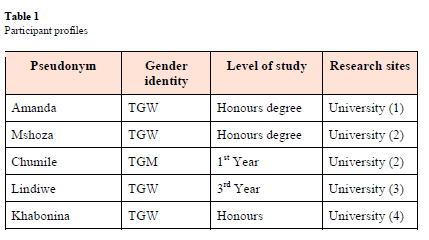
In this qualitative study, guided by the interpretive paradigm (Cresswell, 2014), I aimed to explore the lived experiences of transgender students in cisnormative university environments. Using purposive sampling, I selected five self-identified transgender students from four different South African universities based on their capacity to provide detailed insights into their experiences. The sample included four transgender women (TGW) and one transgender man (TGM) from diverse locations and academic levels (see Table 1).
Data was collected through three cycles using the arts-based approach of draw-and-tell and discussive processes (Pentassuglia, 2017) to maintain the triangulation advocated by Lincoln and Guba (1985). In the first cycle, participants received individual training on using draw-and-tell for data collection, and they signed consent forms. During the second cycle, participants did a drawing reflecting their experiences, guided by the following prompts:
•• Create a symbolic drawing that represents your resilience and reflects the challenges you frequently encounter when expressing your gender at your enrolled institution. How do you navigate and respond to systemic oppression? Illustrate your response through a drawing.
•• Provide a caption (title) for your artwork and write a brief paragraph explaining its meaning. Please note that the quality of the drawing is not important; what matters is how effectively it captures your perceptions and lived experiences.
The third cycle involved discussive processes during which each participant and I discussed the meanings behind their drawings, with discussive processes lasting 60-90 minutes. I analysed the data using Interpretative Phenomenological Analysis (IPA), following the steps of transcript review, thematic development, and cross-case analysis.
Ethical clearance was granted by the University of Johannesburg's Faculty of Education Research Ethics Committee2. To protect participants' anonymity, pseudonyms were used, and the names of specific institutions were omitted in response to concerns about potential discrimination. To ensure trustworthiness, I shared transcribed audio recordings with participants for member checking and maintained an audit trail following Lincoln and Guba (1985). Throughout the discussive process, I kept a reflexive journal to acknowledge my biases. Participant quotes were incorporated to enrich the findings and enhance the transferability of the results.
Data findings and discussions
The key themes that emerged are explored below, drawing from participants' experiences and their approaches to resisting discrimination and cisnormativity in universities. The findings indicate that transgender students challenge systemic oppression through a combination of resilient self-preservation mechanisms, social belonging, and peer solidarity. Each theme represents a distinct yet interconnected form of resistance that helps transgender students navigate, endure, and contest the oppressive learning environments.
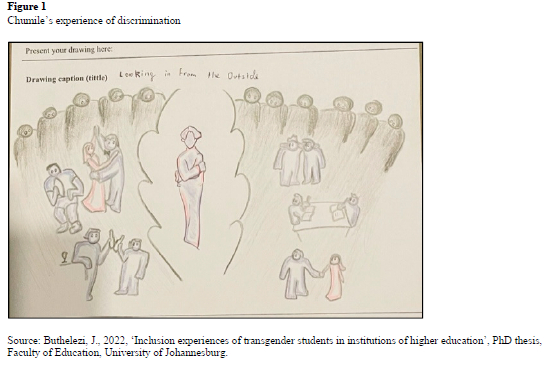
Self-preservation in the face of transphobic discrimination3 about his drawing (see figure 1), he expressed that he is excluded from various facilities at the university. For example, he struggles to access a bathroom that accommodates him on campus. They said, "My drawing is about the discrimination that I am currently experiencing as a first-year student. How can I struggle to go to the bathroom in this institution?"
Most of the participants in this study highlighted that they experience discrimination and adversity in higher education. When I engaged with Chumile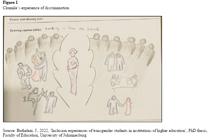
Similarly, Mshoza said that individuals in positions of power, such as security guards and lecturers, do not prioritise the human rights of transgender students. They explained,
As a trans student, I think I am bullied at the gate, by those security guards who always question me about my gender and physical experiences. I do not think I must always explain myself to them. Even lecturers say things that are hurtful to me sometimes.
Given these exclusionary experiences, transgender students adopt resilient strategies to navigate cisnormative learning environments (Hillier et al., 2020). Chumile pointed out that his drawing symbolises his isolation as a form of dealing with discrimination and microaggression. He explained that isolating himself from university facilities, such as not residing in a student residence and not playing varsity sports, serves as a coping mechanism to resist oppression in the institution. Isolation emerges as a significant form of self-protection against microaggressions, misgendering, and systemic exclusion (see Siegel, 2019). This isolation, while protective, highlights the emotional cost of systemic exclusion since it limits opportunities for social connection and belonging. When asked to elaborate on his drawing, he explained,
One of the things I wanted to convey in my drawing is how intimidating it feels to be in social situations where all eyes are on you, like in looming crowds. I feel like I don't fit in. I don't like group activities or presentations. Because of that, I have distanced myself from social activities, as I feel more comfortable alone. This way, I don't have to constantly wonder, do they see me as a girl or a boy? Do I have to explain again that I am a trans man? Do I have to remind them that I am him, not her?
Chumile's experiences evoke feelings of doubt and anxiety, causing him to question his identity and surroundings. These emotions impact negatively his self-efficacy, making it difficult for him to engage in group activities or complete presentations. Transgender and gender non-conforming (TGNC) individuals face significant mental health risks because of social stressors, stigma, and discrimination (Bull & Shannon, 2025; Tankersley et al., 2021; Valentine & Shipherd, 2018). These challenges contribute to increased rates of depression, anxiety, substance use disorders, and suicidality among TGNC adults (Campbell, 2023; Valentine & Shipherd, 2018). For Chumile, isolation becomes a coping mechanism to navigate the oppression he experiences in the institution and mitigate its effects.
Mshoza also adopts the same strategy. She avoids using the student bus when traveling from home to campus because she feels that her gender identity is constantly scrutinised there. She mentioned that at certain times there is no one at the bus stop and she uses it for isolation. She explained.
The bus stop is a healing place, not the bus. I do not use the bus because students are mean and transphobic. But the bus stop is fine. I just sit alone and reflect on what happened after being told that I am not a woman. I remember an incident when a security guard took my student card and asked random students around us to verify if the card belonged to me. They all said 'No' and laughed. I had a class test that day, but I couldn't go to class. I had to miss the test. Instead, I went to the bus stop and ngakhihla esikaNandi isililo (I just wept).
Individuals experiencing homophobia, transphobia, and other forms of oppression often resort to self-isolation as a coping mechanism to address discrimination. However, this strategy can increase stress since socially isolated individuals tend to perceive everyday events as being more stressful. While initially isolation may seem like an effective means of self-protection, prolonged isolation can lead to feelings of exclusion, imposter syndrome, and diminished focus and performance (Campbell, 2023).
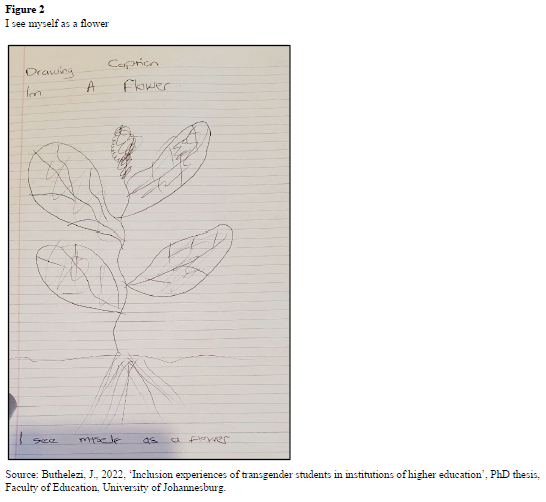
Lindiwe tended to use self-love to resist oppression in HEI. She drew a flower to represent her experiences, and she entitled her drawing "I see myself as a flower."
During the discussive process, Lindiwe explained her drawing.
If we look at the flower, it does not change. If I can plant this kind of a flower next to a different plant, for example, grass, the flower will not change. It does not change based on the plant that is next to it. I can compare this situation with myself. Ok, I am a rose. I can't change to be another plant just because the next plant is different from me. I cannot change because people think being a boy is acceptable and being a transgender woman is not normal.
Lindiwe used the metaphor of a flower to describe her exclusion experiences. She explained that leaves come and go on a plant, like challenges of exclusion for students with transgender identities. In her analysis of the metaphor, she said the roots and stem represented her resilience towards forms of oppression. This metaphorical understanding highlights the urgent need for ongoing support, inclusive policies, and a commitment to addressing the root causes of discrimination (see Lange, 2024). According to her, the roots keep on growing no matter how many challenges the flower faces. During the discursive process, Lindiwe said that her drawing demonstrates her resilience towards forms of oppression in the institution of learning. According to Ungar (2008), resilience is about recovering after "experiences of trauma, either natural or human in design" (p. 346). This metaphor illustrates her steadfastness and refusal to conform to societal pressures, even when faced with discrimination and exclusion. The symbolic use of natural imagery offers a powerful framework for understanding realities such as resilience (Pentassuglia, 2017).

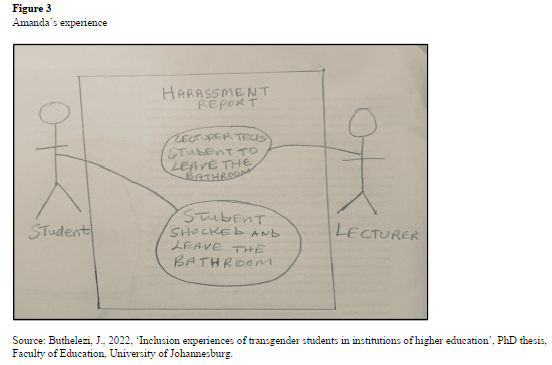
Amanda is another participant who experienced discrimination from a lecturer who was fully aware of her gender identity in a particular HE setting. Although she was shocked by the lecturer's behaviour, Amanda chose to prioritise her emotional well-being by walking away from the situation. During the discussive process, she explained that when confronted with discrimination, she prefers to protect her emotional state while still affirming her identity. In their study, Beukes and Francis (2020) found that individuals who have marginalised identities often walk away when experiencing discrimination and marginalisation, especially from people they trust, such as lecturers, friends, family members, or classmates. However, avoiding these situations does not eliminate exclusion, discrimination, and othering (Goldberg et al., 2019; Storrie & Rohleder, 2018). Despite being open about her identity with the lecturer, Amanda was subjected to targeted exclusion in a gendered space, which suggests a lack of genuine acceptance or respect for her identity in the institution (see Hollingsworth et al., 2017, and Sutherland & Feltey, 2017). She narrated this experience during a discussion.
I was in the bathroom, and my lecturer told me I should leave the bathroom. It was shocking because I know that the lady knows that I am trans; I told her before. So, I was just wondering why she was saying all of those things she was saying. Mind you, I am in her class. My drawing is just about that, and when she said all of that, I had to leave. Even if I wanted to file for the harassment report, the system was going to side with her. No one believes that a transgender woman can be harassed.
Msibi (2012) argued that authorities, such as lecturers (and administrative personnel) in educational institutions, can marginalise LGBTQI+ students. Amanda pointed out that she did not respond to these transphobic remarks but walked away instead as a strategy to cope with the pain, she said,
Andizange ndithethe nto (I did not say anything), but I just walked away.
See Figure 3.
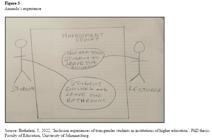
Amanda's drawing illustrates the intersection of personal vulnerability and systemic injustice as outlined by Sutherland and Feltey (2017). The perception that reporting harassment would be futile, because "the system was going to side with her [the lecturer]" exposes a lack of institutional support and credibility for transgender voices (see Buthelezi & Brown, 2023). Amanda's utterance that "no one believes a TGW can be harassed" shows how cisnormativity and institutional bias invalidate transgender experiences, silencing the ability of transgendered individuals to seek redress and justice (Bull & Shannon, 2025). As Amanda pointed out, she did not report her lecturer's transphobic behaviour. She explained,
I didn't report it at that time, but as time went by, I told someone. But I don't think that if it had been reported, anything would have been done, because I know people who received no assistance even after reporting.
University employees who discriminate against students based on gender expression or sexual orientation must be held accountable. However, addressing transphobia relies on the reporting of incidents by victims since this is significant for recognising the prevalence and impact of such discrimination (DePalma & Jennett, 2010). However, different factors affect a victim's decision whether to report transphobic incidents, one being, as mentioned by Amanda, that authorities will not be supportive or may dismiss the account, which, of course, discourages transgender students significantly from reporting transphobic incidents.
The lived experiences of transgender students who see this lack of support from authorities, such as lecturers, affect their self-efficacy and resilience. According to Bandura and Wessels (1977), self-efficacy, the belief in one's ability to impact events and outcomes, is a significant factor in human agency. Therefore, when transgender students are subjected to learning environments that are ineffective because of bias, this can gradually destroy their self-efficacy and lead to emotional withdrawal.
Social belonging and peer solidarity as a resistance strategy
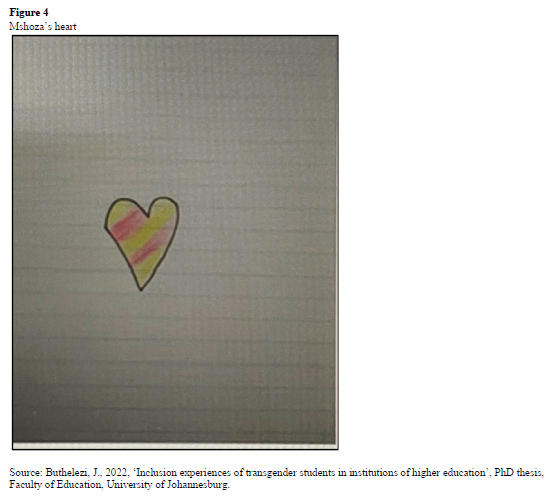
While self-preservation strategies may offer some resistance, the participants of this study also find strength and resilience through collective action and engagement with supportive communities in their institutions. This theme highlights how social belonging and peer solidarity serve as essential tools for resisting systemic oppression in HEIs. For transgender students, building affirming spaces in institutions is an important form of resistance (Alimahomed, 2010). Mshoza's narrative highlights the importance of community support in promoting self-acceptance and resilience. Her drawing (see figure 4) of a heart symbolises the love and sense of belonging she found in the LGBTQI+ community, which alleviated feelings of alienation experienced elsewhere on campus. According to Pryor (2018), a university's climate should create a sense of safety, belonging, and engagement, and provide transgender students with a community that reflects shared values. Such an environment contributes to building their self-efficacy. Bandura and Wessels (1977) asserted that the marginalised populations of the society thrive through social persuasion and can develop self-efficacy in environments where they feel a sense of safety and belonging.

During the discursive discussion, Mshoza mentioned that being part of various LGBTQI+ communities not only provided emotional support but also strengthened her ability to challenge systemic oppression by reinforcing her identity and affirming her self-worth. These communities serve as a means of empowerment, helping to challenge hegemonic notions of queer identity (Alimahomed, 2010). Mshoza believed that joining a support group on campus played a critical role in how she navigated university challenges during her studies. This is because such support groups provide a common culture, shared values, and a collective vision, which are essential to mitigating cisnormative barriers in HEIs (Mampane & Brown, 2021). According to Bandura and Wessels (1997), communities such as LGBTQI+ support networks provide transgender individuals with vicarious experiences, allowing them to observe peers successfully challenging transphobic practices. These experiences reinforce self-efficacy and strengthen their belief in their ability to advocate for change (Meyer, 2003). For Mshoza, witnessing others navigate discrimination and push for institutional transformation empowers transgender students, encouraging them to engage in activism, demand inclusive policies, and develop resilience in the face of systemic barriers.
Khabonina and Chumile shared similar sentiments regarding the significance of social groups in HEIs in resisting discrimination. They emphasised that these groups offer training and workshops on gender-affirming policies and practices. Khabonina stated,
. . . being around trans people from the LGBTQI+ community on campus is encouraging. We meet once or twice a week just to discuss some of our challenges. They stand by my side always. So, those are the people who help me to face each and every day, to face any obstacle that might come. We also have some workshops to discuss policy.
One of the most powerful forms of structural resistance is the strategic use of legal knowledge to hold institutions accountable. As Khabonina pointed out, LGBTQI+ communities on campus engage actively with policy-related issues. It is crucial for transgender students to be aware of their human rights so that they can challenge and resist transphobia and cisnormativity (Francis, 2023). Understanding policies such as those on which the constitution is based and South Africa's Alteration of Sex Description and Sex Status Act 49 of 2003 is a powerful approach for transgender students to use to oppose discrimination (Mavhandu-Mudzusi & Sandy, 2015). Institutional policies that validate gender diversity contribute to inclusive environments and help dismantle systemic barriers.
Amanda recognised the importance of attending seminars and workshops to educate herself on her legal rights. She said,
I also learned about the Sex Status Act 49 when I joined the LGBTQI+ group. Then I started to demand that security personnel use my preferred name instead of the one on my access card.
When transgender individuals are empowered and knowledgeable about their rights, they are better equipped to resist various forms of oppression (Francis, 2023). For instance, Mshoza actively demanded institutional recognition of her gender identity. However, Lindiwe raised concerns about the LGBTQI+ support structures in her institution. According to her, the directors of these on-campus support structures are not queer individuals, and when they organise workshops, they do not invite non-conforming identities such as cisgender lecturers and students. She expressed her concerns in saying,
So far, I am not sure, but since I arrived at the institution two years ago, I have attended webinars organised by the transformation team or something similar. But in my observation, the people who attend these events are students from the LGBTQI+ community, and I haven't seen any of my lecturers there or any straight people. I guess straight people do not care about issues that do not affect them.
Lindiwe recognises that webinars and workshops play a crucial role in curbing and resisting transphobia. However, she raises an important concern since cisgender students, administrators, and university personnel are often not invited to these events. Consequently, while empowering those who are already knowledgeable about LGBTQI+ challenges in HEIs is valuable, it remains important to engage a broader audience. Excluding those who lack awareness does little to educate transphobic personnel and administrators in higher education (Goldberg et al., 2019). In her view, the lack of attendance from cisgender individuals may be perceived as a sign of indifference toward the inclusion of transgender students in HEIs.
Limitations of the study and implications for future research
The study's small sample size presents two challenges: generalisability of the study because the same sample prioritises depth over breadth (see Mohammadi et al., 2023); and sampling only one TGM highlights the lack of gender diversity or limited representations of TGM compared to TGW. To address these challenges, future research could adopt a mixed-methods approach, integrating the statistical analysis of quantitative data with the rich, contextual insights of qualitative methods. Increasing the sample size and ensuring representation across diverse gender identities would also provide a broader understanding of transgender students' lived experiences in HEIs. Longitudinal studies could reveal how institutional policies and environments affect transgender students over time, while comparative research across HEIs may highlight effective practices and ongoing challenges.
Conclusion and recommendations
In this paper, I have explored the lived experiences of five transgender students who have adopted different resilience strategies to negotiate cisnormative university environments. The participants highlighted their resilience strategies, such as self-preservation, using peer support, and activism, to oppose institutional marginalisation. These strategies, while empowering in themselves, demonstrate the persistent failures of HEIs to establish inclusive and gender-affirming learning environments for transgender students (Alimahomed, 2010; Buthelezi & Brown, 2023). Despite constitutional protections, transgender students continue to experience systemic discrimination that impacts negatively their academic achievement and emotional well-being. The findings show how mastery experiences, vicarious learning, and social persuasion encourage resilience and reinforce a sense of agency for students (Bandura,1977; Bandura & Wessels, 1997). However, the responsibility to resist and survive in inequitable systems should not fall solely on transgender students. HEIs must shift from passive inclusion to active transformation through the implementation of gender-inclusive policies aligned with national legislation, such as the Alteration of Sex Description and Sex Status Act (PEPDUPA) (No. 49 of 2003). This transformation also requires integrating transgender perspectives across the curriculum (see Gray, 2023), enforcing compulsory staff training on gender diversity, and promoting student sensitisation to create inclusive campus cultures. Beyond policy, institutions must engage in continual evaluation to address systemic oppression and ensure the full and equitable participation of transgender students in HEIs.
References
- Adams, E. M. (2023). Transforming higher education for the betterment of trans students. The Vermont Connection, 44(1), 85-97. https://scholarworks.uvm.edu/tvc/vol44/iss1/14
- Alimahomed, S. (2010). Thinking outside the rainbow: Women of colour redefining queer politics and identity. Social Identities, 16(2), 151-168. https://doi.org/10.1080/13504631003688849
- Bandura, A. (1977). Self-efficacy: Toward a unifying theory of behavioural change. Psychological Review, 84(2), 191-215. https://doi.org/10.1037/0033-295X.84.2.191
- Bandura, A. (2000). Exercise of human agency through collective efficacy. Current Directions in Psychological Science, 9(3), 75-78. https://doi.org/10.1111/1467-8721.00064
- Bandura, A., & Wessels, S. (1997). Self-Efficacy. Cambridge: Cambridge University Press.
- Bartholomaeus, C., & Riggs, D. W. (2017). Whole-of-school approaches to supporting transgender students, staff, and parents. International Journal of Transgenderism, 18(4), 361-366. https://doi.org/10.1080/15532739.2017.1355648
- Bender-Baird, K. (2024). Gateway to dignity: Legal name changes for transgender people in the united states. Social Problems, 49(0), 1-16. https://doi.org/10.1093/socpro/spae049
- Beukes, A. (2020). Queering gender: The life histories of gender counter-normative students at Stellenbosch University [Doctoral dissertation, Stellenbosch University].
- Beukes, A., & Francis, D. A. (2020). We don't want to stand out, yet some of us do": The experiences and responses of gender counter-normative students at Stellenbosch University. South African Journal of Higher Education, 34(6), 10-26. https://dx.doi.org/10.20853/34-6-4105
- Boonzaier, F., & Mhkize, L. (2018). Bodies out of place: Black queer students negotiating identity at the university of Cape Town. South African Journal of Higher Education, 32(3), 81-100. http://dx.doi.org/10.20853/32-3-2514
- Boyd, A., & Wei, J. (2024). Stretched kinship: Queer female university students negotiating family and identity. Sexualities, 27(8), 1493-1509. https://doi.org/10.1177/13634607231152598
- Bradbury, J., & Mashigo, T. (2018). Finding a place to be ourselves: Narratives of young black women activists. South African Journal of Higher Education, 32(3), 30-44. http://dx.doi.org/10.20853/32-3-2495
- Bull, A., & Shannon, E. (2025). How do institutional gender regimes affect formal reporting processes for sexual harassment? A qualitative study of UK higher education. Law & Policy, 47(1), 1-22. https://doi.org/10.1111/lapo.12255
- Buthelezi, J., & Brown, A. (2023). In (ex) clusion of transgender students in South African higher education institutions. Transformation in Higher Education, 8, 278-289. https://doi.org/10.4102/the.v8i0.278
- Butler, J. (1999). Revisiting bodies and pleasures. Theory, Culture & Society, 16(2), 11-20. https://doi.org/10.1177/02632769922050520
- Butler, J. (2001). Doing justice to someone: Sex reassignment and allegories of transsexuality. glq: A Journal of Lesbian and Gay Studies, 7(4), 621-636.
- Campbell, K. M. (2023). Mitigating the isolation of minoritised faculty in academic medicine. Journal of General Internal Medicine, 38(7), 1751-1755. https://doi.org/10.1007/s11606-022-07982-8
- Chimatira, R., Jebese-Mfenqe, D., Chikwanda, J., Sibanda, E., Thengwa, Q., Futshane, B., & Gaga, S. (2023). Human rights violations among men who have sex with men and transgender people in South Africa. Southern African Journal of HIV Medicine, 24(1), 1417-1423. https://doi.org/10.4102
- Colburn, S. (2020). Beyond the bathroom wars: Increasing gender-free restroom access in libraries. College & Research Libraries News, 81(8), 387-390. https://doi.org/10.5860/crln.8.1.8.387
- Combrinck, Y., & van Wyk Neltjie, C. (2024). Transgender student being in higher education: An integrative review. Gender and Behaviour, 22(2), 22698-22708.
- Cresswell, T. (2014). Place: An Introduction. John Wiley & Sons.
- Currier, A. (2015). Transgender invisibility in Namibian and South African LGBT organizing. Feminist Formations, 27(1), 91-117. https://dx.doi.org/10.1353/ff.2015.0000.
- DePalma, R., & Jennett, M. (2010). Homophobia, transphobia and culture: Deconstructing heteronormativity in English primary schools. Intercultural Education, 21(1), 15-26. https://doi.org/10.1080/14675980903491858
- Doan, P. L. (2007). Queers in the American City: Transgendered perceptions of urban space. Gender, Place and Culture, 14(1), 57-74. https://doi.org/10.1080/09663690601122309
- Francis, D. A. (2023). "Did you just say I was lit?" Transgender and non-binary youth doing gender: Resisting cisnormativity in South African schools. Journal of Gender Studies, 33(5), 686-697. https://doi.org/10.1080/09589236.2023.2172386
- Francis, D., & Monakali, E. (2021). 'Lose the act': Pedagogical implications drawn from transgender and non-binary learners' experiences of schooling. Pedagogy, Culture & Society, 29(5), 715-731. https://doi.org/10.1080/14681366.2021.1912159
- Gamarel, K. E., King, W. M., Mouzoon, R., Xie, H., Stanislaus, V., Iwamoto, M., Suico, S., Nemoto, T. & Operario, D. (2021). A "tax" on gender affirmation and safety: Costs and benefits of intranational migration for transgender young adults in the San Francisco Bay area. Culture, Health & Sexuality, 23(12), 1763-1778.
- Goldberg, A. E., Beemyn, G., & Smith, J. Z. (2019). What is needed, what is valued: Trans students' perspectives on trans-inclusive policies and practices in higher education. Journal of Educational and Psychological Consultation, 29(1), 27-67. https://doi.org/10.1080/10474412.2018.1480376
- Goldberg, A. E., Smith, J. Z., & Beemyn, G. (2020). Trans activism and advocacy among transgender students in higher education: A mixed mixed-methods study. Journal of Diversity in Higher Education, 13(1), 66-84. https://doi.org/10.1037/dhe0000125
- Gray, J. (2024). Living in anti -intellectual times: Addressing transgender inclusion in second language teaching and teacher education. Tesol Quarterly, 58(2), 932-953. https://doi.org/10.1002/tesq.3265
- Hadj-Moussa, M., Ohl, D. A., & Kuzon Jr, W. M. (2018). Evaluation and treatment of gender dysphoria to prepare for gender confirmation surgery. Sexual Medicine Reviews, 6(4), 607-617. https://doi.org/10.1016/j.sxmr.2018.03.006
- Hillier, A., Kroehle, K., Edwards, H., & Graves, G. (2020). Risk, resilience, resistance and situated agency of trans high school students. Journal of LGBT Youth, 17(4), 384-407. https://doi.org/10.1080/19361653.2019.1668326
- Hiner, H., & Troncoso, L. (2021). LGBTQ+ Tensions in the 2018 Chilean feminist Tsunami. Bulletin of Latin American Research, 40(5), 679-695. https://doi.org/10.1111/blar.13331
- Hollingsworth, D. W., Cole, A. B., O'Keefe, V. M., Tucker, R. P., Story, C. R., & Wingate, L. R. (2017). Experiencing racial microaggressions influences suicide ideation through perceived burdensomeness in African Americans. Journal of Counselling Psychology, 64(1), 104-111. https://doi.org/10.1037/cou0000177
- Johnston, L., & Longhurst, R. (2010). Space, place, and sex: Geographies of sexualities. Rowman & Littlefield.
- Jones, C., & Slater, T. (2020). The toilet debate: Stalling trans possibilities and defending 'women's protected spaces.' The Sociological Review, 68(4), 834-851. https://doi.org/10.1177/0038026120934697
- Khan, K. (2017). Intersectionality in student movements: Black queer womxn and nonbinary activists in South Africa's 2015-2016 protests. Agenda, 31(3/4), 110-121. https://doi.org/10.1080/10130950.2017.1396011
- Kollman, K. (2024). The dilemmas of diversity in sexuality movements. Global Perspectives, 5(1), 1-10. https://doi.org/10.1525/gp.2024.124822
- Lange, A. C. (2024). Transgender men and non-binary students managing their identities to pay for college. The Review of Higher Education, 48(1), 129-159. https://dx.doi.org/10.1353/rhe.2024.a937146
- Lincoln, Y. S., & Guba, E. G. (1985). Naturalistic Inquiry. London: Sage.
- Mahali, A., & Matete, N. (2022). #Mbokodoleadus: The gendered politics of black womxn leading campus-based activism in South Africa's recent university student movements. Journal of Contemporary African Studies, 40(1), 132-146. https://doi.org/10.1080/02589001.2021.1946490
- Mahmoodi. H, Mohammad B. F., & Sufi, S. (2023). Comparison of depression, suicidal ideation, and social support between transsexual people with and without gender change. Sci J Forensic Med, 25(3),131-148.
- Marques, A. C. (2020). Telling stories: telling transgender coming-out stories from the UK and Portugal. Gender, Place & Culture, 27(9), 1287-1307. https://doi.org/10.1080/0966369X.2019.1681943
- Matthyse, G. (2017). Heteronormative higher education: Challenging this status quo through LGBTIQ awareness-raising. South African Journal of Higher Education, 31(4), 112-126. http://dx.doi.org/10.20853/31-4-890
- Mavhandu-Mudzusi, A. H., & Sandy, P. T. (2015). Religion-related stigma and discrimination experienced by lesbian, gay, bisexual and transgender students at a South African rural-based university. Culture, Health & Sexuality, 17(8), 1049-1056. https://doi.org/10.1080/13691058.2015.1015614
- Meyer, I. H. (2003). Prejudice, social stress, and mental health in lesbian, gay, and bisexual populations: Conceptual issues and research evidence. Psychological Bulletin, 129(5), 674-697. https://doi.org/10.1037/0033-2909.129.5.674
- Mizock, L., & Mueser, K. T. (2014). Employment, mental health, internalized stigma, and coping with transphobia among transgender individuals. Psychology Of Sexual Orientation And Gender Diversity, 1(2), 146-158. http://dx.doi.org/10.1037/sgd0000029
- Msibi, T. (2012). 'I'm used to it now': Experiences of homophobia among queer youth in South African township schools. Gender and Education, 24(5), 515-533. https://doi.org/10.1080/09540253.2011.645021
- Nicolazzo, Z. (2017). Compulsory heterogenderism: a collective case study. NASPA Journal About Women in Higher Education, 10(3), 245-261. https://doi.org/10.1080/19407882.2017.1351376
- Paceley, M. S., Goffnett, J., Diaz, A. L., Kattari, S. K., Navarro, J., & Greenwood, E. (2021). "I didn't come here to make trouble": Resistance strategies utilized by transgender and gender diverse youth in the Midwestern US. Youth, 1(1), 29-46. https://doi.org/10.3390/youth 1010005
- Peca, K. (2000). Critical theory in education: Philosophical, research, socio-behavioural, and organizational assumptions. https://eric.ed.gov/?id=ED450057.
- Pentassuglia, M. (2017). "The art (ist) is present": Arts-based research perspective in educational research. Cogent Education, 4(1), 1-12.
- Pham, J. M. (2023). queer space and alternate queer geographies: LBQ women and the search for sexual partners at two LGBTQ-friendly US universities. In Geographies of Sexualities (pp. 55-67). Routledge.
- Phipps, C. (2021). Thinking beyond the binary: Barriers to trans- participation in university sport. International Review for the Sociology of Sport, 56(1), 81-96. https://doi.org/10.1177/1012690219889621
- Pryor, J. T. (2018). Visualizing queer spaces: LGBTQ students and the traditionally heterogendered institution. Journal of LGBT Youth, 15(1), 32-51. https://doi.org/10.1080/19361653.2017.1395307
- Pryor, J. T., Ta, D., & Hart, J. (2016). Searching for home: Transgender students and experiences with residential housing. College Student Affairs Journal, 34(2), 43-60. https://dx.doi.org/10.1353/csj.2016.0011
- Pullen-Sansfaçon, A. P., Pineault, D., Davis, J., Dyer, J., Julie, J., Manning, K. E., Temple-Newhook, J., & Pickett, S. (2021). Applying self-directed groupwork and social action research methodology with francophone parents of trans children and youth in rural Quebec. Groupwork, 30(1), 114-131. https://doi.org/10.1921/gpwk.v30i1.1529
- Rehmat, S., Ahmed, S. Z., & Sultan, S. (2025). Intersectional stigma's consequences on transgender students' mental health, motivation, and academic performance. Social Science Review Archives, 3(1), 493-511. https://doi.org/10.70670/sra.v3i1.326
- Republic of South Africa (RSA). (1996). Constitution of the Republic of South Africa (Act no. 108 of 1996) retrieved November 13, 2024, from https://www.justice.gov.za/legislation/constitution/SAConstitution-webeng-02.pdf.
- Republic of South Africa (RSA). (2003). Alteration of Sex Description and Sex Status (Act no. 49 of 2003: PEPDUPA) retrieved 05 Jan, 2025, from https://www.gov.za/sites/default/files/gcis_document/201409/a49-03.pdf.
- Reygan, F., & Lynette, A. (2014). Heteronormativity, homophobia and 'culture' arguments in KwaZulu-Natal, South Africa. Sexualities, 17(5/6), 707-723. https://doi.org/10.1177/1363460714531267
- Riggs, D. W., & Bartholomaeus, C. (2018). Gaslighting in the context of clinical interactions with parents of transgender children. Sexual and Relationship Therapy, 33(4), 382-394. https://doi.org/10.1080/14681994.2018.1444274
- Santos, T. C., Mann, E. S., & Pfeffer, C. A. (2021). Are university health services meeting the needs of transgender college students? A qualitative assessment of a public university. Journal of American College Health, 69(1), 59-66. https://doi.org/10.1080/07448481.2019.1652181
- Seelman, K. L. (2014). Recommendations of transgender students, staff, and faculty in the USA for improving college campuses. Gender and Education, 26(6), 618-635. https://doi.org/10.1080/09540253.2014.935300
- Sinclair-Palm, J., & Chokly, K. (2023). 'It's a giant faux pas': Exploring young trans people's beliefs about deadnaming and the term deadname. Journal of LGBT Youth, 20(2), 370-389. https://doi.org/10.1080/19361653.2022.2076182
- Singh, A. A. (2013). Transgender youth of colour and resilience: Negotiating oppression and finding support. Sex Roles, 68(0), 690-702. https://doi10.1007/s11199-012-0149-z
- Stone, A. L. (2009). More than adding a T: American lesbian and gay activists' attitudes towards transgender inclusion. Sexualities, 12(3), 334-354. https://doi.org/10.1177/1363460709103894
- Storrie, R., & Rohleder, P. (2018). 'I think if I had turned up sporting a beard and a dress then you get in trouble' : Experiences of transgender students at UK universities. Psychology & Sexuality, 9(4), 317-328. https://doi.org/10.1080/19419899.2018.1492435
- Sutherland, J. A., & Feltey, K. M. (2017). Here's looking at her: An intersectional analysis of women, power and feminism in film. Journal of Gender Studies, 26(6), 618-631. https://doi.org/10.1080/09589236.2016.1152956
- Tankersley, A. P., Grafsky, E. L., Dike, J., & Jones, R. T. (2021). Risk and resilience factors for mental health among transgender and gender nonconforming (TGNC) youth: A systematic review. Clinical Child and Family Psychology Review, 24(2), 183-206. https://doi.org/10.1007/s10567-021-00344-6
- Tsfati, M., & Nadan, Y. (2021). Queering the periphery and challenging the center: Transgender students in Israeli Higher Education. Gender, Place & Culture, 28(8), 1174-1195. https://doi.org/10.1080/0966369X.2020.1784103
- Valentine, G. (1995). Out and about: Geographies of lesbian landscapes. International Journal of Urban & Regional Research, 19(1), 96-111. https://doi.org/10.1111/j.1468-2427.1995.tb00492.x
- Valentine, S. E., & Shipherd, J. C. (2018). A systematic review of social stress and mental health among transgender and gender non-conforming people in the United States. Clinical Psychology Review, 66, 24-38. https://doi.org/10.1016/jxpr.2018.03.003
- Vincent, L. D., & Munyuki, C. (2017). 'It's tough being gay. 'gay, lesbian, and bisexual students' experiences of being 'at home'in South African university residence life. South African Journal of Higher Education, 31(4), 14-33. http://dx.doi.org/10.20853/31-4-869
- Weber, S. (2016). "Womanhood does not reside in documentation": queer and feminist student activism for transgender women's inclusion at women's colleges. Journal of Lesbian Studies, 20(1), 29-45. https://doi.org/10.1080/10894160.2015.1076238
Accepted: 18 June 2025
2 Clearance code: Sem 1-2022-038
3 These transcripts have not been edited.