"You can't get to every learner": Rethinking differentiated teaching and remediation in selected South African schools
Abstract
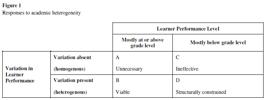
This paper examines why differentiated teaching is rarely observed in South African high schools, despite being widely promoted as a response to variation in learner performance. Drawing on classroom observations and teacher interviews across eight schools in the Eastern and Western Cape, we find little evidence of differentiated teaching in practice. We argue that the limited use of differentiated teaching reflects the structural constraints under which teaching takes place-curriculum pacing requirements, accountability for coverage, large classes, limited instructional time, and automatic progression. Under these conditions, the system produces a misalignment between learners' expected and actual levels of grade-preparedness, and large numbers of under-performers. A communal pedagogy emerges as a rational, adaptive response to the system-produced bottom-heavy learner performance distribution. Remediation features largely as external and parallel to the formal school system. Improving and supporting the quality of communalised pedagogies, and inserting remediation into the formal school day requires attention.
differentiated teaching; heterogeneity; remediation; communal teaching
 Thumbnail
 Thumbnail