#PicnicWriting! How springboard activities and outdoor inspiration enhance process writing skills of second language learners
Abstract
While teaching and learning activities often occur within classroom walls, it is noteworthy to consider anxiety-reducing writing interventions beyond these boundaries. However, the impact of supportive and sometimes outdoor environments on developing writing success remains under-researched. This paper explores the effectiveness of a springboard activity and an outdoor writing session in enhancing 16 Grade 8 and 9 second language learners' process writing skills within a co-curricular English language club (ELC) in a public high school in KwaZulu-Natal. The study draws on a broader participatory action research study, guided by a critical paradigm and founded on Freire's (1970) Critical Pedagogy and Krashen's (1982) Affective Filter Hypothesis, transforming the teaching and learning of English using more enjoyable activities in an ELC. The springboard activity, which included a film trailer, sparked engaging discussions and debate, fostering creativity and enhancing learners' brainstorming skills. To complement this activity, the outdoor session, picnic writing, provided a relaxed and comfortable environment where learners could enjoy their favourite snacks and work collaboratively to draft and edit a film review after watching a film together. By integrating springboard activities and an outdoor setting, the ELC reduced writing anxiety while promoting dialogue, as revealed in data from learners' written texts, field notes and my research journal. Findings suggest that such activities develop process writing skills and enhance learners' confidence and motivation for the writing process, resulting in a more profound and active engagement with English. This paper thus underscores the value of integrating outdoor writing interventions to reduce anxiety, enhance motivation, and foster a more engaging writing experience, encouraging teachers to rethink traditional classroom-bound approaches.
language club; process writing; outdoor activities; affective filter; motivation
Introduction
Given that writing is the most complex component of language (Husni, 2019; Salam, 2017; Tunagür, 2021) when compared to listening, speaking, and reading (Rahman et al., 2021), it can be daunting for learners who are facing second language learning anxiety. Often connected to negative feelings such as worry, frustration, low self-esteem, and tension, anxiety is an emotional barrier to learning (Gaki et al., 2023). In light of this, anxiety associated with learning a second language significantly affects learners' performance and academic achievement and has been found to impact writing skills. Despite this, limited research explores anxiety related to writing activities and even fewer studies address this through structured writing instruction (Busse et al., 2023).
Writing activities in second-language contexts remains largely unchanged. Toba et al. (2019) argued that difficulties with writing are not only due to the limitations in terms of writing skills, but that it also stems from the repetitive and unengaging teaching methods. Traditionally, teaching has followed the approach where the teacher imparts information, and learners are expected to passively absorb it. This method still dominates many schools, limiting more engaging classroom practices due to contextual factors such as large learner-teacher ratios (Gomathi & Radhakrishnan, 2017). The size and composition of a classroom significantly influence writing instruction; increasing class sizes make it more challenging to provide writing instruction that effectively addresses learners' individual needs (Graham, 2019). This issue is particularly prevalent in South African classrooms, where overcrowding remains a persistent challenge in many educational contexts. Van Wyk (2008, as cited in West & Meier, 2020) argued that overcrowded classrooms contribute to poor learning conditions due to limited space, inadequate ventilation, and high noise levels, which can reduce learners' attention and increase stress.
Outdoor settings have been found to promote relaxation, and support mental restoration (Simkin et al., 2020). However, teachers tend to avoid outdoor settings due to challenges such as limited knowledge and lack of motivation to incorporate outdoor learning environments (Kiviranta et al., 2024). In education, while an indoor environment can benefit learning, being exposed to nature is believed to improve learners' focus and attention (Kuo et al., 2019), ultimately reducing stress and promoting creativity. Reducing anxiety levels due to a low-stress environment leads to better acquisition of a language (Krashen, 1982). Thus, teachers are encouraged to create a supportive and inclusive writing environment that enhances learners' self-confidence in their English journey (Hardacre & Güvendir, 2020).
This paper, drawn from a broader study, examines how springboard activities, including viewing the film trailer of Zulu Wedding (AFISilverTheatre, 2021) and the full film Freedom Writers (LaGravenese, 2007), along with a relaxed, picnic-style setting on the school premises, supported learners in drafting and editing a film review to enhance their process writing skills. These activities, implemented as part of a co-curricular English language club (ELC), aimed to reduce learners' anxiety, increase motivation, and foster a more engaging and supportive writing experience.
Theoretical framework
The development of the ELC was guided by principles of Critical Pedagogy, which emphasise learner agency, dialogue, and collaborative knowledge construction (Freire, 1970). Emerging historically as a response to traditional, teacher-centred approaches, Critical Pedagogy emphasises learner agency, dialogue, and social empowerment. A central tenet is humanisation, which asserts that learning should draw on learners' lived experiences and cultural contexts to foster critical thinking, self-efficacy, and transformative engagement (Camangian, 2015).
Critical Pedagogy aligns with second-language learning research that recognises language as embedded in social and cultural contexts (Norton & Toohey, 2004). In this paper, learners engaged in a springboard activity, watching a film trailer followed by a full movie, to stimulate ideas and reflection. This activity, combined with an outdoor picnic writing session, provided a safe, interactive, and supportive environment that encouraged participation, collaboration, and learner reflection. By making choices about what and how to write, learners assumed responsibility for their learning, developing critical consciousness and agency as outlined by Aliakbari and Faraji (2011) and Camangian (2015).
The use of a critical pedagogy was justified because it supports transformative language learning; learners are active participants rather than passive recipients, encouraged to explore ideas, reflect critically on their strengths and challenges, and connect learning to their social and emotional experiences. Dialogue, reflection, and experiential activities like outdoor writing exemplify this approach (Batker et al., 2017; Freire, 1970; Mazdaee & Maftoon, 2012).
Krashen's Affective Filter Hypothesis and the ELC
While Critical Pedagogy shaped the club's design, Krashen's (1982) Affective Filter Hypothesis was used to frame the analysis of the study's findings. Krashen outlined five hypotheses in his Second Language Acquisition Theory. However, this paper is primarily grounded on the Affective Filter Hypothesis and its role in the ELC. The Input Hypothesis is also an important element and will be considered because it complements the affective filter in the learning process.
Input Hypothesis
Krashen's Input Hypothesis (1985, p. 2) stated that second language acquisition is most effective when learners are exposed to "comprehensible input," language that is slightly more advanced than their current proficiency but still within their understanding. His concept of is used, where "i" reflects the learners' present proficiency level and "+1" refers to the materials provided by the teacher that challenge the learners just beyond their existing abilities (Kakule, 2016; Krashen, 1982). Moreover, for learners to progress or improve, the input must be relevant and engaging, extending slightly beyond their current knowledge (Nath et al., 2017). The teacher's input contributes to the affective filter by offering meaningful, engaging content that lowers learners' anxiety and increases motivation, making them more receptive to language acquisition.
In the ELC, using a film trailer, full film, and the outdoor picnic writing session provided learners with engaging, context-rich input that helped bridge the gap between what they already knew and what they were yet to learn about the writing process. By making the input both accessible and stimulating, these activities supported process writing development. In other words, learners' existing knowledge (i) included basic writing skills such as sentence construction and familiarity with simple writing tasks. Still, they struggled with brainstorming and editing their work, which will be discussed later in this paper.
The "+1" emerged from structured brainstorming techniques and the film trailer of Zulu Wedding (AFISilverTheatre, 2021), which acted as a springboard for discussion and provided learners with a familiar, engaging context. This discussion then facilitated the brainstorming process, helping them organise their thoughts. The film, Freedom Writers (LaGravenese, 2007), also served as a springboard for their writing of the film review, providing learners with a relatable context to generate ideas. Furthermore, while engaging with the film, learners were exposed to complex themes and language that challenged them to think critically and write about controversial topics and themes in a structured review, promoting growth in their writing abilities.
While watching the film, learners were encouraged to take notes, prompting them to organise their thoughts and insights before drafting their reviews, thus making the writing process more structured and meaningful. Ultimately, input that was both engaging and slightly beyond learners' current abilities, such as using a film trailer and full film in the ELC, played a vital role in enhancing the writing process.
Affective Filter Hypothesis
The language acquisition device (LAD) is a proposed mechanism in the brain that is believed to be responsible for learning languages, functioning as an inherent system with principles that help children learn a language, understand the order in which this happens, and make common mistakes (Chomsky, 2009). However, not all input reaches the LAD because some is filtered based on learners' emotional states (Abukhattala, 2012; Luo, 2024). Three key variables influence the success of second language acquisition: motivation, self-confidence, and anxiety (Krashen, 1982). Krashen maintained that learners with high motivation, strong self-confidence, and low anxiety are more likely to succeed in second language acquisition.
Motivation
Motivation and a relaxed environment such as the picnic writing setting referred to in this paper, help lower the affective filter, allowing for more effective language acquisition (Krashen, 1982; Nath et al., 2017). A low affective filter, achieved through a comfortable and supportive learning environment, allows for better absorption of input. In this paper, using a relatable film and incorporating a picnic-style setting with snacks while learners wrote their film review created a fun and engaging learning experience, distinct from the traditional classroom routine for writing activities. This transformation in environment motivated learners by making the writing process feel more enjoyable, relaxed, and connected to real-life experiences. In turn, learners felt more invested and open to participating in the writing process.
Anxiety
When the learning environment is anxiety-inducing and stressful, less input is able to reach the LAD, hindering language acquisition (Krashen, 1982), especially for second language learners who already experience language-related anxiety. A negative atmosphere can hinder the processing of input, preventing learners from coping effectively with new information (Kakule, 2016). On the other hand, optimal learning conditions promote positive attitudes towards learning because reduced anxiety allows for more effective absorption of input, ultimately facilitating greater learning (Kakule, 2016; Wang & Wu, 2020). Nath et al. (2017) suggested that outdoor activities are particularly effective in lowering the affective filter because they create a relaxed and supportive environment for learners.
Self-confidence
Group work and social activities play a key role in reducing anxiety and boosting self-confidence, further enhancing language acquisition (Du, 2009). Creating social connections through activities that leverage social benefits is an effective strategy to improve learners' willingness to communicate (Han & Li, 2025), thus enhancing the learning experience. Learners in the ELC watching a film together and subsequently writing in a group setting outdoors emulated the benefits of group work and social activities because it lowered anxiety and fostered a supportive environment that boosts confidence. This is because watching a film together provided a shared experience, creating a sense of community and engagement, principles upon which the ELC was founded, while collaborative writing encouraged peer interaction and writing assistance.
In essence, learners who are highly motivated, confident, and experience low anxiety tend to have lower affective filters, allowing them to receive and process input more effectively. Conversely, those with low motivation, reduced self-confidence, and elevated anxiety are more likely to have higher affective filters, restricting the amount of input they can absorb (Listyani & Tananuraksakul, 2019).
The process writing approach
The process approach includes pre-writing (or planning), drafting, revising, and editing (Yeung, 2019). The Curriculum and Assessment Policy Statement (Department of Basic Education, 2012) recognised that when the process approach is applied to teaching writing, it leads to improved cognitive and metacognitive writing skills. A classroom that follows a process approach focuses on encouraging learners to think before writing, helping them set goals, plan their work, organise the structure and layout, and revise their drafts before finalising them for submission (Ngubane, 2021). The implication is that once learners understand the different stages in the writing process, they develop control over their writing while teachers support the development of their writing skills. Factors contributing to weak writing skills in secondary schools include limited scaffolding of writing in lower grades due to an overloaded curriculum and insufficient professional development in writing instruction (Ngubane, 2021).
Difficulties experienced during writing can cause learners' anxiety during writing activities (Tunagür, 2021). The factors that contribute to writing-related anxiety are diverse and numerous, and they are closely linked to the writing process; restricted vocabulary, insufficient knowledge of the writing process, unfamiliarity with text structures and genres, and limited writing experience contribute to writing-related anxiety (Gaki et al., 2023). These challenges underscore the crucial elements of providing support and appropriate strategies to help learners manage their anxiety and improve their writing skills.
In Rahman et al.'s (2021) study, 17 students worked through the full writing process, from outlining to finalising, with tailored feedback, developing a comprehensive understanding of writing principles and encouraging ongoing progress in their writing abilities. Similarly, Yeung (2019) highlighted a shift towards greater learner autonomy in writing and shed light on the role of various steps of the process writing approach in fostering this change. By examining the writing process of the participants, Yeung revealed how a multiple-draft approach, combined with teacher and peer feedback, supported the development of writing skills. Teaching using the writing process reveals that in some instances, it helps foster positive attitudes towards writing, increased motivation to learn, and a sense of competence (Ngubane, 2021). This approach, similar to the writing interventions in this study, shifted the focus from producing only the final copy, as was common in the English classroom, to valuing each stage of the writing process.
Outdoor activities and writing development
"Although our imaginations can take us anywhere, it can be hard at times to stretch our thinking purely in thought" (Kyllonen, 2019, p. 3). Thus, the use of outdoor classroom activities helps learners improve their writing skills by allowing them to observe their surroundings and develop critical thinking. Furthermore, the more teachers elicit learners' senses and increase the emotions they have from which to draw, inspiring creativity and writing (Kyllonen, 2019). While classroom lessons are essential, outdoor activities give learners the opportunity to explore and use their imagination in a more relaxed environment (Nundi et al., 2009, as cited in Husni, 2019). This approach encourages learning beyond just the classroom walls. It is worth noting that "without interaction with nature . . . people's abilities can be diminished"; interacting with nature can promote creativity and serve as writing inspiration (Manookin, 2018, p. 18).
A study by Hadi et al. (2021) examined the effectiveness of outdoor learning in improving writing skills among senior high school learners by using collaborative writing activities outside the classroom to complete descriptive text. A quantitative pre-experimental design involving a pre-test and post-test was applied to a class of Grade 9 learners, where results showed a significant improvement in their writing scores, confirming that outdoor learning activities can enhance their writing skills. Furthermore, collaborative writing was an effective activity that helped learners complete their writing tasks in outdoor classrooms (Hadi et al., 2021). Peer assessment is an alternative evaluation method that fosters learners' critical thinking and creativity skills; as they assess each other's writing, so they also enhance their own learning (Tunagür, 2021).
Manookin's (2018) research explored the impact of ecopedagogies and nature-based writing on English language learners at Utah Valley University, focusing on how nature-based activities, such as nature journals and a wilderness writing workshop, improved their writing skills, vocabulary, stress levels, and connection to the environment. Nature-based writing increases motivation, enhances writing skills, and reduces stress in English language learners; it also promotes richer vocabulary, more descriptive language, and narrows the gap between their first language and second language proficiency (Manookin, 2018). The study included a 4-day excursion to Capitol Reef National Park in Utah, where learners participated in a wilderness writing workshop. The trip provided English language learners with an immersive nature-based writing experience and allowed them to engage deeply with their surroundings and enhance their writing skills (Manookin, 2018). Similarly, an experimental design with pre-tests and post-tests was used to compare two groups in Indonesia; one taught with outdoor activities and the other without. The results indicated that the experimental group significantly improved their writing skills, confirming the positive effects of an outdoor environment (Husni, 2019). Both Manookin and Husni provided strong evidence that nature-based writing activities and outdoor learning environments significantly enhance English language learners' writing abilities, suggesting that incorporating such strategies can improve writing skills.
Integrating outdoor activities into writing activities positively impacts learner performance. However, it must be noted that even though leaving the school premises may not always be feasible, any outdoor space can stimulate senses, encouraging exploration, discovery, and reflection (Kyllonen, 2019). This is directly reflected in this paper, where the school playground was used instead of an actual park, demonstrating that any outdoor space can stimulate learners' creativity-enhancing motivation and alleviating writing anxiety. While the research cited emphasises placing learners in natural settings to write about their observations, these studies do not specifically address the use of outdoor spaces as a general writing environment, which this paper seeks to explore.
Methodology
Paradigm
The broader study on which this paper is based (Sheokarah, 2022), adopted a critical paradigm, which emphasises social transformation and emancipation. Originating from the Frankfurt School and elaborated by scholars such as Giroux (2009) and Asghar (2013), critical theory analyses dominant societal structures, exposing power relations and oppressive practices (Fuchs, 2015). It seeks to empower those who are marginalised by providing liberating environments and opportunities for agency (Asghar, 2013).
The paradigm is suitable for this paper because learners come from language backgrounds not prioritised at the school, where English is taught as a home language and serves as the medium of instruction. Many learners are therefore linguistically subordinated, facing challenges in learning English and a lack of motivation. The ELC aimed to address this by engaging learners as active participants in planning and implementing activities, fostering motivation through games and collaborative tasks, and providing a platform for voice and agency within a supportive environment.
Critical theory highlights the potential for change (Rush, 2004) and views education as inherently political, yet transformative (Freire, 1998). By adopting this paradigm, the study sought to enable learners to become agents of change in their learning and school context, countering exclusion and powerlessness through active engagement and transformation of conventional English teaching practices.
Research design
This paper emerges from a larger participatory action research study (Sheokarah, 2022), which focused on four cycles, each dealing with different language skills, within a co-curricular ELC. This paper, however, concentrates on Cycle 4 (writing) and examines the implementation of two interventions: viewing the film trailer of Zulu Wedding (AFISilverTheatre, 2021) and brainstorming a conversation between a father and daughter about an arranged marriage, and watching the film Freedom Writers (LaGravenese, 2007) and writing a review.
This paper adopts a qualitative approach to explore how the ELC provided a supportive and informal environment outside the traditional classroom, offering opportunities for learners to engage with writing skills through outdoor, low-anxiety activities. Due to financial constraints, it was not possible to visit a public park. Instead, the school ground was adapted to create a picnic-like setting, providing a relaxed outdoor environment that aligns with the ELC's goals of reducing anxiety and enhancing motivation for English language learning.
Participants
The learners were selected based on their voluntary involvement in the ELC, which provided opportunities for them to engage in English language development outside of their more formal English classroom setting. Participation in the ELC was voluntary and open to all Grade 8 and 9 learners. Thirty-five learners participated in the writing cycle interventions, including 20 Grade 8, and 15 Grade 9 learners. Of these, 16 volunteered for the after-school film review writing session, comprising 11 Grade 8 and five Grade 9 participants. Participation was self-selected, with learners choosing to engage based on interest and availability, reflecting the learner-driven nature of the ELC while ensuring transparency regarding participant selection.
Data generation methods
The writing cycle included the following data generation strategies: field notes, research journal, and learners' written texts (mind maps and film review). Data for the film review writing intervention (picnic) were collected over three sessions, each lasting approximately 90 minutes. The first session involved viewing the film trailer, and brainstorming skills. The second session focused on watching the full film, and the third session was dedicated to writing a film review. These sessions were held on separate afternoons to allow sufficient time for engagement and task completion.
The comprehension text, The King's Daughter (Hooyo, n.d.), one of the other interventions in the writing cycle, kindled a debate on gender issues, demonstrating that relatable stimuli can serve as an effective springboard for further activities. After reflecting on this activity, an important element of action research, learners and I decided that more stimuli should be used in the writing cycle.
Learners watched the trailer of the film Zulu Wedding (AFISilverTheatre, 2021), which tells the story of Lou, a dancer torn between following her dreams and honouring a traditional arranged marriage. Using the trailer, learners were tasked with imagining themselves as the main character and brainstorming a conversation with her father about resisting the forced marriage. These ideas were then discussed as a group, facilitating deeper engagement with the topic, and developing brainstorming skills.
At the learners' request to watch a film during this cycle, I chose Freedom Writers (LaGravenese, 2007) as an effective springboard for writing a film review. Set in Long Beach, California, Freedom Writers is based on a true story about a teacher who used innovative methods to inspire her learners in a racially divided school. The film follows the main character, Erin Gruwell, as she perseveres to unite her divided learners and motivate them to participate in the English classroom, despite them being led to believe that they were not capable of passing the subject. After watching the film, learners in the ELC were asked to write a film review using a template provided, following the process of brainstorming, drafting, and editing their work.
Data analysis
Within a qualitative approach, the data, generated in the form of words, provided rich descriptive detail that supported thematic analysis. Thematic analysis identifies patterns within the data that respond to the research questions and moves beyond summarisation to produce interpretive insights (Maguire & Delahunt, 2017). In this paper, data sources included field notes, research journal entries, and learners' written film reviews. Field notes served as a systematic record of events and interactions in the research setting. The research journal, by contrast, comprised descriptive logs of events and personal reflections, combining subjective and objective aspects throughout the study to enable a productive interdependence of these two strategies (Newbury, 2001). Following Maguire and Delahunt's (2017) steps, the process began with familiarisation through repeated reading of all data sources. Codes were generated from recurring ideas, words, and expressions, which were then grouped into themes that captured learners' attitudes, perceptions, and experiences during the writing cycle and film review activities.
Trustworthiness
It was important to ensure that the data generated and analysed reflected a true interpretation of events in the study (Cohen et al., 2011). Because this study adopted a qualitative approach, many measures of trustworthiness were undertaken. Firstly, prolonged engagement in the larger study and during the writing cycle allowed for the development of rapport, and provided sufficient time to understand learners' experiences (Korstjens & Moser, 2018). Secondly, data triangulation enhanced credibility through the use of multiple sources, including field notes, a research journal, and learners' written film reviews (Flick, 2014). Thirdly, member checking further strengthened trustworthiness by allowing participants to review the summary of data to confirm accuracy (Korstjens & Moser, 2018). These strategies ensured that the findings accurately represented participants' views.
Ethical considerations
Ethical procedures were adhered to by obtaining approval from the gatekeeper to conduct research with learners at the school (principal of the school). Additionally, ethical clearance was obtained from the university's Humanities and Social Sciences Research Ethics Committee (HSSREC/00000143/2019), after which consent was sought from both learners and their parents; the consent form explained the purpose of the study and outlined participants' ethical rights.
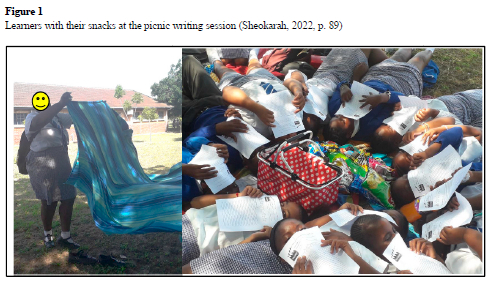
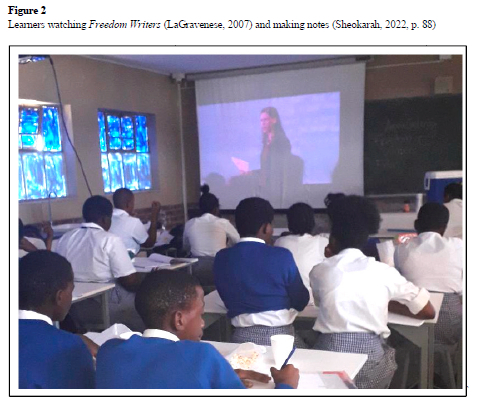
To uphold ethical standards, learners' faces are not visible in the images. During data generation, learners covered their faces with the film review template during the picnic writing, and photographs were taken from the back of the classroom when they watched the film, preventing identification. Pseudonyms were used in text and captions, and all data were securely stored with access restricted, ensuring confidentiality. These measures, in line with the ethical clearance obtained for this study, protect participant anonymity while allowing visual and textual materials to meaningfully support the discussion.
Results
The following themes emerged in Cycle 4: how springboard activities develop brainstorming skills, the importance of peer editing, the influence of an outdoor writing environment on participation, and the significance of note-taking.
How springboard activities develop brainstorming skills
The film trailer Zulu Wedding (AFISilverTheatre, 2021) served as a springboard for a brainstorming activity. Brainstorming is a critical part of the writing process; however, in the English classroom, learners struggled to generate ideas or plan their essays when given only pre-selected topics. Field notes and entries in the research journal recorded that learners spent a significant amount of time brainstorming during writing activities in the classroom. However, in the ELC, learners were able to write in point form, express their ideas confidently, and explore their opinions on the topic of arranged marriages through a mind map, a skill not previously documented in the classroom setting. These records suggest that the environment established by the ELC supported more active engagement and experimentation with writing strategies than the traditional classroom.
Three key issues were observed in the English classroom, recorded in my research journal: 1) learners felt disconnected from the topic and lacked confidence in generating ideas for their essays, 2) they struggled with basic brainstorming techniques, such as jotting down key points and phrases on a mind map instead of lengthy sentences, which was time-consuming and resulted in incomplete or poorly organised final drafts, and 3) a significant number of learners overlooked taking notes during the instruction of activities. These patterns were consistent with prior research indicating that learners often experience affective and cognitive barriers during the planning stage of writing (Graham, 2019; Tunagür, 2021).
To address the three challenges above, giving learners a context to work from (film trailer) was effective. Not only did watching the film trailer serve as an exciting visual experience, but it also dealt with a familiar topic, which proved helpful in motivating learners to complete the brainstorming activity. The activity required learners to brainstorm what they would say to their father if they were in the same situation as the main character in Zulu Wedding (AFISilverTheatre, 2021), who was faced with an arranged marriage. This activity was effective for developing brainstorming skills because it encouraged learners to empathise with the main character, making it easier for them to generate ideas in response to the task. By imagining what they would say to their father in a challenging scenario like an arranged marriage, learners were able to think about their own values and cultural experiences. Not only did this process promote personal reflection, but it also helped learners brainstorm more effectively while discussing the film trailer, compared with the common classroom practice of providing a list of topics and asking learners to brainstorm and write an essay.
The results of this activity indicated that learners were able to write in point form, express their ideas confidently, and explore their opinions on the topic of arranged marriages through a mind map. This skill, evident in learners' written texts (mind maps), had not previously been demonstrated in the classroom. For example, Omi noted on her mind map that she is "against it!" and would "discuss it with dad," adding that it is "[her] choice." In contrast, Lolo, Leah, and Lee expressed that they would have to "listen" to their father. However, Lolo mentioned that she would "ask necessary questions" about the man and would "not just marry" him. These responses evidenced progress, especially when compared to most learners' classwork, where they tended to spend too much time writing full sentences and engaging in lengthy brainstorming sessions, which took time away from their first drafts. These responses suggest that the activity encouraged critical thinking and personalised engagement, consistent with principles of critical pedagogy that emphasise learner agency and meaningful contextualised tasks (Aliakbari & Faraji, 2011; Freire, 1970; Mazdaee & Maftoon, 2012).
Overall, observational field notes and learners' written texts (mind maps) revealed that learners' brainstorming skills were developed. Although learners like Sam, Kwanny, and Sibby made spelling mistakes on their mind maps, the group discussion following the activity highlighted that they better understood how to note down key points instead of writing out complete ideas. This self-awareness and recognition of their own transformation are crucial in lowering the affective filter, making learners more receptive to new ideas and more confident in their learning process, thereby enhancing language acquisition.
These findings align with Krashen's input and affective filter hypotheses (1982, 1985) given that the film trailer provided comprehensible, context-rich input that supported engagement and understanding. Simultaneously, the activity lowered the affective filter by making learners feel confident, motivated, and supported, enhancing their receptiveness to the task and their willingness to participate actively. That is, by providing a familiar, relatable, and engaging context like the film trailer and full film, learners were exposed to content that was both interesting and accessible, which improved their brainstorming skills. The trailer offered meaningful, relatable input that elicited learners' prior knowledge, making it more likely to resonate with them and lower their affective filter, encouraging participation in the brainstorming process.
Importance of peer editing
Outdoor activities prove to be effective because they allow learners to gain knowledge from one another; moreover, social interactions while learners are in a playful setting support relationship-building (Zosh et al., 2017). Observational field notes indicated that the group of 16 learners shared snacks, collaborated, and laughed together while writing the film review in a picnic-style setting. In the traditional English classroom, learners often hesitated to engage in peer editing, either refraining from editing their peers' work or submitting drafts unedited-likely due to fear of judgment, low self-confidence, or perceiving editing as secondary to completing the task for assessment purposes (Graham, 2019; Tunagür, 2021).
The concept of learning collaboratively during outdoor activities in the writing cycle within the ELC was an important observation. Without my prompting, some learners opted to have their film reviews edited by a friend. Peer editing outdoors was effective because the learner editing the work could serve as "fresh eyes" and identify errors, thereby assisting their peers. For example, Luyi spelled "nouse," which was scratched through, and "nose" was written in pencil above it. Various punctuation marks that were missing in her film review were also added by her partner, Jabu. Reflections in the research journal noted that learners recognised the benefits of having peers provide constructive feedback, which aligns with critical pedagogical principles emphasising collaborative knowledge construction (Aliakbari & Faraji, 2011; Freire, 1970; Mazdaee & Maftoon, 2012).
In contrast, Thandi chose to self-edit and demonstrated improvement, with only minor errors remaining in her written text (film review), such as "raccism" and the misuse of an apostrophe in "smell's." This observation suggests growing confidence in her ability to self-correct, reflecting an important stage in process writing where learners develop autonomy under supportive conditions (Graham, 2019; Ngubane, 2021). Field notes indicated that Sam, however, did not engage in peer editing and showed persistent issues with punctuation and comma splicing. The absence of pencil marks on his draft suggests he either did not revise or felt anxious about seeking peer assistance. This highlights the role of affective factors in writing, and aligns with research on anxiety, motivation, and self-efficacy (Busse et al., 2023; Gaki et al., 2023; Wang & Wu, 2020).
Peer editing played a fundamental role in the process writing approach in the ELC, allowing learners to refine their work through collaboration and constructive feedback from their peers. The picnic writing setting further supported this by creating a relaxed, engaging environment where most learners felt comfortable sharing their ideas, editing each other's work, and making meaningful revisions. A comfortable environment alleviated anxiety thus lowering the affective filter (Krashen, 1982), and fostering a more effective editing process compared to the classroom environment. Peer editing influenced learners beyond technical writing skills. It reduced anxiety and increased confidence, thereby lowering the affective filter and facilitating language acquisition (Krashen, 1982). The practice also aligns with critical pedagogy by fostering dialogue and shared authority (Freire, 2018). By shifting power from teacher to learner, peer interaction increases learners' involvement in lessons and allows them to co-create knowledge with their peers (Machimana & Genis, 2025).
Based on observational field notes and reflections recorded in the research journal, learners appeared more at ease in the outdoor setting where they could freely seek help from any peer. Field notes recorded learners' suggestions that the traditional classroom environment, particularly the seating arrangement in their English classrooms, restricted opportunities to seek assistance from peers they trusted. Outdoor collaborative learning has been shown to enhance motivation, participation, and social learning opportunities in both early childhood and adolescent contexts (Husni, 2019; Kiviranta et al., 2024; Manookin, 2018).
Influence of an outdoor writing environment on participation
Conducting the film review writing activity in a park-like environment on the school grounds reduced observable tension and increased learner engagement. According to Krashen's Affective Filter Hypothesis (1982), language acquisition improves when emotional barriers such as anxiety are minimised. Observational field notes from this cycle recorded lively conversations, laughter, and collaborative behaviours among learners as they engaged in planning, drafting, and editing. For instance, the notes highlight that Zimmy and Nisha, who were previously quiet during classroom tasks and preferred working alone, initiated peer discussions and contributed to discussions without prompting.
Similarly, Sam and Sthoko worked jointly on structuring their reviews rather than avoiding writing activities, as observed in previous lessons. Research journal reflections also note that the relaxed, picnic-like writing session allowed learners to interact more freely than in the formal classroom setting. These behaviours suggest that the outdoor environment fostered conditions that may have lowered the affective filter, facilitating greater participation in the writing process.
Thandi's willingness to edit independently, as discussed in the previous section highlights the positive impact of the outdoor writing experience. In the picnic setting (see Figure 1), the relaxed atmosphere reduced anxiety and fostered confidence, thus reducing her affective filter and allowing her openness to the editing process. This transformation in confidence highlights the effect of a comfortable, outdoor environment on learners' motivation to view editing as an integral part of the writing process, helping them take ownership of their work and engage more actively in improving it.
These findings resonate with Yıldırım and Akamca's (2017) study, which reported that outdoor learning spaces enhance motivation and promote social interaction in literacy tasks, enabling them to learn in environments that incite the five senses. Writing outdoors fostered a relaxed atmosphere that reduced anxiety, lowering the affective filter (Krashen, 1982). Learners appeared to feel less pressure, suggested by an increased willingness to participate and experiment with language. Outdoor spaces also challenge traditional hierarchies, creating a more democratic setting aligned with critical pedagogy (Freire, 2018). This environment encourages learner autonomy and authentic engagement.
The significance of note-taking
During the writing cycle, learners developed note-taking skills that were lacking in the classroom. Observational field notes recorded that learners actively took notes while watching Freedom Writers (LaGravenese, 2007; see Figure 2) and asked clarifying questions about key plot points and thematic elements, suggesting they felt motivated for the task to come. These behaviours were essential for understanding the expectations of the film review task and ensured learners engaged with the material in a meaningful way. Research journal reflections validated these observations, indicating that learners recognised the significance of note-taking for structuring their reviews and retaining important information. This marks a shift from passive reception in the classroom to active, self-directed decision-making in their learning process.
This transformation aligns with Krashen's (1982, 1985) Input Hypothesis and Affective Filter Hypothesis. Knowing that they would write a film review after watching the film created a purposeful context for comprehensible input as learners processed the film actively through note-taking and questioning. Simultaneously, the supportive, outdoor environment and collaborative atmosphere during the picnic writing session appeared to lower the affective filter, reducing anxiety and increasing motivation, which in turn facilitated engagement with both comprehension and writing tasks. Empirical studies support this link between purposeful input, lowered affective barriers, and enhanced writing outcomes (Busse et al., 2023; Gaki et al., 2023; Wang & Wu, 2020).
These findings suggest that embedding note-taking and active questioning within the writing cycle not only enhanced writing accuracy, but also fostered learner agency and autonomy. The combination of structured task expectations, social interaction, and an emotionally supportive learning environment created conditions that promoted deeper engagement with both content and the writing process, consistent with Krashen's theory.
Concluding discussion
Hosting writing activities outdoors offers learners a break from long hours spent in the classroom, giving them a stimulating change of scenery that can be good for both body and mind. Teachers have much to gain by integrating outdoor activities into their lessons (Kyllonen, 2019). As evidenced in this paper, outdoor activities not only help alleviate anxiety but also encourage collaboration, creating a more relaxed and engaging learning environment for writing.
This paper reported on the integration of springboard activities and the use of a picnic-like writing environment, highlighting valuable strategies in enhancing the process writing experience for second language learners. By creating an engaging and comfortable outdoor environment, learners in the ELC were able to approach the writing process with reduced anxiety and increased motivation, which fostered a deeper connection to their writing. Incorporating learners' favourite snacks and removing the boundaries of an overcrowded classroom to engage in writing activities in a relaxed picnic environment provided learners with a refreshing break from the usual classroom setting. This change of environment, coupled with the freedom to enjoy snacks, helped reduce stress and created a more comfortable space for students to focus on their writing. The outdoor setting not only encouraged a sense of relaxation but also fostered creativity and collaboration, allowing learners to engage more freely with the drafting and editing stages of the writing process. It provided a comfortable opportunity for peer editing without fear of judgement, further elaborating on the importance of the editing stage of the writing process.
The springboard activities (film trailer and full film) were used to activate prior knowledge and encourage creativity with materials that learners could relate to. This allowed them to engage more meaningfully with their ideas, leading to more thoughtful and structured brainstorming skills that were previously lacking in the English classroom. By moving away from the constraints of the traditional classroom, learners could approach writing with a renewed sense of motivation and focus, ultimately improving their writing skills in a more enjoyable and supportive environment. This not only improved learners' writing skills but also contributed to a more positive and co-operative learning environment, demonstrating that a transformation in strategies towards more dynamic and relaxed teaching methods, can yield significant benefits in the development of writing skills.
This paper recommends that teachers consider incorporating relatable springboard activities, along with alternative learning environments, to allow flexibility in writing approaches- reducing anxiety, enhancing motivation, and supporting the development of process writing skills. Beyond its practical significance for process writing and outdoor learning, the findings have important policy and curriculum implications. Integrating structured outdoor or contextually rich activities, such as film-based brainstorming and collaborative peer editing, into the English curriculum can support learner engagement, autonomy, and writing proficiency. Policymakers and curriculum developers should consider embedding opportunities for experiential and affective-rich tasks that align with Krashen's Input and Affective Filter Hypotheses because these can reduce learner anxiety, enhance motivation, and promote meaningful language acquisition. Furthermore, providing teacher guidelines for implementing peer-editing rules and outdoor writing activities could contribute to more inclusive, learner-centred approaches that bridge gaps in traditional classroom practices and foster critical thinking and collaborative learning skills across grades.
References
Literature review
- Abukhattala, I. (2012). Krashen's five proposals on language learning: Are they valid in Libyan EFL classes? English Language Teaching, 6(1), 128-131. https://doi.org/10.5539/elt.v6n1p128
- AFISilverTheatre. (2021, January 7). Zulu wedding trailer: 2021 new African film festival [Video]. YouTube. https://www.youtube.com/watch?v=2OJDo2vnMNc
- Aliakbari, M., & Faraji, E. (2011). Basic principles of critical pedagogy. 2nd International Conference on Humanities, Historical and Social Sciences., 17, 77-85. https://www.researchgate.net/publication/266224451_Basic_Principles_of_Critical_Pedagogy
- Busse, V., Graham, S., Müller, N., & Utesch, T. (2023). Understanding the interplay between text quality, writing self-efficacy and writing anxiety in learners with and without migration background. Frontiers in Psychology, 14, 1-14. https://doi.org/10.3389/fpsyg.2023.1130149
- Camangian, P. R. (2015). Teach like lives depend on it: Agitate, arouse, and inspire. Urban Education, 50(4), 424-453. https://doi.org/10.1177/0042085913514591
- Chomsky, N. (2009). Cartesian linguistics: A chapter in the history of rationalist thought (3rd ed.). Cambridge University Press.
- Cohen, L., Manion, L., & Morrison, K. (2011). Research methods in education (7th ed.). Routledge.
- Department of Basic Education. (2012). Curriculum assessment policy statements (CAPS): Grade 10-12 English first additional language. https://www.education.gov.za/LinkClick.aspx?fileticket=jJC7EufwE_M=&mid=1556&portalid=0&tabid=570&utm_source
- Du, X. (2009). The affective filter in second language teaching. Asian Social Science, 5(8), 162-165. https://doi.org/10.5539/ass.v5n8p162
- Freire, P. (1970). Pedagogy of the oppressed. Continuum.
- Freire, P. (1998). Pedagogy of freedom: Ethics, democracy, and civic courage. Continuum.
- Freire, P. (2018). Pedagogy of the oppressed (50th anniversary ed.). Bloomsbury.
- Flick, U. (2014). An introduction to qualitative research (5th ed.). SAGE.
- Fuchs, C. (2015). Critical theory. In G. Mazzoleni (Ed.), The international encyclopedia of political communication (pp. 1-13). Wiley.
- Gaki, I., Vasilaki, E., & Spantidakis, I. (2023). Anxiety and the production of writing. In D. V. Katsarou (Ed.), Developmental language disorders in childhood and adolescence (pp. 298-305). IGI Global.
- Giroux, H. A. (2009). Critical theory and educational practice. In A. Darder, M. P. Baltodano, & R. D. Torres (Eds.), The critical pedagogy reader (pp. 27-51). Routledge.
- Gomathi, R. D., & Radhakrishnan, V. (2017). Improving the English writing skills of college students through activity learning. International Journal of English Language, Literature in Humanities, 5(10). https://www.academia.edu/35526038/IMPROVING_THE_ENGLISH_WRITING_SKILLS_OF_COLLEGE_STUDENTS_THROUGH_ACTIVITYLEARNING
- Han, H., & Li, B. (2025). Perceptions of social interactions and second language willingness to communicate in different activities. Asian-Pacific Journal of Second and Foreign Language Education, 10(4), 1-16. https://doi.org/10.1186/s40862-024-00312-x
- Hardacre, B., & Güvendir, E. (2020). Second language learning anxiety. The TESOL Encyclopedia of English Language Teaching, 1-7. https://doi.org/10.1002/9781118784235.eelt0988
- hooyo. (n.d.). Tale 19: The king's daughter. http://hooyo.web.free.fr/E_tale_19.html
- Krashen, S. (1982). Principle and practice in second language acquisition. Pergamon Press.
- Krashen, S. (1985). The input hypothesis. Longman.
- LaGravenese, R. (Director). (2007). Freedom writers [Film]. Paramount Pictures.
- Machimana, P. N. N., & Genis, G. (2025). Language learners as co-creators of knowledge through constructivist peer tutoring interaction. South African Journal of Education, 45(2), Article #2437. https://doi.org/10.15700/saje.v45n2a2437
- Maguire, M., & Delahunt, B. (2017). Doing a thematic analysis: A practical, step-by-step guide for learning and teaching scholars. All Ireland Journal of Teaching and Learning in Higher Education, 8(3). https://www.researchgate.net/publication/349506918_Doing_a_Thematic_Analysis_A_Practical_Step-by-Step_Guide
- Manookin, K. L. (2018). The benefits of nature-based writing for English language learners. Theory and Practice in Language Studies, 8(1), 17-27. https://doi.org/10.17507/tpls.0801.03
- Mazdaee, M., & Maftoon, P. (2012). Implementing the principles of critical pedagogy in an EFL writing class. Modern Journal of Language Teaching Methods, 2(4), 26-50. https://www.researchgate.net/publication/299436664_IMPLEMENTING_THE_PRINCIPLES_OF_CRITICAL_PEDAGOGY_IN_AN_EFL_WRITING_CLASS
- Nath, P. R., Mohamad, M., & Yamat, H. (2017). The effects of movies on the affective filter and English acquisition of low-achieving English learners. Creative Education, 8(8), 1357-1378. https://doi.org/10.4236/ce.2017.88096
- Norton, B., & Toohey, K. (2004). Critical pedagogies and language learning: An introduction. In B. Norton & K. Toohey (Eds.), Critical pedagogies and language learning (pp. 1-15). Cambridge University Press.
- Rahman, S. R., Islam, M. A., Akash, P. P., Parvin, M., Moon, N. N., & Nur, F. N. (2021). Effects of co-curricular activities on students' academic performance by machine learning. Current Research in Behavioral Sciences, 2, 100057. https://doi.org/10.1016/j.crbeha.2021.100057
- Rush, F. L. (2004). Conceptual foundations of early critical theory. In F. Rush (Ed.), The Cambridge companion to critical theory (pp. 6-39). Cambridge University Press.
- Salam, R. (2017). Implementation of outdoor learning method in improving skills of writing. International Journal of Social Science and Humanities Research, 5(3), 504-512. https://www.researchpublish.com/papers/implementation-of-outdoor-learning-method-in-improving-skills-of-writing
- Sheokarah, J. (2022). Using an English language club to enhance the learning of English at a high school in South Africa [Unpublished doctoral thesis]. University of KwaZulu-Natal. https://researchspace.ukzn.ac.za/handle/10413/22375
- Simkin, J., Ojala, A., & Tyrväinen, L. (2020). Restorative effects of mature and young commercial forests, pristine old-growth forest and urban recreation forest: A field experiment. Urban Forestry & Urban Greening, 48, 126567. https://doi.org/10.1016/j.ufug.2019.126567
- Toba, R., Noor, W. N., & Sanu, L. O. (2019). The current issues of Indonesian EFL students' writing skills: Ability, problem, and reason in writing comparison and contrast essay. Dinamika Ilmu, 19(1), 57-73. https://doi.org/10.21093/di.v19i1.1506
- West, J., & Meier, C. (2020). Overcrowded classrooms: The Achilles heel of South African education? South African Journal of Childhood Education, 10(1), Article a617. https://doi.org/10.4102/sajce.v10i1.617
- Yeung, M. (2019). Exploring the strength of the process writing approach as a pedagogy for fostering learner autonomy in writing among young learners. English Language Teaching, 12(9), 42-52. https://doi.org/10.5539/elt.v12n9p42
Accepted: 20 September 2025