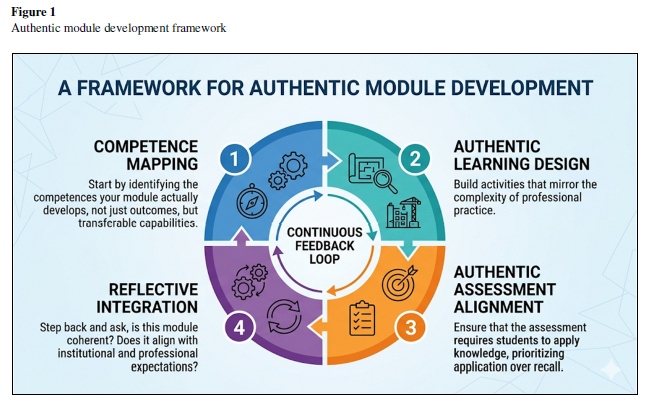
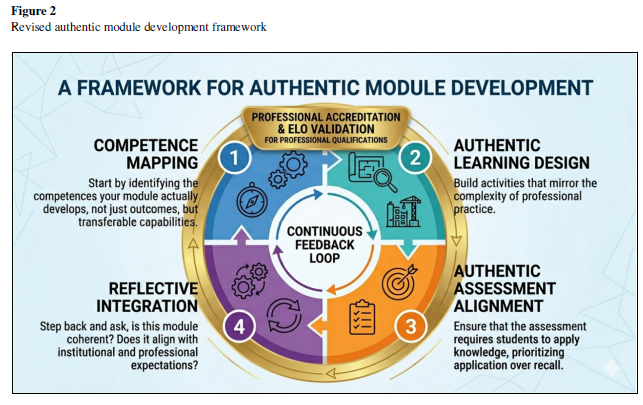
A framework for module template development using authentic teaching and learning: A professional engineering case study at the University of KwaZulu-Natal
Abstract
Curriculum reform in South Africa increasingly emphasises competence development alongside disciplinary knowledge, reflecting global shifts towards authentic, performance-oriented higher education. Within this context, authentic teaching, learning, and assessment provide a means of making embedded competences explicit and enhancing their transferability to professional practice. This study addresses the absence of practical curriculum design tools that assist academics in identifying, embedding, and assessing competences within module design. Drawing on the theoretical perspectives of Biesta (2020), Wiggins (1990), and Ashford-Rowe et al. (2014), a framework for competence-focused module template design was developed to support authentic teaching and assessment. A qualitative case study was undertaken at the University of KwaZulu-Natal, where the framework was iteratively refined and validated through focus group discussions with seven purposively selected academics from the School of Engineering. The findings indicate that participants regarded the framework as relevant, practical, and sufficiently flexible to support curriculum design while making embedded competences more explicit. Participants also highlighted its potential to strengthen constructive alignment, facilitate authentic assessment, and support accreditation processes through clearer documentation of graduate attributes and professional competences. The study contributes a contextually grounded framework that provides academics with a structured approach to designing competence-focused modules and offers a practical mechanism for advancing curriculum transformation within engineering education, with potential applicability for adaptation in other disciplinary contexts.
authentic learning; competence-based education; curriculum reform; module design; professional accreditation
 Thumbnail
 Thumbnail