The inclusion of critical thinking in an accounting curriculum: Students' perceptions
Abstract
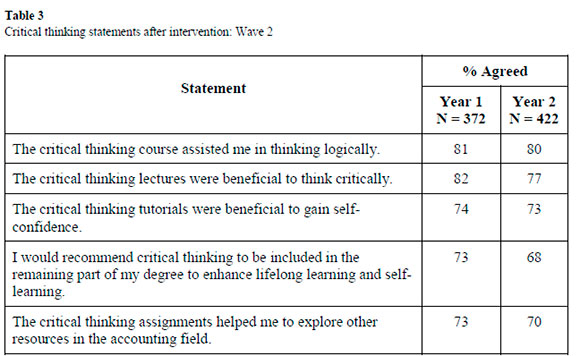
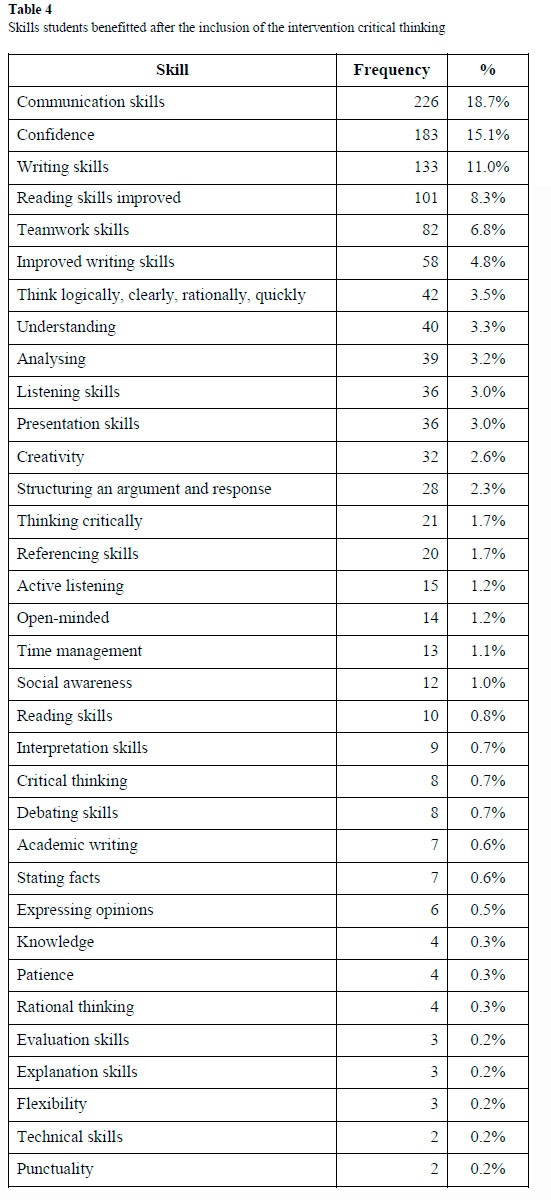
Employers and professional bodies have called repeatedly for critical thinking to be included in the curricula of higher education courses. Therefore, researchers should actively engage in developing course material that includes critical thinking. The purpose of this paper is to explore students' perceptions of the inclusion of a critical thinking course in an accounting curriculum in order to develop and foster their critical thinking. The study adopted a mixed method design to understand students' perceptions of the inclusion of critical thinking in the accounting course. The findings revealed positive results and the promising perceptions that most students benefitted from the inclusion of the critical thinking in the curriculum. The five highest ranked areas in which students benefitted were communication skills, gaining confidence, writing skills, improved reading, and teamwork skills. In addition, most students confirmed that the critical thinking course assisted them to think logically and clearly and be independent. This study contributes to the improvement of student preparedness and readiness for the workplace and to the acquisition of lifelong skills through formal education.
accounting curriculum; critical thinking; higher education; learning; skills; students
 Thumbnail
 Thumbnail