Systemic inarticulation as an obstacle to the education aspirations of mature women ECD practitioners
Abstract
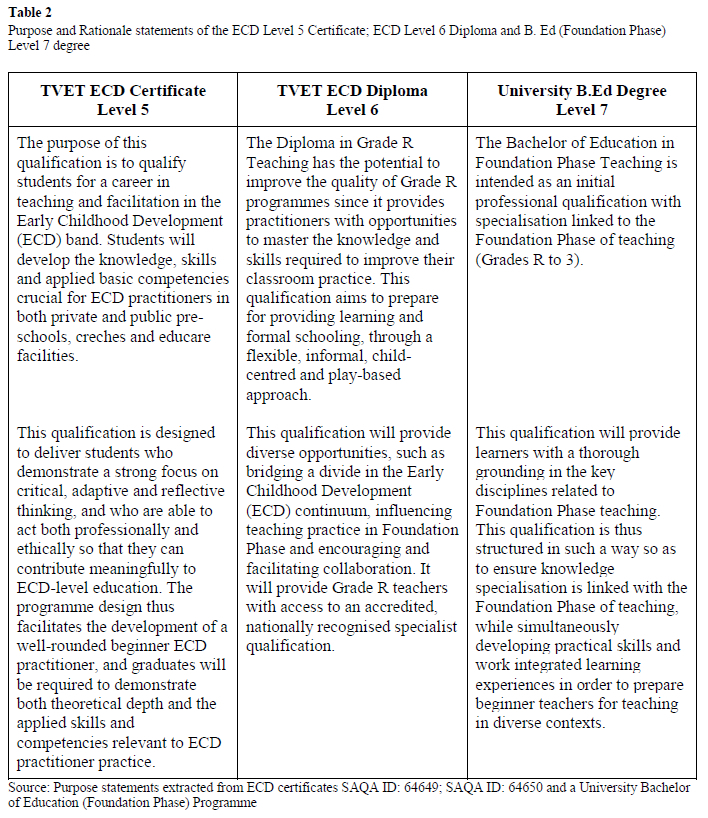
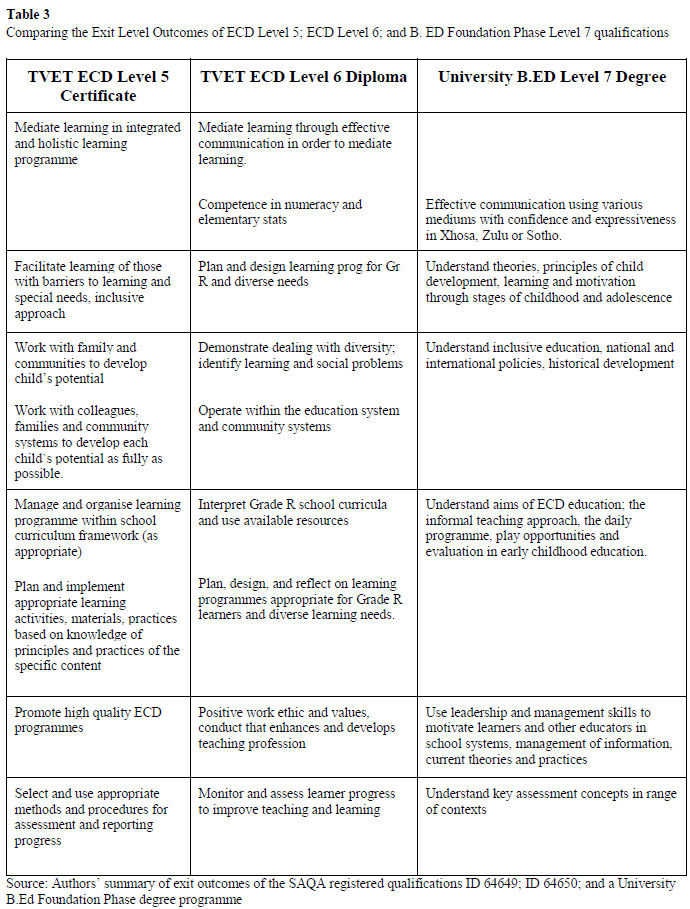
Recent research in South Africa indicates that notwithstanding official policies on articulation, Early Childhood Development (ECD) practitioners who obtain a qualification in their field at a Technical and Vocational Education and Training (TVET) college face significant hurdles in trying to access a university degree. In this article, we report on research conducted among a group of mature women who completed ECD programmes at TVET colleges, and their learning pathways toward the university Bachelor of Education qualification. Applying a narrative methodology, we conducted in-depth life history interviews to map the learning pathways of mature women ECD practitioners and to understand their education and training endeavours. Their stories revealed a number of barriers they encountered as mature women students, but in this article we highlight in particular the blockage they faced in seeking vertical progression through articulation of the ECD Level 5 and Level 6 Certificates with the Bachelor of Education degree, which led to a curriculum mapping exercise that attempted to shed light on this aspect. A key finding was that of programme and institutional inarticulation, resulting in stymied higher education aspirations for the majority of women in this study.
learning pathways; articulation; access; Early Childhood Development (ECD) practitioners
 Thumbnail