An investigation of pedagogical change with novel technology in fee paying and no-fee schools during COVID-19
Abstract
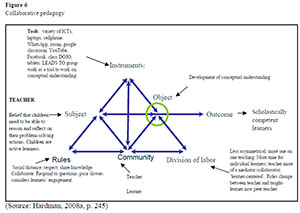
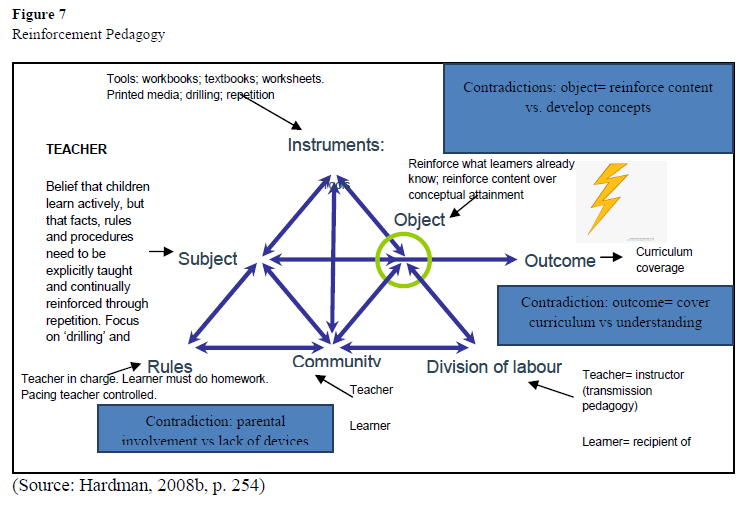
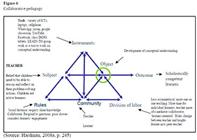
Following the reopening of schools after the national lockdown in March 2020, the Department of Basic Education (2020a) in South Africa implemented the School Reform Plan to mitigate the impact of the COVID-19 pandemic on the loss of learning and teaching in schools. To date, limited information is available on the extent to which these measures have had an impact on pedagogical practices of teachers across the different poverty quintile schools. In this paper, we report on teachers' perceptions of how novel technological tools, introduced during the pandemic, altered their pedagogy practices across no-fee and fee-paying schools. Data was obtained from 1098 teachers and analysed using Engeström's (1987) Cultural Historical Activity Theory as the framework. Findings indicate that two broad, ideal pedagogical types, reinforcement pedagogy and collaborative pedagogy, emerged in both no-fee and fee-paying schools from the use of technology in schools during the COVID pandemic. While reinforcement pedagogy is motivated by the need to cover the curriculum, the motivation behind collaborative pedagogy is to develop learners' understanding of concepts in class.
pedagogical change; technology; COVID; schooling
 Thumbnail
 Thumbnail
 Thumbnail
 Thumbnail
 Thumbnail
 Thumbnail
 Thumbnail
 Thumbnail