Rethinking curriculum reform through a triadic lens: Transformation, decolonisation, and digitisation in higher education
Abstract
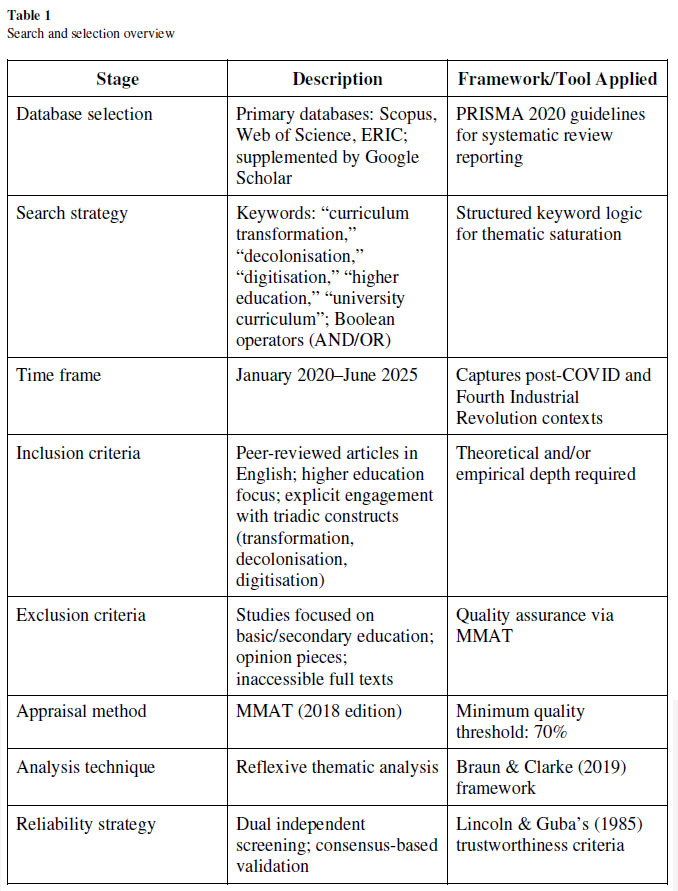
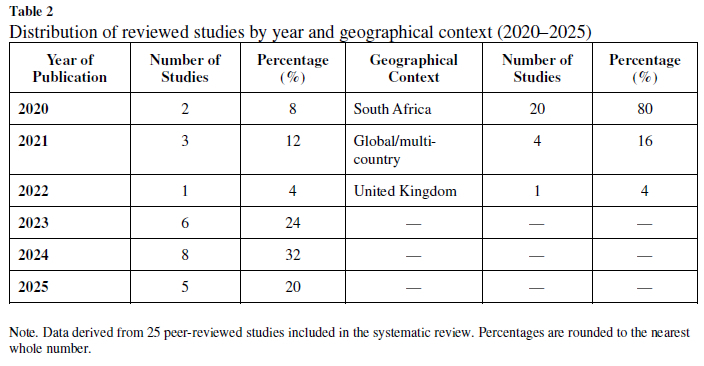
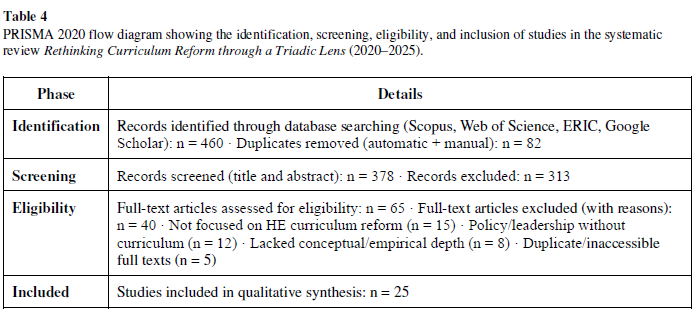
Transformation, decolonisation, and digitisation increasingly intersect with curriculum reform in higher education in South Africa, yet these agendas often evolve independently and perpetuate structural and epistemic inequalities. This study systematically reviewed peer-reviewed research published between 2020 and 2025, screening 460 records across major academic databases and analysing 25 that met the inclusion criteria. Guided by the PRISMA 2020 protocol and a triadic framework grounded in epistemic justice, the review examined how these reform trajectories intersect in theory and practice. The findings indicate that decolonisation functions as the primary epistemic driver, transformation operates as the institutional mechanism, and digitisation acts ambivalently as both an enabler and a constraint. The study advances a triadic model integrating social redress, epistemic plurality, and digital equity, offering a theoretically grounded framework for coherent and socially just curriculum reform in the digital era.
curriculum reform; transformation; decolonisation; digitisation; epistemic justice; higher education