Empowering future generations for global change: Using digital technologies to promote sustainable development in mathematics teacher education
Abstract
Incorporating the principles of sustainable development into mathematics higher education is necessary for preparing future teachers to respond to global challenges. This study explores how mathematics encourages critical thinking, problem-solving, and innovation to foster the Sustainable Development Goals. Moreover, this study explores the use of digital technologies, collaborative pedagogy, and real-world applications in developing mathematical proficiencies that promote sustainability. The study was conducted at one teacher training university in KwaZulu-Natal, South Africa. It involved the participation of lecturers, curriculum developers, and postgraduate students who are also mathematics teachers at schools. The sample size for the study was 22 participants (five lecturers, two curriculum developers and 15 postgraduate students). Framed by Systems Thinking Theory (STT), the study follows a mixed-methods explanatory sequential design. Questionnaires were administered first, followed by semi-structured interviews with purposively selected participants to acquire deeper perceptions. Quantitative data were analysed using Excel, and qualitative data were analysed using thematic analysis framed by STT. The findings emphasise the importance of curriculum reform, teacher training, and policy alignment to bridge the gap between theory and sustainable practice.
digital technologies; global change; mathematics teacher education; pedagogy; sustainable development
Introduction
Sustainable development is a global initiative that focuses on fostering a stable society, economic parity, and environmental conservation. It is defined as the progression that addresses the requirements of the current generation without influencing the needs of the future generation (Tomislav, 2018). Sustainability is entrenched in global policy frameworks such as the United Nations' Sustainable Development Goals (SDGs). Seventeen interconnected SDGs highlight key areas such as quality education (SDG 4), industry, innovation, infrastructure (SDG 9), and climate action (SDG 13; Halkos & Gkampoura, 2021). Science, technology, engineering, and mathematics (STEM)-related subjects encourage sustainable development by equipping students with critical thinking proficiencies, problem-solving skills, and evidence-based decision-making abilities necessary to respond to multifaceted global issues.
The potential of education to advance sustainability is emphasised in SDG 4, which is focused on the importance of quality, inclusive, and equal education (Thangeda et al., 2016). Mathematics education offers important tools for investigating patterns, constructing predictions, and maximising resources. The incorporation of sustainability principles into mathematics teacher education programmes ensures that teachers can motivate and prepare their learners to influence global change (Szabo et al., 2020). STEM education plays an important role in sustainable development by advancing scientific knowledge, encouraging innovation, and promoting digital tools (Dare et al., 2021). Mathematics is the foundation of STEM-related subjects and is crucial for demonstrating environmental structures, managing economic resources, and advancing technological procedures. When mathematics teacher education includes sustainability-focused mathematical pedagogy, the divide between abstract mathematical concepts and real-world sustainability challenges can be bridged. This strategy not only increases engagement but also develops a generation of critical thinkers prepared to respond to global sustainability issues through evidence-based approaches (Dare et al., 2021; Szabo et al., 2020).
The integration of digital technologies in mathematics teacher education encourages the possibility for improving student collaboration, scaffolding conceptual understanding, and fostering digital competencies. These skills are important for active participation in a technology driven society (Cirneanu & Moldoveanu, 2024). The relationship between digital technologies and sustainable development lies in the ability of digitally based pedagogical strategies to promote the knowledge, skills, and competencies that future mathematics teachers require to effectively apply the principles of Education for Sustainable Development (ESD; Meylani, 2025). Within the context of ESD, digital technologies serve as pedagogical instruments for scaffolding inquiry-based learning, critical thinking, collaboration, and mathematical modelling. Through these pedagogical strategies, future teachers develop sustainability skills that help them analyse and respond to environmental and economic problems (Ezekiel et al., 2024; Vázquez-Cano et al., 2023). Consequently, mathematics teacher education provides an important platform for preparing future teachers to use digital technologies that promote sustainability skills necessary for responding to global concerns.
As is evident, research has been conducted to explore the use of digital technologies in mathematics education. Research focussing on ESD in higher education has also been conducted; however, limited research has focused on the connection between digital technologies and sustainable development within mathematics teacher education in South Africa (Graham et al., 2021; Maqoqa, 2025). Thus, this study is guided by the research question: "How can digital technologies be used in mathematics teacher education to promote sustainable development and empower future generations for global change?" Guided by this question, the study explores how to empower mathematics teachers with sustainability knowledge and innovative pedagogical strategies that will enable them to nurture environmentally and socially responsible students.
Education for sustainable development
ESD provides an appropriate background for the study under focus. ESD promotes learning experiences that encourage problem-solving, critical thinking, and decision-making skills (Szabo et al., 2020). Within mathematics teacher education, ESD inspires teachers to consider using teaching strategies that integrate sustainability-focused content. This is supported by researchers in the field (Barwell, 2018; Habibaturrohmah et al., 2023) who maintain that ESD encourages teachers to link mathematical concepts with real-world environmental issues, such as ecological conservation, resource management, and social equality.
Furthermore, research (Ezekiel et al., 2024) proposes that by inserting SDGs within the mathematics curriculum, teachers can nurture students' knowledge and awareness of global environmental challenges. This leads to the promotion of responsible citizenship and hands-on participation in sustainable procedures. These notions align with ESD's emphasis on comprehensive learning that integrates emotional, intellectual, and social dimensions. Acevedo-Duque et al. (2023) suggest that ESD encourages interdisciplinary methods inspiring mathematics lecturers to work together across different subjects to develop meaningful and applicable educational experiences. Additionally, ESD supports the advancement of flexible teaching and learning strategies that equip future generations to survive in a rapidly changing world (Vázquez-Cano et al., 2023). Based on the research in the field, it is important to explore what is currently being done in South African mathematics teacher education to promote ESD.
Mathematics teacher education and ESD
Mathematics plays a pivotal role in nurturing sustainable development by preparing students with the investigative skills essential to address challenges globally. Mathematics concepts, such as algebra, statistics, geometry, and calculus, scaffold evidence-based decision-making on issues linked to sustainable development, climate science, infrastructure, and the management of resources. Incorporating aspects related to sustainable development within targeted professional development and training courses helps teachers encourage critical thinking and awareness about global environmental challenges (Fowler & Leonard, 2021; Kanandjebo, 2024). By using authentic case studies linked to energy, resource budgeting, and greenhouse gas calculations, mathematics teachers can make their pedagogy relevant and effective.
Furthermore, research (Szabo et al., 2020) proposes that supporting mathematics teachers with digital tools and innovative pedagogical approaches increases their skills in incorporating sustainability concepts effectively within the curriculum. Similarly, other research (Cirneanu & Moldoveanu, 2024; Naidoo, 2022) suggests that by nurturing an attitude that values accuracy, ethical behaviours, responsibility, and logical reasoning, mathematics education becomes an influential platform for endorsing sustainable development. Ensuring that mathematics teachers are trained to acquire these important skills catalyses shaping a responsible and active future generation capable of steering a positive global change in the environment (Su et al., 2023). Thus, it is important to explore what pedagogic strategies are currently used for mathematics teacher education to promote sustainability.
Pedagogical strategies for mathematics teacher education and sustainability
Fostering sustainability through mathematics teacher education encompasses pedagogical strategies that emphasise problem-based learning, experiential learning, and collaborative learning (Asmara et al., 2024). These strategies encourage contextual learning, critical thinking, and real-world problem-solving. Problem-based learning for mathematics requires teachers to encourage their learners to work with case studies centred on sustainability-related mathematical problems (Kanandjebo, 2024).
Experiential learning is another important pedagogical strategy. Interactive, hands-on experiences help teachers build their skills in accuracy, data analysis, assessment, and spatial reasoning (Ajai & Ogungbile, 2025). Collaborative learning environments promote discussion and the sharing of knowledge within the educational context. Group projects on sustainable real-world sustainability changes, such as urban planning or circular economy projects, encourage cooperative and innovative thinking (Serrano-Bedia & Perez-Perez, 2022). These projects prepare teachers to demonstrate collaborative problem-solving within their classroom contexts. The integration of digital technologies further increases the effect of these pedagogical strategies. Therefore, it is important to find out more about how digital technologies are currently used in mathematics education.
Digital technologies in mathematics education
Digital technologies are transforming how mathematics education is being delivered by enriching teaching, learning, and assessment strategies (Cirneanu & Moldoveanu, 2024). Interactive computer programmes, online platforms, artificial intelligence tools, and simulations allow for the exploration of mathematical concepts and promote understanding. Digital platforms allow for the analysis of students' answers and personalise teaching to their needs (Hennessy et al., 2022). As a result, personalised teaching allows lecturers to offer directed support to alleviate challenges.
Digital technologies advance a more comprehensive educational environment that considers diverse learning styles and skills. Interactive whiteboards, online discussion environments, and web-based applications enable knowledge-sharing and collaborative problem-solving. Thus, digital technologies inspire interaction and participation, making mathematics more appealing and accessible. Computerised grading structures and interactive tests provide a deeper understanding of students' development. Lecturers can use digital technologies to examine learning designs and mediate learning challenges timeously. Consequently, research (Cirneanu & Moldoveanu, 2024) indicates that integrating digital technologies in mathematics education also prepares students for the future. By incorporating sustainable development concepts into technology-based mathematics education pedagogy, lecturers can prepare future teachers with the key skills required to respond to global challenges (Kanandjebo, 2024; Naidoo, 2022), thereby inspiring a knowledgeable society.
Theoretical framework
Systems Thinking Theory (STT) provides an appropriate lens through which to interrogate the role of mathematics teacher education in nurturing sustainable development and global change. STT highlights the integration of aspects within a system (Salado et al., 2019). Moreover, it is applicable in understanding how mathematics education can be used to foster sustainability awareness among the future generation. Mathematics teacher education exists within a wider educational environment that includes curriculum development, cultural influences, policy guidelines, different pedagogical strategies, and social dimensions (Agbozo et al., 2024). STT offers researchers the opportunity to explore these interrelated factors in an all-encompassing manner rather than in isolation. By acknowledging the relationship between teachers, students, educational institutions, and the needs of society, STT assists in categorising useful ideas that can contribute to meaningful transformation (Barwell, 2018; Frankel-Goldwater, 2022).
A key reason for using STT in this study is the incorporation of sustainability concepts into mathematics teaching. It is important to ensure that mathematics teachers are well-versed in mathematical content, and also recognise the value of mathematics in responding to sustainability challenges at a global level, for example, climate change, resource conservation and management, and economic equality (Christensen, 2023; Nguyen et al., 2020; Sunzuma & Luneta, 2023). The STT approach offers lecturers the opportunity to develop interdisciplinary teaching and learning experiences where mathematical concepts are linked to real-world, authentic sustainability challenges, thereby fostering problem-solving and critical thinking skills. In addition, for this study, STT serves as a framework for understanding how digital technologies, pedagogy, curriculum, teacher preparation, and sustainability competencies interact as interlinked elements of mathematics teacher education. From this viewpoint, digital technologies are perceived as tools that scaffold pedagogy to promote the development of sustainability skills.
Moreover, STT emphasises the value of feedback and reflection in education. Effective teacher training programmes need to include constant reflection, evaluation, assessment, and modification to ensure that future mathematics teachers are well prepared to encourage sustainable practices in their classrooms, schools, and beyond the school environment (Bulut & Ferri, 2025; Peretz, 2025). By viewing mathematics teacher education as a fluid system, this study offers approaches for developing long-term educational and societal transformation. Consequently, guided by STT, this study emphasises the need for an all-encompassing, integrative approach in mathematics teacher education to carefully prepare teachers to empower future generations in advancing sustainable change at a global level.
Research design and methodology
Issues of ethics
Participants in the study were mathematics lecturers, curriculum developers, and postgraduate students at the participating university. Ethical clearance was granted by the research office of the participating university (HSSREC/00006885/2024). Participants were given an informed consent form with detailed information about the study and the data collection process prior to participating (Burchfield et al., 2025). Information regarding the protection of participants' confidentiality and anonymity was also included.
Population and sample
The population for this study was 113 individuals (11 lecturers, seven curriculum developers, and 95 postgraduate mathematics students). All 113 individuals were invited to participate and 22 agreed to participate in the study. Thus, the sample was 22 participants (n = 10 male, and n = 12 female), comprising five lecturers, two curriculum developers, and 15 postgraduate students who agreed to participate. All 22 participants participated in Phase 1 of the study and submitted a completed questionnaire. After that, eight participants were purposively selected to participate in Phase 2 of the study.
Participant coding
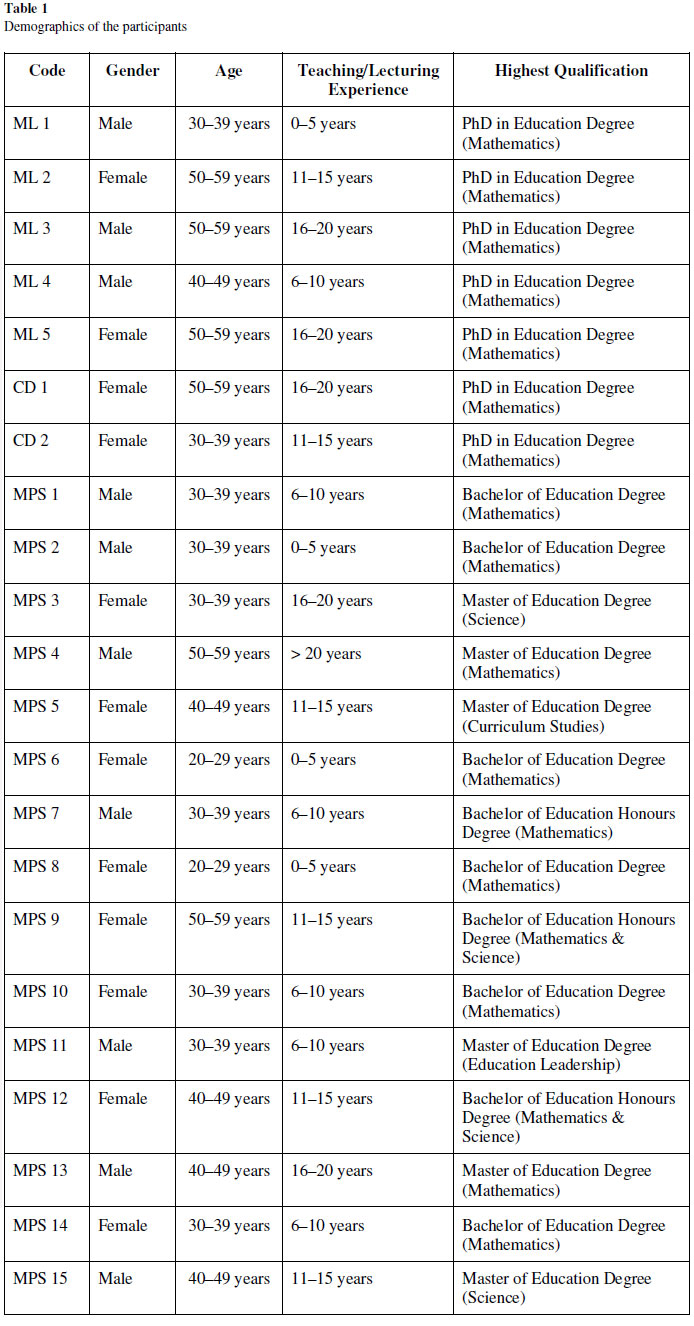
Codes were created for each participant to maintain confidentiality and anonymity. The mathematics lecturer who submitted their signed informed consent form first was coded as ML 1, the curriculum developer who submitted their signed informed consent form first was coded as CD 1, and the mathematics postgraduate student who submitted their signed informed consent form first was coded as MPS 1. Table 1 depicts the demographics of the 22 participants.
Research design
STT guided the research design by framing mathematics teacher education as an interrelated system encompassing curriculum, digital technologies, pedagogical strategies, teacher preparation, and sustainability skills. Questions focussing on these key concepts were included in both research instruments. The research followed a mixed-methods explanatory sequential design. Phase 1 included the quantitative phase, which involved the distribution and completion of a questionnaire. All 22 participants participated in Phase 1 and completed the questionnaire. Through a detailed analysis of the questionnaires, eight participants (two lecturers, one curriculum developer, and five postgraduate students) were purposively selected and invited to participate in Phase 2 of the study. In Phase 2, semi-structured interviews were conducted individually with these eight purposively selected participants to provide in-depth perceptions of their experiences and knowledge about using digital technologies for promoting sustainable development in mathematics teacher education.
Data collection methods
Data generation for the main study entailed two sequential phases. The first data collection phase was the distribution of a questionnaire to all 22 participants who consented to participate in the study. The second data generation phase involved conducting individual semi-structured interviews with eight purposively selected participants.
The questionnaire
The questionnaire included two sections with a total of five questions. Section A focused on the biographical details of the participants and included four closed-ended multiple-choice questions. Question 5 in Section B was a Likert Scale question with 10 items focusing on the participants' perceptions of using digital pedagogy and digital tools. The reason for this focus was to ensure that the most suitable participants would be purposively selected for the interviews. It was important to select participants who used digital pedagogy and digital tools for mathematics teaching, learning, and assessment. The questionnaire took the participants approximately 15 minutes to complete.
The semi-structured interviews
A semi-structured interview was done in person with each of the eight (2 ML, 1 CD, 5 MPS) purposively selected participants. Each interview lasted approximately 45 minutes. Each interview consisted of six open-ended questions, comprising three general questions for all participants and three questions that were specific to each participant category. The general questions were used to capture the broad viewpoints on the role of mathematics education in promoting sustainable development. The three questions specifically designed for each participant group (lecturers, curriculum developers, and postgraduate students) were used to explore their unique experiences and perceptions. These included questions focusing on the integration of sustainability topics in teaching, the role of mathematics in global challenges, experiential learning experiences, curriculum design strategies, balancing rigour and relevance, assessment and evaluation, experiential impact on perceptions, real-world applications, and suggestions for programme improvement.
Validity, reliability, and trustworthiness
For the questionnaire, content validity was determined by developing items founded on literature reviewed on digital pedagogy and technology integration in mathematics education. The questionnaire was peer reviewed by experts in mathematics education. This peer review helped to confirm if the questionnaire items appropriately reflected the participant's perceptions of using digital technologies and digital pedagogy.
For the interviews, trustworthiness was maintained through confirmability, credibility, dependability, and transferability. These criteria were achieved by using open-ended interview questions and probing participant's perspectives for clarity. After the interviews were transcribed, participants were provided with copies of their transcribed interviews to verify their responses. All interview transcripts included verbatim quotations to justify that interpretations were based on the experiences of the participants. An audit trail was adhered to whereby all stages of the research process were captured, including the development of the research instruments, data generation, coding, and analysis. All instruments were piloted first with a sample of six participants. Based on the pilot testing, the questionnaire and interview schedule were revised. None of the six participants who participated in the pilot phase participated in the main study.
Data analysis
Quantitative data analysis
The questionnaire analysis was conducted using Excel. For the closed-ended questions (e.g. multiple-choice options), the selected options from the questionnaire were inputted (i.e., Male, 0-5 years, Female, 6-10 years, etc.). For the Likert Scale items, ratings were inputted (e.g. 1-5, where 1 = Strongly Disagree, 2 = Disagree, 3 = Neutral, 4 = Agree, and 5 = Strongly Agree). For the closed-ended questions, the frequency was calculated to determine how many times each option arose. The quantitative data were analysed using descriptive statistics. For this study, the quantitative phase was not designed to test hypotheses or make statistical inferences to a larger population, therefore descriptive statistics were appropriate. Moreover, the quantitative data analysis supported the process of purposively selecting participants for the qualitative interview data by providing an overall summary of participants' responses.
Qualitative data analysis
Thematic analysis assisted in classifying themes and subthemes. Firstly, each interview was carefully transcribed. Then, the transcription was given to each participant for member-checking. Next, initial codes and preliminary nodes were identified. Initial codes encompassed inductive and deductive (based on the main research question, interview questions, and STT) coding methods. Initial codes and phrases were grouped as themes. After the generation of themes through thematic analysis, the themes were analysed within the ambit of STT. This analysis explored how the participants explained the relationships between curriculum design, digital technologies, pedagogy, teacher preparation, institutional support, and sustainability rather than viewing these concepts separately. A thorough analysis of the qualitative data warranted a careful exploration of the participants' experiences and perceptions of how the use of digital technologies for mathematics teacher education can be enhanced to promote sustainable development and empower future generations for global change.
Data presentation and interpretation
Data collected from the questionnaires
For this phase of the study, 22 participants participated. The participants were postgraduate students (n = 15), mathematics lecturers (n = 5), and curriculum developers (n = 2) at the participating university.
Section A of the questionnaire
The tables that follow represent the information from Section A of the questionnaire.
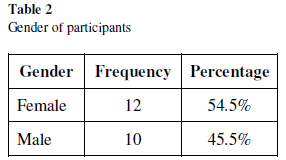
Based on the data presented in Table 2, it is evident that 12 participants were female and 10 participants were male.
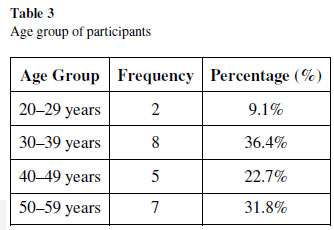
The data captured in Table 3 shows that the majority of participants (n = 8) were aged between 30-39 years, seven participants were between 50-59 years, five participants were between 40-49 years, and a minority of the participants were between 20-29 years (n = 2).
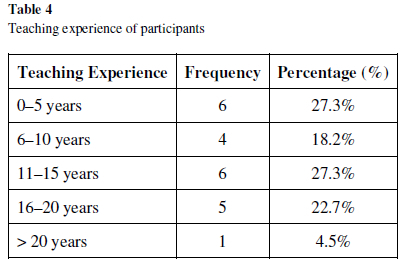
Based on the teaching experience reflected in Table 4, the minority (n = 1) of the participants had taught for more than 20 years, and the same number of participants (n = 6) had taught for 0-5 years and 11-15 years. Five participants had taught for 16-20 years, and four participants for 6-10 years.
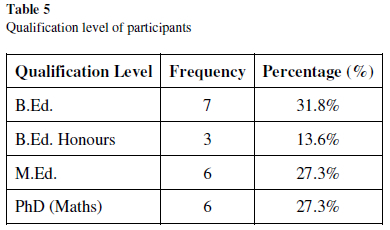
Table 5 indicates that most of the participants (n = 7) had an initial B.Ed. degree, the minority of the participants (n = 3) had a B.Ed. Honours degree, and the same number of participants (n = 6) had an M.Ed. and a PhD degree, respectively.
Section B of the questionnaire
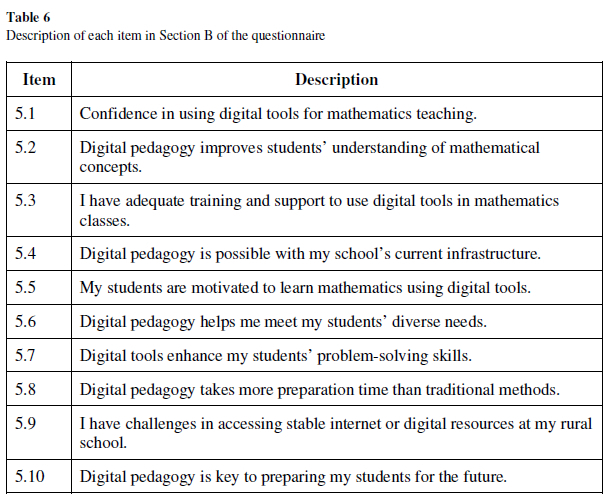
In Section B of the questionnaire, the participants were asked to answer Likert Scale questions that focused on their perceptions about digital tools and digital pedagogy for mathematics. Section B was designed to gauge participants' perceptions of the use of digital technologies for mathematics education. This was done by examining their confidence in using digital technologies and pedagogies, and their beliefs about the usefulness of digital tools. The questionnaire also assisted in finding out more about access to support and infrastructure, barriers encountered when using digital technologies, and their perceptions about the effectiveness of digital pedagogy for preparing students for the future. Section B comprised 10 items with a five-point Likert scale (Strongly Disagree, Disagree, Neutral, Agree and Strongly Agree). Table 6 describes each of the 10 items.
As is evident from Table 6, in Section B of the questionnaire, the statements for each item were designed to find out more about the participants' confidence, challenges and perceptions about the use of digital technologies for mathematics education.
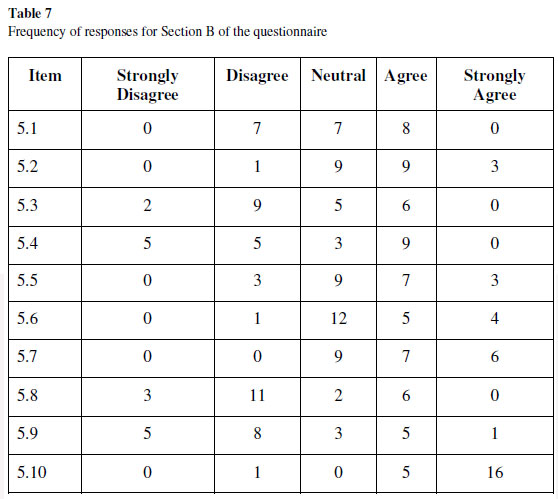
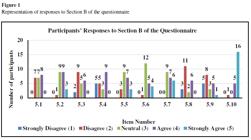
Table 7 displays the frequency of the participants for each item in Section B of the questionnaire.
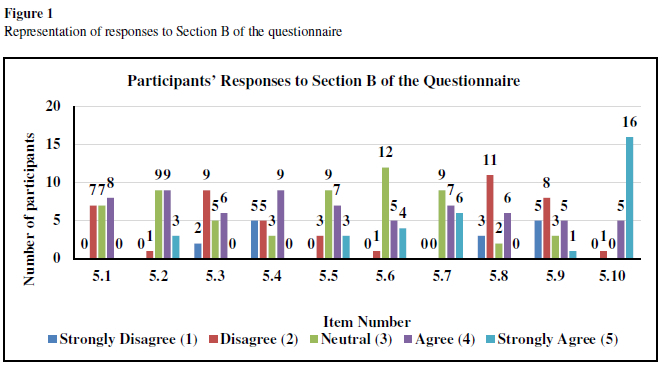
Based on the responses shown in Table 7, Item 5.1, the majority of the participants (n = 8) agreed that they were confident in using digital pedagogy, while an equal number of participants disagreed (n = 7) or were neutral (n = 7) about this statement. For item 5.2, the same number of participants (n = 9) were neutral or agreed with the statement about digital pedagogy improving students' understanding of mathematics. For item 5.3, none of the participants strongly agreed that they had adequate training and support for using digital tools when teaching mathematics. Rather, the majority (n = 9) of the participants disagreed with this statement. Six participants agreed, five participants were neutral, and two participants strongly disagreed with this statement. The majority of participants (n = 9) agreed with item 5.4 concerning digital pedagogy being possible due to their school's infrastructure, the same number of participants (n = 5) strongly disagreed and disagreed, three were neutral, and none of the participants strongly agreed with this statement.
Concerning item 5.5, focusing on digital pedagogy helping meet students' needs, none of the participants strongly disagreed, the majority of participants were neutral (n = 9), the same number of participants (n = 3) agreed or disagreed, respectively, and seven participants agreed. Item 5.7 centred on digital tools enhancing problem-solving skills. None of the participants strongly disagreed or disagreed with this statement. The majority of participants (n = 9) provided a neutral response, while seven participants agreed and six participants strongly agreed.
Item 5.8 focused on digital pedagogy, taking more preparation time than traditional methods. For this item, the majority of participants (n = 11) disagreed, none of the participants strongly agreed, six participants agreed, three participants strongly disagreed, and a minority of participants (n = 2) were neutral about this statement. For item 5.9, which focused on challenges in accessing the internet or digital resources at rural schools, the majority of participants (n = 8) disagreed, the same number of participants (n = 5) agreed or strongly disagreed, one participant strongly agreed, and three participants were neutral about this statement. The last item, 5.10, centred on the importance of digital pedagogy in preparing students for the future. For this item, the majority of participants (n = 16) strongly agreed, none of the participants strongly disagreed or provided a neutral response, one participant disagreed, and five participants agreed with this statement. Based on the responses analysed from Table 7, it was of interest to purposively select participants to explore the responses to Section B of the questionnaire in more depth during the individual semi-structured interviews. Figure 1 provides a visual representation of Table 7 and shows the responses of participants for each of the 10 items in Section B of the questionnaire.
Data generated from the semi-structured interviews
For this study, eight participants agreed to participate in semi-structured individual interviews. These participants included two mathematics lecturers (ML 2 and ML 4), one curriculum developer (CD 1) and five postgraduate students (MPS 2, MPS 3, MPS 5, MPS 11, and MPS 15). From the analysis of the interview transcripts, four themes emerged. These themes included perspectives on the role of mathematics education in sustainable development; barriers to integrating sustainability in curriculum development and classroom practice; linking sustainability teaching, curriculum design, and continuous evaluation for impact; and teacher preparation for embracing real-world learning, and recommendations for effective practice. Data in support of these themes are presented in the sections that follow.
Perspectives on the role of mathematics education in sustainable development
This theme set the foundation for the context and importance of mathematics education in advancing sustainable development. During the interviews, the participants expressed the importance of using digital technologies to include aspects of sustainability within mathematics teaching, learning, and curriculum integration. Based on the interviews conducted, the participants indicated an awareness of the importance of using digital technologies to showcase aspects of sustainable development within mathematics education. The participants also discussed incorporating content linked to energy and water conservation, climate change and issues of social justice and inequality. This is evident in the interview transcript excerpts that follow.
CD 1: Curriculum design that integrates technology and SDG-related content in mathematical tasks . . . make learning relevant . . . aligned to policy and critical thinking is encouraged.
ML 2: Mathematics equips students with problem-solving and analytical skills . . . addressing sustainability challenges . . . climate change, resource sharing, and . . . decision-making . . . simulations are useful to show students the impact of not protecting natural resources.
ML 4: Integrating real-world contexts such as energy consumption or population increase . . . help students link mathematical reasoning to sustainable development . . . modelling scenarios and projecting the graphs on a screen can provide a convincing visual representation.
MPS 3: Mathematics helps learners measure . . . water use or carbon emissions . . . reports can be shared online with the class to encourage debates and discussions.
MPS 11: Mathematics education provides a basis for understanding patterns . . . simulations can be used to show the importance of managing resources responsibly.
MPS 15: I teach concepts like statistics . . . environmental data is shared using PowerPoints, graphs, and reports . . . in this way learners understand the real-world impact.
From the interviews, it was evident that the participants had a positive attitude and strong views about using digital technologies in mathematics education to foster sustainable development. These sentiments are evident in extracts from the interview transcripts.
ML 4: Go beyond teaching formulas by integrating sustainability themes . . . using videos and case studies for students to see the relevance of maths . . . global problems.
MPS 2: Opened my eyes . . . mathematical concepts . . . statistics and modelling using simulations . . . to explore real sustainability issues . . . climate change and inequality.
MPS 5: Assignments to promote mathematical reasoning can be linked to the Sustainable Development Goals . . . watch videos of what is happening in poverty-stricken countries . . . encourages responsible consumption.
MPS 11: Shifted my mindset . . . view maths as a powerful tool . . . by using videos learners are exposed to what is happening in different parts of the world . . . to encourage social and environmental awareness among my learners.
The excerpts of the interview transcripts presented for this theme suggest that the participants valued and appreciated the importance of integrating concepts and aspects linked to sustainable development within mathematics education curricula, teaching, learning, and assessment. However, the participants did indicate that they experienced barriers to integrating aspects linked to sustainable development within mathematics education. These views are presented in the next theme.
Barriers to integrating sustainability in curriculum development and classroom practice
This theme presents barriers participants faced when moving from theory to practice. The following interview transcript extracts are presented to support the theme.
CD 1: Limited collaboration between mathematics teachers and sustainability experts . . . limited availability of contextually relevant resources that meaningfully address sustainability . . . curriculum design becomes complicated and time-consuming . . . including the use digital tools and devices in curriculum revision are innovative but dependent on access to resources and infrastructure.
ML 2: The rigid curriculum structure . . . little space for integrating sustainability . . . implicitly . . . mathematics lessons.
ML 4: Pre-service teachers do not have much awareness or training on how to link abstract mathematical concepts with real-world sustainability issues . . . videos and simulations can be useful to show these links.
MPS 3: Challenging to find age-appropriate sustainability data that links with the curriculum . . . the videos that are available are engaging for learners.
MPS 5: Learners struggle to see the relevance of sustainability . . . in math class . . . they only expect to work with numbers and formulas . . . simulations bring in something different to the lesson.
MPS 11: Limited access to digital devices and resources creates a barrier . . . sustainable development in the curriculum is treated as a cross-cutting theme . . . without clear guidelines on how to integrate with mathematics content.
Interview excerpts indicate that developing material that considers mathematical accuracy while promoting awareness of issues of sustainability is a challenge. Also, the participants perceived that not much training is provided for mathematics teachers on how to make the links between mathematics education and sustainability. This theme suggests the need to find solutions to alleviate these challenges and barriers.
Linking sustainability teaching, curriculum design, and continuous evaluation for impact
This theme revolves around finding solutions and suggestions for the deliberate integration of sustainability issues within mathematics education. These discussions will assist with strategic mathematics education curriculum implementation. During the interviews, the participants indicated how they integrated or planned to integrate sustainability topics within mathematics education.
CD 1: Thematic integration approach, embedding sustainability topics like energy efficiency and waste reduction into mathematical content, for example measurement and data analysis . . . using simulations and case studies that are aligned with SDG goals, CAPS, and the module outlines . . . incorporate sustainability-related examples by using videos, models and reports that examine carbon footprints or water usage data when teaching statistics . . . students engage more because they see the relevance to real-life.
ML 2: Mathematics provides students with the tools to analyse data and make evidence-based decisions . . . digital tools and skills that are important for engaging . . . with issues like climate change and resource distribution . . . we should encourage this in teaching.
ML 4: Students can uncover patterns in data and by using videos and reports they can evaluate the impact of human actions . . . allowing them to question, interpret, and act on sustainability challenges.
MPS 2: A project that used data analysis of data captured in Excel to track local water usage . . . helped learners understand the impact of overuse on sustainability.
MPS 3: Modelled the carbon footprint of various transportation . . . data was inputted using Excel to create graphs . . . led to a discussion on how mathematical modelling can affect decisions for sustainable practices.
MPS 5: A project which looked at food waste in the community . . . graphs were used to get a clearer view on how math can address the global sustainability issue of food security.
MPS 11: Statistics-based project . . . renewable energy consumption of various businesses was obtained using the internet . . . mathematical reasoning, critical thinking and problem-solving was encouraged . . . intricate environmental data more accessible for learners.
In the interview transcripts, the participants indicated the need to ensure skills and competencies linked to problem-solving and critical thinking were aligned with sustainability topics. The interviews also suggest the gaps in skills that need to be addressed when preparing teachers. These views suggest that there is a need for teacher preparation that includes incorporating real-world examples in curriculum development, teaching, learning, and assessment.
Teacher preparation for embracing real-world learning, and recommendations for effective practice
This theme focuses on providing practical strategies and recommendations for mathematics teacher preparation. Based on their experiences, the participants provided important suggestions for future teacher preparation programmes.
CD 1: Revisions need to be made to policy and curriculum that provide clear guidelines on how to include SDGs in our modules.
ML 4: I would recommend more interdisciplinary workshops to be included in teacher development . . . focus on how to integrate sustainability with mathematics . . . linking theory with practical examples and applications.
MPS 2: Resources, like videos and case studies on sustainable development, need to be provided . . . help us better understand how to include real-world sustainability issues in math lessons.
MPS 5: More focus on developing critical thinking skills through sustainability-related math problems . . . better prepare us for future teaching.
MPS 11: Helpful to have mentorship or collaborations with sustainability experts to help guide us with our teaching . . . even if it is online seminars or workshops . . . this should be part of our teacher preparation methodology modules.
MPS 15: We should have more training and more emphasis on using technology and data analysis tools in sustainability projects . . . improve our capability to teach learners about modern global sustainability challenges.
The participants' perceptions of how focusing on sustainability through mathematics impacts student awareness, interaction, and critical thinking skills were important to note. The interview transcripts reveal views about policy changes, curriculum design, training, and professional development.
Discussion of the findings
The discussion incorporates the quantitative and qualitative findings to offer an inclusive insight of the participants' perceptions. The quantitative data provided general trends, while the qualitative data explained these trends. Discussed within the ambit of STT, the integrated discussion of findings show how curriculum design, digital technologies, pedagogical strategies, and sustainability skills are linked within mathematics teacher education.
Perspectives on the role of mathematics education in sustainable development
The demographic data collected and analysed for Section A of the questionnaire offers important information about the professional experiences of the participants. The sample was made up of a slightly larger number of females (n = 12) than males (n = 10). The age distribution showed that most participants were 30-39 years (n = 8). Research suggests that teachers in this age group are more likely to embrace the inclusion of digital technologies and sustainability themes in their teaching due to their flexibility, digital competence, and professional experience (Vázquez-Cano et al., 2023). The teaching experience data suggest a mixture of beginner and mid-career participants who indicated varying viewpoints on ESD. A significant number of participants held an M.Ed. or PhD (n = 6 each), which is aligned to research (Acevedo-Duque et al., 2023), and suggests that teachers with postgraduate qualifications are more inclined to consider critical thinking and interdisciplinary strategies for promoting ESD. These findings suggest that the participants' professional and academic backgrounds place them in an ideal position to integrate the principles of sustainable development within mathematics teacher education (Su et al., 2023). In addition, during the interviews, the participants mentioned their professional knowledge, teaching experience, and awareness of the importance of using digital technologies to showcase aspects of sustainable development within mathematics. Based on the interview data, it was evident that the participants went beyond the traditional approach of teaching formulas and concepts in mathematics, and included digital technologies, such as videos and simulations, to incorporate aspects linked to sustainability in their lessons. From the interview data, the participants perceived digital technologies as enablers for promoting engagement, collaboration, mathematical modelling, and critical thinking. These pedagogical strategies are aligned with competencies endorsed by ESD., and suggest that digital technologies can support the preparation of future teachers to respond to global sustainability challenges.
The findings from the questionnaire and interviews suggest an alignment with the UNESCO 2030 agenda regarding the importance of well-qualified teachers who can nurture reflective, transformative, and critical thinking among learners. These findings are also supported by the STT framework, which offers lecturers a chance to develop interdisciplinary teaching and learning experiences where mathematical concepts are linked to real-world sustainability challenges, thereby advancing problem-solving and critical thinking skills (Agbozo et al., 2024; Frankel-Goldwater, 2022). Thus, using digital technologies for mathematics serves as an important platform for the promotion of sustainable development.
Barriers to integrating sustainability in curriculum development and classroom practice
The findings from Section B of the questionnaire provide key insights into participants' perceptions, confidence levels, barriers, and challenges concerning the integration of digital pedagogy in mathematics ESD. The responses to the Likert Scale items indicate varied and complex views, with a large number of participants (n = 8) indicating confidence while using digital pedagogy. In contrast, an equal number disagreed (n = 7) or remained neutral (n = 7). This suggests a divide that emphasises the need for targeted professional development and training (Fowler & Leonard, 2021). The findings suggest an alignment with research that claims that teachers' confidence in using digital technologies is dependent on access to devices, infrastructure, professional development, and training (Hennessy et al., 2022). Moreover, based on the findings, a majority of participants (n = 16) strongly agreed the need for digital technologies to support their students in being future ready. These findings support the importance of using digital technologies to advance 21st-century skills, which is also promoted by the UNESCO 2030 agenda (Su et al., 2023). The findings suggest that there is a need for investment in infrastructure, targeted programmes for teachers, and support from key stakeholders. In addition, during the interviews, the participants indicated limited collaboration with sustainability experts and mathematics education material developers, which poses a challenge with material development that links sustainability themes with mathematics education. These findings are supported by STT, in that the framework supports the notion that mathematics teacher education, digital technologies, and sustainable development are connected elements of a wider educational environment (Nguyen et al., 2020). Similarly, the findings discussed within this theme align with SST because based on the participants' perceptions, barriers to sustainability integration were due to the challenges they experienced in curriculum design, pedagogy, access to resources, and intuitional infrastructure. Within the ambit of STT, by recognising the important relationships between society, infrastructure, teachers, students, and institutions of learning, ideas pertaining to transformation are promoted (Barwell, 2018; Frankel-Goldwater, 2022).
Linking sustainability teaching, curriculum design, and continuous evaluation for impact
The data supporting this theme focused on finding solutions for incorporating sustainability themes within mathematics education. This integration would be important for future-ready mathematics education curriculum implementation (Szabo et al., 2020). The participants provided suggestions for using simulation-based sustainability projects that linked energy, climate change, water use, food security, and transportation issues concerning carbon footprints. These suggestions are supported by research focusing on ESD (Ezekiel et al., 2024; Habibaturrohmah et al., 2023). Moreover, based on the interview data, the participants wanted to ensure students improved their problem-solving and critical thinking skills, which are aligned with sustainability topics. During the interviews, the participants also alluded to the skills gaps that need to be considered when preparing future teachers. In this study, the participants' linking of sustainability topics to prepare students for the future is aligned to STT in that mathematics teachers need to recognise the value of mathematics in finding solutions to global sustainability challenges (Christensen, 2023; Sunzuma & Luneta, 2023). This theme aligns with SST because it theorises ESD as an organised and dynamic process in which curriculum design, pedagogy, and assessment are dependent on each other for shaping effective and meaningful educational experiences (Peretz, 2025). These sentiments suggest the importance of teacher training and preparation that includes incorporating real-world examples and simulations in teaching, learning, curriculum development, and assessment.
Teacher preparation for embracing real-world learning, and recommendations for effective practice
This theme revealed practical strategies and tips for teacher training and preparation to address the issues of including sustainability themes within mathematics education. During the interviews, participants mentioned linking theory with practice and the need for interdisciplinary workshops, the use of real-world case studies, simulations, and promoting mentorship via online seminars and workshops from sustainability experts to support the inclusion of sustainability themes within mathematics education. Research supports this view and indicates that these pedagogical strategies would assist in supporting students with developing critical thinking and problem-solving skills (Asmara et al., 2024; Dare et al., 2021; Serrano-Bedia & Perez-Perez, 2022; Szabo et al., 2020). The participants also indicated the need for teacher training that incorporated the use of technology and data analysis tools to advance future teachers' skills for teaching about contemporary sustainability challenges. These sentiments are linked to STT, whereby effective teacher training programmes need to ensure that future mathematics teachers are prepared to promote sustainable practices in teaching, learning, and assessment (Bulut & Ferri, 2025). This theme is framed within the ambit of STT because the theory perceives teacher preparation and real-world learning as integrated elements that constantly interact to achieve enhanced pedagogy and outcomes (Peretz, 2025).
Conclusion
This study focused on using digital technologies to empower future generations for global change by encouraging sustainable development through mathematics teacher education. The study was guided by one main research question: "How can digital technologies be used in mathematics teacher education to promote sustainable development and empower future generations for global change?" The study was located at one teacher training university in KwaZulu-Natal, South Africa. Participants included lecturers, curriculum developers, and postgraduate students. The data were obtained through questionnaires and semi-structured individual interviews. Four major themes emerged from the analysis of the data. The themes focused on the role of mathematics education in sustainable development, barriers to integrating sustainability in curriculum development and practice, linking sustainability teaching with curriculum design, and teacher preparation for real-world learning. Based on the discussion of the findings, these themes emphasise the importance of online collaboration with sustainability experts, curriculum reform, teacher training, and policy alignment to alleviate the gap between theory and practice.
The study's findings indicated that digital pedagogy supports sustainable development not only through technology, but by scaffolding pedagogical strategies that foster sustainability skills among future mathematics teachers. In this way, the findings suggest that mathematics teacher education can prepare teachers to harness digital technologies to promote critical thinking and problem-solving. Accordingly, mathematics teacher education can contribute to the advancement of sustainable development. Thus, the findings of this study indicate a contribution to research on the role of mathematics education in supporting global change by encouraging a transformation in mathematics teacher education.
This study does have limitations. Its findings offer insights into the participants' perceptions of using digital technologies to promote sustainable development, however, the study was conducted at only one university. This limitation may hinder the transferability of the findings to other universities. In addition, the study explored participants' perceptions using a questionnaire and interview schedule; observations were not conducted. Based on these limitations, the study offers recommendations and suggestions for researchers, academics, curriculum developers, teachers, and policy makers.
The strengths and limitations linked with digital technologies and ESD are not specific to mathematics. For future research, it is suggested that similar studies be conducted at other teacher training universities in STEM related subjects to explore the impact of digital technologies in fostering sustainable development beyond mathematics. Given that digital technologies play an essential role in developing future-ready students, a recommendation for research focussing on the use of digital technologies for other STEM related subjects is suggested. This further research would assist in establishing whether the findings are relevant for other subjects and contexts. A further recommendation is the inclusion of observations. Observations ought to be included in the research design of future research to reveal how participants' insights could be transformed into practice in real classroom settings. Future research could promote digital and sustainability competencies among STEM students, which could result in higher education institutions contributing more effectively to attaining the SDGs.
References
Literature review
- Acevedo-Duque, Á., Jiménez-Bucarey, C., Prado-Sabido, T., Fernández-Mantilla, M. M., Merino-Flores, I., Izquierdo-Marín, S. S., & Valle-Palomino, N. (2023). Education for sustainable development: Challenges for postgraduate programmes. International Journal of Environmental Research and Public Health, 20(3), 1-15. https://doi.org/10.3390/ijerph20031759
- Agbozo, K. K., Agyei, E., & Arthur, Y. D. (2024). Socio-cultural foundations in teacher education: Fostering egalitarianism among pre-service teachers in the mathematics classroom. Golden Ratio of Social Science and Education, 4(2), 136-146. https://goldenratio.id/index.php/grsse/article/view/339
- Ajai, J., & Ogungbile, T. (2025). Improving students' achievement in geometry through laboratory-based instructional methods in Jalingo Metropolis, Taraba State, Nigeria. Edukasiana: Jurnal Inovasi Pendidikan, 4(1), 1-17. https://doi.org/10.56916/ejip.v4i1.961
- Asmara, A., Ramadianti, W., Jumri, R., Ristontowi, R., & Masri, M. (2024). Improving the quality of mathematics education through innovative approaches: A literature review. International Journal of Teaching and Learning, 2(1), 282-296. http://injotel.org/index.php/12/article/view/65/93
- Barwell, R. (2018). Some thoughts on a mathematics education for environmental sustainability. In P. Ernest (Ed.), The philosophy of mathematics education today (pp.145-160). Springer. https://doi.org/10.1007/978-3-319-77760-3_9
- Burchfield, M. A., Rosenberg, J. M., & Stegenga, S. M. (2025). Informed or outdated consent? An investigation into the media release policies of school districts in the United States. Journal of Research on Technology in Education, 57(4), 766-783. https://doi.org/10.1080/15391523.2024.2313614
- Christensen, D. (2023). Computational thinking to learn environmental sustainability: A learning progression. Journal of Science Education and Technology, 32(1), 26-44. https://doi.org/10.1007/s10956-022-10004-1
- Cirneanu, A. L., & Moldoveanu, C. E. (2024). Use of digital technology in integrated mathematics education. Applied System Innovation, 7(4), 1-26. https://doi.org/10.3390/asi7040066
- Dare, E. A., Keratithamkul, K., Hiwatig, B. M., & Li, F. (2021). Beyond content: The role of STEM disciplines, real-world problems, 21st century skills, and STEM careers within science teachers' conceptions of integrated STEM education. Education Sciences, 11(1), 1-22. https://doi.org/10.3390/educsci11110737
- Ezekiel, U. A., David, B., & Okon, U. B. (2024). Pure and applied mathematics and science education, research and strategies for sustainable development in the 21st century. Advanced Journal of Research in Education, 9(2), 42-47. https://mail.bwjournal.org/index.php/bsjournal/article/view/1944
- Fowler, S., & Leonard, S. N. (2021). Using design-based research to shift perspectives: A model for sustainable professional development for the innovative use of digital tools. Professional Development in Education, 50(1), 192-204. https://doi.org/10.1080/19415257.2021.1955732
- Frankel-Goldwater, L. (2022). Social responsibility and the world of nature: An interdisciplinary environmental studies course for inspiring whole system thinking and environmental citizenship. Journal of Environmental Studies and Sciences, 12(1), 114-132. https://doi.org/10.1007/s13412-021-00720-2
- Graham, M. A., Stols, G. H., & Kapp, R. (2021). Integrating classroom technology: South African mathematics teachers. Computers in the Schools, 38(3), 189-213. https://doi.org/10.1080/07380569.2021.1953951
- Habibaturrohmah, Z., Kaniawati, I., Solihat, R., & Nirbayati, W. F. (2023). How to integrate ESD (Education for Sustainable Development) into STEM education? A systematic literature review. Journal of Natural Science and Integration, 6(2), 270-282. https://doi.org/10.24014/jnsi.v6i2.29924
- Halkos, G., & Gkampoura, E. C. (2021). Where do we stand on the 17 Sustainable Development Goals? An overview on progress. Economic Analysis and Policy, 70(1), 94-122. https://doi.org/10.1016/j.eap.2021.02.001
- Hennessy, S., D'Angelo, S., McIntyre, N., Koomar, S., Kreimeia, A., Cao, L., Brugha, M., & Zubairi, A. (2022). Technology use for teacher professional development in low- and middle-income countries: A systematic review. Computers and Education Open, 3(1), 1-32. https://doi.org/10.1016/j.caeo.2022.100080
- Kanandjebo, L. N. (2024). Mathematics as a driver for sustainable development: Pre-service teachers' perspectives on awareness, challenges, and implications for teacher training. Interdisciplinary Journal of Education Research, 6(1), 1-17. https://doi.org/10.38140/ijer-2024.vol6.26
- Maqoqa, T. (2025). Integrating sustainable development and 4IR competencies in South African mathematics education: A rural secondary school perspective. International Journal of Learning, Teaching and Educational Research, 24(11), 509-525. https://doi.org/10.26803/ijlter.24.11.24
- Meylani, R. (2025). A critical glance at technology's role in mathematics education for a sustainable future: Advancing SDG 4-quality education through a systematic review and qualitative synthesis. Journal of Lifestyle and SDG'S Review, 5(2), 32-47. https://doi.org/10.47172/2965-730X.SDGsReview.v5.n02.pe04566
- Naidoo, J. (2022). Technology-based pedagogy for mathematics education in South Africa: Sustainable development of mathematics education post COVID-19. Sustainability, 14(17), 1-14. https://doi.org/10.3390/su141710735
- Nguyen, T. P. L., Nguyen, T. H., & Tran, T. K. (2020). STEM education in secondary schools: Teachers' perspective towards sustainable development. Sustainability, 12(21), 1-16. https://doi.org/10.3390/su12218865
- Peretz, R. (2025). Integrating systems thinking into sustainability education: An overview with educator-focused guidance. Education Sciences, 15(12), 1-26. https://doi.org/10.3390/educsci15121685
- Salado, A., Chowdhury, A. H., & Norton, A. (2019). Systems thinking and mathematical problem-solving. School Science and Mathematics, 119(1), 49-58. https://doi.org/10.1111/ssm.12312
- Serrano-Bedia, A. M., & Perez-Perez, M. (2022). Transition towards a circular economy: A review of the role of higher education as a key supporting stakeholder in Web of Science. Sustainable Production and Consumption, 31(1), 82-96. https://doi.org/10.1016/j.spc.2022.02.001
- Su, C. S., Díaz-Levicoy, D., Vásquez, C., & Hsu, C. C. (2023). Sustainable development education for training and service teachers teaching mathematics: A systematic review. Sustainability, 15(10), 1-20. https://doi.org/10.3390/su15108435
- Sunzuma, G., & Luneta, K. (2023). An evaluation of secondary school mathematics textbooks in light of sustainable education in Zimbabwe. LUMAT: International Journal on Math, Science and Technology Education, 11(1), 118-139. https://doi.org/10.31129/LUMAT.11.1.1886
- Szabo, Z. K., Körtesi, P., Guncaga, J., Szabo, D., & Neag, R. (2020). Examples of problem-solving strategies in mathematics education supporting the sustainability of 21st-century skills. Sustainability, 12(23), 1-28. https://doi.org/10.3390/su122310113
- Thangeda, A., Baratiseng, B., & Mompati, T. (2016). Education for sustainability: Quality education is a necessity in modern day. How far do the educational institutions facilitate quality education? Journal of Education and Practice, 7(2), 9-17. https://eric.ed.gov/?id=EJ1089752
- Tomislav, K. (2018). The concept of sustainable development: From its beginning to the contemporary issues. Zagreb International Review of Economics & Business, 21(1), 67-94. https://doi.org/10.2478/zireb-2018-0005
- Vázquez-Cano, E., Sáez-López, J. M., Grimaldo-Santamaría, R.Ó., & Quicios-García, M.D.P. (2023). Influence of age, gender and years of experience on teachers in promoting strategies for digital sustainability and data protection. Journal of New Approaches in Educational Research, 12(2), 307-322. https://doi.org/10.7821/naer.2023.7.1467
Accepted: 29 July 2026