Effective ethical leadership practices in a context of turbulence and multiple deprivations
Abstract
In this empirical paper, I discuss effective ethical leadership (EL) practices in four Zimbabwean high schools in the context of turbulence and multiple deprivations. This paper resulted from understanding the dynamics school leaders face while attempting to incorporate EL in a Zimbabwean context marred by turbulence and multiple deprivations due to intermittent political and economic turmoil. This contributes to filling a gap in the literature on ethical leadership practices in challenging contexts. The paper is couched in the multiple ethical paradigm (MEP) theory based on four paradigms: ethics of care, justice, critique, and professionalism. Four Zimbabwean high schools were purposively selected for the qualitative study that employed semi-structured interviews to collect data. A total of 20 purposively selected participants from the four high schools, comprising four principals, four heads of department, and 12 teachers, were interviewed for the study. It was evident from the study's findings through thematic analysis that communication of ethical leadership values, demonstrating ubuntu (such as honesty, being fair and principled), caring and fair treatment of others and holding subordinates accountable for their behaviour, provides effective ethical leadership. Conclusively, ethical leadership practices are evident and effective in a context of turbulence and multiple deprivations; hence, this context should not be used as an excuse for unethical leadership practices. This study recommends strengthening ethical leadership training focusing on ubuntu in schools due to the direct impact of ethical leadership on accountability.
ethical leadership practices; multiple deprivations; school leadership; turbulence
Introduction
Ethical leadership is premised on the need for leaders to anticipate and meet the moral needs of their organisation (Saha et al., 2020). However, economic downturns and political instabilities, resulting in turbulence and multiple deprivations, present a unique context that requires an in-depth analysis of ethical leadership practices. Turbulences and multiple deprivations are assumed to influence the practice of ethical leadership in schools because school leaders are expected to engender trust, fairness, honesty, and caring (Shapiro & Stefkovich, 2016) and external factors can influence these practices. The context of turbulence and multiple deprivations brings a myriad of challenges to ethical leadership (Chibaya, 2021). It is expected that the ethical leader, in a caring manner, upholds ethical standards when dealing with everyone directly or indirectly linked to the school (Brown et al., 2005) despite contextual factors. School leaders are, therefore, obliged to demonstrate moral standards that benefit the school and the community around it in every circumstance.
Various studies have been conducted on ethical leadership practices in education. Kalshoven et al. (2011) attributed ethical leadership practices to personality traits, explaining that being ethical comes from one's disposition. The influence of personality traits on one's decisions agrees with a study in the United States, which revealed that the leader is a moral person and a moral manager (Treviño et al., 2003). Ethical leadership practices include several personal traits such as honesty, fairness, care, and behaving ethically. In agreement with this, Sharma et al. (2019) looked at developing ethical leadership in organisations, highlighting the personality attributes of ethical leaders and developing a conceptual framework that included antecedents and outcomes of ethical leadership. The antecedents include honesty and integrity, and outcomes include organisational commitment. Similarly, Khan et al. (2017), in a study of organisations in Pakistan, provided seven dimensions of ethical leadership- fairness, power sharing, concern for sustainability, ethical guidance, role clarification, and integrity-that are critical personality traits for ethical leaders. On the other hand, Shapiro and Stefkovich (2016) indicated that one's context influences ethical leadership practices. Contextual factors become key in considering issues related to ethical practices.
In light of this, there has been an increase in international literature focusing on ethical leadership in different countries (Arar & Saiti, 2022; Gross & Shapiro, 2015; Northouse, 2021; Yukl, 2012). Ahmed (2025) conducted a literature review on ethical leadership studied from 1990 to 2022, and highlighted the rapid growth in ethical leadership research and its consistent links to trust, commitment, job satisfaction, and favourable school climate. The author also emphasised the need for non-Western literature on ethical leadership. On the African continent, maladministration and corruption are widespread, with most of the literature focusing on the private sector, while there is scarce literature from the public sector (Cheteni & Shindika, 2017). Besides general world problems such as unethical practices in institutions, the African context is marred by additional burdens such as poverty, poor health, lack of resources, and political turmoil that exacerbate the already dire situation (Chibaya, 2021). It is in this context that ethical leadership practices are analysed in this study.
Non-Western literature on ethical leadership has gained popularity, providing a look at ethical leadership in a different context. Edwards et al. (2023) identified trust, respect, and transparency as the bedrock of ethical leadership, which made staff in selected South African schools feel that the decisions made by principals were fair and legitimate. Another study by Hlongwane and Bhengu (2025) involving six principals from both primary and secondary schools revealed that ethical leadership is an ongoing process that needs balancing to navigate dilemmas. However, recent history has shown that increased ethical leadership literature does not translate to ethical practices. Businesses mainly focus on profit and not on being ethical; however, schools have a moral purpose driven by the school leadership (Fullan et al., 2023) that requires them to emphasise ethical practices more. In addition, ethics and leadership are two sides of the same coin (Shapiro & Stetkovich, 2016), which spotlights ethical leadership practices hinged on justice, fairness, and honesty (Treviño et al., 2003). Ethical practices can therefore be studied at a personal and a contextual level.
Brown and Treviño (2006) highlighted that much has been written about the philosophical perspective of ethical leadership, which suggests what leaders should do, but very little about what they do in different contexts. They also indicated that the social scientific approach to ethical leadership is underdeveloped and fragmented. Other studies (Mafugu et al., 2022; Mahere, 2014; Muparuri et al., 2021; Mushowe, 2018) related the ethical problems being faced in the leadership of schools in Zimbabwe to the current political and economic environment, showing how severely underpaid teachers are demotivated. This attaches unethical practices to contextual factors. The literature is mainly prescriptive and lacks the social scientific approach, which develops an understanding of ethical leadership through an exploratory study. While I accept that turbulence and multiple deprivations may result in unethical practices that may inadvertently compromise ethical principles, my focus remains on ethical practices. This study explores ethical leadership as a social issue and deviates from the essentially normative approach to ethical leadership. It explores ethical leadership practices in the context of turbulence and multiple deprivations in four Zimbabwean schools. The paper answers the question: "What are the effective ethical practices in four Zimbabwean schools in a context of turbulence and multiple deprivations?" It is arranged as follows: theoretical framework, literature review, methodology, discussion of findings, and conclusion.
Theoretical framing
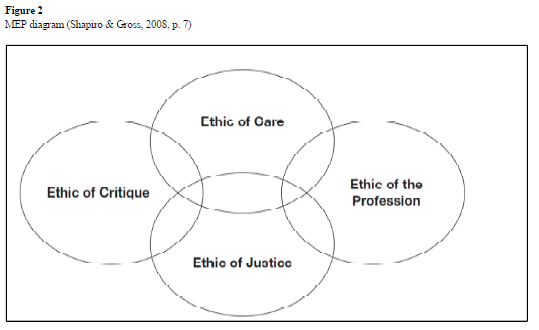
The study is underpinned by the multiple ethical paradigm (MEP), which resulted from work by Shapiro, who emphasised the ethics of care and critique, and Stefkovich, who mainly used the ethics of justice and the profession (Shapiro & Stefkovich, 2016). They added a fourth paradigm (the ethic of the profession) to Starratt's (1994) three ethical paradigms, thus, the ethic of justice, the ethic of critique, and the ethic of care. The MEP theory was chosen because it assists in analysing the complex dilemmas that educational leaders face (Shapiro & Stefkovich, 2016). The complex dilemmas in this study are the ethical leadership practices under turbulence and multiple deprivations, and MEP theory is relevant in analysing such dilemmas.
Educational leaders faced with complex dilemmas due to the complexities and challenges, such as turbulence and multiple deprivations, can use the MEP to deal with these complexities ethically (Shapiro & Stefkovich, 2016). MEP, as a theoretical framework with its four paradigms, help categorise the ethical practices of school leaders when dealing with different contexts. Figure 2 is a representation of the MEP diagram.
The multiple ethical theories will assist by being a lens through which the practices of school leaders in Zimbabwe can be classified in contexts of multiple deprivations. Individuals are primarily inclined to lean on one or two perspectives of ethics; however, looking at the MEP helps one open their mind to other models of dealing with ethical dilemmas (Shapiro & Stefkovich, 2016). Knowledge of the different paradigms helps educational leaders deal with the complexities in today's schools because they have more models to resolve ethical dilemmas. This research unearths the areas of the MEP that are compromised, applied, and heavily leaned upon in Zimbabwean schools in the context of turbulence and multiple deprivations.
Ethical leadership practices are critical for fostering positive social transformation, particularly within educational institutions. The literature suggests ethical leadership can affect meaningful social change (Brown et al., 2005). Shapiro and Stefkovich (2016) present a distinctive framework for interrogating the role of ethical leadership in mitigating turbulence and fostering stability within schools. Ethical leaders not only reinforce appropriate conduct and censure unethical behaviour but also shape the moral compass of their followers, ensuring that ethical standards permeate institutional and societal structures (Yukl, 2012).
Scholarly literature on turbulence frequently examines its intersection with multiple deprivations because turbulences often emerge during periods of crisis (Boin et al., 2013), challenging contexts (Harris, 2002), and societal instability (Anderson et al., 2017). A salient example is the 2008 global financial crisis, which led to severe economic shocks, including hyperinflation, commodity shortages, hunger, malnutrition, impaired learner concentration, unemployment, and widespread social unrest (Branson & Gross, 2014). Such crises illustrate how turbulence amplifies deprivation and necessitates a nuanced understanding of leadership during destabilising periods to enhance crisis management. One of the key requirements from leaders in such a context is open communication, which (Kanokorn et al., 2013) expounded as communicating ethical values. Communication is not just verbal but also action. In exploring leadership effectiveness during turbulent contexts marked by deprivation, Boin et al. (2013) highlighted key crises in US history, such as Hurricane Katrina, the BP oil spill, and financial upheavals, and examined leadership responses and performance under these conditions. This underscores the critical need for frameworks that assess and strengthen leadership capacity during crises.
Ethical leadership becomes an indispensable catalyst for sustainable transformation in the context of multiple deprivations. Prioritising ethical leadership, therefore, is not merely an aspirational ideal but a necessary intervention for curbing instability and advancing social reform. Schools serve as pivotal sites for inculcating ethical norms, with their influence extending beyond the institution to the broader community through learners (Brown & Treviño, 2006). Conversely, the perpetuation of unethical leadership across various sectors- government, education, and civil society-has eroded the moral fabric of nations, exacerbating social turbulence (Gross & Shapiro, 2015). Despite its profound potential to drive societal progress, ethical leadership remains an underexplored phenomenon, particularly within Africa (Mangena, 2011). This gap necessitates a deeper scholarly engagement with ethical leadership as a transformative force for fostering integrity, stability, and sustainable social change.
Literature has reports of ethical failures in institutions, some perpetrated by the leaders. References can be made to numerous reports of scandals involving corporate and public sector leaders (e.g. Brinkmann & Sims, 2003; Brown & Treviño, 2006; Toms, 2019), focusing sharply on a demand for accountability and an increasing interest in ethical leadership. Unethical practices have been revealed in political, industrial, religious, media, and educational scandals, leaving unimaginable destruction in their path (Branson & Gross, 2014). Some scholars have seen the focus on ethical leadership in recent years as a knee-jerk reaction to the devastating effects of unethical practices (Chibaya, 2021). However, others argued that ethical practices are linked to personality traits (Kalshoven et al., 2011) and the context (Shapiro & Stefkovich, 2016). Branson and Gross (2014) highlighted the need for ethical dimensions in leadership in a summary of some famous occurrences of unethical practices, emphasising that leaders who act ethically solve crises that result from unethical practices. This study focuses on exploring effective ethical leadership practices.
Ethical practices anchored in justice, fairness, and honesty, as articulated by (Treviño et al., 2003), do not appear to be immediate priorities for many organisations. The widespread prevalence of unethical conduct, coupled with the frequency with which such transgressions go unreported or remain unaddressed, underscores fundamental structural deficiencies within organisations. In the corporate sector, the predominant focus on profit maximisation often relegates ethical considerations to the periphery because ethical commitments are perceived as diverting valuable resources-both time and financial-from revenue-generating activities (Boin et al., 2013). Similarly, within educational institutions, the emphasis on academic performance metrics, particularly pass rates, may inadvertently compromise ethical principles such as justice, fairness, and honesty because schools prioritise competitive results over moral imperatives.
The inextricable relationship between leadership and ethics has been widely acknowledged, with scholars conceptualising them as two sides of the same coin (Shapiro & Stetkovich, 2016). This perspective necessitates that leaders recognise and uphold the moral obligations inherent in their positions. In this regard, Richardson-Mitchell (2007) advocated for a transformative approach to ethical leadership-one that demands heightened awareness of ethical responsibilities, referred to as covenantal duties (Pava, 2022). These duties must be carried out despite the context that leaders find themselves in.
Ethical leadership presents a demand for accountability and social trust (Branson & Gross, 2014; Yukl et al., 2013). The ethical leader has to be accountable for their decisions and behaviour and demand accountability from subordinates in line with how they have to influence their followers to behave ethically. When leaders are accountable, they attract social trust. As for the social trust of leaders, which is at a record low worldwide (Gil de Zúñiga et al., 2019), the ethical leader must strive to improve social trust by being ethical, involving the community and considering the community values when making decisions. Accountability and social trust can be achieved by involving others in ethical leadership practices. For example, school leaders involve other staff members in accountability for their duties.
Zimbabwean context
Zimbabwe has experienced and continues to experience turbulent times characterised by multiple deprivations, as described in the introduction, and this is assumed to affect every sector of the nation, including schools (Sibanda et al., 2024). Over the years, the nation has suffered a considerable brain drain, resulting in schools losing teachers due to large-scale teacher migration, a depletion in teaching and learning resources due to economic and political challenges, poor school fee payments and accusations to school leaders of unethical practices (Hammer et al., 2010; Kgari-Masondo & Chingwanangwana, 2024). This portrays a context of turbulence and multiple deprivations, which Noble et al. (2010) defined as the accumulation of discrete dimensions of deprivation; the effects on ethical leadership practices inform the scope of this paper.
Despite the prevailing hardships resulting from turbulence and multiple deprivations, there is an insatiable call for ethical leadership in Zimbabwe (Sibanda et al., 2024). Literature highlights issues of mismanagement, accountability, transparency, ethical leadership challenges, and ethical behaviour in Zimbabwean schools (Kgari-Masondo & Chingwanangwana, 2024; Muzvidziwa, 2014; Zvavahera & Svongoro, 2024). However, ethical leadership practices in contexts of turbulence and multiple deprivations remain scarcely explored. There is evidence of the explanation of ubuntu, interpreted as hunhu, an inspiring blueprint to ethical values, as a theoretical framework for African ethical leadership, and its tenets' links to the MEP (Chibaya, 2021; Khoza, 2012).
Taringa (2020) asserted that hunhu describes what is known to be human; therefore, it is an inspiring, valuable blueprint for present and future social, economic, and political life in modern environments. This means that hunhu or ubuntu is the ethical benchmark of African societies and provides an ethical guide to African men and women in any context (Mangena, 2019). Hunhu is a theoretical framework for African ethical leadership because its tenets of respect, honesty, care, and democracy link to the MEP (Chibaya, 2021; Khoza, 2012).
The prevailing literature on ethical leadership remains predominantly prescriptive, with limited engagement in empirical, social scientific inquiry. This study addresses that gap by conceptualising ethical leadership as a socially embedded phenomenon, departing from normative frameworks. It investigates ethical leadership practices in turbulence and multidimensional deprivations across four Zimbabwean schools. Whatever the causes of ethical practices, discussing them and making them a focal point for leadership in any context is necessary.
Methodology
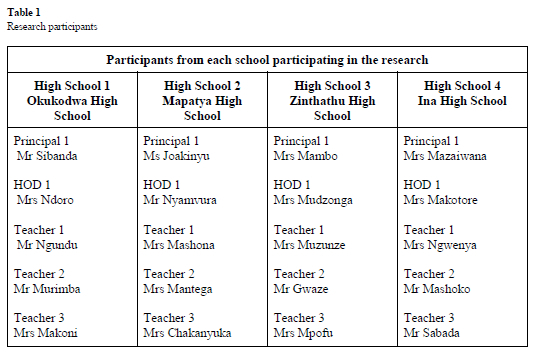
A qualitative research approach was used for this empirical study, which applied the constructivist paradigm (Creswell, 2008). The data were gathered from four purposively selected Zimbabwean schools due to the prevailing contexts of turbulence and multiple deprivations, which were assumed to influence ethical leadership practices. A total of 20 purposively selected participants from the four high schools, comprising four principals, four heads of department, and 12 teachers, were interviewed for the study (Creswell, 2008). These participants provided rich insights into ethical practices in their schools because semi-structured interviews were used to collect data from the participants, enabling the interviewer to gain insight into how people interpret certain situations from their point of view (Cohen et al., 2017). The data included information on their conceptualisation and experiences of ethical leadership. The study utilised thematic analysis. According to (Braun & Clarke, 2006), thematic analysis is a method for identifying, analysing, and reporting themes within the data collected over three months. Thematic analysis was used in this study because it organised and described the data on ethical leadership practices in turbulence and multiple deprivations in rich detail. Table 1 shows the list of participants.
Findings and discussions
In this section, the findings and discussions are combined. In practising ethical leadership in their schools, the participants revealed many ethical practices that prevailed within their schools despite the context of turbulence and multiple deprivations. The Zimbabwean schools in this study were experiencing turbulence and multiple deprivations, as illustrated by (Sibanda et al., 2024). The findings note the existence of ethical leadership practices. The consolidated data gathered in this study provided four key themes that clearly showed the ethical behaviour of the school leaders, which will now be discussed. These ethical leadership practices included communicating ethical values, demonstrating ubuntu (such as honesty, being fair and principled), caring and fair treatment of others, and holding subordinates accountable for their behaviour to provide effective ethical leadership. Each participant and school was given a pseudonym for anonymity to help discuss the findings.
Communication of ethical values
One of the key findings from this study emphasised how communication of ethical values is one of the ethical leadership practices. To illustrate this, one participant said:
I think that when someone is ethical, he/she speaks to people about ways to be ethical, such as what a preacher would do about his/her way of life. It is about influencing people to do what is right by directing them to what is right, no matter the circumstance, for the school's success. (Okukodwa Principal, Mr Sibanda)
Besides the general view of the importance of communication, especially in times of crisis, as exposed by (Boin et al., 2013), the findings went further to portray the value of communication of ethical values. This entails how the ethical leader encourages subordinates to behave ethically and relays ethical values to them. The participants highlighted how the school leader communicates, how, what and why ethical values are applicable in the school.
The statement aligns with how, in Thailand, Kanokorn et al. (2013) identified communication of ethical values as one of the descriptors of ethical leadership practice. Ethical leadership practices are shown here to include the verbalisation of ethical values. According to the MEP, ethical communication leans towards the ethics of care and justice, where the ethical leader understands what is ethical and is caring enough to share (Shapiro & Stefkovich, 2016). The ethical leader speaks about ethical values in a way that encourages others to be ethical. In the response, the participant also touched on the influence of effective communication. Yukl (2013) highlighted that leadership is about influence. Ethical leaders communicate ethical values in a way that influences people to behave ethically "no matter the circumstance." This makes the ethical leader go beyond being a role model to communicating ethics to others in the context of turbulence and multiple deprivations and in this way, become the transformative force for fostering integrity, stability, and sustainable social change.
In the same way, Brown et al. (2005) emphasised the importance of communication of ethics. Ethics communication must be explicit and supported by reinforcements or rewards clearly articulated to the school members. As espoused by the MEP, ethical values can be seen as possible guidelines for communicating ethical values; be it the ethic of care that looks at nurturance and relationships, the ethic of justice that covers laws and policies, the ethic of critique that covers analytical and rational approaches, or the ethic of the profession that gives legitimacy to the profession (Shapiro & Stefkovich, 2016), communication is vital. It is the responsibility of ethical leaders to explain why they made certain decisions and provide rewards and punishment (Chibaya, 2021). This is buttressed by the social learning theory that shows that people are most likely to pay attention to behaviours that have control over valued rewards and punishments (Redhead et al., 2021; Suff & Cox, 2007). Ubuntu also upholds communication of ethical values.
Touching on ubuntu/hunhu regarding the communication of ethical values, Mrs Makoni, a teacher from Okukodwa High School, opened my eyes to something interesting. Mrs Makoni contended that one could tell whether a person has hunhu or not by the way they talk; there is a manner of communication that demonstrates hunhu and another that does not. Therefore, the importance of hunhu as an ethical guide in social, economic, and political life must be communicated as an ethical value (Mangena, 2019; Taringa, 2020).
Demonstrating ubuntu
Linked to the communication of ethical practices was the demonstration of ubuntu/hunhu as an ethical leadership practice. In demonstrating ubuntu, which is an African philosophy that is shown through attributes such as respect, honesty, fairness and principled, the participants had this to say:
It is leadership that has principles; they have values. These are the standards that guide our operations and are embodied in the ethics and policies of the institution. (Mapatya teacher, Mrs Mantega)
Ethics, hunhu, is the behaviour of the leader and teachers. The behaviour should be respectful, tolerant and must be open to learning. (Okukodwa teacher, Mrs Makoni)
Mrs Mantega emphasised how ethical leadership is related to principles and values. Studies conducted in Zimbabwe on the African philosophy of hunhu/ubuntu have shown it to value family and community needs before personal needs, as well as be an ethical guide to African leaders and followers (Kgari-Masondo & Chingwanangwana, 2024; Mangena, 2011). Hunhu has been shown to be all-encompassing, covering doing what right, accountability, integrity, honesty, fairness, cultural values, and respect, which are practices in the findings (Chibaya, 2021). This agrees with the ethic of care, which deals with knowing and acknowledging the rights of others (Shapiro & Stefkovich, 2016) however, it may not reflect the ethic of the profession because there is no documentation on hunhu that outlines its expression in the teaching profession.
The other response on ubuntu, but with a focus on respect, was respect for the property of others:
You should know the society's expectations, what the society expects, and whether you know the customs. Do you keep yourself clean, do you respect other people's property and are you serious in whatever you are doing? What are you expecting to give back to the community? (Ina teacher, Mr Sabada)
Society considerably impacts one's ethical leadership practices, especially regarding ubuntu. Literature shows the importance of ethics in relation to the community. For example, ubuntu emphasises the community contributing to one's value system (Khoza, 2012), the ethic of the profession is influenced by community standards (Shapiro & Gross, 2013), and how ethical decisions take into account cultural needs and local community needs (Branson & Gross, 2014). Mr Sabada demonstrates the importance of ethics in the community, and how ethical leaders must consider the community and know what it stands for when making decisions. It is also important to highlight that decisions made by an ethical leader are for the good of the community (common good). The philosophy of ubuntu is shown to work with emphasis on community, cultural, and traditional values. Some of the values embraced by ubuntu are transparency, consultation, respect, sharing, selflessness, caring, and respect for others (Chisale, 2018; Kgari-Masondo & Chingwanangwana, 2024; Khoza, 2012). Taringa (2020) asserted that ubuntu embraces the spirit of caring, communalism, harmony, hospitality, respect, and responsiveness based on the culture and society of the African people. Once again, the reference to ubuntu is made regardless of the prevailing circumstances. In my findings, hunhu is expected in conditions of turbulence and multiple deprivations as the ethical leader strives to improve social trust and involve the community and consider the community values when making decisions (Gil de Zúñiga et al., 2019).
In light of how knowledgeable the principals, heads of departments, and teachers are about ethical leadership, I can surmise that the data on ethical leadership gathered from them is reliable. Their conceptualisations relate to previous findings in Zimbabwe that show that school members are aware of ethical leadership and have some understanding using the ethic of critique on how laws and regulations in the teaching profession are formed.
Caring and fair treatment of others
The sentiments on caring and fair treatment of others appeared clearly as key ethical leadership practices. The ethical leader was shown to be concerned with the teachers' and the learners' well-being. In addition, an ethical leader was identified as one who treats others fairly. Care and fairness were a common thread within the responses of the participants. What follows are some sentiments on caring and fairness from the participants:
Sometimes, the principal shows that he cares without being intrusive. We all know what a caring person does; the person is genuinely concerned about your well-being. He would go out of his way to ensure your comfort. He visited me in the hospital. (Okukodwa teacher, Mr Murimba)
Why I usually communicate this to my students is fairness. . . . Fairness is the first thing that one can use to gain trust. I also practice it with my students. I try to be as fair as possible and as impartial as possible in the manner in which I treat my kids and in the manner in which I interact with them. (Okukodwa HOD, Mrs Ndoro)
The good thing about me is that I do not see skin colour or consider the differences in people when dealing with them. I treat people equally and make every effort to be fair in everything I do. (Zinthathu principal, Mrs Mambo)
Mr Murimba highlights the care that his principal showed by visiting him while he was in hospital. Care comes from sensitivity to others (Shapiro & Stefkovich, 2016). The sensitivity also concurs with the ethic of care, which calls on the ethical leader to be aware of the feelings and emotions of the subordinates. Ethical leadership is about being sensitive to others' emotions, and education seems to have ignored emotions for a long time (Hargreaves, 2008). The participants highlighted the need to focus on emotions as they attached caring to ethical leadership practices. In the prevailing context of turbulence and multiple deprivations, the practice of ethical leadership such as the ethic of care helps solve crises that result from the challenging context (Branson & Gross, 2014).
Regarding fairness, ethical practices are shown to include fair treatment of others, as alluded to by Mrs Mambo. This agrees with the ethic of justice, which is understood as directing or governing justly (Starratt, 1994). Ethical leaders uphold principles of equity by balancing their personal convictions of justice with the broader ethical standards and expectations of the community. Consequently, ethical leadership that is driven by an ethic of justice creates an environment whereby democratic practices operate and where a strong community spirit is nurtured (Starratt, 1994).
Holding subordinates accountable
Beyond being accountable, the ethical leader also holds subordinates accountable. Literature indicates an increased demand for accountability in schools, reflecting the increasing interest in ethical leadership (Clarke, 2016). Accountability is an ethical leadership practice, as shown by the principal of Okukodwa High School, Mr Sibanda, who stated that he understood ethical leadership as doing the right thing and acting morally while putting accountability in the fore. Clarke (2016) highlighted possible responses to a climate that requires accountability-resistance, alignment, and coherence, which are linked to the dilemmas and paradoxes involved in ethical leadership practices such as autonomy and accountability. While the scope of this study was not to evaluate responses to the demand for accountability, future studies must focus on this in the same context.
The principal of Mapatya High School, Ms Joakinyu, espoused ethical leadership as being grounded on integrity and involving rules and boundaries that guide an institution's governing. The principal from Zinthathu High School, Mrs Mambo, in agreement with the importance of fairness mentioned by Ms Joakinyu, added that financial integrity was vital and that ethical leadership thought of what was best for the learners. This could be seen as having learners' interests at heart. In the same vein, the principal of Ina High School, Mrs Mazaiwana, mentioned that she was responsible for asking staff members to account for aspects of cultural values, understanding diversity, and being moral:
The leadership should follow up on cultural values, embrace diversity, and encourage good morals and values among the staff, the learners, and the community members. A leadership also demands accountability and openness.
The school principals underscored the value of ethical leadership in their schools by encouraging their subordinates to be accountable and transparent. They clarified that ethical leadership was shown to follow up on cultural values among staff members and learners while embracing diversity and transparency. This aligns with the profession's ethics, which demands that specific professional, community, and formal codes and standards be followed (Shapiro & Stefkovich, 2016). It was evident in their responses that they saw ethical leadership as helping promote accountability in an effective and professional way. The motivation is envisaged to lead their staff members to behave in a manner that portrays transparency and accountability. Below is what the principal of Okukodwa High School, Mr Sibanda, said:
I am more into transparency; whatever I do should be transparent to myself, to those above me and to the teachers, but foremost are terms like accountability and professionalism. This involves sticking to the policy or guidelines that have been laid down.
On accountability, Mrs Ngwenya of Ina High School indicated that as a teacher, when she collects funds from the students for school functions, she is expected to give a clear report of this. This report would contain the amount she collected from every child; each child must sign to show how much they paid. The money is then receipted in the main office by the school secretary, and a report is sent to the principal. The idea is that the ethical school leader influences others to be ethical (Yukl, 2011). As being accountable is a principle of ethical leadership, ethical leadership practices include holding subordinates accountable. Literature supports the idea that ethical leadership is premised on the demand for accountability to enhance trust (Branson & Gross, 2014; Yukl et al., 2013)
Sentiments such as those from Mrs Ngwenya indicated a sense of respect for the value of accountability. From her narration, it becomes apparent how ethical practices are linked to accountability and unethical practices are linked to the lack of accountability. The lack of accountability can also be linked to a lack of communication. Communication was a key component of ethical leadership in the earlier parts of the discussion of findings. It is also important to point out that while all the information in the schools may not be open to all people at all times, a general sense of openness is thought to avoid doubt about the administration's conduct, especially regarding finances. Further, the use of public funds must be made public. This was the general feeling among the teachers interviewed in the four Zimbabwean Schools.
Conclusions and recommendations
Several ethical leadership practices were identified from the study despite the prevailing context of turbulence and multiple deprivations. It was clear that ethical leaders do not merely model ethical behaviour but actively promote ethical values in ways that influence, guide, and reinforce ethical conduct within their institutions. The study affirms that effective, ethical leadership is not passive; it necessitates continual engagement, explicit articulation of ethical expectations, and the provision of clear incentives or consequences to shape behaviour (Brown et al., 2005), particularly in contexts of turbulence and multiple deprivations. Furthermore, the study shows that the influence ethical norms goes beyond the school to the broader community through learners under ubuntu. The foundational role of ubuntu as an ethical leadership practice is reaffirmed in this study, demonstrating that ethical leadership in educational settings is deeply intertwined with principles of community, fairness, and respect. The participants' perspectives align with existing literature (Mangena, 2011), highlighting ubuntu as an ethical compass that prioritises collective well-being over individual gain. However, the absence of formal documentation outlining ubuntu's expression in the teaching profession suggests a critical gap that needs further exploration.
In addition, the findings demonstrated that care and fairness are fundamental pillars of ethical leadership in educational settings. Participants' reflections on care align with the ethic of care (Shapiro & Stefkovich, 2016), emphasising the need for school leaders to be attuned to the emotions and experiences of those they lead. This is particularly critical in turbulence and socioeconomic deprivation, where sensitivity to the needs of others enhances morale, cohesion, and institutional stability (Hargreaves, 2008). Ethical leadership, guided by fairness, cultivates a democratic and just school environment where leaders balance personal convictions with broader community expectations. This study further underscores the critical role of ethical leadership in fostering accountability and transparency, highlighting the value of openness and a demand for accountability from subordinates.
This study recommends that there be a strengthening of ethical leadership training due to the direct impact of ethical leadership on accountability and community involvement. The school leadership must develop programmes that integrate ethics-based training emphasising integrity, fairness, responsible financial management, and ethical communication. Additionally, every school should focus on institutional accountability mechanisms and ubuntu promotion. Schools should develop clear accountability frameworks that mandate regular financial disclosures, transparent decision-making, and active stakeholder engagement to reduce ethical lapses and enhance trust in leadership that sets an ethical tone in the school environment. Policy frameworks should institutionalise ethical communication as a key component of school leadership, ensuring that ethical leadership is not left to chance but systematically cultivated. Further research should explore how cultural philosophies, such as ubuntu, influence ethical communication in educational leadership, thereby contributing to a broader, contextually informed discourse on ethical leadership practices in diverse educational settings.
References
Literature review
- Ahmed, E. I. (2025). A systematic review of ethical leadership studies in educational research from 1990 to 2022. Educational Management Administration & Leadership, 53(4), 769-788. https://doi.org/10.1177/17411432231193251
- Anderson, V., Ndalamba, K. K., & Caldwell, C. (2017). Social responsibility in a troubled world. International Journal of Public Leadership, 13(2), 98-115. https://doi.org/10.1108/IJPL-10-2016-0034
- Arar, K., & Saiti, A. (2022). Ethical leadership, ethical dilemmas and decision making among school administrators. Equity in Education & Society, 1(1), 126-141. https://doi.org/10.1177/27526461211070828
- Boin, A., Kuipers, S., & Overdijk, W. (2013). Leadership in times of crisis: A framework for assessment. International Review of Public Administration, 18(1), 79-91. https://doi.org/10.1080/12294659.2013.10805241
- Branson, C. M., & Gross, S. J. (2014). Handbook of ethical educational leadership. Routledge.
- Brinkmann, J., & Sims, R. R. (2003). Enron ethics (or: Culture matters more than codes). Journal of Business Ethics, 45(3), 243-256. https://doi.org/10.1023/A:1024194519384
- Brown, M. E., & Treviño, L. K. (2006). Ethical leadership: A review and future directions. The Leadership Quarterly, 17(6), 595-616. https://doi.org/10.1016/jJeaqua.2006.10.004
- Brown, M. E., Treviño, L. K., & Harrison, D. A. (2005). Ethical leadership: A social learning perspective for construct development and testing. Organizational Behavior and Human Decision Processes, 97(2), 117-134. https://doi.org/10.1016/j.obhdp.2005.03.002
- Cheteni, P., & Shindika, E. S. (2017). Ethical leadership in South Africa and Botswana. BAR: Brazilian Administration Review, 14(2). https://doi.org/10.1590/1807-7692bar2017160077
- Chibaya, S. (2021). Exploring ethical leadership in four Zimbabwean high schools in the context of turbulence and multiple deprivation [Unpublished doctoral dissertation]. University of Witwatersrand.
- Chisale, S. S. (2018). Ubuntu as care: Deconstructing the gendered ubuntu. Verbum et Ecclesia, 39(1). https://doi.org/10.4102/ve.v39i1.1790
- Clarke, S. (2016). School leadership in turbulent times and the value of negative capability. Professional Development in Education, 42(1), 5-18. https://doi.org/10.1080/19415257.2015.1010692
- Cohen, L., Manion, L., & Morrison, K. (2017). Research methods in education. Routledge.
- Creswell, J. W. (2008). Research design: Qualitative, quantitative, and mixed methods approaches (3rd ed.). SAGE.
- Edwards, D., Schmidt, M., & Mestry, R. (2023). Core values of ethical leaders in South African schools. South African Journal of Education, 43(SI2), S1-S11. https://hdl.handle.net/10520/ejc-educat_v43_nsi2_a7
- Fullan, M., Azorín, C., Harris, A., & Jones, M. (2023). Artificial intelligence and school leadership: Challenges, opportunities and implications. School Leadership & Management, 1-8. https://doi.org/10.1080/13632434.2023.2246856
- Gil de Zúñiga, H., Ardèvol-Abreu, A., Diehl, T., Gómez Patiño, M., & Liu, J. (2019). Trust in institutional actors across 22 countries: Examining political, science, and media trust around the world. Revista Latina de Comunicación Social, 74, 237 -262. https://doi.org/10.4185/RLCS-2019-1329en
- Gross, S. J., & Shapiro, J. P. (2015). Democratic ethical educational leadership. Taylor & Francis.
- Hargreaves, A. (2008). The emotional geographies of educational leadership. Passionate Leadership in Education, 129-150. https://doi.org/10.4135/9781446216675.n7?urlappend=%3Futm_source%3Dresearchgate
- Hlongwane, C. B., & Bhengu, T. T. (2025). Ethical leadership in schools: A qualitative case study of perspectives from six South African principals. Issues in Educational Research, 35(1), 199-219. https://www.iier.org.au/iier35/hlongwane.pdf
- Kanokorn, S., Wallapha, A., & Ngang, T. K. (2013). Indicators of ethical leadership for school principals in Thailand. Procedia-Social and Behavioral Sciences, 93, 2085-2089. https://doi.org/10.1016/j.sbspro.2013.10.170
- Kgari-Masondo, M. C., & Chingwanangwana, B. (2024). Examining the pragmatism of unhulized leadership in schools amid socio-political and economic turbulence in Zimbabwe: The experiences of school heads and teachers in Marondera District. Leadership and Policy in Schools, 1-13. https://doi.org/10.1080/15700763.2024.2313015
- Khoza, R. (2012). Attuned leadership: African humanism as compass. Penguin Random House.
- Mafugu, T., Njini, S., Sithole, B. M., & Abel, S. (2022). A review of financial management practices in selected secondary schools in the Kwekwe District of Zimbabwe. International Journal of Sciences and Research, 78(1), 72 -86. https://tinyurl.com/33zsr8cu
- Mangena, F. (2011). Ethical leadership in post-colonial Zimbabwe: Insights, challenges and remedies. Africana, 5(3), 100-125.
- Mangena, F. (2019). Discussing inclusive development and governance in Zimbabwe: Pragmatizing hunhu/ ubuntu philosophy. Filosofia Theoretica: Journal of African Philosophy, Culture and Religions, 8(1), 39-54. https://doi.org/10.4314/ft.v8i1.4
- Muparuri, P., Chingara, R., & Muzenda, D. (2021). School leadership in volatile environments: The Zimbabwean experience. Scholars Journal of Arts, Humanities and Social Sciences, 9(9), 442-451. https://doi.org/10.36347/sjahss.2021.v09i09.009
- Mushowe, B. (2018). A ray of hope for the outlawing of corporal punishment in Zimbabwe: A review of recent developments. University of Zimbabwe Law Journal, 1(1). https://ir.uz.ac.zw/handle/10646/3907
- Noble, M., Barnes, H., Wright, G., & Roberts, B. (2010). Small area indices of multiple deprivation in South Africa. Social Indicators Research, 95(2), 95-281. https://doi.org/10.1007/s11205-009-9460-7
- Northouse, P. G. (2021). Leadership: Theory and practice. SAGE.
- Pava, M. (2022). The emergence of next stage capitalism and the need for a broadened conception of Jewish business ethics. In M. Dion & M. L. Pava (Eds.), The spirit of conscious capitalism: Contributions of world religions and spiritualities (pp. 59 -84). Springer.
- Richardson-Mitchell, B. (2007). Ethical leadership: A faculty obligation. In D. M. Hellmich (Ed.), Ethical leadership in the community college: Bridging theory and daily practice (pp. 57-67). Anker Publishing.
- Saha, R., Shashi, Cerchione, R., Singh, R., & Dahiya, R. (2020). Effect of ethical leadership and corporate social responsibility on firm performance: A systematic review. Corporate Social Responsibility and Environmental Management, 27(2), 409-429. https://doi.org/10.1002/csr.1824
- Shapiro, J. P., & Gross, S. J. (2008). Ethical educational leadership in turbulent times. Routledge
- Shapiro, J. P., & Stefkovich, J. A. (2016). Ethical leadership and decision making in education. Routledge.
- Sharma, A., Agrawal, R., & Khandelwal, U. (2019). Developing ethical leadership for business organizations. Leadership & Organization Development Journal, 40(6), 712-734. https://doi.org/10.1108/LODJ-10-2018-0367
- Sibanda, F., Sibanda, O., Ntombana, L., & Jere, T. (2024). False hope religion? Socio-economic turmoil and the rise of prosperity gospel in Zimbabwe. Pharos Journal of Theology, 105(2). https://doi.org/10.46222/pharosjot.105.25
- Starratt, R. J. (1994). Building an ethical school: A practical response to the moral crisis in schools. Falmer.
- Suff, P., & Cox, A. (2007). Paying for performance: New trends in performance-related pay. Institute for Employment Studies, 1-38. employment-studies.co.uk/system/files/resources/files/mp78.pdf
- Taringa, N. T. (2020). The potential of ubuntu values for a sustainable ethic of the environment and development. In E. Chitando, M. R. Gunda, & L. Togarasei (Eds.), Religion and development in Afric. 387-400). University of Bamberg Press.
- Toms, S. (2019). Financial scandals: A historical overview. Accounting and Business Research, 49(5), 477-499. https://doi.org/10.1080/00014788.2019.161059
- Treviño, L. K., Brown, M., & Hartman, L. P. (2003). A qualitative investigation of perceived executive ethical leadership: Perceptions from inside and outside the executive suite. Human Relations, 56(1), 5-37. https://doi.org/10.1177/0018726703056001448
Accepted: 20 September 2025